It does not happen all at once. That is the first thing to understand about isolation in relationships — and the reason so many people do not see it until they are already deep inside it. According to the National Domestic Violence Hotline, isolation from friends, family, and support networks is one of the earliest and most consistent tactics used in emotionally abusive and coercive relationships — present in over 70 percent of reported cases of intimate partner abuse. But isolation red flags rarely begin with dramatic demands or obvious control.
They begin with comments that sound like love. With preferences that sound like closeness. With a gradual, almost imperceptible narrowing of your world that does not feel like confinement until the walls are already built. By the time most people recognize isolation for what it is, their social network has quietly eroded. The friendships have grown thin from neglect. The family relationships have become strained by distance or conflict. The person they have become inside this relationship would barely be recognized by the person they were before it.
This article names the isolation red flags clearly and honestly — the early ones, the mid-stage ones, and the ones that signal a situation that has become genuinely dangerous. It is written for the person who has a quiet unease they cannot fully name. For the friend watching someone disappear into a relationship. And for anyone who wants to understand how isolation works — so they can recognize it before it has finished its work.
How Isolation Works: The Psychology of Cutting Someone Off
Understanding how isolation operates psychologically is essential — because isolation in relationships is almost never a single dramatic event. It is a process. A carefully graduated, often unconscious strategy that works precisely because each individual step is small enough to rationalize and the cumulative effect is only visible in retrospect.
Psychologists who study coercive control — including Evan Stark, whose research on the subject is foundational — describe isolation as a control strategy that works by dismantling a person’s external support system, leaving the controlling partner as the primary or sole source of emotional support, information, validation, and reality-testing.
The strategic logic is straightforward: a person with a strong, active support network is harder to control. They have people who know them well enough to notice changes. They have perspectives outside the relationship to compare against. They have emotional resources that do not depend on the controlling partner. They have somewhere to go.
Isolation removes all of this. Gradually. Often with the target’s active participation — because each step has been framed in terms that make compliance feel like love, loyalty, or reasonable accommodation.
This is why isolation is so effective and so dangerous. It does not look like control from the inside. It looks like devotion.
Early Isolation Red Flags: The Beginning of the Narrowing
Subtle Criticism of Your Friends and Family
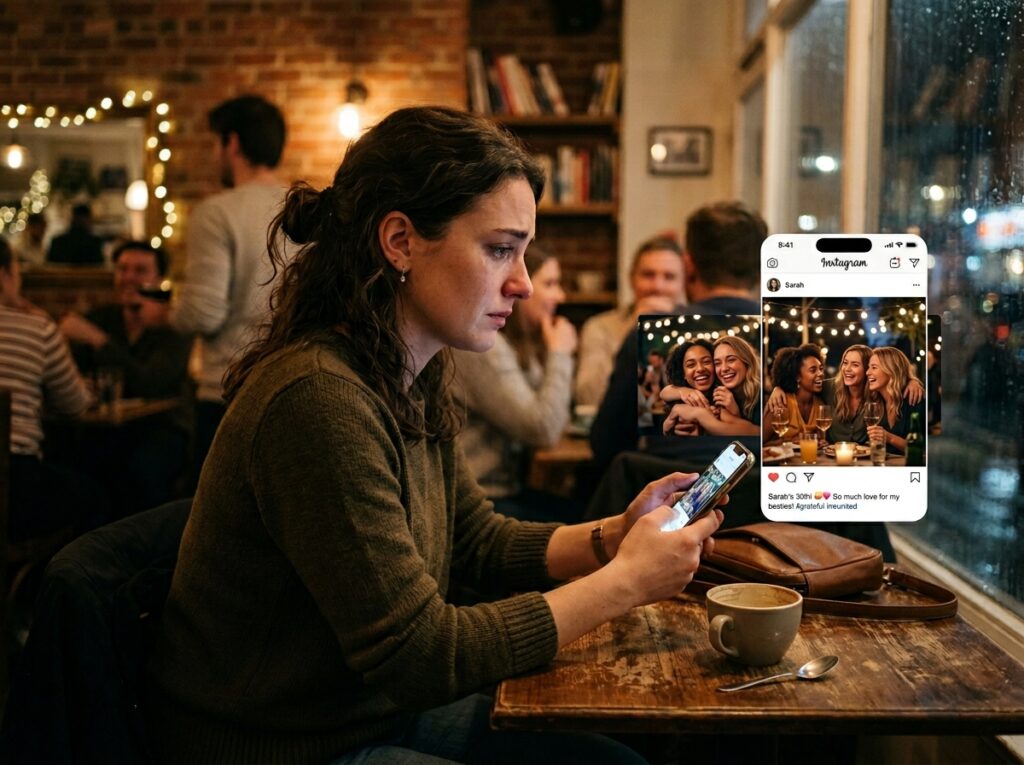
The most common entry point for isolation is not demands — it is commentary. Slow, consistent, carefully delivered commentary about the people in your life that gradually reframes your relationships with them through a negative lens.
It starts gently. An observation about a friend: “She always seems a bit negative, have you noticed?” A comment about a family member: “Your brother never really seems happy for you.” A passing remark about your closest friend that plants a seed of doubt: “I just want to make sure the people around you are actually good for you.”
None of these comments are accusations. None of them tell you who to see or not see. They are observations — concerned, loving-sounding observations from someone who presents themselves as simply caring about the quality of your relationships.
But the pattern matters more than any individual comment. When the commentary is consistent — when it is always pointing in the same direction, always finding reasons why the people in your life are problematic, always questioning their motives or their care for you — it is constructing a narrative. A narrative in which your existing relationships are the problem and this new relationship is the solution.
Over time, without any explicit demand being made, you may find yourself seeing your friends and family through a filter that was not yours originally. Questioning their intentions. Feeling slightly awkward or guilty in their presence. Mentioning them less. Defending them less.
The criticism has done its work without ever becoming a command.
Expressing Jealousy of Your Time With Others
Early in the relationship, jealousy of your time with others may present as flattery. “I just miss you so much when you are not with me.” “I hate sharing you.” “You are my favorite person — I always want to be with you.”
Said occasionally, in the right emotional context, these expressions can feel like love. Said consistently, as a response to any plan that does not include the partner, they are something else entirely.
The isolation red flag here is the pattern: a partner who consistently expresses disappointment, hurt, or mild reproach when you make plans with other people in your life. Who is never explicitly forbidding you from going — but whose response to your plans makes you feel guilty for having them. Whose emotional state on the evenings you spend with friends ensures that those evenings carry a cost that eventually makes them feel not worth having.
You do not cancel your plans because you were told to. You cancel them because it has become genuinely easier not to go — because the alternative is managing your partner’s feelings before and after, and the math of that emotional labor no longer makes the plan worth it.
Preferring to Spend All Time Together — Exclusively
There is a meaningful difference between a partner who genuinely loves spending time with you and a partner who is uncomfortable with any time you spend separately.
A partner who loves your company will enjoy your time together enthusiastically and also support your individual life — your friendships, your family relationships, your personal interests — because they understand that a complete, socially connected you is the person they fell in love with.
A partner who is uncomfortable with your separate life will frame their discomfort in the language of love but will consistently work — through expressed hurt, through manufactured alternatives, through scheduling that conveniently conflicts — to minimize the time you spend outside the relationship.
This preference, when it is driving behavior rather than simply expressing a feeling, is an early isolation red flag that deserves honest examination rather than the romantic interpretation it is usually given.
“Isolation does not announce itself as control. It announces itself as love — as devotion, as closeness, as the desire to have you for themselves. By the time it becomes visible as control, it has already done most of its work.”
Mid-Stage Isolation Red Flags: The Walls Getting Higher
Creating Conflict Between You and Your Support Network
As the isolation progresses, the strategy often shifts from commentary to active interference — behaviors designed to create genuine conflict between you and the people in your life.
This can look like: sharing private information you disclosed to your partner with your family or friends in ways that cause hurt or conflict. Behaving rudely to your friends or family in ways that make it uncomfortable for you to invite them into your life. Starting arguments before social events that ensure you arrive in an emotional state that damages the visit. Sending messages from your phone to people in your life — sometimes posing as you, sometimes not — designed to create misunderstanding or hurt.
The goal in each case is the same: to make your external relationships feel costly, complicated, or actively painful — until you begin to withdraw from them not because you have been told to, but because maintaining them while also managing the relationship has become genuinely exhausting.
Monitoring and Controlling Your Communications
A partner who checks your messages, who needs to know who is contacting you, who becomes activated by the presence of certain names in your notifications, who insists on being present during phone calls or reads your messages afterward — this is a monitoring behavior that serves the isolation goal directly.
When your communications are monitored, two things happen. First, the people in your life begin to feel the chill of your reduced availability and responsiveness — they reach out less, because the responses have become sporadic or stilted, because you no longer call spontaneously, because there is a flatness in your engagement that they sense but cannot explain.
Second, you begin to self-censor. Knowing that what you say or receive may be read and responded to by your partner changes the nature of what you communicate. The honest, unguarded conversations that sustain close friendships and family relationships are no longer possible when there is surveillance. The relationships thin from the inside, because the authenticity that keeps them alive has been removed.
Making You Financially Dependent
Financial control is one of the most concrete and most consequential forms of isolation — because financial dependence removes not just the desire to leave but the practical ability to do so.
This can develop through various means: discouraging or sabotaging employment, controlling access to shared financial resources, creating situations where you become financially reliant on the partner for basic needs, accumulating shared debt in ways that complicate exit, or simply taking over financial management in ways that seem helpful initially but create dependency over time.
A person who has no independent financial resources, no employment history, and no access to money is not just emotionally isolated — they are practically trapped. The financial isolation and the social isolation work together to ensure that the exit from the relationship becomes increasingly difficult to imagine as realistic.
Advanced Isolation Red Flags: When It Becomes Dangerous
Cutting Off Contact With Family Directly
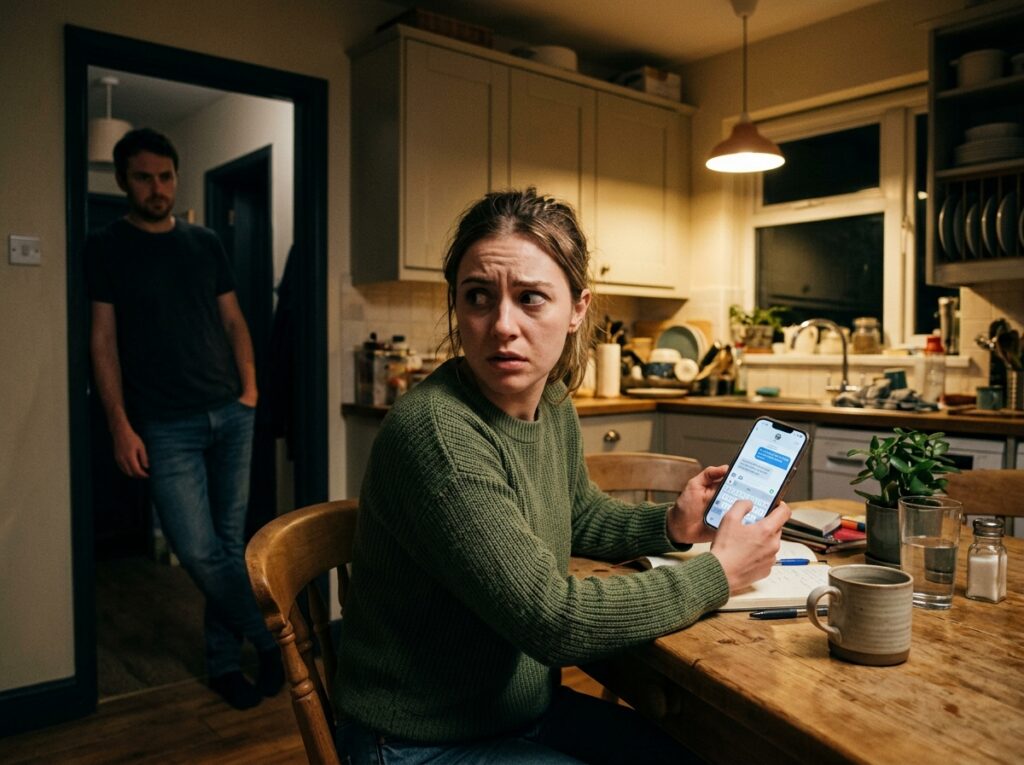
As isolation deepens, the indirect methods — commentary, jealousy, manufactured conflict — may give way to more direct interference. A partner who explicitly forbids contact with specific family members. Who insists on being present at all family interactions. Who creates ultimatums: “It is me or your family.” Who has moved you geographically away from your support network and actively resists any effort to maintain those relationships across distance.
At this stage, the isolation has moved from subtle to structural. The walls are no longer being suggested — they are being enforced.
This level of isolation is a significant indicator of an abusive relationship dynamic. It should be taken seriously regardless of how it is framed — regardless of the stated justifications, the accusations against the family members, or the emotional arguments deployed in its defense.
Rewriting Your Perception of Reality
Advanced isolation frequently involves a specific form of psychological manipulation that targets your ability to reality-test. Because reality-testing — the ability to compare your experience against external perspectives — is precisely what an external support network provides.
With that network removed, the partner becomes the primary or sole interpreter of reality. What happened in an argument. What your family member actually meant when they said that thing. What your friend’s behavior really indicated. Whether what you are feeling is reasonable or whether you are overreacting.
When one person controls the narrative of reality and there is no external check on that narrative, the conditions for profound psychological disorientation are in place. The isolated person begins to doubt their own perceptions — because there is no one left whose perception they can compare theirs against.
This is the stage at which many people in isolated relationships begin to feel that they are going crazy. That their memory is faulty. That their emotional responses are irrational. That they cannot trust their own judgment. These feelings are the product of sustained reality manipulation — not evidence of mental instability.
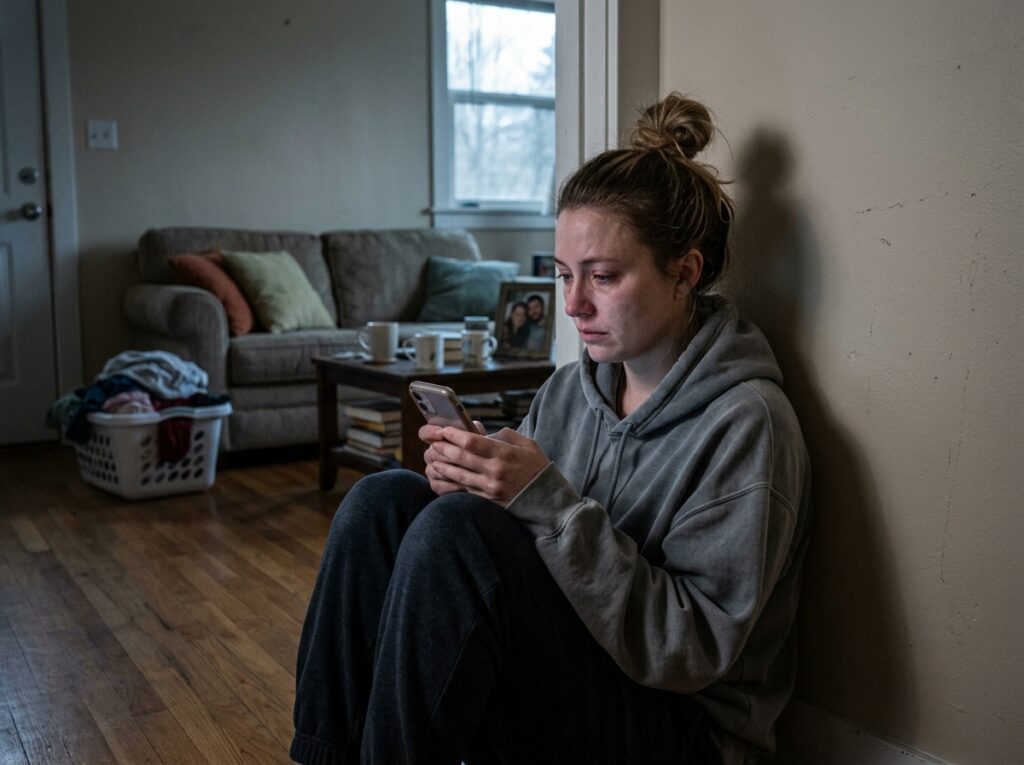
You Have Nowhere to Go — And No One Who Knows
The final stage of effective isolation is the one that is most frightening and most important to name clearly: the point at which the isolated person has no one who knows enough about what is happening to help, and nowhere they could realistically go if they wanted to leave.
The friends have drifted away. The family relationships are strained or severed. The financial dependence is real. The self-doubt is profound enough that even identifying the situation as abusive feels uncertain — because the partner’s version of events has been the only available version for so long.
If you are reading this from inside this stage — this is the most important thing in this entire article: you are not crazy, you are not alone, and what is happening to you has a name.
Why People Do Not Leave — And Why That Deserves Compassion, Not Judgment
One of the most common and most damaging responses to learning about someone in an isolating relationship is the question: why don’t they just leave?
The question, however well-intentioned, reflects a fundamental misunderstanding of what successful isolation has accomplished by the time leaving becomes a conscious consideration.
By the time the isolation is visible enough to generate an outside “why don’t you leave” response, the isolated person has typically experienced:
Profound self-doubt. Months or years of having their perceptions, judgments, and emotional responses questioned and reframed have produced a genuine uncertainty about their own reliability as a witness to their own experience. They are not sure their assessment of the situation is accurate. They have been told — and have partially come to believe — that they are overreacting, that they are the problem, that outside perspectives do not understand the relationship’s complexity.
Genuine love for the partner. Isolation does not eliminate love. It coexists with it — often in the agonizing combination of loving someone who is harming you, which produces a form of cognitive and emotional dissonance that immobilizes rather than clarifies.
Real practical obstacles. No independent financial resources. No established place to go. Children who complicate exit. Immigration status that creates dependency. Shared assets that make leaving economically devastating.
Fear. Research consistently demonstrates that the period of attempting to leave a controlling relationship is statistically the most dangerous period for the person doing the leaving. Many isolated people know this instinctively, even without the statistics — they have seen enough of their partner’s response to attempts at autonomy to understand that leaving is not simple.
Understanding these realities does not excuse the isolation or the abuse. It explains why compassion, patience, and practical support are more useful responses than judgment.
What to Do If You Recognize These Signs
If you recognize these signs in your own relationship:
Start with a private, honest inventory. Not of what your partner has done — but of what your life looks like now compared to before the relationship. Who have you stopped seeing? What have you stopped doing? What do you no longer talk about with the people you care about? How much of that change was your genuine choice versus an accommodation of your partner’s expressed preferences or emotional responses?
Reconnect with one person you trust — quietly, without announcing it, without needing to explain everything immediately. A text to an old friend. A call to a family member. The simple re-establishment of a connection that has been allowed to thin. This is not a dramatic gesture. It is the beginning of rebuilding the network that isolation has eroded.
Reach out to a professional resource. The National Domestic Violence Hotline (1-800-799-7233) provides confidential support and can help you assess your situation, make safety plans, and identify local resources — without requiring you to have already decided to leave.
If you are not yet sure whether what you are experiencing is isolation or simply a relationship that has needed some adjustment, that uncertainty itself is something a professional can help you examine clearly.
If you recognize these signs in someone you care about:
The most important thing you can do is maintain the connection — even when it becomes difficult, even when they pull away, even when the partner’s interference makes genuine communication complicated. Isolation works by removing external relationships. Your consistent, non-judgmental presence is a direct counter to that strategy.
Do not issue ultimatums. Do not tell them they need to leave. Do not express anger at the partner in ways that make your friend feel the need to defend them. Simply be there. Be steady. Be the person they know they can come back to when they are ready — because readiness is not something you can create for someone else, but you can ensure that when it arrives, there is somewhere for them to go.

The Recovery: Rebuilding After Isolation
For people who have left an isolating relationship, the aftermath includes not just the grief of the relationship’s end but the specific challenge of rebuilding a social world that was systematically dismantled.
This process takes time. It takes humility — the willingness to re-enter relationships that were allowed to lapse, to explain where you have been, to begin again with people who may have been hurt by the distance. It takes patience with the disorientation of rebuilding a sense of self that the isolation worked to erase.
Some specific realities of post-isolation recovery:
The self-doubt does not immediately lift. The internalized narrative of the isolation — the version of yourself as unreliable, irrational, or unworthy of genuine support — has been installed over months or years. It does not uninstall the moment the relationship ends. Individual therapy, particularly trauma-informed approaches, is one of the most effective tools for this specific work.
Relationships need to be actively rebuilt. The friendships and family relationships that were eroded during the isolation will not automatically restore themselves. They need to be actively tended — with honesty about what happened when the person is ready to share it, and with patience for the repair process that genuine reconciliation requires.
The isolation’s effects on judgment and trust take time to heal. One of the most significant long-term consequences of sustained isolation is the damage to the person’s ability to trust their own perceptions and to trust other people. Rebuilding these capacities is genuine recovery work — not something that resolves with the end of the relationship, but something that unfolds over time with support.
Recovery is possible. People rebuild from profound isolation regularly, reclaiming their social world, their sense of self, and their capacity for genuine, equitable relationships. But it requires the same honesty and deliberateness that escaping the isolation required — and it deserves the same compassion that was too often absent from the inside.
Final Thoughts
Isolation red flags are among the most important relationship warning signs to understand — not because every partner who expresses jealousy is abusive, and not because every relationship that becomes private is dangerous, but because isolation is the mechanism by which so many genuinely abusive situations are able to deepen and sustain themselves without intervention.
The earlier it is recognized, the more options exist. The more connections that are maintained — in spite of the discomfort, in spite of the guilt, in spite of the partner’s preferences — the harder isolation is to complete.
Your friendships matter. Your family relationships matter. Your independent life, your independent finances, your independent sense of self — all of it matters. Not as a threat to a loving relationship. As the foundation of one.
A partner who loves you does not need you to have no one else. A partner who needs you to have no one else does not love you in the way that word is meant.
Save this article — it may be the most important thing someone in your life needs to read right now.
Share it widely. Isolation works through silence. This article is the opposite of silence.
Follow Truthsinside.com for more honest, psychology-informed content on relationships, red flags, and the truth that protects people.
Related article: 15 Signs She Is Testing You: Why Women Test Men and What to Do
Frequently Asked Questions
Q1: Is it a red flag if my partner just prefers spending most of our time together?
Preference for togetherness is not inherently a red flag — many people genuinely value closeness and quality couple time. The distinction lies in how that preference is expressed and what happens when you choose to spend time with others. A partner who loves your company but also actively supports your friendships and individual life is expressing closeness. A partner whose expressed preference for togetherness consistently results in your other relationships being deprioritized, through guilt, conflict, or emotional pressure, is expressing control.
Q2: What if my partner has legitimate reasons to dislike some of my friends or family?
Legitimate concerns about specific relationships in your life deserve to be heard and considered. A partner can reasonably share a concern about a friendship that seems harmful to you. The red flag is not the concern — it is the pattern. When concerns are consistently directed at all or most of your relationships, when they escalate to demands rather than remaining as shared perspectives, and when the effect is the systematic removal of your support network rather than the thoughtful evaluation of specific relationships, the concern has become a control strategy.
Q3: How do I help a friend who I think is being isolated without pushing them away?
Stay consistent and non-judgmental. Make contact regularly without requiring them to explain or justify their partner’s behavior. Express care for them specifically — not concern about the relationship, which can feel like an attack they need to defend against. Make yourself easy to reach and clear that you are not going anywhere. Avoid ultimatums. And when the time comes — if it comes — be ready to offer practical support rather than just emotional support. The most important thing you can do is be the person they know is still there.
Q4: Can isolation happen in relationships that are not otherwise abusive?
Isolation exists on a spectrum. Some degree of relationship-focused social narrowing happens in many new relationships that are not abusive — the organic prioritization of the new relationship during its early stages is common and not inherently problematic. Isolation becomes an abuse dynamic when it is persistent, when it is driven by one partner’s deliberate or unconscious need for control, when it results in genuine harm to the isolated partner’s support network and autonomy, and when it combines with other controlling behaviors. Context, pattern, and impact are what matter most in making this distinction.
Q5: What resources are available for someone experiencing isolation in a relationship?
The National Domestic Violence Hotline (1-800-799-7233 or text START to 88788) provides confidential support 24 hours a day, seven days a week — including for people who are not yet sure whether their situation qualifies as abuse. The hotline can help with safety planning, local resource identification, and simply talking through what is happening with someone who understands. In many countries, equivalent national resources exist. loveisrespect.org is also an excellent resource specifically for understanding healthy versus unhealthy relationship dynamics.
🎵 Music
Maren Lull is a singer-songwriter who writes from the places most people don’t talk about out loud.
Not the dramatic grief. Not the obvious heartbreak. The quiet kind — the ordinary Tuesday emptiness, the habit of reaching for someone who isn’t there anymore, the particular exhaustion of being strong for so long that the strength itself wears thin.
Her music lives at the intersection of emotional honesty and soft beauty — breathy vocals over gentle piano, slow tempos, lyrics that feel less like songs and more like something you wrote in a private notebook at two in the morning and never showed anyone.
Maren Lull writes for the people who feel everything deeply and say very little about it. For the ones who listen to sad music not because they want to feel worse — but because being understood, even by a song, makes the feeling easier to carry.
📱 Follow Maren Lull:
→ Spotify
→ Apple Music
→ Youtube
→ Audiomack