There is a version of your partner that only exists behind closed doors — and you won’t meet them until you share a front door. Moving in together is one of the most romanticized milestones in a relationship, painted as the natural next step toward forever. But for a startling number of couples, it becomes the moment the carefully constructed image of who they thought they were dating begins to quietly, then dramatically, fall apart. The excitement of shared spaces and morning coffee together can give way to a creeping discomfort that something — or someone — is not what it seemed.
Research from the University of Denver found that couples who moved in together before making a clear mutual commitment to the future reported significantly higher rates of relationship dissatisfaction, conflict, and eventual separation compared to those who established clear intentions before cohabiting. Psychologists refer to this as the “cohabitation effect” — and while it doesn’t doom every couple who moves in together, it does reveal a critical truth: living together strips away the performance that dating allows, and exposes the unfiltered reality of who each person actually is when comfort replaces effort.
Red flags after moving in together are uniquely dangerous because they emerge slowly, disguised by the familiarity and routine of shared life. Unlike early dating red flags — which often feel obvious in retrospect — these warning signs are easy to rationalize, minimize, or simply not notice until a pattern has already taken hold. This article identifies 9 of the most alarming red flags that only surface after cohabitation begins — and what each one may be telling you about the relationship you’re actually in.
Why Moving In Together Changes Everything
Before we examine the specific red flags, it’s worth understanding why cohabitation acts as such a powerful reveal of a person’s true character. During the dating phase, both partners are — consciously or not — managing impressions. They choose when to be seen, how to present themselves, and when to retreat to the privacy of their own space to decompress, reset, or simply be themselves without an audience.
The moment two people move in together, that privacy disappears. There is no going home to process. No space to hide moods, habits, financial behaviors, or emotional patterns. The relationship becomes a twenty-four-hour reality — and many people are simply not the same person at hour twenty-two as they were on a carefully planned Saturday night date.
This is not inherently sinister. Everyone has private sides of themselves. The question is whether what surfaces in the unguarded environment of shared living is something you can genuinely build a life with — or something that signals a fundamental incompatibility, or worse, a relationship that was never as healthy as it appeared. The red flags that follow are the ones most consistently reported by people who, looking back, wish they had recognized them sooner.

Red Flag #1: They Completely Stop Making an Effort
During dating, effort is almost automatic — because the relationship is still being built and the desire to impress is naturally present. But once the lease is signed and the boxes are unpacked, some partners experience what can only be described as a total withdrawal of effort. Date nights disappear. Appearance stops being a consideration. Thoughtfulness evaporates. The relationship quietly shifts from something being actively cultivated to something being passively inhabited.
A certain level of comfort and relaxation in a long-term relationship is healthy and expected. The red flag is not comfort — it is complete abandonment. When one partner stops showing any investment in the relationship’s quality — stops initiating connection, stops expressing appreciation, stops contributing to the emotional health of the partnership — it is a signal that the effort during dating was a performance rather than a reflection of who they genuinely are.
Pay attention to whether the drop in effort is mutual and gradual — which is normal — or whether it is sudden, one-sided, and severe. The latter suggests that the relationship dynamic you experienced during dating was not sustainable or authentic, and you are now seeing the version of this person who exists when they no longer feel they need to try.
Related article: What Does It Actually Feel Like to Fall in Love? Science + Real Stories
Red Flag #2: Controlling Behavior Disguised as “Preferences”
One of the most insidious red flags that surfaces after moving in together is controlling behavior — and it almost never announces itself as control. Instead, it arrives dressed as preferences, habits, or reasonable requests. “I just like the kitchen a certain way.” “I prefer the TV off by ten.” “I don’t really like when you have friends over without asking me first.”
Individually, any one of these could be a simple expression of personal preference — the kind of difference two people navigate when learning to share space. The red flag is the pattern: when one partner’s preferences consistently override the other’s, when the requests escalate over time, when pushback is met with anger, guilt, or punishment — that is not preference. That is control.
Research on coercive control in relationships, published in the Journal of Interpersonal Violence, consistently shows that cohabitation is one of the most common trigger points for controlling behavior to intensify. The physical closeness and daily access that living together provides can accelerate a controlling partner’s need to manage and monitor the other person’s behavior, movements, social connections, and daily choices.
If you find yourself constantly adjusting your behavior, shrinking your social life, or feeling like you need permission to exist comfortably in your own home — that is not a preference issue. That is a serious red flag that deserves your full attention.
Red Flag #3: Financial Dishonesty Surfaces Immediately
Money is one of the leading causes of relationship conflict and breakdown — and moving in together is often the first time two people’s financial realities are forced into direct contact. Shared bills, rent, groceries, and household expenses create a transparency that dating never required. And for some couples, that transparency reveals something deeply troubling.
Financial red flags after moving in together include: discovering significant hidden debt that was never disclosed, a partner who consistently fails to contribute their agreed share of expenses without reasonable explanation, someone who monitors and controls the other’s spending while being secretive about their own, or a partner who casually borrows money with no intention or plan to repay it.
Financial dishonesty is particularly dangerous because it operates beneath the surface of the relationship’s emotional content. You can be deeply in love with someone and simultaneously be in serious financial danger because of their undisclosed habits or hidden circumstances.
A partner who was not honest about their financial situation before moving in — or who changes their financial behavior dramatically once the living arrangement is secured — is demonstrating a willingness to deceive you about something foundational. And that pattern of deception rarely stays contained to money alone.
“The person you live with is not always the person you dated. The front door is where the performance ends and the truth begins.”
Red Flag #4: Your Social Life Begins to Shrink
Healthy relationships expand your world. They do not compress it. One of the most quietly alarming red flags that can emerge after moving in together is the gradual erosion of your independence — your friendships, your hobbies, your time alone, and your connections to people outside the relationship.
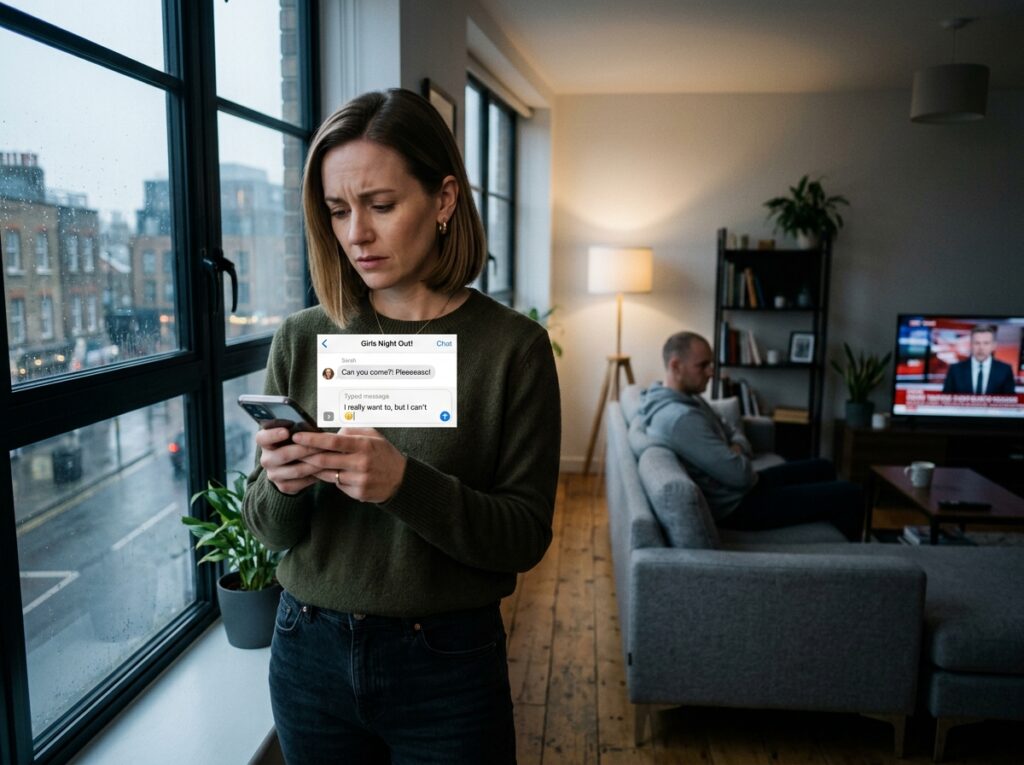
This rarely happens dramatically or all at once. It begins with small friction points: your partner seems unhappy when you make plans without them, expresses low-level jealousy when you spend time with friends, makes you feel vaguely guilty for choosing to do something independently. Over time, the path of least resistance becomes simply staying home, declining invitations, and letting friendships quietly fade.
Before long, your entire social and emotional world has narrowed to one person — the very person creating the conditions that made it narrow. This is a textbook element of emotional isolation, a pattern that relationship researchers and domestic abuse advocates consistently identify as one of the earliest and most reliable warning signs of a relationship moving in a dangerous direction.
Your right to an independent social life does not end when you share an address. A partner who genuinely loves you will encourage your friendships, support your independence, and feel secure in the relationship even when you’re not physically present. If that is not what you’re experiencing — pay attention.
Red Flag #5: Explosive Reactions to Ordinary Disagreements
Every couple disagrees. Conflict is a normal and even healthy part of sharing a life with another person. What is not normal — and what becomes impossible to ignore once you’re living together — is a partner whose response to ordinary disagreements is explosive, disproportionate, or frightening.
During dating, conflict is relatively limited and often easier to manage because both people can retreat to their own spaces afterward. Living together removes that buffer. And for partners who struggle with emotional regulation — or who use anger, intimidation, or emotional volatility as tools of control — cohabitation creates the conditions for those patterns to fully emerge.
Explosive reactions to small disagreements — raised voices over dishes, stonewalling that lasts days over minor decisions, or emotional outbursts that leave you walking on eggshells in your own home — are not signs of passion or intensity. They are signs of emotional dysregulation and, in some cases, of a temperament that poses a genuine risk to your emotional and physical safety.
Notice how your partner handles being told no. Notice how they respond when plans change unexpectedly, when something doesn’t go their way, or when you express a need they find inconvenient. The gap between how someone handles conflict in public during dating and how they handle it privately once you’re living together can be vast — and deeply revealing.
Related article: The 5 Love Languages Explained: Which One Are You?
Red Flag #6: Household Responsibilities Become Completely One-Sided
Domestic imbalance is one of the most commonly reported sources of resentment in cohabiting relationships — and it is a red flag that almost universally only becomes visible after the move. During dating, household responsibilities don’t exist as a shared dynamic. Once you’re living together, they become one of the clearest windows into how your partner views fairness, respect, and partnership.
A partner who consistently contributes nothing to the shared household — who never cleans, never cooks, never manages bills, never thinks about what the home needs without being asked — is not simply messy or forgetful. They are demonstrating, in daily, concrete terms, that they do not consider maintaining your shared life to be their responsibility.
This becomes especially significant when confronting it produces defensiveness, minimization, or promises that are never followed through on. A genuinely well-intentioned partner who struggles with domestic habits will respond to an honest conversation with acknowledgment and effort. A partner whose imbalance reflects a deeper belief that their needs and time are more important than yours will respond with excuses, irritation, or the kind of temporary change that disappears within days.
A relationship where one person carries the entire domestic weight of a shared life is not a partnership. It is a service arrangement — and one that breeds resentment with absolute reliability.
Red Flag #7: Emotional Intimacy Disappears Behind Closed Doors
There is a painful and confusing phenomenon that some people experience after moving in with a partner: the emotional intimacy that made the relationship feel so profound during dating quietly vanishes once they share a home. Conversations become logistical. Vulnerability dries up. The warmth, curiosity, and genuine interest each person showed in the other during courtship gives way to coexistence.
This is different from the natural deepening and evolving of intimacy in long-term relationships. This is the discovery that the emotional depth the relationship appeared to have was partially a product of distance, novelty, and limited time together — not a genuine capacity for sustained intimacy.
For some partners, closeness was easier to perform in limited doses than to genuinely sustain in the dailiness of shared life. When proximity removes the option of retreat, and when the excitement of new love stabilizes into reality, some people simply don’t know how to remain emotionally present — because they never truly were. If you find that living together has made you feel more alone than you ever did when you were apart, that feeling is not something to dismiss. It is data.
“Sharing a home should make you feel less alone in the world — not more. If it’s doing the opposite, that is not a small thing.”
Red Flag #8: Disrespect for Your Boundaries Becomes Routine
Boundaries that were respected during dating — your need for alone time, your personal space, your right to privacy, your comfort with certain behaviors in the home — can become targets of erosion once cohabitation begins. A partner who consistently dismisses, mocks, or simply ignores your stated boundaries is not someone who forgot them. They are someone who no longer feels the social pressure to honor them.
Boundary violations in cohabiting relationships often escalate gradually. It begins with something small — a partner who reads your phone without asking, who enters the bathroom without knocking, who makes decisions about your shared home without consulting you. Each individual violation feels minor. The cumulative pattern is anything but.
Your right to personal boundaries does not diminish because you share an address. A partner who cannot honor the space between “your life” and “our life” — who treats your privacy, autonomy, and personal limits as obstacles rather than legitimate needs — is showing you something important about how they view you as an individual within the relationship.
Red Flag #9: You Feel Like a Guest in Your Own Home
Perhaps the most telling red flag of all — and one that is almost impossible to fully articulate until you’ve experienced it — is the feeling of being a guest, an outsider, or an inconvenience in the home you share. This can manifest in obvious ways, like a partner whose family or friends are constantly present without your input, or whose ownership of the shared space leaves no room for your identity within it.
But it can also manifest in subtler, more psychological ways. Feeling afraid to express discomfort in your own home. Never quite relaxing because you’re always slightly braced for a reaction. Noticing that the home reflects one person’s preferences entirely and yours not at all. Feeling like your presence is tolerated rather than celebrated.
A shared home should feel like a sanctuary for both people. It should be a place where both partners feel safe, comfortable, and genuinely at home. When it becomes a place where one person’s comfort is consistently prioritized at the expense of the other’s — where one person shrinks to accommodate the other’s dominance of the shared space — the living arrangement is not a partnership. It is an imbalance that will quietly but surely damage your sense of self if left unaddressed.

What to Do If You Recognize These Red Flags
Recognizing red flags after moving in together is complicated by the fact that leaving is now logistically, financially, and emotionally more complex than it was during dating. The shared lease, the merged finances, the intertwined routines — all of it creates inertia that can make staying feel like the easier choice, even when everything inside you is signaling that something is seriously wrong.
But recognizing a red flag is not a reason to panic — it is an invitation to respond with clarity and intention. Start by naming what you’re observing, both to yourself and, where it is safe to do so, to your partner. Some behaviors can shift when named directly and met with genuine accountability from a partner who is willing to do the work.
If direct conversation is met with denial, escalation, or retaliation — or if you feel unsafe having it — that response is itself a red flag of the highest order. In those situations, reaching out to a therapist, a trusted friend, or a professional support service is not weakness. It is the most powerful form of self-advocacy available to you.
You deserve a relationship where coming home feels like relief — not like bracing for what comes next.
💾 Save this article — share it with yourself as a reminder that your instincts deserve to be taken seriously.
📤 Share it with a friend who just moved in with their partner, or who has been quietly describing a situation that sounds like this.
👣 Follow Truthsinside.com for more honest, deeply researched relationship content that helps you see clearly — even when love makes it hard to.
📃 Related article: 15 Subtle Red Flags in a New Relationship Most People Miss
FAQ: Red Flags After Moving In Together
Q1: Is it normal for a relationship to change after moving in together?
Yes — some change is completely normal. Living together reveals the everyday reality of both people, which naturally shifts the dynamic from dating to something deeper and more complex. The key distinction is whether the changes reveal genuine incompatibilities or concerning behaviors, versus simply the natural adjustment of two people learning to share a life. Normal adjustment involves mutual effort, communication, and goodwill. Red flags involve patterns of disrespect, control, or deception.
Q2: How soon do red flags typically appear after moving in together?
Most cohabitation red flags begin surfacing within the first three to six months, though some may appear sooner — particularly those related to finances, domestic habits, and emotional regulation. The timeline varies based on how long the couple dated before moving in and how effectively one or both partners were able to manage impressions during the dating phase.
Q3: Can a relationship recover if red flags appear after moving in together?
It depends entirely on the nature of the red flag and whether both partners are genuinely willing to address it. Domestic imbalance, communication issues, and effort gaps can often be addressed through honest conversation and couples counseling. Red flags involving controlling behavior, financial deception, emotional abuse, or boundary violations require more serious evaluation — and in some cases, the appropriate response is not to fix the relationship but to safely exit it.
Q4: What if I’m not sure whether what I’m experiencing is a red flag or just an adjustment period?
Trust the consistency of what you’re observing. A difficult adjustment period typically involves both people struggling to adapt, both expressing goodwill, and things gradually improving with effort and communication. Red flags, by contrast, tend to be one-sided, consistent, and resistant to genuine improvement. If you’ve expressed a concern clearly and nothing changes — or things get worse — that is a meaningful signal worth taking seriously.
Q5: Should I move out if I notice red flags after moving in together?
Not necessarily — but do not let the logistical complexity of moving out prevent you from honestly assessing what is happening in the relationship. If the red flags you’re observing involve your emotional or physical safety, leaving should be the priority regardless of the practical difficulties involved. If the situation feels more ambiguous, couples counseling — ideally with a therapist who specializes in relationship dynamics — can help you gain clarity about whether the relationship has genuine potential or whether the red flags you’re seeing represent something that cannot and will not change.
🎵 Music
Maren Lull is a singer-songwriter who writes from the places most people don’t talk about out loud.
Not the dramatic grief. Not the obvious heartbreak. The quiet kind — the ordinary Tuesday emptiness, the habit of reaching for someone who isn’t there anymore, the particular exhaustion of being strong for so long that the strength itself wears thin.
Her music lives at the intersection of emotional honesty and soft beauty — breathy vocals over gentle piano, slow tempos, lyrics that feel less like songs and more like something you wrote in a private notebook at two in the morning and never showed anyone.
Maren Lull writes for the people who feel everything deeply and say very little about it. For the ones who listen to sad music not because they want to feel worse — but because being understood, even by a song, makes the feeling easier to carry.
📱 Follow Maren Lull:
→ Spotify
→ Apple Music
→ Youtube
→ Audiomack