

She Played a Superhero on Screen. Behind the Camera, She Was Fighting a Very Real Battle That Almost Broke Her.
Most people who watch a television show never think about what it costs the actors to make it. The lights, the cameras, the performances — they appear seamless, effortless, the product of talent rather than sacrifice. But behind almost every great performance is a story that the audience never sees. For Erin Moriarty Graves disease The Boys fans are only now learning about — that hidden story is one of extraordinary physical suffering, remarkable willpower, and a commitment to craft that borders on the heroic. According to the American Thyroid Association, Graves’ disease affects approximately 1 in 200 people in the United States, making it the most common cause of hyperthyroidism.
It is a serious, life-altering autoimmune condition. Erin Moriarty lived with it — in secret, on set, through five full seasons of one of television’s most demanding productions.

Erin Moriarty Graves Disease The Boys: How the Secret Finally Came Out
The revelation came on June 30th, during an episode of the Messy podcast hosted by Jamie-Lynn Sigler and Christina Applegate — two women who have themselves navigated serious health challenges in the public eye. Sigler has lived with multiple sclerosis since her twenties. Applegate was diagnosed with MS in 2021. The podcast, by its very nature, creates a space for honest, unfiltered conversations about health, identity, and the experience of living with chronic illness — particularly for women in the entertainment industry.
It was in that space — one built on vulnerability and mutual understanding — that Erin Moriarty chose to share what she had been carrying privately for years. She disclosed that she had been battling Graves’ disease throughout the filming of The Boys, across all five seasons of the Amazon Prime Video series. The condition — an autoimmune disorder in which the immune system attacks the thyroid gland, causing it to overproduce hormones — had been affecting her in ways that were invisible to the camera but deeply felt by the woman behind the performance.
The choice of venue was significant. Moriarty did not make this revelation in a traditional press junket interview or in a carefully controlled magazine profile. She shared it in a conversation with two women who understand chronic illness from the inside — which gave her both the freedom and the context to be genuinely honest about what she had experienced.
📃 Related article: Taylor Swift Bridal Style Moments Stunningly Revealed
What Is Graves’ Disease and Why Does It Matter?
To fully appreciate the gravity of what Erin Moriarty endured during the filming of The Boys, it is important to understand what Graves’ disease actually is and what living with it demands of a person. Graves’ disease is an autoimmune condition in which the body’s immune system mistakenly attacks the thyroid gland, causing it to produce excessive amounts of thyroid hormone — a state known as hyperthyroidism.
The symptoms of Graves’ disease are wide-ranging and can be severely debilitating. They include rapid or irregular heartbeat, extreme fatigue, anxiety, tremors, weight loss, heat intolerance, and in some cases, eye problems that can affect vision. The condition can also significantly compromise the immune system, making the body more vulnerable to secondary infections and complications.
For an actor working on a high-production television series — with long shooting days, physical demands, emotional intensity, and the constant pressure of performance — managing Graves’ disease without disruption to work would be an extraordinary challenge under even the best circumstances. That Moriarty did so for five full seasons, without public disclosure, speaks to a level of dedication and endurance that is difficult to fully comprehend.

The Staph Infection: When the Body Reached Its Limit
As serious as Graves’ disease is on its own, the most viscerally striking element of Moriarty’s health disclosure was the account of what happened when her already compromised immune system was pushed past its limits. During filming — in a period when her body was severely run-down from managing the autoimmune condition — Moriarty developed a severe staph infection.
Staphylococcal infections, caused by the Staphylococcus aureus bacteria, range from relatively minor skin irritations to life-threatening systemic infections. In someone whose immune system is already compromised by an autoimmune condition like Graves’ disease, a staph infection can escalate quickly and become extremely dangerous. For Moriarty, the infection manifested in a way that was both physically agonizing and practically debilitating: it caused swelling in her armpit so severe that she described it as a “second head” — a vivid, almost unimaginable image that communicates the scale of what she was dealing with more effectively than any clinical description could.
The infection rendered her right arm effectively immobile. She could not move it properly. She was in significant pain. And yet — and this is the part of the story that demands the most attention — she did not stop filming.
📃 Related article: Jodie Turner-Smith Co-Parenting Reality Boldly Revealed
Filming a Night Shoot With a “Second Head” in Her Armpit
The specific incident that Moriarty described on the Messy podcast is one of the most striking accounts of on-set physical endurance in recent Hollywood memory. Despite the staph infection, despite the immobility in her right arm, despite the swelling that she compared to a second head growing from her armpit, she performed a night shoot.
The scene involved her co-star Jack Quaid, who plays Hughie Campbell — the central love interest to Moriarty’s character Annie January, also known as Starlight, across the series. The precise nature of the scene was not elaborated upon in detail, but the fact that Moriarty performed it in this condition — maintaining the physical and emotional requirements of a scene opposite her co-star while managing an acute infection and significant pain — is remarkable by any measure.
What makes this account particularly powerful is the matter-of-fact way in which Moriarty appears to have approached the situation at the time. She did not describe a dramatic on-set confrontation or a moment of crisis that required intervention. She pushed through. She completed the shoot. She did what the job required, and she carried the physical cost of that decision in private.

“Erin Moriarty performed a night scene on The Boys with a staph infection, a swollen arm, and what she described as a ‘second head’ in her armpit. The camera captured Starlight. It had no idea who was actually standing there.”
Erin Moriarty Graves Disease The Boys: Five Seasons of Hidden Suffering
The timeline of Moriarty’s health struggle is what elevates this story beyond a single dramatic incident. This was not an isolated bad day on set. This was not a one-time health scare that she recovered from quickly and moved past. The Erin Moriarty Graves disease The Boys story spans the entire run of the series — all five seasons, from the show’s debut through its conclusion.
The Boys is not a gentle production. The show is known for its intense content, its complex emotional demands, and its physically challenging sequences. Playing Annie January — a character who undergoes tremendous personal and moral evolution across the series, who faces violence, betrayal, and profound existential crisis — requires enormous reserves of emotional and physical energy. Moriarty was doing all of that while managing a serious autoimmune condition that depletes exactly those reserves.
The fact that her performance remained powerful, nuanced, and critically praised throughout all five seasons — with viewers and critics consistently highlighting her work as one of the show’s greatest strengths — is a testament to what she was able to compartmentalize and overcome. The audience watching Starlight had no idea what Erin Moriarty was carrying to get there.
📃 Related article: Blac Chyna Cosmetic Surgery Honest Reversal Revealed
“Suffering for Her Art”: Moriarty’s Philosophy of Endurance
In her conversation on the Messy podcast, Moriarty reflected on her experience with autoimmune illness not merely as a hardship to be survived but as something that had become integral to her identity as an artist. She spoke about a mindset of enduring pain for her art — of embracing the suffering as part of the creative process rather than resisting it as an obstacle to be managed.
This philosophy — suffering for one’s art — is one of the most complicated and contested ideas in the creative world. On one hand, it speaks to a genuine and admirable commitment to craft, a willingness to give everything in service of a performance. On the other hand, it raises important questions about the expectations placed on performers, particularly in high-pressure television productions, and about the degree to which suffering should ever be normalized as a prerequisite for artistic excellence.
Moriarty’s framing of her experience in these terms is not a criticism to be leveled at her. It is, rather, a window into the mindset that allowed her to keep going when her body was telling her to stop. She found meaning in the endurance. She transformed a deeply difficult experience into something that felt purposeful. That is a genuinely human response to suffering — and it is one that deserves to be honored even as we acknowledge that no one should have to suffer silently in order to do their job.

The Messy Podcast: A Space Built for This Kind of Truth
The context of Moriarty’s revelation is inseparable from the impact it had. The Messy podcast, hosted by Jamie-Lynn Sigler and Christina Applegate, exists specifically as a space for conversations about chronic illness, health struggles, and the experience of living with conditions that the entertainment industry rarely acknowledges openly.
Sigler, diagnosed with multiple sclerosis in her twenties, has spoken extensively about the challenge of maintaining a performance career while managing a progressive neurological condition. Applegate, who went public with her own MS diagnosis in 2021, brought that same lived experience to the podcast. Together, they have created a platform that gives guests — particularly women in entertainment — permission to be completely honest about what their bodies have put them through.
That environment clearly gave Moriarty the safety and the context she needed to share her story. The Messy podcast is not the kind of space where a guest offers a polished, managed version of their experience. It is a space where the full, complicated, sometimes ugly truth is welcomed. And Moriarty’s account of her Graves’ disease, her staph infection, and her night shoot with a swollen arm was exactly the kind of full truth that the podcast was designed to receive.
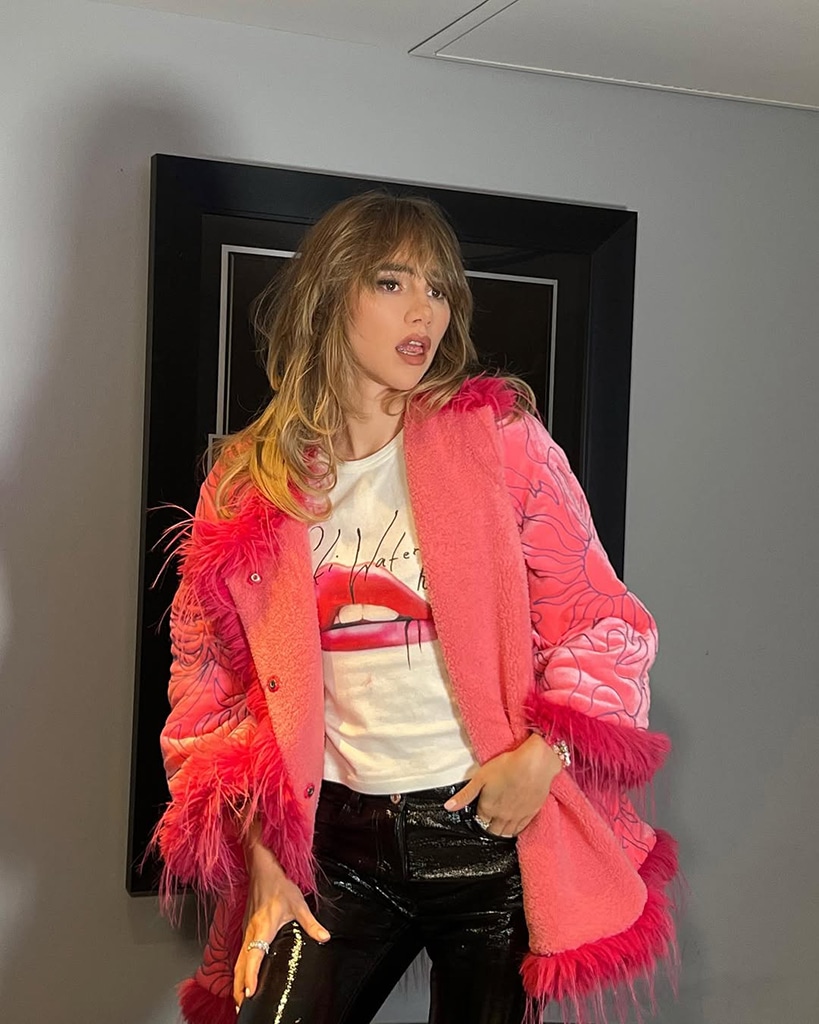
“The Messy podcast gave Erin Moriarty something that most celebrity interviews never offer: a room full of people who already know what it feels like to perform through pain — and who weren’t going to flinch at what she had to say.”
Jack Quaid and the Scene Nobody Knew Was Happening Under Those Conditions
Jack Quaid — who plays Hughie Campbell, Starlight’s central love interest across the series — was Moriarty’s scene partner during the night shoot she described. It is not known whether Quaid was aware at the time of the full extent of what Moriarty was dealing with. The account suggests a degree of private suffering that her co-star may not have fully understood in the moment.
This raises a quietly interesting question about the nature of on-set relationships and the degree to which actors share or conceal their physical struggles from their colleagues. Moriarty’s account implies that she managed her condition with a significant degree of privacy — not just from the public, but from the immediate environment of the set. The performance she delivered in that night shoot was not accompanied by visible distress that would have made her situation obvious.
Quaid’s work as Hughie throughout the series has been celebrated in its own right — his chemistry with Moriarty a consistent highlight of the show. The knowledge that at least some of that chemistry was generated under the conditions Moriarty has now described adds an entirely new layer to the audience’s understanding of what was happening on screen.

What Moriarty’s Story Reveals About the Invisible Cost of Television
The Erin Moriarty Graves disease The Boys story is, at its most essential, a story about invisibility. About the things that happen behind the camera that the audience is never meant to see. About the physical and emotional costs of performance that are absorbed privately so that what reaches the viewer is clean, complete, and seemingly effortless.
This invisibility is not unique to Moriarty’s experience. Countless actors have worked through illness, injury, grief, and personal crisis to deliver performances that gave no indication of what they were carrying. But Moriarty’s account is particularly vivid — the image of the “second head,” the immobile arm, the night shoot — and it arrives at a cultural moment when audiences are increasingly interested in the full story behind the content they consume.
There is a growing conversation in the entertainment industry about the duty of care owed to performers, about the culture of pushing through that has long been normalized on sets, and about what a more humane approach to production might look like. Moriarty’s story contributes meaningfully to that conversation — not as a condemnation of any particular production, but as an honest account of what one actor experienced in service of a show that millions of people loved.

FAQ: Erin Moriarty, Graves Disease, and The Boys
1. What health condition did Erin Moriarty reveal she had during The Boys?
Erin Moriarty revealed on the June 30th episode of the Messy podcast that she had been battling Graves’ disease — a serious autoimmune condition affecting the thyroid gland — throughout the filming of all five seasons of The Boys.
2. What is Graves’ disease and how does it affect the body?
Graves’ disease is an autoimmune disorder in which the immune system attacks the thyroid gland, causing it to overproduce thyroid hormone. Symptoms include extreme fatigue, rapid heartbeat, anxiety, tremors, weight loss, and a compromised immune system that makes the body more susceptible to secondary infections.
3. What happened with Erin Moriarty’s staph infection during filming?
Moriarty’s compromised immune system — weakened by Graves’ disease — led to a severe staph infection during production. The infection caused extreme swelling in her armpit, which she described as resembling a “second head,” and rendered her right arm effectively immobile. Despite this, she continued filming, including a night shoot with co-star Jack Quaid.
4. Which podcast did Erin Moriarty share her health story on?
Moriarty shared her experience on the Messy podcast, hosted by Jamie-Lynn Sigler and Christina Applegate — both of whom live with multiple sclerosis and have created the podcast as a space for honest conversations about chronic illness in the entertainment industry.
5. Who is Jack Quaid and what is his connection to this story?
Jack Quaid plays Hughie Campbell in The Boys — the central love interest to Moriarty’s character Annie January, also known as Starlight. He was Moriarty’s scene partner during the night shoot she described filming while suffering from the staph infection and arm immobility.
Final Thoughts: The Superhero Was Real All Along
Annie January spent five seasons of The Boys learning what it truly means to be a hero — not in the sense of having powers, but in the sense of choosing to keep going when everything inside you is telling you to stop. It is one of the show’s most resonant themes, and one of the reasons Moriarty’s performance connected so deeply with audiences.
The Erin Moriarty Graves disease The Boys revelation reframes that theme entirely. She was not just playing a character who endures. She was enduring. Every scene, every season, every long night on set was completed by a woman whose body was working against her in ways that her audience never knew and her character never reflected.
That is not just good acting. That is extraordinary human perseverance. And now that the world knows what it cost her, every scene of Annie January’s journey carries the weight of a truth that makes it more powerful than it already was.
Erin Moriarty did not just play a superhero. In every sense that actually matters, she was one.
💾 Save this article for the next time someone asks you what real dedication to a craft looks like.
📤 Share it with every Boys fan who deserves to know the full story behind the performance they loved.
👉 Follow Truthsinside.com for the celebrity stories that go deeper than the headlines and tell the truth that matters.
🎵 Music
Maren Lull is a singer-songwriter who writes from the places most people don’t talk about out loud.
Not the dramatic grief. Not the obvious heartbreak. The quiet kind — the ordinary Tuesday emptiness, the habit of reaching for someone who isn’t there anymore, the particular exhaustion of being strong for so long that the strength itself wears thin.
Her music lives at the intersection of emotional honesty and soft beauty — breathy vocals over gentle piano, slow tempos, lyrics that feel less like songs and more like something you wrote in a private notebook at two in the morning and never showed anyone.
Maren Lull writes for the people who feel everything deeply and say very little about it. For the ones who listen to sad music not because they want to feel worse — but because being understood, even by a song, makes the feeling easier to carry.
📱 Follow Maren Lull:
→ Spotify
→ Apple Music
→ Youtube
→ Audiomack