He Built One of Television’s Most Consistent Characters Over a Decade. Now He Is Leaving — and the Story They Gave Him Is Perfect.
There is something uniquely bittersweet about watching a character you have followed for over a decade prepare to walk out of the story for the last time. Television relationships between audiences and long-running characters are some of the most quietly powerful connections in popular culture — built not in a single viewing but across hundreds of hours, season after season, year after year. The LaRoyce Hawkins Chicago PD exit after thirteen seasons is that kind of moment. According to a 2023 Nielsen report, long-running procedural dramas consistently rank among the most-watched television genres in the United States, with loyal viewers returning season after season in numbers that few other formats can match.
Chicago PD, which premiered on NBC in 2014, has been one of the genre’s defining successes — and LaRoyce Hawkins has been part of it from the very first episode.

LaRoyce Hawkins Chicago PD Exit: The Announcement That Ends an Era
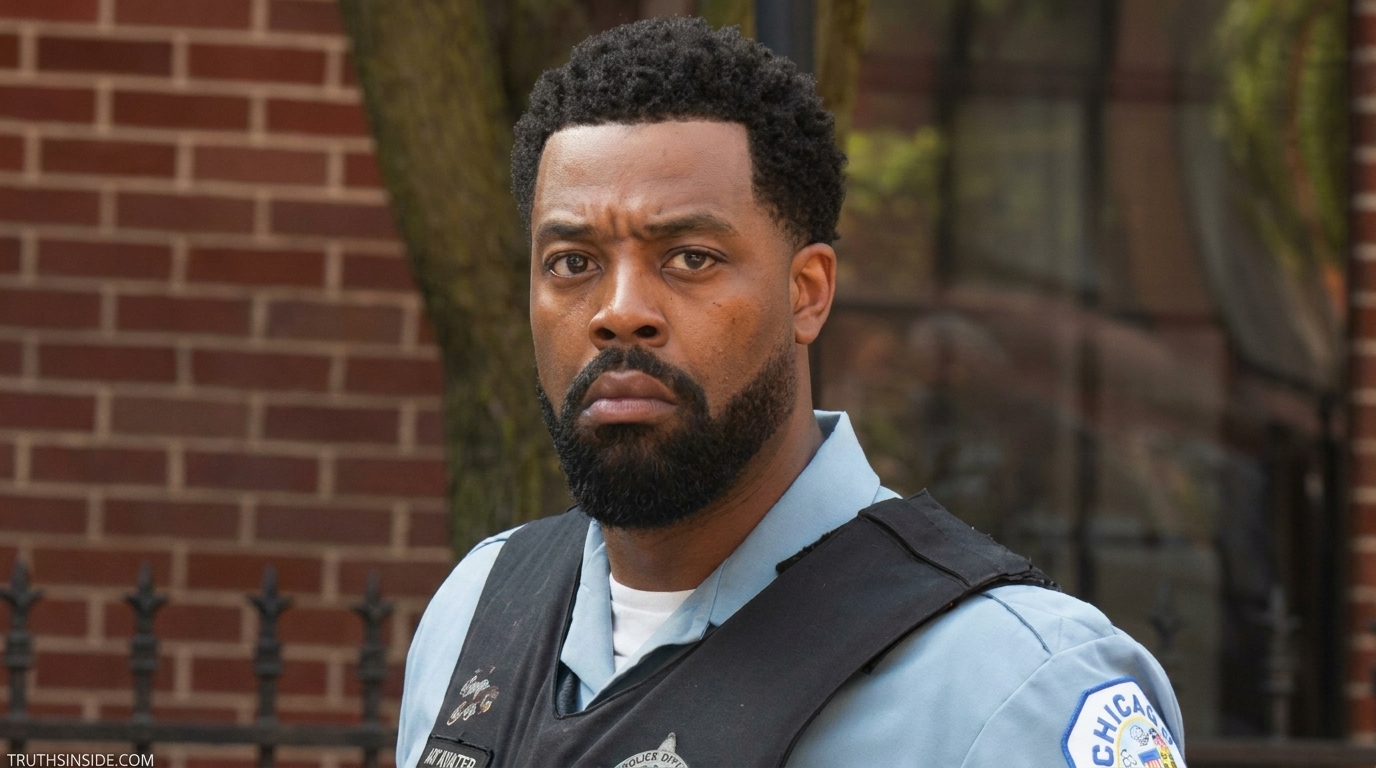
The news that LaRoyce Hawkins would be departing Chicago PD after thirteen seasons landed with the particular weight that only a truly long-running character departure can generate. Hawkins has played Officer Kevin Atwater since the show’s premiere in 2014 — making him one of the longest-serving members of the original cast and one of the most consistent presences in the Chicago PD universe.
His exit was not announced with the kind of abrupt finality that sometimes accompanies cast departures from long-running series. Instead, the show made clear that Atwater’s story would be handled with care — that the character would appear in multiple episodes at the start of Season 14 to provide genuine narrative closure before his final departure from the screen. That commitment to closure is significant. It tells viewers that this is not an exit driven by behind-the-scenes conflict or contractual complications. It is a carefully planned farewell designed to honor both the character and the audience that has spent thirteen seasons caring about him.
Thirteen Seasons: The Rarity and Weight of That Number
Before examining the specifics of how Officer Atwater’s story concludes, it is worth pausing to appreciate the genuine rarity of what LaRoyce Hawkins accomplished. Thirteen seasons on a single network drama is an extraordinary achievement — one that places Hawkins in a small and distinguished group of television actors who have maintained a consistent presence on a single show for that length of time.
Television is, by its nature, an unstable medium. Shows are cancelled. Characters are written out. Contracts expire and are not renewed. Creative directions shift. Cast members move on to other opportunities. The forces working against any single actor remaining on any single show for thirteen seasons are numerous and relentless. The fact that Hawkins and the showrunners of Chicago PD maintained their partnership across that entire span reflects a combination of genuine talent, professional dedication, and a character whose story remained compelling and relevant season after season.
For Hawkins personally, the longevity of the role has been transformative. He has spoken about the confidence that portraying Kevin Atwater across thirteen seasons has built within him — describing it as the most confidence-building experience of his career. Consistency of that kind, in a profession defined by uncertainty and transition, is not something to be taken lightly. It is, in many ways, the foundation on which an acting career is built.

Who Is Officer Kevin Atwater? A Character Portrait
To fully appreciate the significance of the LaRoyce Hawkins Chicago PD exit, it helps to understand who Kevin Atwater is — not just as a plot function within the show but as a character whose thirteen-season arc has given him real depth and genuine audience connection.
Atwater entered Chicago PD as a young, idealistic officer navigating the moral complexities of law enforcement in a major American city. Over thirteen seasons, he grew into one of the most fully realized characters in the One Chicago universe — a man whose commitment to justice was repeatedly tested by the gap between the law as written and justice as lived, particularly in the context of race, community, and the specific pressures facing Black officers within a predominantly white institution.
Those storylines — often challenging, sometimes uncomfortable, always honest — gave Hawkins material that demanded real craft and real emotional intelligence. The fact that Atwater’s final storyline centers not on a case or a confrontation but on love, impending fatherhood, and the decision to follow his heart to a new city is a reflection of how much the character grew across thirteen seasons. He arrived as a cop. He leaves as a man with a full life — a life that, ultimately, called him away from Chicago.
The Love Story That Became the Exit: Officer Tasha Fox
The narrative mechanism through which the LaRoyce Hawkins Chicago PD exit is being executed is both dramatically satisfying and genuinely moving. In Season 13, Atwater began a romantic relationship with Officer Tasha Fox — a storyline that gave one of the show’s most consistently serious characters a new kind of emotional dimension.
The relationship with Fox developed with the kind of care and authenticity that long-running television does best — building slowly, grounded in the shared experience of two people who understand the particular demands and dangers of the work they do. Atwater and Fox were not just two people falling in love. They were two officers navigating a relationship within a profession that does not make love easy.
Then Fox moved to Miami for a new job. The professional pull of a significant career opportunity took her away from Chicago — and away from Atwater, at a moment when their relationship was still finding its footing across the distance. The revelation that Fox is pregnant with Atwater’s child transforms that long-distance situation into something far more consequential. It is no longer simply a question of whether a relationship can survive geography. It is a question of what kind of father Atwater wants to be — and whether being that father requires him to be present in Florida rather than working a beat in Chicago.

“Kevin Atwater’s exit from Chicago PD is not a story about a cop leaving the force. It is a story about a man choosing his child — and in doing so, finally putting something above the badge.”
LaRoyce Hawkins Chicago PD Exit: The Florida Decision and What It Means
The suggestion embedded in the Season 13 storyline — that Atwater may leave Chicago entirely to join Fox and their unborn child in Florida — is a narrative choice that deserves specific attention. It is, in the context of this character and this show, exactly the right ending.
Kevin Atwater has spent thirteen seasons being defined by his commitment to Chicago. To his community. To the people on his beat. To the institution he served even when that institution failed to fully see or protect him. His loyalty to the city was never incidental — it was central to who he was. Asking audiences to accept that he would leave Chicago required a reason commensurate with that depth of commitment. An unborn child and the woman he loves provide exactly that reason.
This is not a character abandoning his values. This is a character expanding them — recognizing that the loyalty and dedication he brought to his work can be redirected toward a family, that the care he showed for his community can begin with the child he is about to bring into the world. Atwater leaving Chicago is not a diminishment of who he has always been. It is an evolution of it.
The Florida setting adds a particular texture to the departure. Miami represents not just geographical distance from Chicago but a completely different environment — warmer, different in character, far from the streets and the precinct that defined the first thirteen seasons of his adult life. It is a clean break, in the most literal sense. A new chapter that looks nothing like the previous ones.
How Season 14 Will Handle the Goodbye
The decision to give Kevin Atwater multiple episodes at the start of Season 14 to conclude his storyline is a creative choice that reflects genuine respect for both the character and the audience. In an era when significant cast departures are sometimes handled abruptly — a single farewell episode, or worse, an off-screen explanation — the Chicago PD showrunners appear committed to giving Atwater the send-off he has earned.
Multiple episodes means time. Time for the character to process the decision he is making. Time for his colleagues to respond to his departure. Time for the relationships he has built over thirteen seasons — with Voight, with the team, with the precinct that has been his home — to be acknowledged and honored before they are left behind. Time for the audience to say goodbye properly.
This approach also gives Hawkins himself the opportunity to close the chapter of his career that Atwater represents with the same care and intention with which he opened it. He has spent thirteen years building this character. A multi-episode departure gives him the space to do justice to that investment — to bring Atwater’s story to a conclusion that feels complete rather than truncated.

LaRoyce Hawkins on What Chicago PD Gave Him
Among the most affecting elements of the LaRoyce Hawkins Chicago PD exit story is what Hawkins himself has said about what portraying Kevin Atwater for thirteen seasons has meant to him personally and professionally. His reflections are not the standard, gracious-but-guarded departure statements that actors often issue when leaving long-running shows. They are genuine, specific, and revealing.
Hawkins has described Chicago PD as the most confidence-building experience of his acting career. That framing is significant. Not the most lucrative. Not the most high-profile. The most confidence-building. For an actor, confidence is the foundation of everything — the ability to commit fully to a character, to make bold choices, to bring genuine vulnerability to difficult material without flinching. The fact that thirteen seasons as Kevin Atwater gave Hawkins that foundation says something important about both the quality of the material and the depth of his engagement with it.
He has also spoken about the value of longevity and consistency — of having a role that allowed him to return, season after season, to a character whose growth he was actively shaping. Acting, in its most common forms, is a profession of discontinuity. Auditions, short projects, brief character appearances, and then the search for the next thing. Thirteen seasons on a single show is the antithesis of that experience — a sustained, deepening engagement with a single human being’s life across more than a decade. That kind of continuity is rare, and Hawkins understands its value.
The Chicago PD Legacy: What Atwater’s Departure Means for the Show
Beyond the personal significance to Hawkins, the LaRoyce Hawkins Chicago PD exit represents a significant moment for the show itself. Atwater is one of the last remaining members of the original Season 1 cast — his departure marks a genuine generational shift in the series.
Long-running television shows face a particular challenge as they age: the tension between continuity and renewal. Audiences who have followed a show for thirteen seasons are deeply invested in its familiar elements. They have formed emotional attachments to specific characters, specific relationships, specific rhythms of storytelling. Removing a foundational element — particularly one as central as Atwater has been — risks disrupting those attachments in ways that are difficult to repair.
At the same time, shows that refuse to evolve — that protect familiar elements at the expense of genuine storytelling development — risk stagnation. The creative challenge is to handle departures in ways that honor the past while creating genuine space for the future. The multi-episode Season 14 closure for Atwater suggests that Chicago PD is approaching this challenge thoughtfully.

“LaRoyce Hawkins spent thirteen seasons making Kevin Atwater one of television’s most consistently compelling law enforcement characters. His exit deserves — and appears to be receiving — exactly the care that tenure demands.”
What Hawkins Does Next: A Career Built on a Solid Foundation
The LaRoyce Hawkins Chicago PD exit is, professionally speaking, a transition rather than an ending. The confidence and craft that thirteen seasons of playing Kevin Atwater have built within him represent a foundation that any actor would be fortunate to carry into the next chapter of their career.
Hawkins arrives at this transition as a known quantity — a recognized face with a thirteen-year record of consistent, quality work on one of network television’s most successful procedural dramas. That resume opens doors. It generates casting conversations. It establishes credibility that is difficult to build any other way than through exactly the kind of sustained, serious engagement with a single character that Hawkins has demonstrated across the run of Chicago PD.
What comes next for him is not yet known. But given everything he has brought to Kevin Atwater over thirteen seasons — the nuance, the moral seriousness, the emotional intelligence, the physical commitment to the character’s journey — it seems safe to say that whatever project he chooses next will benefit from everything that Chicago PD gave him.

FAQ: LaRoyce Hawkins Chicago PD Exit and Kevin Atwater’s Farewell
1. Why is LaRoyce Hawkins leaving Chicago PD?
LaRoyce Hawkins is departing Chicago PD after thirteen seasons. While specific behind-the-scenes reasons have not been publicly detailed, his character Kevin Atwater’s exit is being handled through an in-story narrative — the character is expected to leave Chicago to be with Officer Tasha Fox and their unborn child in Florida.
2. Will Kevin Atwater appear in Season 14 of Chicago PD?
Yes. LaRoyce Hawkins will appear in multiple episodes at the start of Season 14 to provide narrative closure to Atwater’s storyline before his final departure from the series.
3. What happened to Officer Tasha Fox on Chicago PD?
Officer Tasha Fox, Atwater’s romantic partner introduced in Season 13, relocated to Miami for a new job opportunity. She was subsequently revealed to be pregnant with Atwater’s child — a development that sets up the possibility of Atwater leaving Chicago to join her and their unborn child in Florida.
4. How long did LaRoyce Hawkins play Kevin Atwater on Chicago PD?
LaRoyce Hawkins played Officer Kevin Atwater for thirteen seasons, from the show’s premiere in 2014 through Season 13. He will also appear in early Season 14 episodes before the character’s final exit.
5. What has LaRoyce Hawkins said about his time on Chicago PD?
Hawkins has expressed deep gratitude for his tenure on the show, describing it as the most confidence-building role of his career. He has emphasized the value of the longevity and consistency the role provided and credited his time on Chicago PD with significant personal and professional growth.
Final Thoughts: Thirteen Seasons, One Extraordinary Character
The LaRoyce Hawkins Chicago PD exit is, at its core, a story about what it means to fully inhabit a character for long enough that the character becomes genuinely part of the culture — part of the weekly rhythm of millions of viewers’ lives, part of the ongoing conversation about law enforcement, justice, race, and community that Chicago PD has always tried to engage.
Kevin Atwater arrived in 2014 as a young officer with something to prove. He leaves — or will leave, in the early episodes of Season 14 — as a man who has proven it, many times over, and who is now choosing something that matters more than the badge: a family, a child, a life in a new city with the woman he loves.
LaRoyce Hawkins built that character season by season, scene by scene, with a consistency and a commitment that thirteen years on one of network television’s biggest shows demands. The confidence he says it gave him was earned. The farewell he and the character are receiving is deserved.
Chicago PD will continue. But the precinct will be a different place without Kevin Atwater in it. And for thirteen seasons of reasons, that absence will be felt.
💾 Save this article for every Chicago PD fan who needs to process this goodbye properly.
📤 Share it with someone who has been watching Kevin Atwater’s journey since Season 1 and deserves the full story.
👉 Follow Truthsinside.com for the most complete, thoughtful coverage of your favorite TV shows and the stars who make them.
🎵 Music
Maren Lull is a singer-songwriter who writes from the places most people don’t talk about out loud.
Not the dramatic grief. Not the obvious heartbreak. The quiet kind — the ordinary Tuesday emptiness, the habit of reaching for someone who isn’t there anymore, the particular exhaustion of being strong for so long that the strength itself wears thin.
Her music lives at the intersection of emotional honesty and soft beauty — breathy vocals over gentle piano, slow tempos, lyrics that feel less like songs and more like something you wrote in a private notebook at two in the morning and never showed anyone.
Maren Lull writes for the people who feel everything deeply and say very little about it. For the ones who listen to sad music not because they want to feel worse — but because being understood, even by a song, makes the feeling easier to carry.
📱 Follow Maren Lull:
→ Spotify
→ Apple Music
→ Youtube
→ Audiomack