The Magic You See on Screen Is Only Half the Story
There is something universally captivating about Disney characters. Whether it’s the spine-tingling cackle of a villain or the quiet grace of a beloved princess, these roles live rent-free in our hearts for decades. But what actually happens behind the camera? What does it feel like to slip into a cape of darkness or a gown of goodness and breathe life into a character that millions of people grew up loving? The Disney villains and heroes actors behind some of the most iconic roles in entertainment history are pulling back the curtain — and what they reveal is surprising, deeply personal, and genuinely magical.
Research shows that audience emotional attachment to Disney characters is among the strongest of any entertainment franchise globally, and it’s not hard to see why once you understand the craft behind the performance.
This is the full inside story.
From Rivals to Allies: How Character Dynamics Have Evolved
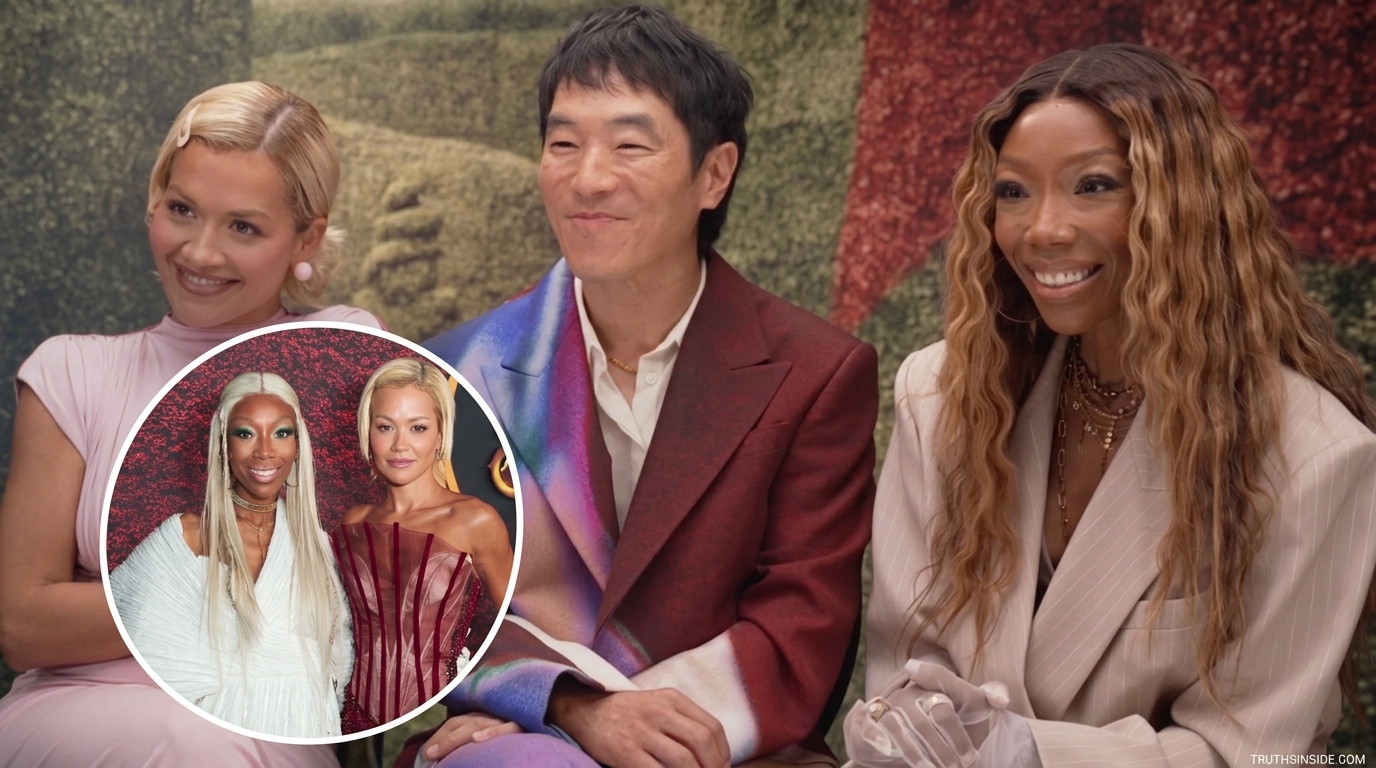
One of the most striking revelations from the actors involved in the latest Disney project is how dramatically the relationships between their characters have shifted from previous installments.
In earlier chapters of these beloved stories, characters like the Queen of Hearts and Cinderella existed in entirely separate worlds — one draped in menace, the other in warmth and hope. Conflict, or at least distance, was the default. But in this new production, something different was asked of the performers: to find friendship, alliance, and genuine camaraderie between characters who were once on opposite ends of the moral spectrum.
For the actors, this shift wasn’t just a narrative choice — it was an acting opportunity. More shared scenes meant more time to build real on-screen chemistry. It meant discovering unexpected tenderness between characters who were never supposed to get along. And it meant that both the villain and the hero had to stretch beyond their archetypal boundaries to meet somewhere in the middle.
The result, by all accounts from the cast, is something richer and more emotionally resonant than what came before.

Disney Villains and Heroes Actors on the Art of Playing Both Sides
When you ask actors which they prefer — playing the villain or the hero — the answer is almost always the same. And in conversations surrounding this Disney production, that pattern held true.
Playing a villain, the actors explained, offers a kind of creative freedom that heroic roles rarely provide. There’s an inherent permission to go bigger, bolder, and darker. Motivations can be murky and complex. The character’s journey doesn’t have to end in redemption. There’s room to explore the full spectrum of human — or in Disney’s case, fantastical — psychology.
“Playing antagonists was described as more exciting due to the depth and motivation behind their actions” — and it’s easy to understand why. A villain who simply wants to destroy is boring. But a villain who believes, with absolute conviction, that they are right? That’s a character worth inhabiting.
But the actors were equally thoughtful about the challenge of playing heroes. Cinderella, for example, is a role that carries enormous cultural weight. She is goodness personified — kind, patient, resilient. And therein lies the acting trap: how do you make pure goodness feel three-dimensional and human rather than flat and saintly?
The answer, according to the performers, lies in finding the quiet complexity beneath the virtue. The moments of doubt. The small choices. The vulnerability inside the grace.
📃 Related article:Tom Hanks Taylor Swift Wedding: Brilliant Advice Revealed
The Queen of Hearts: Good, Evil, and Everything Between
Perhaps no character in this production exemplifies the blurred line between hero and villain better than the Queen of Hearts.
Traditionally, the Queen of Hearts is a figure of terror — imperious, irrational, and terrifyingly powerful. “Off with their heads!” is not a phrase associated with warmth or nuance. Yet in this new project, the actor portraying her was given something rare: the opportunity to show both sides.
The Queen of Hearts in this iteration demonstrates genuine benevolence alongside her well-documented villainous tendencies. She is capable of kindness. She is capable of alliance. And that contrast — that tension between the two extremes living inside a single character — is what makes the performance so compelling to watch.
For the actor behind the role, navigating that duality required careful, deliberate choices in every scene. When does the menace creep in? When does the softness surface? How do you keep an audience slightly off-balance, never entirely sure which version of the Queen they’re getting?
“The Queen of Hearts taught us that the most fascinating characters are the ones who refuse to be fully good or fully evil — they are, like all of us, somewhere beautifully in between.”
Musical Magic: The Duet That Changed Everything
One of the most celebrated elements of this Disney production — and one of the moments the actors spoke about with the most visible joy — is the inclusion of a significant musical duet between the two leads.
For Disney fans, music is never incidental. Songs are the emotional architecture of the story. They are the moments when characters reveal their deepest truths, their greatest fears, and their most tender hopes. So when the two lead actors — one playing a hero, one playing a villain — were given a duet to perform together, the narrative implications were enormous.
The song, described as emotionally powerful and tonally complex, became a meeting point for two characters whose worlds had previously been kept apart. Musically, it mirrored the story’s broader theme of unlikely alliance. And for the performers, it was a deeply gratifying creative experience.
What makes the behind-the-scenes story of this duet particularly interesting is the logistics of its creation. Due to scheduling constraints, the vocals were recorded separately — one actor handling the higher range passages, the other navigating the lower register. Piecing together two separately recorded vocal performances into a seamless, emotionally unified duet is no small feat, and both actors expressed genuine admiration for the technical and artistic skill involved.

Disney Villains and Heroes Actors on the Joy of Singing for Disney
There is something specifically magical about singing for a Disney production — and the actors on this project were not shy about expressing that.
Both performers spoke about the experience with a reverence that went beyond professional satisfaction. For one, the opportunity to record music in the Disney tradition connected directly to one of the most cherished memories of her career: recording the iconic song Impossible alongside the legendary Whitney Houston.
That recording experience was described as a “core memory” — a moment that defined not just a career milestone but a profound personal experience of what it means to make music that matters. Carrying that legacy forward into a new Disney production carries weight that most performers can only imagine.
“Recording for Disney isn’t just a job — it’s a conversation with every child who ever believed that wishes could come true.”
The mutual respect between the two performers extended deeply into their musical collaboration. Each expressed genuine admiration for the other’s vocal range, technical skill, and emotional commitment to the songs. And both described the recording and rehearsal process not as grueling work, but as something closer to play — exciting, joyful, and entirely removed from the stress that often accompanies high-stakes creative production.
📃 Related article:Hugh Grant Taylor Swift Wedding: Hilarious Secret Revealed
Creative Freedom on Set: Improvisation and Personal Flair
One of the more surprising revelations from the actors was the degree of creative freedom they were given by the directors on set.
Disney productions carry enormous responsibility. The characters are beloved by generations. The stories are carefully constructed. The expectations from audiences worldwide are immense. It would be easy — and perhaps understandable — for a director to keep a tight grip on every moment, every line, every gesture.
But that’s not the environment these actors described.
Instead, they spoke of directors who actively encouraged improvisation. Who created space for the performers to bring personal flair, unexpected choices, and spontaneous moments into scenes. The message from the creative leadership was clear: you know these characters, you know what they feel, now go find something real inside them.
For actors of this caliber, that kind of trust is both a gift and an exhilarating challenge. It requires confidence, deep preparation, and the willingness to try something in the moment that might not work — knowing that the safety net of directorial trust is there to catch you if it doesn’t.
The result is a production that, by the cast’s account, contains genuine moments of spontaneity and surprise — even within the highly structured world of a major Disney release.

Balancing Silliness and Seriousness on a Disney Set
Every great production has its own rhythm — its own balance between the serious and the lighthearted, the focused and the free. And this Disney project, by the cast’s description, found that balance beautifully.
The actors spoke warmly about the playful atmosphere on set. There was laughter. There were jokes between takes. There was the kind of easy, affectionate dynamic between performers that you can feel on screen even when it isn’t explicitly shown.
But they were equally clear that the silliness had its time and place. When critical scenes demanded full concentration — emotionally charged moments, technically demanding sequences, pivotal story beats — the cast knew how to shift gears. The professionalism matched the playfulness in exactly the right proportions.
This balance is, in many ways, a reflection of what Disney itself does so well as a storytelling institution. It holds humor and heartbreak in the same hand. It knows when to make you laugh and when to make you cry — sometimes within the same sixty seconds of screen time.
📃 Related article:Karlie Kloss Taylor Swift Wedding: Stunning Reunion
Body Positivity and Personal Legacy: What These Roles Mean Beyond the Screen
The conversations around this Disney production went deeper than craft and process. They touched on something more personal — the way these roles intersect with the actors’ own lives, values, and public presence.
One of the performers spoke candidly about facing public criticism regarding her appearance. It’s a reality that far too many women in the entertainment industry navigate — the unsolicited commentary, the comparison, the judgment. And rather than dismissing or deflecting, she chose to use her platform to advocate for something more meaningful.
Her message was one of body positivity and radical self-compassion: be gentle with yourself. Be kind to yourself in the same way you would be kind to a friend. Extend to your own reflection the same grace you would offer to someone you love.
In the context of playing Cinderella — a character who embodies inner beauty and resilience in the face of cruelty — that message takes on additional weight. The actor is not just performing a role. She is living its values in real time, for a real audience that is watching and taking notes.

New Music and the Next Creative Chapter
For at least one of the actors involved in this project, the Disney production is not the only creative endeavor on the horizon. New music is actively in development — a signal that this performer is entering a new professional era with energy, ambition, and a clear sense of artistic identity.
The anticipation surrounding this new music is palpable in the way she speaks about it. There’s no vagueness, no hedging. It’s described with the kind of enthusiasm that suggests the work is already deep underway and the excitement is completely genuine.
For fans who have followed her career across screen and stage and studio, the promise of new music in the context of a major Disney role is the kind of combination that generates real cultural momentum. It positions her not just as an actor inhabiting a classic character, but as a creative force in her own right — one with stories left to tell in multiple formats.
What Disney Villains and Heroes Actors Teach Us About Storytelling
Stepping back from the specific details of this production, there’s a broader lesson embedded in everything these actors shared.
Great storytelling — whether it comes from a Disney animated classic or a live-action reimagining — is built on the same foundation: human truth. Villains who feel real are villains who believe in themselves. Heroes who move us are heroes who carry doubt alongside their courage.
The actors who bring these characters to life understand something that casual audiences sometimes miss: the line between good and evil in storytelling is not a wall. It’s a membrane — permeable, shifting, endlessly interesting to probe.
When a performer can stand on both sides of that membrane — as villain and as hero, sometimes in the same frame — they are doing something genuinely extraordinary. They are reminding us that complexity is not a flaw in a character. It is the very thing that makes a character worth caring about.
FAQ: Disney Villains and Heroes Actors — Your Questions Answered
1. What makes playing a Disney villain more exciting than playing a hero, according to the actors?
The actors described villains as offering more creative depth and freedom. Antagonists come with complex motivations, layered psychology, and the ability to explore darker emotional territory — making them uniquely exciting to portray compared to more straightforwardly heroic roles.
2. How was the musical duet in this Disney production recorded?
Due to scheduling constraints, the two lead actors recorded their vocal parts separately. One handled the higher vocal range, and the other took the lower register. The performances were then combined into a unified duet for the final production.
3. How did the creative team on set support the actors’ performances?
Directors actively encouraged improvisation and gave the performers significant creative freedom to bring personal flair to their roles. This trust created space for genuine spontaneous moments within a highly structured production environment.
4. What personal message did one of the actors share about body positivity?
One performer spoke openly about facing public criticism regarding her appearance and used the opportunity to advocate for self-compassion and kindness — encouraging both herself and her audience to extend grace and gentleness to their own self-image.
5. Is new music coming from one of the actors featured in this Disney project?
Yes. At least one of the performers confirmed that new music is currently in development, marking an exciting new chapter in her creative career alongside her work in this Disney production.
Final Thoughts: The Craft Behind the Magic
Disney has always known something that the rest of entertainment is still catching up to: the best stories are not about good versus evil. They are about the complicated, beautiful, endlessly surprising space where the two meet.
The Disney villains and heroes actors who bring these worlds to life understand that truth in their bones. They carry it into every recording session, every rehearsal, every improvised moment on set. And in doing so, they give audiences something that outlasts the closing credits — a reminder that the most interesting characters, like the most interesting people, can never be reduced to a single side.
The magic, it turns out, was always in the complexity.
💾 Save this article for the next time someone asks you what it really takes to play a Disney icon.
📤 Share it with every Disney fan in your life — they’ll thank you for it.
👣 Follow Truthsinside.com for more exclusive entertainment deep-dives, celebrity insights, and the stories behind your favorite cultural moments.
🎵 Music
Maren Lull is a singer-songwriter who writes from the places most people don’t talk about out loud.
Not the dramatic grief. Not the obvious heartbreak. The quiet kind — the ordinary Tuesday emptiness, the habit of reaching for someone who isn’t there anymore, the particular exhaustion of being strong for so long that the strength itself wears thin.
Her music lives at the intersection of emotional honesty and soft beauty — breathy vocals over gentle piano, slow tempos, lyrics that feel less like songs and more like something you wrote in a private notebook at two in the morning and never showed anyone.
Maren Lull writes for the people who feel everything deeply and say very little about it. For the ones who listen to sad music not because they want to feel worse — but because being understood, even by a song, makes the feeling easier to carry.
📱 Follow Maren Lull:
→ Spotify
→ Apple Music
→ Youtube
→ Audiomack