Signs You Are in a Relationship to Avoid Being Alone
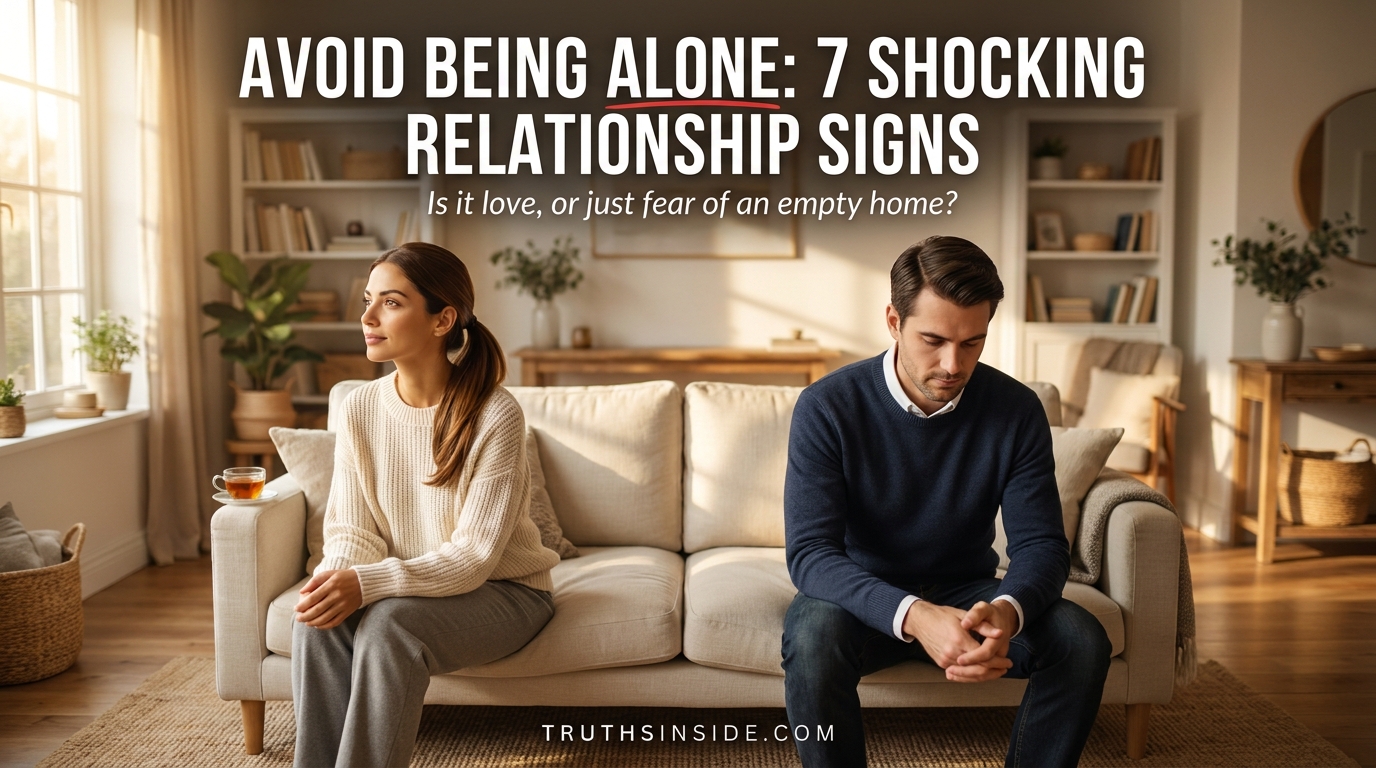
Staying with someone only to avoid being alone is one of the quietest, most painful experiences in modern love. From the outside, everything looks fine: you share a home, a calendar, maybe even a pet. Inside, you feel a hollow ache you can’t quite name, and the thought of leaving makes your chest tighten. If that sounds familiar, you are far from the only one. Research led by psychologist Stephanie Spielmann found that people with a strong fear of being single are more willing to settle for less satisfying partners and to stay in unfulfilling relationships longer.
This does not make you weak, shallow, or incapable of love. Humans are wired for connection, and the prospect of an empty apartment, a quiet phone, and a Saturday night with no plans can feel genuinely threatening. When fear drives the decision, though, the relationship slowly becomes a shelter instead of a partnership. You stay because leaving feels scarier than staying, not because staying feels good. Many people never realize they are doing it to avoid being alone.
In this guide, you will learn what it means to stay together to avoid being alone, why the fear is so powerful, and seven clear signs that your relationship may be running on fear instead of love. You will also find honest self-check questions and practical next steps. Read slowly, stay gentle with yourself, and remember that clarity is a form of self-respect, not a betrayal of the person beside you.
“Fear can keep two people in the same room for years without ever bringing them closer.”
What It Really Means to Stay Together to Avoid Being Alone
A relationship to avoid being alone is a partnership where the main glue is fear of loneliness rather than genuine desire for the person. The relationship becomes a solution to a problem: no one to text good morning, no plus-one at weddings, no one to come home to. The partner’s actual qualities, values, and compatibility matter far less than the simple fact that they are present.
Many people who stay to avoid being alone are not manipulating anyone. They often care about their partner sincerely and enjoy parts of the life they share. The trouble is that comfort and fear can look surprisingly similar to love when you are inside them. Over time, the gap between what you feel and what you tell yourself you feel grows wider, and that gap is where quiet resentment lives.
Loneliness vs. Love: Why the Difference Matters
Loneliness is a signal that you need connection. Love is a choice to invest in one particular person. When you confuse the two, any warm body can feel like the answer, especially when your real goal is to avoid being alone. You may tolerate disrespect, shrug off unmet needs, or ignore obvious incompatibility, all because the alternative feels worse. Choosing a partner out of need rather than desire also means your partner never gets to be chosen for who they truly are, and that is unfair to both of you.
📃 Related article: Relationship Built to Last: 9 Proven Healthy Signs
The Science Behind the Fear of Being Single
Psychologists have studied this pattern for years. Spielmann and her colleagues found that a strong fear of being single predicts lower standards for partners and a greater tendency to remain in unsatisfying relationships. Attachment theory adds another layer: people with an anxious attachment style often experience separation as a threat to survival, which makes them more likely to cling to a relationship just to avoid being alone.
Rusbult’s investment model explains why leaving feels so heavy. Commitment grows not only from satisfaction but also from how much you have invested and how poor your alternatives seem. When you believe the alternative is only loneliness, your perceived alternatives shrink, and staying feels like the only option. In other words, the fear does not just influence your feelings. It quietly reshapes the math your mind uses to decide.
7 Signs You Are Staying to Avoid Being Alone
None of these signs proves your relationship is doomed, and no checklist can replace honest reflection. Still, if several of them feel painfully familiar, it may be time to look closer at why you stay. Read each one with curiosity rather than judgment.
Sign 1: You Fear the Empty House More Than Losing Them
Picture the relationship ending tomorrow. What hits first? If your mind jumps straight to the silent apartment, the lonely weekends, and the exhausting idea of starting over, that is worth noticing. In a loving relationship, the thought of a breakup brings grief about losing this specific person: their laugh, their habits, the way they make you feel. When you stay to avoid being alone, the grief is mostly about the void, not the person.
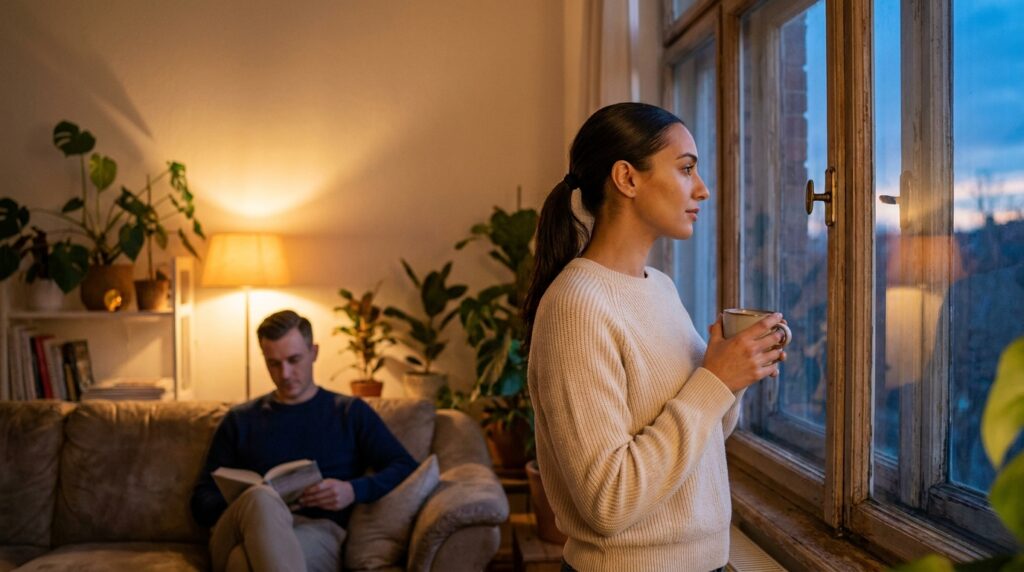
Notice also how you handle small separations. A partner who travels for work or spends a weekend with friends can trigger real anxiety, even panic. You may find yourself checking your phone constantly, not because you miss them, but because their absence reminds you of what life might feel like alone. That reaction is information. It tells you the relationship is meeting a need for company more than a desire for them.
Sign 2: You Feel Lonely Even When You Are Together
One of the cruelest ironies of staying to avoid being alone is that you often end up lonelier than you were before. You sit on the same couch, eat the same dinners, and share the same bed, yet conversations stay shallow and emotional needs go unspoken. You may realize you share more of your real thoughts with a friend, a coworker, or even a journal than with your partner.
This kind of loneliness is heavier than being physically alone because it comes with confusion. You have a partner, so you feel you have no right to complain. Psychologists often describe this as emotional loneliness, the absence of a close, understanding bond, and it can exist inside a long relationship. If being with your partner feels like waiting for the evening to be over, the connection may be missing even though the person is present. Staying just to avoid being alone rarely heals that ache.
Sign 3: You Keep Lowering Your Standards
At the beginning, you may have had a clear list of values and needs: kindness, honesty, shared goals, emotional availability. Over time, items quietly disappear from the list. You tell yourself that nobody is perfect, that you are too picky, that good enough is fine. Some of that is healthy realism. But when the reason you accept less is the wish to avoid being alone, realism turns into self-abandonment.
Ask yourself which needs you have stopped mentioning. Maybe you wanted more affection, more effort, or more respect, and you now shrug it off. This matches what the research on fear of being single suggests: the more strongly people dread singlehood, the more they are willing to settle. A good partnership asks you to compromise on preferences, never on dignity. If you keep trading your standards for company, you are paying too high a price to avoid being alone.
Sign 4: You Cannot Picture a Shared Future You Actually Want
Healthy couples daydream together. They talk about trips, homes, careers, and the kind of people they want to become side by side. If you notice that every future conversation makes you uncomfortable, or you can only imagine your life continuing exactly as it is, take that seriously. A relationship to avoid being alone often shows up as a preference for the status quo over any real vision.
You might also dodge milestone talks. Moving in, getting engaged, or having children may feel like pressure because part of you knows you are not fully choosing this path. Try a quiet experiment: imagine the same life five years from now with the same partner, with no changes. If your first feeling is dread, numbness, or guilt, your heart may be telling you what your fear has been drowning out.
Sign 5: You Feel Relief When You Get Time Apart
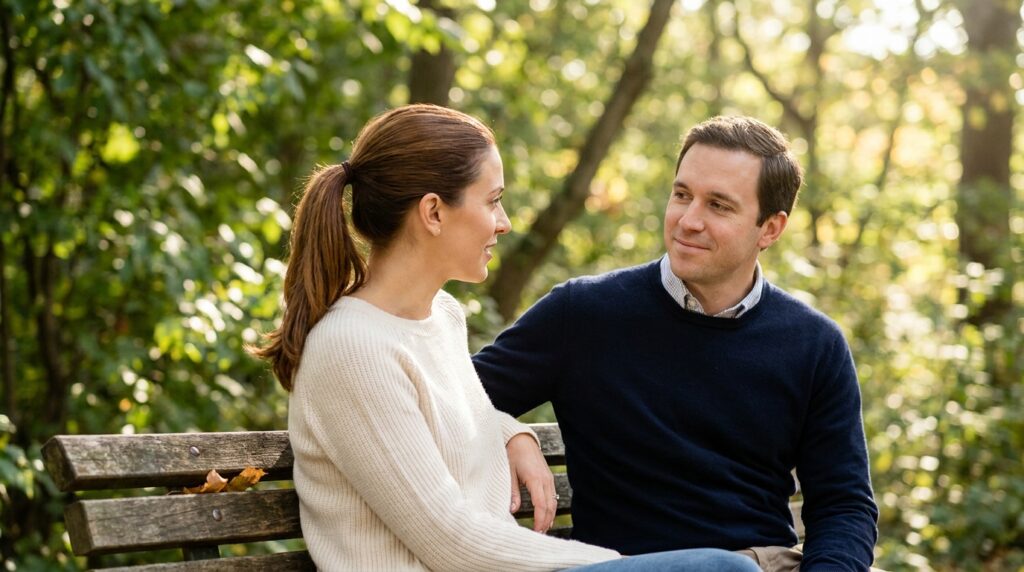
When your partner leaves for a few days, how does your body respond? For some people who stay together to avoid being alone, the answer is surprising: relief. The house feels lighter. You laugh more easily, sleep better, and enjoy your own company. Then, as their return approaches, a familiar heaviness settles in. That contrast says a lot about whose needs the relationship is actually serving.
Relief does not automatically mean the relationship is wrong. Everyone needs space. The warning sign is a pattern: you feel freer and more yourself when they are gone, yet you panic at the idea of a permanent separation. That tension, enjoying solitude while fearing it as a label, shows that the problem may not be being alone at all. It may be what you have been telling yourself being alone means.
Sign 6: You Stay to Avoid Being Alone Because of Age, Timing, or Social Pressure
Sometimes the pressure is loud and external. Friends are getting engaged, relatives ask about your plans, and social media is full of anniversary photos. You start thinking in deadlines: I am too old to start over, I have already invested too many years, I will not find anyone else. These thoughts feel like logic, but they are usually fear wearing a practical mask.
Rusbult’s investment model shows how time and effort already spent can lock people into a relationship long after satisfaction fades. Remember that years invested are a fact about the past, not a promise about the future. Staying to avoid being alone because of a calendar or an audience means you are living for spectators. The people applauding your relationship will not be the ones sitting in your silence at night.
Sign 7: You Keep Telling Yourself “I Should Be Grateful”
Gratitude is lovely, but it is not the same as desire. If your main reason for staying is that your partner is kind, stable, or good on paper, you may be using gratitude to cover a missing spark. You tell yourself: they never cheat, they pay the bills, they are nice to my family, who else would put up with me? That last question is a particularly loud clue. It often hides the real motive: the wish to avoid being alone.
“Who else would put up with me?” is the voice of fear, not love. It assumes you are a burden to be tolerated rather than a person worth choosing with enthusiasm. A relationship to avoid being alone often runs on this quiet bargain: I will accept what I am given because I am afraid of getting nothing. You deserve a partnership where gratitude and desire show up together.
“Gratitude can keep you in a room. Only desire makes you want to be there.”
Why Caring People End Up in a Relationship to Avoid Being Alone
Almost nobody chooses this on purpose. It usually grows from a blend of experiences: a childhood where love felt conditional, a painful breakup that left you wary of solitude, or a culture that treats being single as a problem to solve. Anxious attachment, low self-worth, and past abandonment can all make a partner feel like emotional safety, even when the connection is shallow. For many, the deepest wish is simply to avoid being alone.
Modern life adds to the pressure. Dating apps can feel exhausting, friendships shift as people marry, and many adults live far from family. After a long day, a familiar person on the sofa can feel like the only buffer against isolation. Understanding these roots matters, because shame makes change harder. You are not broken. You have simply been using a relationship to manage a feeling that deserves a gentler solution.
Self-Check Questions: Are You Staying to Avoid Being Alone?
Take a quiet moment and answer these honestly to see whether you simply want to avoid being alone. There are no right answers, only useful ones.
- If you knew you would meet someone wonderful within a year, would you still stay?
- Do you miss your partner as a person, or do you miss having someone around?
- When did you last feel genuinely excited about your relationship?
- Which needs have you stopped asking for?
- Could you enjoy a quiet Saturday night on your own, or does the thought feel unbearable?
- If a close friend described your relationship, would you tell them to stay?
If most of your answers point toward fear, you are not doomed. You have simply found valuable information about your motives and a clear place to begin.
What to Do If You Recognize These Signs
Build a Life That Stands on Its Own, Not Just to Avoid Being Alone
Fear of being single shrinks when your own life feels full. Rebuild friendships, revive hobbies, schedule solo dates, and practice spending an evening alone without reaching for your phone. Each small success teaches your nervous system that solitude is survivable, even pleasant. The goal is not to push your partner away. It is to make sure that if you stay, you are choosing it. People who are comfortable alone rarely need a relationship to avoid being alone.
Have an Honest Conversation
Share what you have noticed without blaming. You might say, “I have realized I have been afraid of being alone, and I want us to be honest about whether we are truly connected.” Some couples find that this honesty opens the door to rebuilding with real intention. Others discover the bond is not there. A couples therapist or an individual counselor can help you sort through the fear safely, especially if anxious attachment feels strong.
📃 Related article: Emotional Enmeshment: 7 Hidden Signs of Harm
Decide With Clear Eyes, Not Fear
Once the fear is quieter, ask what you truly want. Staying can be a healthy choice if you feel connection, respect, and desire. Leaving can be an act of kindness if those are missing. Either way, you are choosing from strength. Give yourself time, lean on trusted friends, and remember that a season of solitude is often the doorway to a love you will never need to use to avoid being alone.

Frequently Asked Questions
Can a relationship to avoid being alone turn into real love?
Sometimes, yes. Many relationships begin with mixed motives, and genuine affection can grow when both partners show up honestly. The difference is awareness. If you recognize that fear brought you together and you commit to building real connection, the relationship can change. If you keep ignoring the fear, it is likely to stay hollow. A bond built only to avoid being alone needs honest attention to grow.
Is it wrong to stay with someone to avoid being alone?
It is not a moral failure, but it can be unfair to both people. Your partner deserves to be chosen for who they are, and you deserve a relationship that feels alive. Staying while knowing your reasons, communicating openly, and working toward honesty is very different from hiding behind comfort.
How do I know if I love my partner or just fear being alone?
Look at how you feel about the person, not the situation. Do you admire them, enjoy their company, and feel excited about their future? Or do you mostly feel safe, relieved, or obligated? Try imagining them happily building a life with someone else. Love usually stings at that thought, while fear tends to focus on your own emptiness.
How can I stop fearing being alone?
Start by building comfortable time alone in small steps, strengthen your friendships, and challenge the story that single means unlovable. Therapy, especially approaches that address attachment and self-worth, can help. Over time, the fear usually shrinks, and you can make relationship choices from freedom rather than urgency.
Final Thoughts
Staying in a relationship to avoid being alone is a deeply human choice, and you deserve compassion rather than criticism for noticing it. The signs are not accusations. They are invitations to know yourself better, to ask what you need, and to choose love with open eyes. Whether you stay and rebuild or leave and heal, the goal is the same: a life where you are not hiding from solitude but moving toward real connection.
Found this helpful? Save this article for the moment you need clarity, share it with someone who may be quietly trying to avoid being alone, and follow Truthsinside.com for more honest relationship advice every week.
🎵 Music
Maren Lull is a singer-songwriter who writes from the places most people don’t talk about out loud.
Not the dramatic grief. Not the obvious heartbreak. The quiet kind — the ordinary Tuesday emptiness, the habit of reaching for someone who isn’t there anymore, the particular exhaustion of being strong for so long that the strength itself wears thin.
Her music lives at the intersection of emotional honesty and soft beauty — breathy vocals over gentle piano, slow tempos, lyrics that feel less like songs and more like something you wrote in a private notebook at two in the morning and never showed anyone.
Maren Lull writes for the people who feel everything deeply and say very little about it. For the ones who listen to sad music not because they want to feel worse — but because being understood, even by a song, makes the feeling easier to carry.
📱 Follow Maren Lull:
→ Spotify
→ Apple Music
→ Youtube
→ Audiomack