
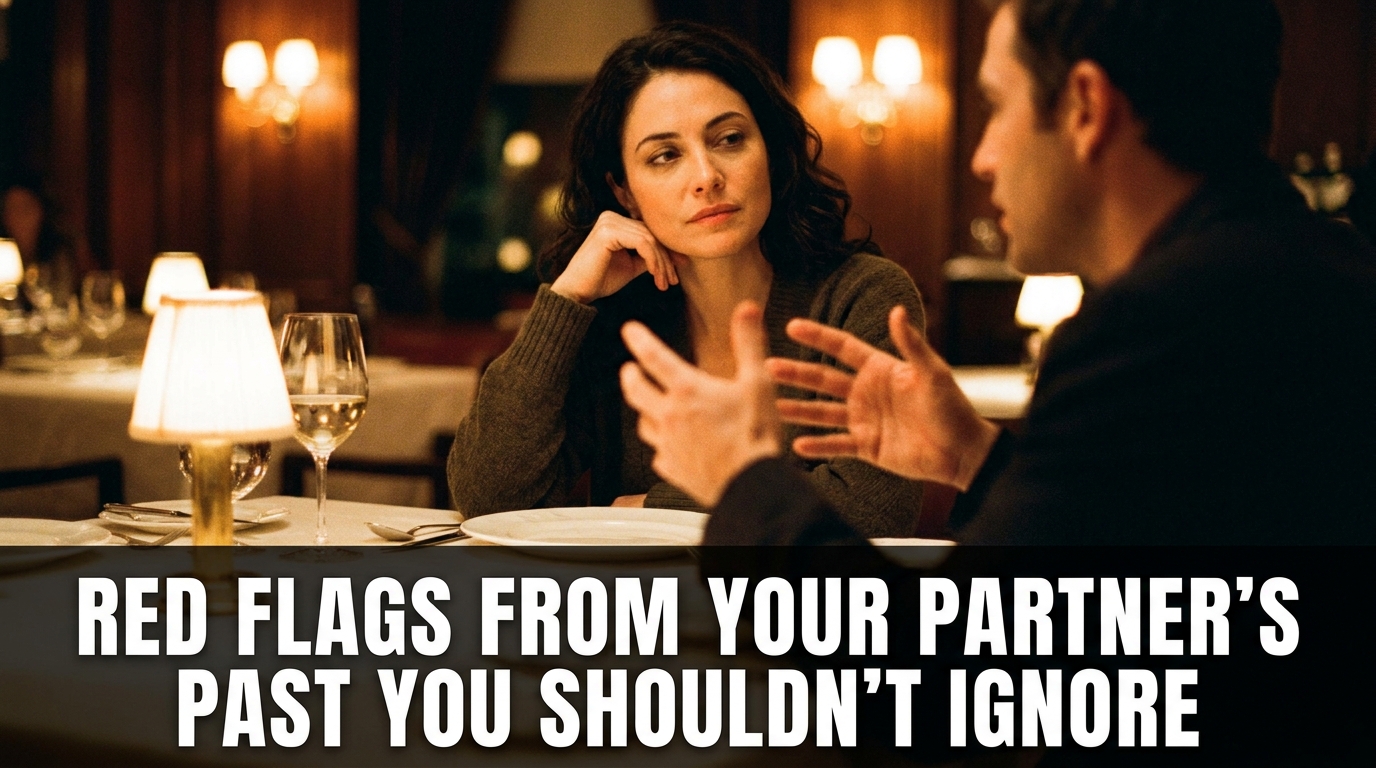
Everyone has a past. Failed relationships, difficult seasons, mistakes made and lessons learned — or not yet learned. You didn’t fall in love with a résumé. You fell in love with who they are now, in this moment, with you. And yet the past keeps arriving in the present — in the patterns you’re beginning to notice, in the stories they tell about how their last relationships ended, in the way they speak about people who are no longer in their life. And something in you is paying attention, even when you’re not sure you want it to.
The past is not a verdict. People genuinely change. Growth is real. But behavioral patterns — particularly those that have appeared across multiple relationships and multiple contexts — are among the most reliable predictors of future behavior available. Research from psychologist Dr. Brad Bushman at Ohio State University confirmed that past behavior is the single strongest predictor of future behavior in interpersonal contexts, accounting for more variance than personality tests, stated intentions, or self-reported change. Understanding the red flags from your partner’s past is not about holding history against someone. It is about paying attention to the information that history offers — and using it wisely.

The Important Distinction: Pattern vs. Incident
Before the specific red flags, this distinction is foundational — because without it, the framework becomes unfair and the analysis becomes uncharitable.
A single incident from someone’s past — one difficult relationship, one bad decision, one period of behavior they are not proud of — is not a red flag. It is human. Everyone carries at least one version of this: a relationship that ended badly, a season when they weren’t at their best, something they did that they would do differently now.
A pattern is different. A pattern is the same behavior, the same dynamic, or the same outcome appearing across multiple relationships, multiple contexts, and multiple periods of time. A pattern suggests something that has not been changed — or has not been seriously examined. And patterns, unlike incidents, are genuinely predictive.
When examining your partner’s past, the question to ask is not “did they ever do something concerning?” — almost everyone has. The question is: does this appear to be an isolated incident or part of a recurring pattern? Does your partner demonstrate awareness of the behavior? Have they done any genuine work to understand and change it? And most importantly — does their current behavior toward you reflect that change, or does it echo the pattern?
Red Flags From Your Partner’s Past You Shouldn’t Ignore
1. All Their Exes Are “Crazy”
This is perhaps the most universally recognized relationship red flag — and one of the most consistently rationalized away. When every single past partner is described as unstable, controlling, dishonest, or unreasonable — when the story of every significant relationship ends with the other person as the villain and your partner as the blameless victim — something important is missing from the narrative.
That missing thing is accountability. Healthy people, reflecting on relationships that ended, are able to identify their own contributions to the dynamic — the ways they fell short, the patterns they brought, the mistakes they made alongside the other person’s. Someone who cannot locate any responsibility in themselves across multiple relationships has not examined those relationships honestly. And someone who hasn’t examined their past honestly is someone whose past is likely to repeat itself — with you as the next person eventually assigned to the role of “crazy ex.”
2. A Pattern of Cheating — Without Genuine Accountability
Infidelity in a past relationship is not automatically a red flag. Context matters enormously — people cheat for complex reasons, and a person who has genuinely reckoned with why they cheated, taken full accountability for the harm caused, and done substantive work to understand and change the underlying patterns is very different from someone who has simply moved on without examination.
The red flag is not the act — it is the absence of genuine accountability. If the cheating is minimized (“it wasn’t that serious”), externalized (“they weren’t meeting my needs”), or rationalized (“we were basically already over”), the work of genuine reckoning has not happened. Without that reckoning, the underlying conditions that produced the behavior — entitlement, avoidance of difficult conversations, compartmentalization of emotional and physical intimacy — remain intact.
3. A History of Emotional, Verbal, or Physical Abuse
This deserves its own category — and its own clarity. A partner who has a history of abusive behavior toward past partners is not someone whose past can be contextualized away as youthful mistakes or situational stress. Abusive behavior patterns — particularly when they appear across more than one relationship — reflect deeply entrenched dynamics around control, emotional regulation, and the use of power in intimate contexts that require significant professional intervention to change.
This does not mean change is impossible. It means that change, in this context, requires far more than time and a new relationship. It requires sustained therapeutic work, genuine accountability, and demonstrated behavioral change over years rather than months. If your partner has this history, the question to ask honestly is not whether they are capable of change — but whether they have actually done the specific work that change requires, and what evidence currently exists that the patterns have genuinely shifted.

4. Consistently Short Relationships With No Clear Understanding of Why
A string of short relationships — three months, six months, never quite long enough for genuine depth — is worth gentle examination. On its own, it means relatively little: some people date widely before finding a compatible match, some have simply been unlucky in timing, some were in seasons of life that didn’t support sustained commitment.
What elevates this to a red flag is the combination of the pattern with an absence of reflection about it. If your partner cannot identify why their relationships haven’t lasted — if the endings are always attributed to circumstance or the other person’s limitations rather than to anything they’ve observed about themselves — the pattern has not been examined. And a pattern that hasn’t been examined tends to repeat.
5. They Cut People Off Completely and Permanently
Their relationship with a family member ended — completely, irreversibly, without nuance. A close friend of years was excised from their life following a conflict. Former partners are described in terms of absolute finality — erased rather than transitioned. There is a pattern of relationships that end not with distance and grief but with total cutoff and, often, total recharacterization of the person as someone who was never worth knowing.
The capacity to maintain some form of continued humanity toward people who have been significant — even when a relationship ends, even when harm occurred — reflects a particular kind of emotional maturity. Its absence, particularly when it appears as a consistent pattern, raises questions about how conflict is processed, how attachment is managed, and what happens in this person’s relationships when they feel hurt or betrayed. It also raises the question: if things go wrong between you, what category will you be placed in?
6. Financial Irresponsibility That Has Never Been Addressed
As explored in the financial red flags article in this series, a history of significant financial irresponsibility — debt that damaged relationships, financial dishonesty with past partners, burned bridges around money — is meaningful when it has not been genuinely addressed. Financial patterns tend to be among the most stable behavioral patterns in adults — not because people cannot change their financial behavior, but because changing it requires specific awareness, sustained effort, and often professional support that many people never seek.
A partner who acknowledges past financial struggles with genuine honesty and demonstrates current financial responsibility is showing you the trajectory that matters. A partner who waves away past financial behavior without acknowledgment or whose current financial patterns mirror the historical ones is showing you something different.

7. A History of Addiction Without Ongoing Recovery Work
Addiction in a partner’s past is not a disqualifying factor. Recovery is real, it is possible, and people who have done genuine recovery work are often among the most self-aware and emotionally honest partners available. The red flag is not the history — it is the absence of ongoing work.
Addiction recovery is not a destination that, once reached, requires no further attention. It is an ongoing practice that requires continued support, community, and awareness. A partner who describes themselves as “over it” without any ongoing recovery structure — therapy, support groups, continued self-monitoring — has not reckoned with addiction’s nature. And a partner who becomes defensive, dismissive, or minimizing when the topic arises has not reached the honesty about it that genuine recovery requires.
8. Estrangement From Family With No Self-Reflection
Family dynamics are complex, and estrangement from family members is sometimes the healthiest available choice — in cases of abuse, neglect, or sustained toxicity that would be harmful to maintain contact with. Estrangement is not itself a red flag.
What is worth examining is how your partner understands and narrates the estrangement. Do they show any awareness of the complexity — of their own role, of the relational dynamics, of the grief involved in family disconnection? Or is the narrative entirely one-sided, entirely blaming, and entirely closed to any examination of their own contribution? Family-of-origin patterns are among the most predictive available of how someone will navigate intimacy, conflict, and attachment in adult relationships. The quality of their self-reflection about those patterns tells you something important.
9. Past Partners Have Said Similar Things About Them
You’ve heard, through mutual connections or through their own telling, that past partners have raised similar concerns — about communication, about emotional availability, about specific behaviors that ended those relationships. When multiple people, from different contexts and different periods of your partner’s life, have independently arrived at similar observations, the convergence is significant. It suggests something consistent about how this person shows up in relationships — not a personality clash with one particular person, but a pattern that has appeared and been remarked upon across multiple relationships.
This is particularly meaningful when the concerns raised by past partners mirror concerns you have begun to notice yourself — even early, even mildly. Early pattern recognition, taken seriously before the emotional investment deepens, is one of the most genuinely protective things you can do for yourself.

10. They Have Never Been in a Long-Term Relationship — And Can’t Explain Why
This is not a red flag in isolation — particularly for younger people or those who simply haven’t met the right person. But for someone in their 30s or beyond who has never sustained a meaningful long-term relationship, some honest examination of the pattern is warranted — and your partner’s capacity to engage in that examination honestly is itself telling.
The question is not whether they’ve had long-term relationships — it’s whether they’ve reflected on why they haven’t, what they’ve observed about themselves in the relationships they have had, and what they understand about their own patterns of connection and disconnection. Absence of long-term relationship experience without any self-reflection suggests either an avoidance of the depth that sustained relationships require, or an unawareness of their own patterns that makes that depth difficult to reach.
11. They Speak About Past Partners With Contempt
Not sadness, not grief, not the complicated mixture of feelings that the end of something meaningful produces — but contempt. Mockery. Dismissal. The ex described with scorn rather than any acknowledgment of what they once meant. As established in Dr. Gottman’s research and explored throughout this series, contempt is one of the most damaging emotional postures available in intimate relationships. Its presence toward past partners — people who were once chosen and loved — raises a legitimate question about what happens to the people this person cares about when the relationship ends or when they feel hurt.
12. A Pattern of Leaving Rather Than Working Through
Every relationship in their past ended when things got hard — not through mutual recognition of incompatibility, but through flight at the first serious difficulty. Conflict avoided rather than navigated. Problems left unaddressed until the relationship became untenable. A consistent history of relationships that ended because one person couldn’t do the work of staying through difficulty is a meaningful predictor of what will happen in your relationship when difficulty arrives — as it inevitably will.
How to Use This Information Without Being Unfair
Understanding red flags from a partner’s past requires a specific kind of fairness — one that takes the information seriously without weaponizing it, that distinguishes patterns from incidents, and that holds space for genuine change while not being naively blind to its absence.
Ask about the past with genuine curiosity, not interrogation. The most revealing conversations about a partner’s history happen when they feel safe to be honest rather than defensive. Open questions — “What do you think you learned from that relationship?” “How did that end, from your perspective?” — invite reflection in ways that direct questions about behavior often don’t.
Listen for accountability, not just narrative. The content of what they share matters less than the quality of self-reflection it reveals. Do they take any responsibility? Do they demonstrate awareness of their own patterns? Do they show any compassion for the other people involved, even in relationships that ended badly?
Compare what they say with what you observe. The past is only relevant insofar as it informs the present. If your partner describes patterns from their past that contradict what you’re currently experiencing — if the person who describes themselves as avoidant is consistently showing up with warmth and presence — the current behavior is the most reliable data available.
Trust the convergence. When what you hear about someone’s past begins to align with what you’re already beginning to notice in your present — when the patterns match rather than contradict — that convergence deserves serious attention rather than rationalization.

The Bottom Line
Red flags from your partner’s past are not reasons to immediately end a relationship or to hold history as an immovable verdict against someone you care about. They are information — specific, meaningful, pattern-level information about how this person has historically shown up in intimate relationships, and what that history suggests about the future you would be building together.
People change. Growth is real. Love is not naive for being hopeful. But hope that ignores consistent patterns is not optimism — it is the decision to be surprised by something that was always visible. The most loving thing you can do — for yourself and for the relationship — is to take the information seriously, ask the honest questions, and trust the full picture that emerges when you look at both the past and the present with equal clarity.
The past is not a prison — for them or for you. But it is a teacher. And the question is never whether someone has a difficult history. The question is whether they have honestly learned from it — and whether what you see in them today reflects that learning, or quietly repeats it.
📌 Save, Share & Follow
💾 SAVE this article — return to it when something from your partner’s history is giving you pause and you need a framework for thinking it through. 📤 SHARE this with someone who is trying to figure out how much weight to give to what they’re learning about a partner’s past. 👉 FOLLOW TruthsInside.com for more honest, psychology-backed relationship content that helps you see clearly when it matters most.
❓ Frequently Asked Questions
Q1: How much should I consider a partner’s past when deciding about a relationship? The past should inform but not determine your decision. What matters most is the combination of their past patterns and their current behavior — particularly whether there is evidence of genuine self-awareness and change. A difficult past with clear growth and current behavioral evidence of that growth is very different from a difficult past that is minimized, defended, or quietly recurring in the present relationship. Use both lenses together for the most accurate picture.
Q2: Is it fair to bring up a partner’s past in a relationship? Yes — thoughtfully and from a place of genuine curiosity rather than accusation. Understanding your partner’s history is a legitimate part of building genuine intimacy and making informed relationship decisions. The way you bring it up matters: approaching it with openness and genuine interest in their perspective creates very different conditions than approaching it with suspicion or as evidence against them.
Q3: What if my partner gets defensive when I ask about their past? Some defensiveness about personal history is normal — particularly around sensitive topics like past relationships, family dynamics, or difficult seasons. What matters is the degree and the persistence of the defensiveness. Mild initial defensiveness that gives way to genuine reflection is different from sustained, escalating defensiveness that shuts down all inquiry. The latter pattern — where curiosity about the past is consistently met with resistance — is itself information worth noting.
Q4: Can someone with a genuinely difficult past be a good partner? Absolutely — and many of the most self-aware, empathetic, and relationally skilled people are those who have done honest, serious work on a genuinely difficult history. The past is not the measure. The work done with the past is the measure. What you are looking for is not a clean history but an honest, examined one — someone who has looked clearly at where they’ve been and made genuine effort to understand it.
Q5: What if I see red flags from their past but everything is great right now? Take it seriously without catastrophizing. The combination of past pattern and current observation is the most useful framework. If the past patterns you’re aware of are completely absent from your current experience — and have been absent consistently across enough time to constitute a genuine pattern of change — that is meaningful. If they are absent now but the relationship is still relatively new, it is worth maintaining awareness as the relationship deepens and the conditions that produced past patterns have a chance to either resurface or remain genuinely changed.
🎵 Music
Maren Lull is a singer-songwriter who writes from the places most people don’t talk about out loud.
Not the dramatic grief. Not the obvious heartbreak. The quiet kind — the ordinary Tuesday emptiness, the habit of reaching for someone who isn’t there anymore, the particular exhaustion of being strong for so long that the strength itself wears thin.
Her music lives at the intersection of emotional honesty and soft beauty — breathy vocals over gentle piano, slow tempos, lyrics that feel less like songs and more like something you wrote in a private notebook at two in the morning and never showed anyone.
Maren Lull writes for the people who feel everything deeply and say very little about it. For the ones who listen to sad music not because they want to feel worse — but because being understood, even by a song, makes the feeling easier to carry.
📱 Follow Maren Lull:
→ Spotify
→ Apple Music
→ Youtube
→ Audiomack