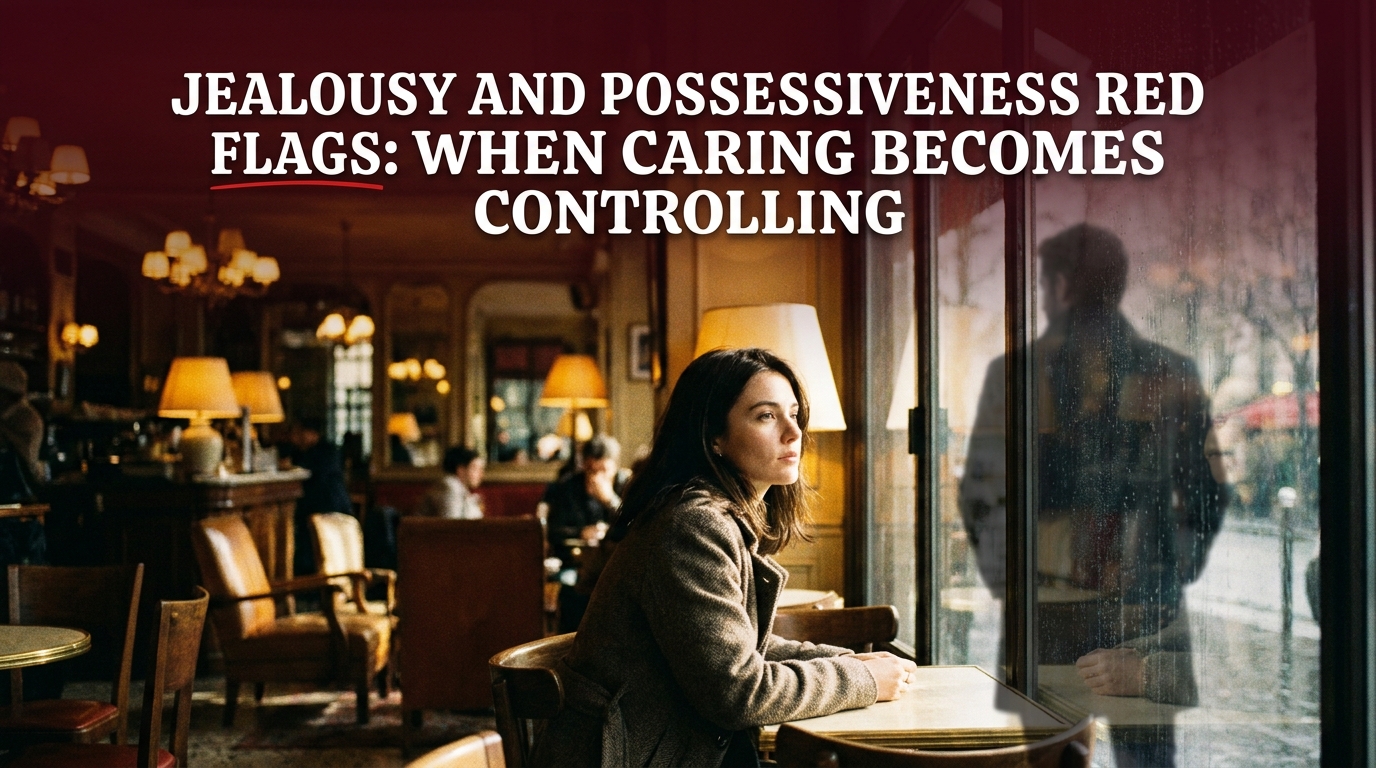
Have you ever confused someone’s jealousy for love? You’re not alone — and science confirms it. Studies show that up to 34% of people in relationships mistake controlling behavior for deep affection, especially in the early stages when possessiveness can feel flattering rather than frightening. But here’s the painful truth: jealousy and possessiveness red flags rarely stay small. They grow. They tighten. And by the time most people recognize them, they’re already deep inside a relationship that chips away at their freedom, identity, and self-worth.
This article is for anyone who has ever wondered, “Is this love, or is this control?” We’ll break down the psychology behind jealousy and possessiveness, show you how to identify the warning signs early, and give you the tools to protect yourself before a caring relationship turns into a cage.

What Is the Difference Between Healthy Concern and Jealousy?
Every relationship involves some level of care and protectiveness. Wanting your partner to be safe, happy, and faithful is completely normal. The line between healthy concern and toxic jealousy, however, lies in control, frequency, and intent.
Healthy concern sounds like: “I worry about you when you don’t text back — are you okay?”
Jealousy and possessiveness sound like: “Why didn’t you text me back? Who were you with? Show me your phone.”
One comes from love. The other comes from fear — fear of abandonment, fear of inadequacy, fear of losing power. According to psychologist Dr. Robert Leahy, jealousy is rooted in what he calls the “scarcity model of love” — the belief that love is a limited resource that can be stolen, lost, or shared away. This belief drives possessive partners to monitor, restrict, and eventually control the person they claim to love.
The key psychological difference is trust. A caring partner trusts you even when they’re worried. A possessive partner doesn’t trust you even when you’ve done nothing wrong.
Understanding this distinction is the first step in recognizing jealousy and possessiveness red flags in your own relationship.
The Psychology Behind Possessive Behavior
Possessiveness doesn’t appear out of nowhere. It has roots — often deep, painful ones. Most possessive partners aren’t “bad people” by nature. They are often people who carry unhealed wounds from their past: childhood abandonment, betrayal trauma, anxious attachment styles, or previous infidelity.
Attachment theory, developed by John Bowlby and later expanded by researchers like Mary Ainsworth, helps explain why some people become possessive in relationships. Individuals with an anxious attachment style often experienced inconsistent caregiving as children — sometimes loved, sometimes rejected. As adults, they hyper-monitor their romantic partners, fearing that any distance means abandonment.
This doesn’t excuse controlling behavior. But it helps explain why possessiveness can feel so genuine, so emotionally raw, and so convincing when the possessive partner says, “I do this because I love you so much.”
The danger is when this psychology is used — consciously or not — to manipulate. When a partner’s insecurity becomes your responsibility to manage at the cost of your own freedom, that’s no longer love. That’s emotional labor turned into emotional imprisonment.
“Love is not ownership. Caring is not surveillance. When someone truly loves you, they want you to be free — not because they don’t fear losing you, but because they respect your humanity more than their fear.”
10 Jealousy and Possessiveness Red Flags You Should Never Ignore
Knowing the signs is your most powerful defense. Here are the most common — and most dangerous — red flags to watch for:
1. Constant Monitoring and Checking They text or call repeatedly when you’re out. They ask where you are, who you’re with, and demand proof — screenshots of conversations, locations shared in real time. This isn’t affection. It’s surveillance.
2. Demanding Access to Your Phone and Accounts A possessive partner often frames this as “we have no secrets.” But there’s a profound difference between freely sharing and being forced to share. If you feel anxiety handing over your phone, that anxiety is telling you something important.
3. Isolating You from Friends and Family This is one of the most dangerous jealousy and possessiveness red flags, and it often happens gradually. They express discomfort with your friendships. They start arguments after you spend time with others. Eventually, spending time with people outside the relationship feels more trouble than it’s worth — and that’s exactly where they want you.
4. Explosive Reactions to Normal Interactions You smiled at the cashier. You hugged your childhood friend. You liked someone’s photo on Instagram. To a possessive partner, these ordinary moments become accusations, arguments, and emotional blow-ups.
5. Using Guilt as a Weapon “If you really loved me, you wouldn’t go.” “I guess I’m just not enough for you.” Guilt-tripping is a form of emotional manipulation designed to make your autonomy feel like a betrayal.
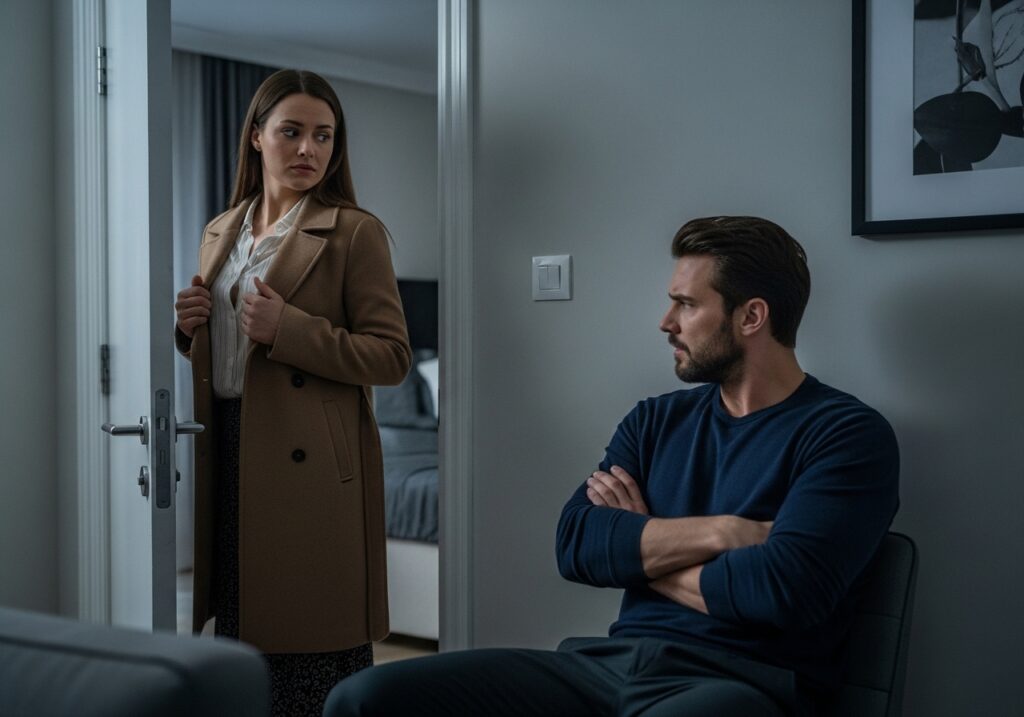
6. Jealousy Over Professional or Social Success A partner who undermines your accomplishments, discourages your career growth, or becomes resentful when you receive praise or attention from others is displaying deep insecurity wrapped in possessiveness. They want you to shine — but only as bright as they’re comfortable with.
7. Controlling What You Wear Comments like “That’s too short” or “Why are you dressing up for them?” use clothing as a proxy for control. Your body, your appearance, and how you present yourself to the world are yours — not your partner’s to govern.
8. Making You Feel Responsible for Their Emotions “When you do that, I can’t help how I react.” Possessive partners often shift the responsibility for their jealousy and anger onto you. If you find yourself constantly managing their emotional state, walking on eggshells, or editing your behavior to prevent their outbursts, you’re living in a dynamic of emotional control.
9. Threats — Subtle or Overt These can range from “I’ll hurt myself if you leave” to “I’ll tell everyone about you” or even vague warnings meant to keep you afraid of the consequences of your own choices. Any form of threat — emotional, social, or physical — is a serious red flag.
10. Cycling Between Extremes: Adoration and Punishment A possessive partner often follows the cycle of idealization and devaluation. They worship you, then punish you. They love-bomb you, then withdraw affection as punishment for perceived transgressions. This cycle keeps you emotionally off-balance and endlessly chasing their approval.
How Possessiveness Escalates Over Time
One of the most critical things to understand about jealousy and possessiveness red flags is that they almost never stay static. They escalate.
What starts as “I just want to know you’re safe” can become constant location tracking. What begins as “I don’t really like that friend of yours” can evolve into complete social isolation. What sounds like “I get jealous because I love you so much” can end in emotional, psychological, or even physical abuse.
Researchers at the National Domestic Violence Hotline identify possessiveness as one of the earliest and most consistent predictors of escalating relationship abuse. The pattern follows what’s often called the Power and Control Wheel — a framework developed by the Duluth Model that maps how control tactics build upon one another over time.
The escalation is often so gradual that victims don’t notice the change. Each step feels like only a small shift from the last. This is sometimes called “the boiling frog effect” in psychology — incremental changes that would feel intolerable all at once become normalized over time.
This is why identifying jealousy and possessiveness red flags early — before the relationship deepens and the patterns entrench — is so critical.
“Possessiveness doesn’t announce itself as abuse. It arrives dressed as love — intense, all-consuming, and utterly convincing. By the time the mask slips, many people have already given up the very things that made them who they are.”

What Jealousy Does to the Person on the Receiving End
Living with a jealous or possessive partner takes a measurable psychological toll. Research published in the Journal of Social and Personal Relationships found that individuals in possessive relationships reported significantly higher rates of anxiety, lower self-esteem, and reduced sense of personal identity over time.
When someone constantly questions your motives, monitors your movements, and reacts with anger to your normal behavior, you begin to internalize their distorted narrative. You start to question yourself. Did I do something wrong? Am I being unfair? Am I overreacting?
This is called gaslighting by proxy — not necessarily intentional, but the effect is the same. You lose trust in your own perceptions. You become more dependent on your partner’s version of reality. And ironically, the isolation that possessiveness causes makes you more reliant on the very person causing the harm.
Psychologists call this trauma bonding — the deep emotional attachment that forms under cycles of reward and punishment, affection and control. It’s the reason so many people in controlling relationships feel they can’t leave, even when they know they should.
How to Respond to a Possessive Partner
If you recognize jealousy and possessiveness red flags in your relationship, here’s what you can do:
Name what you’re seeing, clearly and calmly. Use “I” statements: “I feel monitored when you check my phone. I need privacy to feel respected in this relationship.”
Set firm boundaries — and hold them. Boundaries are not ultimatums. They are statements of what you will and won’t accept. A partner who truly loves you will hear them. A possessive partner will test and push them.
Don’t manage their emotions at the expense of your own. You are not responsible for your partner’s jealousy. Compassion for their insecurities is healthy. Sacrificing your freedom to soothe them is not.
Seek outside support. Possessiveness thrives in isolation. Maintain your friendships, family relationships, and support systems. These connections are not threats to your relationship — they are what keep you grounded and safe.
Consider couples counseling — or individual therapy. If the possessiveness is rooted in genuine attachment trauma and your partner is willing to do the work, therapy can help. But if they refuse, minimize the issue, or use therapy sessions to further manipulate you, that itself is a red flag.
Know when to leave. If threats, escalation, or any form of abuse is present, your safety comes first. Contact a trusted person or a professional resource. Leaving a controlling relationship is often the most courageous and necessary act of self-love you can take.

The Difference Between Growth and Excuses
One important nuance: people can change. A partner who recognizes their possessive behavior, takes genuine accountability, and actively works on themselves through therapy or self-reflection is not the same as one who weaponizes their growth as a reason to stay.
Watch for actions, not promises. Real change looks like consistent new behavior over time — not temporary improvement followed by the same old patterns. Real accountability sounds like, “I know my behavior was wrong, and I’m working on it,” not “I only act this way because of what you do.”
If your partner’s jealousy and possessiveness red flags have been named, addressed, and genuinely worked on — and you see sustained, real change — that’s worth acknowledging. Healthy relationships can survive difficult seasons when both people are committed and honest.
But if promises are followed by relapses, if apologies come packaged with blame, or if the cycle keeps spinning — believe the pattern, not the potential.

You Deserve a Love That Feels Like Freedom
Jealousy and possessiveness red flags don’t always show up wearing a villain’s face. More often, they wear the face of someone who loves you deeply, fears losing you, and expresses that fear through control. That makes them harder to recognize — and harder to walk away from.
But you deserve a relationship where love feels expansive, not suffocating. Where you can have friendships, ambitions, and a full life of your own — and your partner celebrates that rather than fears it. Where “I love you” is never followed by “so prove it by giving something up.”
The most powerful thing you can do is trust your own discomfort. If something feels wrong — if you find yourself constantly explaining yourself, shrinking yourself, or afraid of your partner’s reactions — that feeling is data. Don’t dismiss it.
Real love doesn’t clip your wings. It gives you room to fly — and trusts you to come back.
═══ FAQ SECTION ═══
Q1: Is jealousy always a red flag in a relationship? Not always. Occasional, mild jealousy is a normal human emotion and doesn’t automatically signal a toxic relationship. The red flag emerges when jealousy becomes frequent, intense, and leads to controlling, monitoring, or isolating behavior. If your partner’s jealousy consistently limits your freedom or makes you feel anxious, that’s when it crosses into dangerous territory.
Q2: Can a possessive person change? Yes, but only with genuine self-awareness, willingness, and sustained effort — typically through professional therapy. Change is possible, but it requires the possessive partner to take full accountability without minimizing or deflecting blame. Promises alone are not change. Consistent new behavior over time is.
Q3: Why do I feel like I’m overreacting to my partner’s jealousy? This feeling is extremely common in relationships with possessive partners, and it’s often the result of gaslighting — having your valid concerns minimized or turned around on you. If a trusted friend or family member expresses concern about your relationship, or if you feel the need to hide your partner’s behavior from people who love you, your instincts are likely correct. You’re not overreacting.
Q4: What’s the difference between possessiveness and protectiveness? Protectiveness is about your safety — it respects your autonomy. Possessiveness is about control — it restricts your autonomy. A protective partner checks in because they care. A possessive partner checks in because they don’t trust you and wants to monitor you. The difference lies in whether the behavior feels supportive or imprisoning.
Q5: How do I leave a possessive relationship safely? Safety planning is crucial, especially if your partner has made threats or shown signs of aggression. Talk to a trusted person before making any moves. Reach out to a domestic violence hotline or counselor for guidance tailored to your situation. If you’re in immediate danger, contact emergency services. You don’t have to figure it out alone.
═══ CALL TO ACTION ═══
💾 Save this article — you might need it later, or someone you know might need it now.
📤 Share it — you never know who in your circle is quietly living in a relationship that feels like this.
👉 Follow Truthsinside.com for more honest conversations about love, red flags, and the psychology of relationships.
🎵 Music
Maren Lull is a singer-songwriter who writes from the places most people don’t talk about out loud.
Not the dramatic grief. Not the obvious heartbreak. The quiet kind — the ordinary Tuesday emptiness, the habit of reaching for someone who isn’t there anymore, the particular exhaustion of being strong for so long that the strength itself wears thin.
Her music lives at the intersection of emotional honesty and soft beauty — breathy vocals over gentle piano, slow tempos, lyrics that feel less like songs and more like something you wrote in a private notebook at two in the morning and never showed anyone.
Maren Lull writes for the people who feel everything deeply and say very little about it. For the ones who listen to sad music not because they want to feel worse — but because being understood, even by a song, makes the feeling easier to carry.
📱 Follow Maren Lull:
→ Spotify
→ Apple Music
→ Youtube
→ Audiomack