You are 1,000 miles away from the person you love — and something feels off. You can’t quite explain it, but the calls have gotten shorter, the excuses have gotten longer, and that warm feeling of being chosen is slowly being replaced by anxiety and doubt. Research from the Journal of Communication found that long-distance relationships are not inherently less satisfying than close-proximity ones — but they are significantly more vulnerable to breakdown when trust and communication begin to erode. If your gut is telling you something is wrong, it is time to look at the red flags in a long-distance relationship you might be brushing aside.
Long-distance relationships require more intentionality, more emotional labor, and more trust than any other relationship structure. When the cracks start to show, they can feel easy to dismiss — because distance makes everything feel uncertain anyway. But there is a difference between normal LDR challenges and genuine warning signs that your relationship is in serious trouble.
This article will walk you through the most important red flags, what they mean psychologically, and what you should do when you notice them.
Why Red Flags in a Long-Distance Relationship Hit Differently
In a regular relationship, red flags are often visible in real-time. You see body language. You notice when your partner is cold, distracted, or pulling away. You can read the room.
In a long-distance relationship, you are working with far less information. You rely almost entirely on calls, texts, and video chats. That limited channel of communication makes it much easier for a partner to hide things — and much harder for you to trust what you feel. This is why red flags in a long-distance relationship are so dangerous: they are easy to rationalize. “They’re just busy.” “The time zones make it hard.” “They’ve been stressed at work.”
Psychologists call this cognitive dissonance — the mental discomfort of holding two conflicting beliefs at the same time. When you love someone, your mind will naturally reach for explanations that protect the relationship. But sometimes the most loving thing you can do for yourself is to stop explaining away the warning signs and start paying attention to them.
The truth is: distance does not make red flags disappear. It just makes them easier to ignore.

1. They Constantly Avoid Making Future Plans
One of the earliest and clearest red flags in a long-distance relationship is when your partner refuses to talk about the future. Not occasionally — constantly. Every time you bring up visiting, moving closer, or what the long-term plan looks like, they deflect, change the subject, get defensive, or give you vague, non-committal answers.
In healthy long-distance relationships, both partners hold onto the idea of an endpoint. They talk about when they will finally be in the same city. They make concrete plans. They treat the distance as a temporary situation — not a permanent lifestyle.
When a partner stops engaging with those conversations, it often means one of two things: either they no longer see a future with you, or they are keeping their options open. Neither of those is acceptable if you are fully committed to building something real with this person.
Pay attention to whether their avoidance is consistent. Occasionally postponing a conversation because of stress is normal. Shutting down every future-oriented conversation is a pattern — and patterns are data.
2. Communication Has Become Inconsistent or Feels Like an Obligation
At the beginning of your long-distance relationship, you probably couldn’t stop talking. Good morning texts, long calls, random voice notes just because something reminded you of them. That rhythm of communication was a love language all on its own.
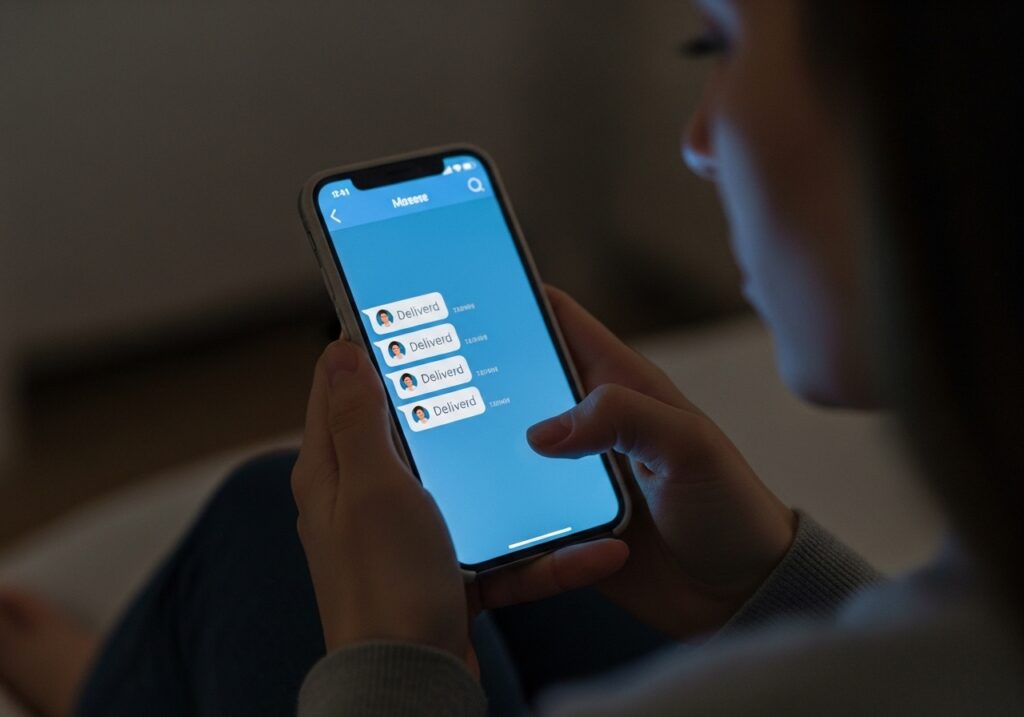
But now? They take hours to reply. They cancel calls with excuses that feel thin. When you do connect, the conversation feels forced — like they are going through the motions rather than genuinely wanting to be there. This is one of the most psychologically telling red flags, because communication is the backbone of any long-distance relationship.
Dr. John Gottman’s research on relationship health consistently highlights responsiveness — the feeling that your partner is emotionally available and present — as a core predictor of relationship satisfaction. When responsiveness drops dramatically, especially without a clear explanation, it signals emotional withdrawal.
“Love is not just a feeling. It is a consistent choice to show up — even when showing up is just a phone call away.”
The key distinction here is sudden or sustained change. If your partner was always a light communicator, that is a compatibility issue from the start. But if they used to be present and engaged, and now they are not — that shift is the red flag. People make time for what they prioritize. If they are no longer making time for you, ask yourself honestly: what does that tell you?
3. They Become Secretive or Protective of Their Privacy
Privacy and secrecy are not the same thing. Everyone is entitled to personal space, their own friendships, and parts of their life that are just theirs. That is healthy. But there is a distinct shift that can happen in a long-distance relationship — where privacy starts to feel more like concealment.
Signs to watch for: They suddenly stop mentioning who they spend time with. They get defensive or irritated when you ask simple questions about their day. Their social media is active, but they never mention the events or people in the posts. They change passwords or become protective of their phone in ways that are new and unexplained.
Psychologically, this kind of behavior activates what attachment researchers call hypervigilance — a heightened state of anxiety where you start scanning for threats to the relationship. The problem is, this hypervigilance is often your nervous system accurately detecting that something has changed, not just you being paranoid.
It is important to acknowledge: sometimes people become more private because they are going through something personal they are not ready to share. Give space for that. But if the secrecy is specifically about their social life, their whereabouts, or who they are spending time with — and it is paired with other warning signs on this list — it deserves an honest conversation.
4. Visits Keep Getting Cancelled, Postponed, or Deprioritized
Physical visits are the heartbeat of a long-distance relationship. They are what you hold onto during the hard weeks. They are proof that the relationship exists in three dimensions, not just through a screen.
When visits start getting cancelled — especially repeatedly, especially with reasons that do not quite add up — it is one of the most painful and significant red flags in a long-distance relationship. Because it means they are not fighting for the relationship. They are not inconveniencing themselves to be with you. They are choosing comfort over connection.
Now, life does happen. Work obligations, financial limitations, family emergencies — these are real. But there is a crucial difference between “I can’t make it work right now but I am devastated and here’s when we can reschedule” and “something came up, we’ll figure it out sometime.”
“A person who wants to be with you will find a way. A person who doesn’t will find an excuse.”
Cancelled visits hurt. But more than the hurt, pay attention to how they handle the cancellation. Do they feel guilty? Do they immediately try to make it right? Or do they seem almost relieved? That emotional response — or lack of it — tells you everything.
5. Your Gut Feels Anxious and Unsettled — Constantly
This might be the most underrated red flag of all: you do not feel okay. Not because you are an anxious person by nature — but because something in this relationship has shifted and your body knows it before your mind is willing to accept it.
Relationship psychology refers to this as somatic awareness — the way your nervous system registers emotional threats before your conscious mind processes them. You feel it in your stomach. You feel it as a low hum of dread before a call. You feel it as a wave of sadness after you hang up, even though nothing overtly bad happened.
If you find yourself constantly checking their social media for clues, rehearsing conversations before you have them, or lying awake anxious about the relationship — that level of sustained anxiety is not just normal LDR worry. It is information.
Healthy long-distance relationships have hard days and moments of longing. But they should also have a baseline feeling of security. You should trust, at your core, that your partner is there, that they want you, and that the relationship is real. When that baseline security is gone — when uncertainty becomes your resting state — something has broken.
6. They Are Emotionally Unavailable When You Need Them Most
Life throws hard things at all of us. Job losses, family stress, grief, health scares. In a long-distance relationship, your partner cannot be there physically — but they can be there emotionally. A phone call. A long voice note. Staying up late to talk something through.
When a partner becomes emotionally unavailable — particularly during your difficult moments — it is a profound red flag. Not just because of the immediate hurt, but because it reveals something about how they see their role in your life. Are they your partner, or are they someone you chat with when it is convenient?
Emotional availability is especially critical in long-distance relationships because it is one of the few ways your partner can actively demonstrate care. When that disappears, the relationship is largely just two people maintaining a status — not genuinely building something.
Watch how they show up when you are struggling. Not when things are easy and fun — when things are hard. That is when character reveals itself.

7. You Feel More Alone Inside the Relationship Than Outside of It
There is a particular kind of loneliness that is worse than being single. It is the loneliness of being in a relationship where you do not feel seen, chosen, or cared for. If you have started to notice that you feel more peaceful and more like yourself when you are not thinking about the relationship — that is a signal worth sitting with.
A long-distance relationship will always carry some loneliness. The physical absence of your partner is real, and it is hard. But there is a difference between missing someone you feel secure with, and feeling alone in a relationship that is supposed to make you feel less alone.
If you regularly feel like you are the only one trying, the only one reaching out, the only one who seems to care about the relationship’s future — you are not in a partnership. You are in a one-sided emotional investment that is costing you more than it is giving you.
8. Trust Has Broken Down and They Will Not Acknowledge It
Trust is the entire foundation of a long-distance relationship. Without it, everything collapses. If there has been a breach of trust — a lie, a discovered secret, emotional infidelity, or something that simply did not add up — and your partner is unwilling to take accountability, be transparent, or do the work to rebuild trust, that is one of the most serious red flags on this list.
Rebuilding trust after a rupture requires honesty, time, and consistent effort from the person who broke it. What it does not look like is gaslighting you for bringing it up, minimizing what happened, or making you feel like you are the problem for not being “over it” fast enough.
If your partner is defensive rather than remorseful, or if you feel like you cannot bring up your hurt without a fight — trust has not just been broken. The relationship dynamic has become unhealthy.

What Should You Do When You See These Red Flags?
Recognizing red flags in a long-distance relationship is hard. Acting on them is even harder. But here is what the research — and human experience — consistently shows: ignoring warning signs does not make them go away. It just delays the pain while increasing the cost.
Start with an honest conversation. Not an accusation — a conversation. Tell your partner what you have noticed and how it has made you feel. Use “I” language: “I have felt disconnected lately,” “I feel anxious when our calls get cancelled,” “I need to understand what is happening between us.”
Pay attention not just to what they say — but how they respond. Do they meet your vulnerability with care? Or do they become defensive, dismissive, or make you feel like you are overreacting?
If the conversation goes well and change follows — that is a good sign. If the conversation leads nowhere, or if the same patterns resurface — you have more information now. What you do with that information is your choice. But you deserve a love that does not require you to shrink your needs, silence your gut, or constantly wonder where you stand.
Long-distance relationships can work. They have worked for millions of people. But they work because both partners choose them — every single day — not because one person is carrying the weight of two.
CTA: 💾 Save this post before you forget it. 📤 Share it with someone in a long-distance relationship. ➕ Follow Truthsinside.com for more relationship psychology content.
FAQ
Q: How do you know if a long-distance relationship is worth saving? A: If both partners are willing to communicate openly, take accountability, and actively work toward closing the distance — the relationship likely has a foundation worth rebuilding. If only one person is doing the emotional labor, it may be time to reconsider.
Q: Can anxiety in a long-distance relationship be confused with red flags? A: Yes. Not all anxiety is a sign of red flags — some is simply the reality of missing someone you love. The key difference is whether your anxiety is rooted in a specific pattern of behavior from your partner, or just in the difficulty of the distance itself.
Q: Is emotional unavailability always a red flag in a long-distance relationship? A: Occasional emotional unavailability — during stressful periods — is human and understandable. Sustained emotional unavailability, especially when you are going through something hard, is a red flag worth addressing.
Q: What if I see red flags but my partner denies anything is wrong? A: Trust your observations. Your feelings are data. If your partner consistently dismisses your concerns without addressing the underlying behavior, that dismissiveness itself is a red flag.
Q: When should you consider ending a long-distance relationship because of red flags? A: When the red flags are consistent, unaddressed, and your attempts at honest communication are met with defensiveness or indifference. You deserve a partner who takes your concerns seriously — not one who makes you feel wrong for having them.
🎵 Music
Maren Lull is a singer-songwriter who writes from the places most people don’t talk about out loud.
Not the dramatic grief. Not the obvious heartbreak. The quiet kind — the ordinary Tuesday emptiness, the habit of reaching for someone who isn’t there anymore, the particular exhaustion of being strong for so long that the strength itself wears thin.
Her music lives at the intersection of emotional honesty and soft beauty — breathy vocals over gentle piano, slow tempos, lyrics that feel less like songs and more like something you wrote in a private notebook at two in the morning and never showed anyone.
Maren Lull writes for the people who feel everything deeply and say very little about it. For the ones who listen to sad music not because they want to feel worse — but because being understood, even by a song, makes the feeling easier to carry.
📱 Follow Maren Lull:
→ Spotify
→ Apple Music
→ Youtube
→ Audiomack