The Merc With a Mouth Is Just Getting Started
There is a particular kind of excitement that only comic book fans truly understand — the electric thrill of watching a beloved character finally done right on screen, and the desperate hope that it never has to end. For millions of Marvel fans worldwide, Deadpool future films are no longer just a hopeful wish — they are a confirmed reality. According to a 2023 Statista report, the Marvel Cinematic Universe has generated over $29 billion in global box office revenue, making it the highest-grossing film franchise in history. And Wade Wilson, the foul-mouthed, fourth-wall-breaking anti-hero brought to life by Ryan Reynolds, is now a permanent part of that universe.
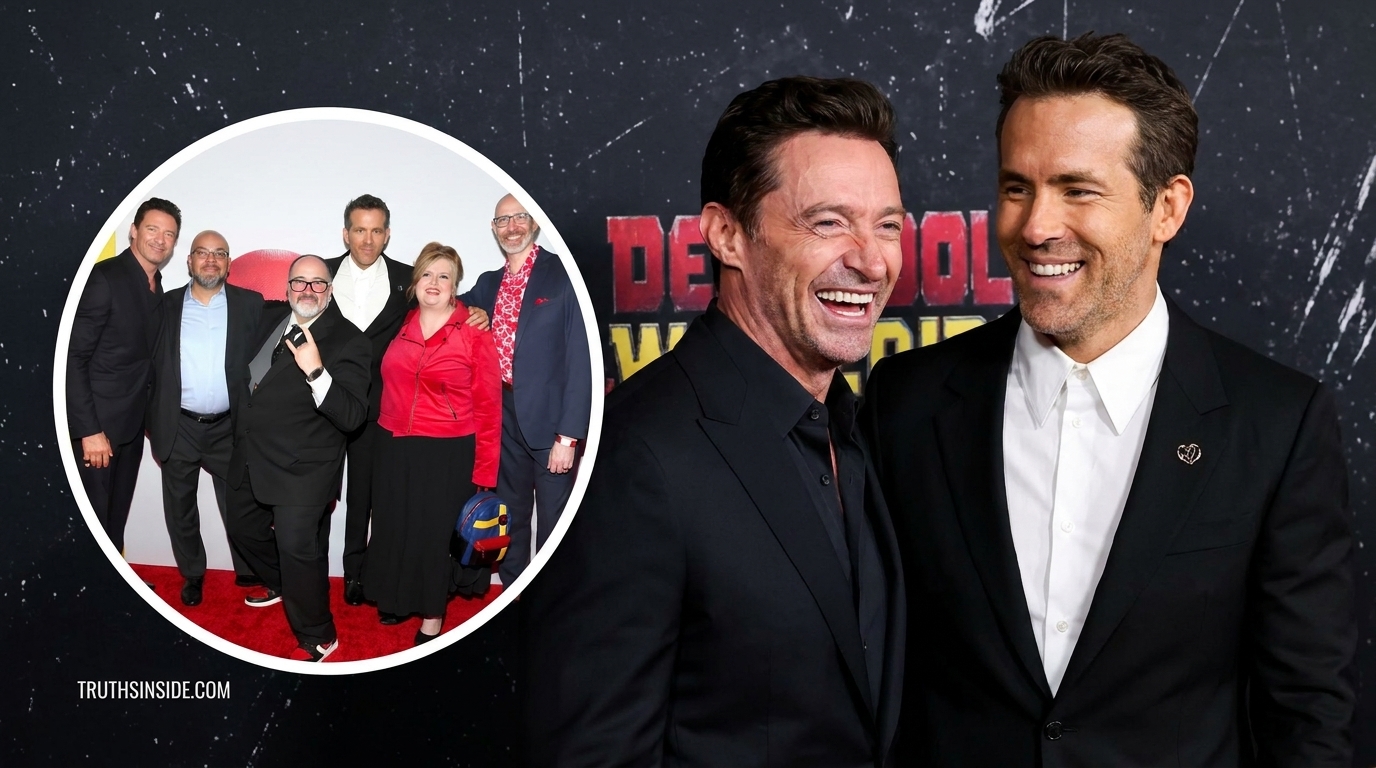
At a highly anticipated panel appearance during Fanatics Fest, Ryan Reynolds made the announcement that sent shockwaves through the Marvel fan community — Deadpool is not going anywhere. The 2024 Deadpool & Wolverine film, featuring Hugh Jackman’s iconic return as Logan, is not the end of the road for the character. It is, by all indications, the beginning of an entirely new and even more ambitious chapter for one of Marvel’s most beloved and unconventional heroes.
This article breaks down everything Reynolds confirmed, what it means for the MCU’s future, and why Deadpool’s continued presence is one of the most exciting developments in superhero cinema today.

Who Is Ryan Reynolds’ Deadpool — And Why Does It Matter So Much?
To fully appreciate the significance of Ryan Reynolds confirming Deadpool future films, it helps to understand just how much this character means to both the actor and the fans who adore him.
Wade Wilson, better known as Deadpool, first appeared in Marvel Comics in 1991, created by writer Fabian Nicieza and artist Rob Liefeld. Over the decades, Deadpool evolved from a relatively straightforward mercenary character into one of Marvel’s most complex, self-aware, and genuinely hilarious anti-heroes. His ability to break the fourth wall — to speak directly to the reader, and later the audience — made him unlike anything else in superhero storytelling.
Ryan Reynolds first portrayed the character in the widely criticized X-Men Origins: Wolverine in 2009, a version of Deadpool so poorly received by fans that it became a running joke in the franchise. Reynolds himself has been one of the loudest critics of that portrayal.
But in 2016, everything changed. The R-rated, irreverent, and brilliantly written Deadpool film shattered box office records and proved that superhero movies did not have to follow a single template to succeed. Reynolds was not just playing Deadpool — he was channeling the character with a level of passion and authenticity that audiences recognized immediately and fell in love with completely.
📃 Related article: Mr. Beast Wedding: Stunning Necker Island Ceremony
The Fanatics Fest Announcement That Changed Everything
The news broke during Fanatics Fest, a high-profile fan event that brings together some of the biggest names in sports and entertainment to connect directly with their audiences. Ryan Reynolds appeared on a panel that quickly became one of the most talked-about moments of the event.
With characteristic wit and genuine enthusiasm, Reynolds confirmed what many fans had hoped but were not certain of — there will be another Deadpool film in the future, beyond the 2024 release. The announcement was met with an eruption of applause from the crowd, a reaction that Reynolds appeared to genuinely relish, because of course he did.
What made the announcement particularly compelling was not just the confirmation itself, but the details Reynolds chose to share alongside it. He did not simply say “there will be more Deadpool.” He spoke specifically about the comic book material that inspires him, the writers whose work he admires, and the directions he hopes future films will explore.
This was not a vague, studio-approved non-answer designed to manage expectations. This was Ryan Reynolds — a producer as well as the star of the franchise — speaking with the kind of informed excitement that only comes from someone genuinely invested in where the story goes next.

Deadpool Future Films: What Ryan Reynolds Actually Confirmed
Let us be precise about what Reynolds confirmed at Fanatics Fest, because the details matter enormously.
First and most importantly, Reynolds stated explicitly that there will be another Deadpool film in the future. This goes beyond simply implying that the franchise has legs — it is a direct, unambiguous statement that development on future projects is already on the horizon.
Second, Reynolds referenced the work of Fabian Nicieza and Gerry Duggan, two of the most celebrated writers in Deadpool’s comic book history. Nicieza, of course, co-created the character alongside artist Rob Liefeld back in 1991. Duggan is responsible for some of the most beloved and critically acclaimed Deadpool comic runs of the modern era.
By name-dropping these specific writers, Reynolds was sending a clear signal to comic book fans — he has done his homework, he knows the source material, and he intends to draw from it meaningfully in future films. This is the kind of commitment to authenticity that separates truly great comic book adaptations from forgettable ones.
📃 Related article: Abby Elliott Divorce Filed After Nearly a Decade
The Significance of “Deep Cuts” — Exploring Untapped Comic Lore
One of the most intriguing phrases Reynolds used during his Fanatics Fest appearance was the idea of “deep cuts” from Deadpool’s comic book history. This is not a term used lightly by someone who knows the material as well as Reynolds does.
In comic book culture, “deep cuts” refers to story arcs, character traits, and narrative moments that are beloved by dedicated readers but have never received mainstream attention — the kind of content that a casual fan might not know about, but that a lifelong Deadpool enthusiast would find absolutely thrilling.
The implication is significant. It suggests that future Deadpool future films will not simply rehash the character beats and comedic formulas that have already been established on screen. Instead, they may venture into richer, stranger, and more emotionally complex territory — territory that the comics have mapped in extraordinary detail but that film audiences have never had the chance to experience.
This is the kind of creative ambition that makes a franchise genuinely worth following for the long term. It signals growth, not stagnation.

“Reynolds was not just announcing more movies — he was announcing a deeper, richer, more ambitious version of Deadpool that comic fans have been waiting to see on screen for over thirty years.”
Deadpool Future Films and the MCU Team-Up Strategy
One of the most exciting aspects of Reynolds’ announcement is what it suggests about the structural direction of future Deadpool stories within the broader Marvel Cinematic Universe.
Previous hints and confirmed story details suggest that future Deadpool films will move beyond solo adventures and into genuine team-up territory within the MCU framework. The 2024 Deadpool & Wolverine film already demonstrated this approach beautifully, pairing Wade Wilson with Hugh Jackman’s Logan in a crossover that fans had dreamed about for years.
The MCU has always excelled at its interconnected storytelling model — the idea that individual character films serve as building blocks for larger ensemble narratives. Deadpool’s integration into this model opens up extraordinary possibilities. Wade Wilson’s fourth-wall-breaking sensibility, his irreverent relationship with the conventions of superhero storytelling, and his uniquely chaotic energy could interact with virtually any MCU character in ways that are both hilarious and genuinely narratively interesting.
The question of which superhero Reynolds’ Deadpool might team up with next has already become one of the most passionately debated topics in online Marvel fan communities. And that debate, in itself, is a sign of just how effectively Reynolds has managed to position Deadpool as a character whose future is genuinely unpredictable and endlessly exciting.
📃 Related article: Jada Pinkett Smith Lawsuit: Will Smith Testimony
Hugh Jackman’s Wolverine and the X-Men Connection
No discussion of Deadpool future films would be complete without acknowledging the seismic importance of Hugh Jackman’s return as Wolverine in Deadpool & Wolverine.
Jackman had famously retired from the role following the critically acclaimed Logan in 2017, a film widely regarded as one of the greatest superhero movies ever made. His decision to return for Deadpool & Wolverine was nothing short of extraordinary, and it speaks volumes about the creative excitement surrounding the direction Reynolds and the MCU team were taking with the franchise.
The pairing of Reynolds’ Deadpool with Jackman’s Wolverine is, on paper, comedic genius — and by all accounts, the execution delivered fully on that promise. Their real-life friendship and playful public rivalry translated directly into on-screen chemistry that audiences found irresistible.
The success of that pairing also opens up fascinating questions about the future of the X-Men characters within the MCU more broadly. With Deadpool now firmly integrated into Marvel’s cinematic universe, the door for other mutant characters to follow has been swung wide open. Future Deadpool future films may serve not just as Deadpool stories, but as entry points for a whole new generation of X-Men narratives within the MCU framework.

Comic Book Writers at the Heart of Future Deadpool Stories
Reynolds’ specific praise for Fabian Nicieza and Gerry Duggan at Fanatics Fest deserves a closer look, because understanding their contributions to the Deadpool comics helps illuminate where future films might be headed.
Fabian Nicieza co-created Deadpool alongside artist Rob Liefeld in 1991, establishing the foundational elements of the character — the mercenary background, the regenerative healing factor, the sardonic wit, and the deeply complicated psychology that lies beneath the jokes and the violence.
Gerry Duggan took the character to entirely new heights during his celebrated run on the Deadpool comics beginning in 2012. Duggan’s version of Wade Wilson was at once funnier and more emotionally devastating than almost any previous interpretation. He introduced storylines that forced Deadpool to confront his own loneliness, his desperate need for connection, and the tragic dimensions of a life defined by pain and humor in equal measure.
If Reynolds is drawing inspiration from Duggan’s work in particular, fans should prepare themselves for Deadpool stories that go considerably deeper emotionally than anything the films have yet delivered — which is saying something, given that the existing Deadpool films have already demonstrated a surprising capacity for genuine pathos beneath the comedy.

Why Deadpool’s Continued MCU Presence Is a Game-Changer
The confirmation of Deadpool future films is significant not just for fans of the character, but for the MCU as a whole. Here is why.
Deadpool operates by a fundamentally different set of rules than virtually every other MCU hero. His awareness of his own fictional nature, his willingness to mock the very conventions he inhabits, and his R-rated sensibility make him a genuinely unique creative tool within a universe that has occasionally been criticized for formula-driven storytelling.
His presence in the MCU gives Marvel a character who can serve as an internal critic, a pressure valve, and a creative wildcard all at once. Stories that would be too self-serious coming from other characters become opportunities for both humor and genuine emotional resonance when filtered through Deadpool’s particular perspective.
Moreover, Deadpool’s proven ability to attract audiences who might not otherwise engage with traditional superhero content — older viewers, fans who prefer edgier material, and people who appreciate meta-humor — expands the MCU’s reach in meaningful ways.
“Deadpool’s presence in the MCU gives Marvel a creative wildcard unlike any other — a character who can mock the universe he inhabits while simultaneously making audiences genuinely care about what happens to him.”
Audience Reaction: The Fans Have Spoken
The crowd response at Fanatics Fest when Reynolds made his announcement was, by all accounts, electric. The eruption of applause that followed his confirmation of future Deadpool projects was not just polite appreciation — it was the sound of an audience releasing months of pent-up anticipation and hope.
Fan reaction online mirrored that energy exactly. Social media lit up within minutes of the announcement becoming public, with Marvel fans sharing their excitement, their theories about future team-ups, and their deep appreciation for Reynolds’ evident passion for the character and the material.
This level of genuine fan investment is not something studios can manufacture or purchase. It is earned over years of creative commitment, authentic storytelling, and a performer who clearly loves what he does. Reynolds has built exactly that kind of relationship with the Deadpool fan base, and the Fanatics Fest reaction demonstrated just how powerful and real that connection truly is.

What to Expect From Deadpool’s MCU Future
Based on everything Reynolds confirmed and implied at Fanatics Fest, here is a reasonable outline of what fans can expect from Deadpool future films in the years ahead.
Narratively, expect deeper dives into comic book storylines that have not yet been adapted for screen — the “deep cuts” Reynolds referenced with such enthusiasm. Expect emotional complexity alongside the trademark humor. And expect the kind of authentic engagement with the source material that comes from a creative team that genuinely respects and understands what makes Deadpool special.
Structurally, expect more team-ups. The MCU’s interconnected model means Deadpool will increasingly find himself in the orbit of other Marvel characters, creating storytelling possibilities that are as unpredictable as the character himself. Whether those team-ups involve further X-Men integration, crossovers with established Avengers-adjacent characters, or something entirely unexpected, the creative potential is extraordinary.
And tonally, expect the same razor-sharp balance of irreverence and genuine heart that has defined the Deadpool franchise from the very beginning. Reynolds understands that the comedy only works because the character actually means something — and future films will continue to honor that understanding.
Summary of Key Confirmed Details
| Aspect | Details |
|---|---|
| Actor | Ryan Reynolds |
| Announcement Venue | Fanatics Fest Panel |
| Upcoming Films | Deadpool & Wolverine (2024) + confirmed future sequel(s) |
| Comic Writers Referenced | Fabian Nicieza, Gerry Duggan |
| Narrative Direction | Deeper comic lore, team-ups with other MCU heroes |
| Recent MCU Crossover | Deadpool & Wolverine featuring Hugh Jackman |
| Audience Reaction | Enthusiastic, widely positive |
| Tonal Approach | Continued balance of humor and emotional depth |
FAQ: Deadpool Future Films — Your Questions Answered
1. Has Ryan Reynolds officially confirmed more Deadpool films?
Yes. During a panel at Fanatics Fest, Reynolds explicitly confirmed that there will be another Deadpool film in the future beyond the 2024 Deadpool & Wolverine release.
2. Which comic book writers did Reynolds reference as influences for future Deadpool films?
Reynolds specifically praised Fabian Nicieza, the co-creator of Deadpool, and Gerry Duggan, whose celebrated comic run is known for blending deep humor with genuine emotional complexity.
3. Will Hugh Jackman return as Wolverine in future Deadpool films?
Reynolds has not confirmed Hugh Jackman’s involvement beyond Deadpool & Wolverine (2024). However, the success of their pairing makes future collaboration a widely discussed possibility among fans and industry observers.
4. What does “deep cuts” mean in the context of future Deadpool stories?
“Deep cuts” refers to lesser-known but beloved storylines and character elements from Deadpool’s extensive comic book history that have not yet been adapted for film — material that dedicated comic readers know well and that Reynolds has indicated will influence upcoming projects.
5. How does Deadpool fit into the broader MCU going forward?
Deadpool is now fully integrated into the Marvel Cinematic Universe and is expected to participate in the MCU’s interconnected storytelling model, including potential team-ups with other established Marvel heroes beyond Wolverine.
Final Thoughts
Ryan Reynolds’ confirmation of Deadpool future films is one of the most genuinely exciting announcements to emerge from the Marvel fan community in recent memory. It signals not just the continuation of a beloved franchise, but a creative deepening — a commitment to exploring richer comic book material, building more complex narratives, and leveraging Deadpool’s unique position within the MCU to do things that no other character can do.
For fans who have followed Wade Wilson’s cinematic journey from the unfortunate early days to the triumphant, record-breaking reinvention of 2016 and beyond, this announcement feels like exactly what it is — a promise that the best is still yet to come.
Deadpool is staying. And the MCU will never be quite the same because of it.
💾 Save this article so you never miss an update on Deadpool’s MCU future.
📤 Share this story with every Marvel fan in your life — they will thank you for it.
👉 Follow Truthsinside.com for the freshest celebrity and entertainment news, updated daily.
🎵 Music
Maren Lull is a singer-songwriter who writes from the places most people don’t talk about out loud.
Not the dramatic grief. Not the obvious heartbreak. The quiet kind — the ordinary Tuesday emptiness, the habit of reaching for someone who isn’t there anymore, the particular exhaustion of being strong for so long that the strength itself wears thin.
Her music lives at the intersection of emotional honesty and soft beauty — breathy vocals over gentle piano, slow tempos, lyrics that feel less like songs and more like something you wrote in a private notebook at two in the morning and never showed anyone.
Maren Lull writes for the people who feel everything deeply and say very little about it. For the ones who listen to sad music not because they want to feel worse — but because being understood, even by a song, makes the feeling easier to carry.
📱 Follow Maren Lull:
→ Spotify
→ Apple Music
→ Youtube
→ Audiomack