
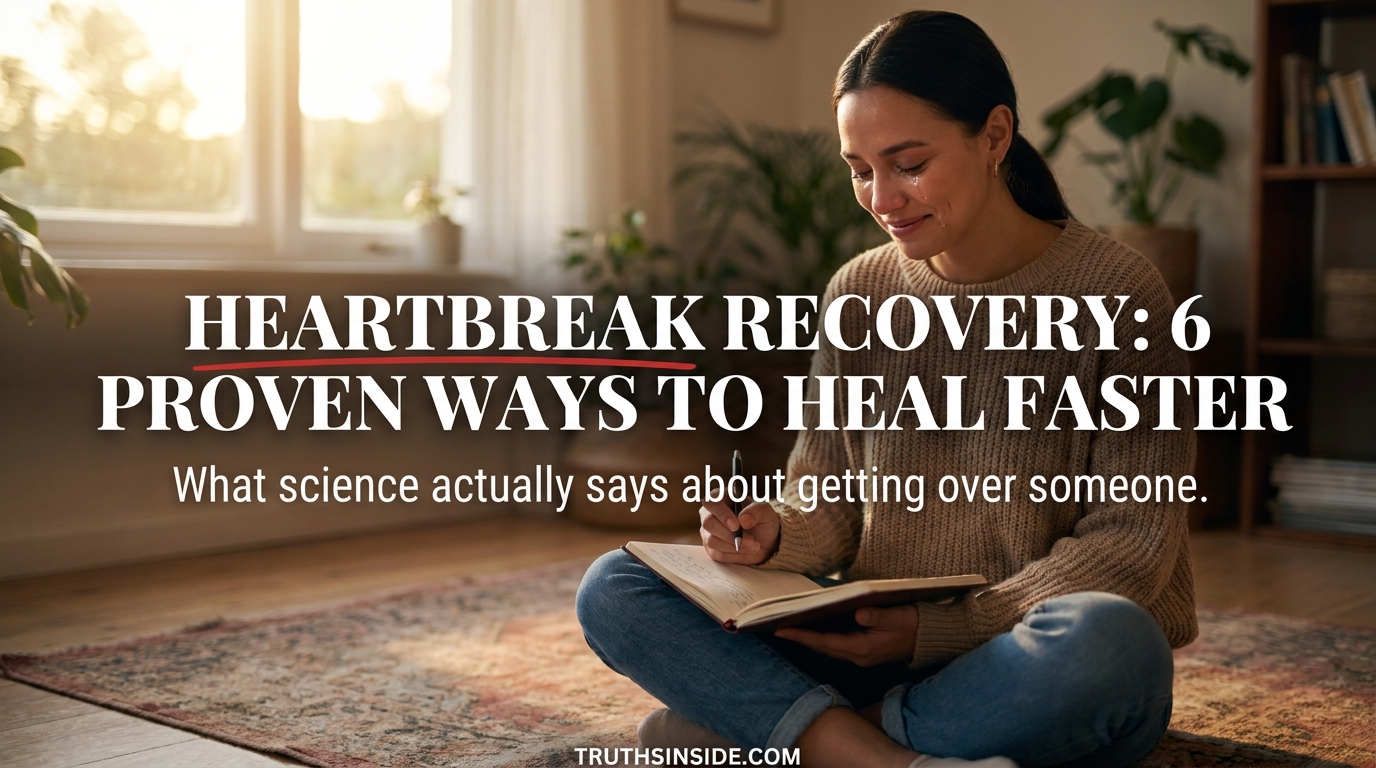
There’s a specific kind of pain that comes with heartbreak — the kind that shows up in your chest, your stomach, your sleep, even your appetite. If you’ve ever wondered why a breakup can feel almost physically unbearable, neuroscience has an answer: brain imaging studies show that romantic rejection activates the same regions of the brain associated with physical pain. Heartbreak recovery isn’t just an emotional process — it’s a neurological one.
Researchers like Dr. Helen Fisher, who has studied the neuroscience of love and loss extensively, found that early-stage heartbreak can trigger brain activity strikingly similar to substance withdrawal. This helps explain why breakups can feel less like sadness and more like an addiction being abruptly cut off — complete with cravings, obsessive thinking, and a desperate urge to reach out to the person who hurt you.
The encouraging news is that heartbreak recovery follows patterns that researchers understand fairly well, and there are specific, evidence-backed strategies that can genuinely speed up healing. This article breaks down the science behind why heartbreak hurts so much, and the practical steps that support faster, healthier recovery.
Why Heartbreak Hurts So Much, According to Science
Understanding the biology behind heartbreak can make the process of heartbreak recovery feel less confusing and less like personal failure. When a relationship ends, the brain doesn’t just process sadness — it undergoes a genuine withdrawal response, similar to what happens when someone stops using an addictive substance.
Dr. Fisher’s research using fMRI scans found that people who had recently been rejected showed activity in the same brain regions associated with cocaine cravings when looking at photos of their ex-partner. This is part of why heartbreak recovery often includes intense urges to check an ex’s social media, replay memories, or hope for reconciliation — the brain is chemically driven to seek out its former source of reward.
Additionally, romantic attachment involves oxytocin and dopamine, chemicals tied to bonding and pleasure. When a relationship ends, levels of these chemicals drop sharply, while cortisol, the stress hormone, rises. This chemical shift is part of why early heartbreak recovery can feel physically exhausting, foggy, or even nauseating — your body is genuinely in a state of chemical withdrawal, not just emotional distress.
📃 Related article: Love Someone, Not In Love? 7 Painful Truths
The Stages of Heartbreak Recovery
While heartbreak recovery isn’t perfectly linear, researchers studying grief and loss have identified common phases most people move through, even if the order and duration vary.
Shock and denial. Immediately after a breakup, many people feel numb or disbelieving, especially if the split was sudden. This protective numbness is the mind’s way of buffering against overwhelming pain all at once.
Yearning and protest. This stage often includes intense longing, checking your phone obsessively, or fantasizing about reconciliation — a direct result of the withdrawal-like brain response described earlier.
Anger and bargaining. As the initial shock fades, many people move through frustration, resentment, or an urge to understand “what went wrong,” sometimes cycling through blame directed at themselves or their ex-partner.
Despair and reflection. This is often the emotional low point of heartbreak recovery, where sadness feels heaviest, but it’s also frequently where genuine self-reflection and insight begin to take root.
Acceptance and rebuilding. Eventually, most people reach a stage where the pain softens into something manageable, and energy naturally starts redirecting toward personal growth, new routines, and renewed hope.
“Heartbreak recovery isn’t about forgetting someone. It’s about your nervous system slowly learning that you’re safe without them.”

6 Science-Backed Ways to Heal Faster
1. Cut off contact, at least temporarily. Just as substance withdrawal improves once exposure stops, research suggests that reducing or eliminating contact with an ex accelerates heartbreak recovery by allowing the brain’s reward-seeking response to gradually quiet down.
2. Let yourself grieve without a timeline. Studies on emotional processing show that suppressing grief often prolongs it. Allowing yourself to feel sadness, rather than rushing past it, is a core part of genuine heartbreak recovery rather than avoidance disguised as strength.
3. Reframe the story you’re telling yourself. Cognitive reappraisal — consciously shifting how you interpret an experience — has been shown in psychological research to reduce emotional distress. Focusing on lessons learned rather than only loss can meaningfully support heartbreak recovery.
4. Rebuild your identity outside the relationship. Many people lose touch with hobbies, friendships, or personal goals while coupled up. Reinvesting in these areas isn’t just distraction — it’s a documented part of healthy heartbreak recovery, restoring a sense of self that exists independently of the relationship.
5. Prioritize physical movement. Exercise increases endorphins and helps regulate the cortisol spike associated with emotional stress, making it one of the most consistently supported tools for faster heartbreak recovery in psychological research.
6. Lean on your support system. Social connection buffers stress at a biological level. Studies consistently show that people with strong support networks experience smoother, faster heartbreak recovery than those who isolate themselves during the healing process.
“You don’t heal by waiting for the pain to disappear. You heal by building a life the pain no longer fits into.”

Common Mistakes That Slow Down Heartbreak Recovery
Certain behaviors, while understandable, can significantly delay heartbreak recovery by keeping the brain locked in its withdrawal-like state rather than allowing it to reset.
Checking their social media repeatedly. Every glance at an ex’s profile can reactivate the same reward-seeking brain circuitry involved in the original attachment, effectively resetting the heartbreak recovery clock each time.
Jumping into a rebound too quickly. While companionship can feel soothing, using a new relationship purely to avoid processing grief often delays the deeper emotional work that genuine heartbreak recovery requires.
Isolating from friends and family. Withdrawing from support during heartbreak may feel protective, but research consistently shows that connection, not isolation, speeds up recovery from emotional pain.
Replaying the relationship on a loop. Constant rumination — mentally replaying arguments or memories — has been linked in psychological studies to prolonged distress, making it one of the more common obstacles to smooth heartbreak recovery.
Suppressing emotions entirely. Pretending to be “fine” too quickly often backfires, as unprocessed grief tends to resurface later, sometimes in unrelated situations or future relationships.

When Heartbreak Recovery Needs Extra Support
For most people, heartbreak recovery gradually improves over weeks to months with the strategies above. However, if sadness persists intensely for many months, interferes significantly with daily functioning, or comes with symptoms of depression, professional support can make a meaningful difference. Therapists trained in grief, attachment, or cognitive behavioral approaches can help process heartbreak more effectively, especially when the loss connects to deeper patterns like anxious attachment or past relational trauma.
There’s no universal timeline for healing, and comparing your heartbreak recovery to someone else’s — or to arbitrary “get over it in X weeks” advice — often does more harm than good. What matters most is steady, honest progress, even when that progress feels slow.
📃 Related article: Text I Almost Didn’t Send: How 9 Words Changed Everything
Frequently Asked Questions
Why does heartbreak physically hurt?
Brain imaging research shows that romantic rejection activates regions of the brain associated with physical pain, which is part of why heartbreak recovery can feel like an actual physical ache.
How long does heartbreak recovery usually take?
There’s no fixed timeline — heartbreak recovery depends on relationship length, attachment style, and individual circumstances, though most people notice significant improvement within a few months.
Is it normal to still think about my ex during heartbreak recovery?
Yes. Early heartbreak recovery often involves withdrawal-like cravings and intrusive thoughts, which is a normal neurological response, not a sign that healing isn’t happening.
Does going no contact really help heartbreak recovery?
Research suggests limiting contact helps quiet the brain’s reward-seeking response tied to the relationship, which can meaningfully accelerate heartbreak recovery.
When should I see a therapist for heartbreak recovery?
If sadness persists intensely for several months, interferes with daily life, or resembles depression, a therapist can provide valuable support beyond what self-guided heartbreak recovery strategies offer.
If you’re in the middle of healing, save this article for the days it feels hardest, share it with someone going through a breakup, and follow Truthsinside.com for more science-backed love and emotions content.
🎵 Music
Maren Lull is a singer-songwriter who writes from the places most people don’t talk about out loud.
Not the dramatic grief. Not the obvious heartbreak. The quiet kind — the ordinary Tuesday emptiness, the habit of reaching for someone who isn’t there anymore, the particular exhaustion of being strong for so long that the strength itself wears thin.
Her music lives at the intersection of emotional honesty and soft beauty — breathy vocals over gentle piano, slow tempos, lyrics that feel less like songs and more like something you wrote in a private notebook at two in the morning and never showed anyone.
Maren Lull writes for the people who feel everything deeply and say very little about it. For the ones who listen to sad music not because they want to feel worse — but because being understood, even by a song, makes the feeling easier to carry.
📱 Follow Maren Lull:
→ Spotify
→ Apple Music
→ Youtube
→ Audiomack