Have you ever wondered why you cling tightly in relationships — or why you push people away the moment they get too close? Why some people fear abandonment so deeply it drives their partner away, while others feel suffocated by the very intimacy they crave? The answer may have been shaped before you could even speak. Attachment theory — one of the most influential frameworks in psychology — explains how our earliest bonds with caregivers program the way we love, connect, and protect ourselves as adults. Research shows that attachment style influences everything from how we argue to how we experience loneliness. Understanding yours could change everything.

What Is Attachment Theory?
Attachment theory was first developed by British psychiatrist and psychoanalyst John Bowlby in the 1950s and 1960s. Bowlby proposed that human beings are biologically wired to form close emotional bonds with caregivers — and that these early bonds serve as a survival mechanism. A child who feels safe and protected by their caregiver develops confidence to explore the world. A child who doesn’t learns to adapt — sometimes in ways that follow them for decades.
Psychologist Mary Ainsworth later expanded on Bowlby’s work through her landmark “Strange Situation” experiments in the 1970s, identifying distinct patterns in how children responded to separation and reunion with their caregivers. Those patterns became the foundation for what we now call attachment styles.
Later researchers — particularly Cindy Hazan and Phillip Shaver — extended attachment theory into adult romantic relationships, showing that the same patterns formed in childhood play out, often unconsciously, in the way adults love and relate to their partners.
“The way we attach in childhood becomes the blueprint for how we connect — and disconnect — in every relationship that follows.” — Dr. Sue Johnson, Emotional Focused Therapy
There are four primary attachment styles. Understanding each one — including its origins, its patterns, and its impact — is the first step toward conscious, healthier relating.
The 4 Attachment Styles Explained
1. Secure Attachment — The Foundation of Healthy Love
How it develops: Secure attachment forms when a caregiver is consistently responsive, warm, and available. The child learns: the world is safe, people can be trusted, and I am worthy of love. Their needs are met reliably, so they don’t develop anxiety around connection.
What it looks like in adults: Securely attached adults are comfortable with intimacy and independence in equal measure. They can depend on others without fear and allow others to depend on them. They communicate needs directly, handle conflict without catastrophizing, and recover from relationship ruptures relatively quickly.
They don’t play games. They don’t fear vulnerability. They trust that love, once established, doesn’t require constant proof.
In relationships: Secure partners tend to be emotionally available, consistent, and able to offer reassurance without feeling threatened by their partner’s needs. They’re not perfect — but when conflict arises, they move toward resolution rather than away from it.
The shadow side: Securely attached people can sometimes struggle to understand why their partner’s anxiety or avoidance feels so overwhelming — which, without awareness, can create its own kind of disconnect.
Roughly 50–60% of the population is estimated to have a secure attachment style — though life experiences, trauma, and relationships can shift this over time.

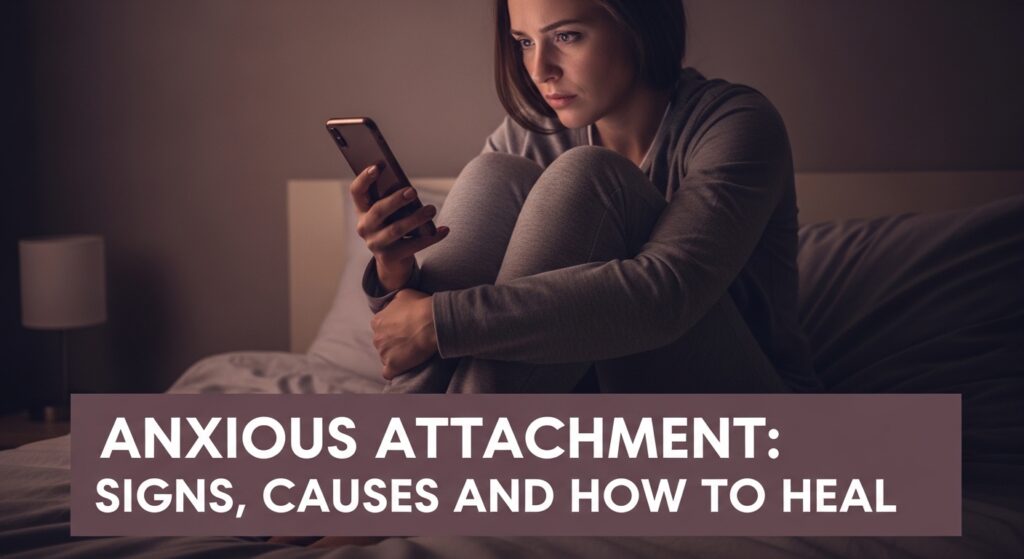
2. Anxious Attachment — Love on High Alert
How it develops: Anxious attachment — also called ambivalent or preoccupied attachment — typically forms when caregiving is inconsistent. Sometimes the caregiver is warm and responsive. Other times, they are unavailable, distracted, or emotionally unpredictable. The child never quite knows what to expect — so they learn to be hypervigilant, constantly scanning for signs of disconnection.
What it looks like in adults: Anxiously attached adults crave deep intimacy but are simultaneously terrified of losing it. They tend to be highly sensitive to their partner’s moods, words, and behavior — reading potential rejection into things that others might not notice at all.
Common patterns include:
- Constantly seeking reassurance (“Do you still love me? Are we okay?”)
- Difficulty being alone or self-soothing
- Interpreting a delayed text as a sign of fading interest
- Becoming emotionally activated quickly during conflict
- A tendency to people-please at the expense of their own needs
In relationships: Anxious partners often come across as “too much” — too needy, too intense, too sensitive. But beneath those behaviors is a profound fear: I am not enough, and the people I love will eventually leave. Every action is an attempt to prevent that feared outcome.
The shadow side: Ironically, the desperate pursuit of closeness that anxious attachment produces can push partners away — fulfilling the very fear it was trying to prevent. This is one of the most painful cycles in relationship psychology.
The anxiously attached don’t love too much. They fear too much. And fear, unchecked, can masquerade as love.
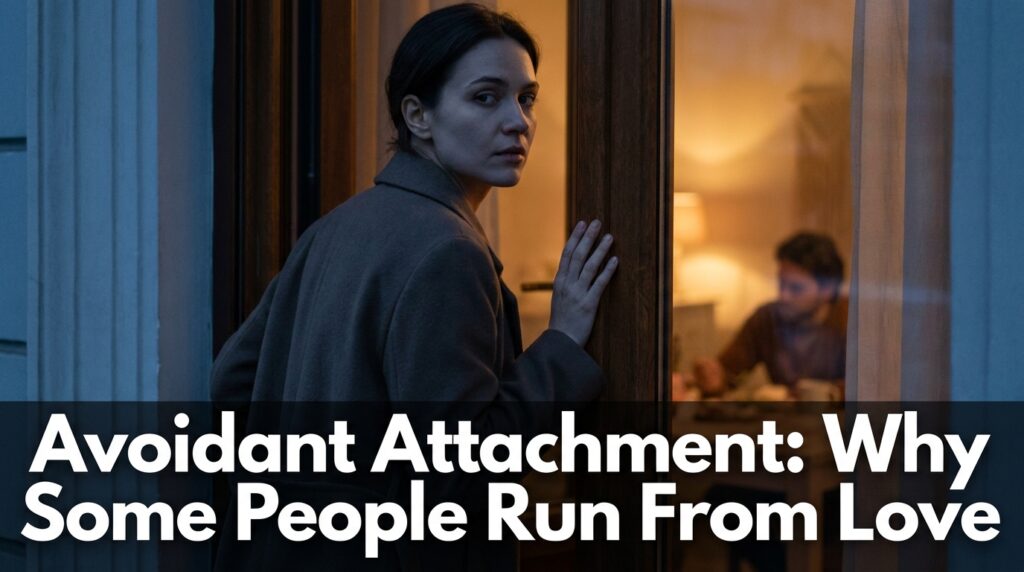
3. Avoidant Attachment — The Intimacy Paradox
How it develops: Avoidant attachment — also called dismissive-avoidant — forms when a caregiver is consistently emotionally unavailable, dismissive of the child’s emotional needs, or discourages dependence. The child learns: my needs are a burden. Emotional expression leads to rejection. The safest thing to do is need nothing and no one.
What it looks like in adults: Avoidantly attached adults highly value independence — sometimes to an extreme. They are often self-sufficient, capable, and appear emotionally stable on the surface. But beneath that self-reliance is a deep discomfort with emotional closeness and vulnerability.
Common patterns include:
- Pulling away when a relationship gets “too serious”
- Feeling suffocated or overwhelmed by a partner’s emotional needs
- Difficulty expressing feelings or asking for help
- Idealizing independence and viewing neediness as weakness
- Shutting down during conflict rather than engaging
In relationships: Avoidant partners often attract anxiously attached people — and the resulting dynamic is one of the most studied in relationship psychology. The more the anxious partner pursues, the more the avoidant withdraws. The more the avoidant withdraws, the more the anxious partner panics. It becomes a painful, exhausting dance that neither person fully understands.
The shadow side: Avoidantly attached people do want love and connection. They often just don’t have the tools to receive it without feeling threatened. Beneath the independence is frequently a deep loneliness they’ve learned not to acknowledge.
How to Communicate Better With Your Partner: 12 Proven Techniques

4. Disorganized Attachment — When Love Feels Like Danger
How it develops: Disorganized attachment — also called fearful-avoidant — typically develops in environments where the caregiver was both a source of comfort and a source of fear. This is most common in cases of childhood trauma, abuse, neglect, or severe emotional instability at home. The child faces an impossible dilemma: the person I need to feel safe is also the person who scares me.
What it looks like in adults: Disorganized attachment is the most complex and often the most painful style. Adults with this pattern simultaneously crave deep intimacy and fear it profoundly. They may oscillate between anxious and avoidant behaviors — desperately wanting closeness, then sabotaging it when they get it.
Common patterns include:
- Intense push-pull dynamics in relationships
- Fear of both abandonment and engulfment
- Difficulty trusting partners, even caring and consistent ones
- Emotional volatility that can feel confusing to both themselves and their partners
- A tendency to attract or stay in unhealthy relationship dynamics
In relationships: Disorganized attachment makes stable, secure relationships feel paradoxically threatening. Love is unconsciously associated with danger or loss. Partners may experience the relationship as unpredictable and emotionally exhausting — even when the disorganized person desperately wants things to be different.
The shadow side: This attachment style is most strongly associated with past trauma. Healing is absolutely possible — but it typically requires professional therapeutic support, particularly trauma-informed approaches like EMDR or Emotionally Focused Therapy (EFT).

Can Your Attachment Style Change?
This is one of the most important questions in attachment psychology — and the answer is yes. Attachment styles are not life sentences.
Research consistently shows that attachment patterns, while deeply ingrained, are malleable. They can shift through:
Therapy: Particularly Emotionally Focused Therapy (EFT), Internal Family Systems (IFS), and trauma-informed approaches. A skilled therapist can help you identify the root of your attachment wounds and build new internal working models of relationships.
A secure relationship: Being in a consistently safe, loving relationship with a securely attached partner — what researchers call a “corrective emotional experience” — can gradually rewire attachment patterns over time. Love, when it is steady and trustworthy, teaches the nervous system that safety is possible.
Self-awareness and intentional work: Simply understanding your attachment style is itself transformative. When you can name the pattern — “This is my anxious attachment being triggered, not evidence that my partner is leaving” — you create space between the feeling and the reaction. That space is where healing lives.
You were not broken by your attachment wounds. You adapted. And adaptation means you can adapt again — this time, toward safety.

How to Use This Knowledge in Your Relationship
Understanding attachment theory isn’t just an intellectual exercise. It’s a practical tool. Here’s how to apply it:
Know your own style. Reflect honestly on your patterns. Do you pursue or withdraw? Do you need constant reassurance or struggle to give it? Do you feel most comfortable alone or only feel okay when connected? Honesty here is everything.
Understand your partner’s style. When you can see your partner’s behavior through the lens of their attachment history rather than as a personal attack, empathy becomes possible. Their avoidance isn’t rejection. Their anxiety isn’t manipulation. It’s a survival strategy — one they learned long before they met you.
Name the dynamic, not the person. Instead of “you’re being cold and distant,” try “I notice I’m feeling anxious and I think we’ve gotten into that pursue-withdraw pattern again. Can we slow down?” This language depersonalizes the conflict and invites collaboration.
Seek support together. Couples therapy with an attachment-informed therapist can accelerate healing dramatically. You don’t have to figure this out alone.
The Art of Active Listening in Relationships: A Practical Guide
Which Attachment Style Are You?
Sit with these questions honestly:
- When conflict arises, do you move toward your partner or away?
- Do you worry frequently that your partner will leave, or does closeness make you feel trapped?
- Is it easy or difficult for you to ask for what you need?
- When your partner is upset, is your first instinct to comfort them or to give them space?
- Do you feel worthy of love — or do you secretly wonder when they’ll figure out you’re not enough?
There are no right answers. Only honest ones. And honesty — with yourself first — is where every attachment healing journey begins.
💾 Save this article — share it with someone trying to understand their relationship patterns. 📤 Tag a friend who needs to read this. 👣 Follow Truthsinside.com for more psychology-backed insights on love, relationships, and the mind.
Frequently Asked Questions
Q1: What is the most common attachment style? Secure attachment is the most common, with research estimating that roughly 50–60% of adults have a predominantly secure attachment style. Anxious attachment affects approximately 20% of the population, avoidant around 25%, and disorganized attachment — which is most associated with early trauma — is estimated at around 5%, though some researchers believe it is underdiagnosed.
Q2: Can two anxious people be in a relationship together? Yes — but it comes with unique challenges. Two anxiously attached partners can create a dynamic of mutual reassurance-seeking that becomes exhausting for both. However, if both partners have self-awareness and are committed to growth, they can also offer each other deep empathy and understanding. Therapy — individual and couples — is especially valuable in this pairing.
Q3: Is avoidant attachment the same as not caring? No — and this is one of the most important misconceptions to correct. Avoidantly attached people often care deeply. They simply have a nervous system that has learned to associate emotional closeness with danger or loss of self. Their withdrawal is a protection mechanism, not a lack of love. With the right support and a patient partner, avoidant individuals can develop significantly more capacity for intimacy.
Q4: How do I know if I have disorganized attachment? Disorganized attachment is often characterized by contradictory relationship behaviors — desperately wanting closeness while simultaneously fearing and sabotaging it. It’s also associated with a history of childhood trauma or a caregiving environment that felt unsafe. If you recognize these patterns strongly in yourself, working with a trauma-informed therapist is the most effective path forward.
Q5: Can attachment theory explain why I keep attracting the same type of partner? Very much so. We are unconsciously drawn to what feels familiar — even when familiar means painful. Anxiously attached people often attract avoidant partners because the push-pull dynamic mirrors early caregiving experiences. Understanding this pattern is the first step to breaking it — and choosing relationships based on genuine compatibility rather than unconscious familiarity.