Have you ever looked at the person you love and felt a quiet, unsettling fear that something — or someone — has a stronger hold on them than you do? That feeling is not jealousy. It is not insecurity. It is one of the most painful forms of emotional clarity a person can experience in a relationship.
Substance addiction does not just affect the person using. According to the Substance Abuse and Mental Health Services Administration (SAMHSA), more than 46 million Americans struggled with a substance use disorder in 2022 alone — and for every person battling addiction, at least one romantic partner is quietly absorbing the emotional fallout. Research published in the Journal of Marital and Family Therapy confirms that addiction is one of the leading contributing factors to relationship breakdown, emotional abuse, financial instability, and chronic trauma in partnerships across the United States.
But here is what makes addiction in relationships particularly devastating: it rarely announces itself loudly. It creeps in slowly, disguised as stress, bad days, personality quirks, and isolated incidents — until the day you realize those incidents were never actually isolated at all. Recognizing the addiction red flags in a relationship early is not about giving up on someone you love. It is about seeing clearly enough to protect yourself while there is still time to make an informed choice.
Why Addiction Changes the Entire Relationship Dynamic
Before diving into the specific warning signs, it is essential to understand why addiction fundamentally alters the foundation of any romantic relationship.
Addiction — whether to alcohol, prescription medication, illegal substances, or other compulsive behaviors — rewires the brain’s reward and priority system. What once brought joy, connection, and motivation gradually becomes secondary to the substance. This is not a moral failing. It is a neurological reality confirmed by decades of scientific research.
But understanding the neuroscience does not make the emotional reality any less painful for the partner on the receiving end. When substances become the primary relationship in your partner’s life, you are no longer in a partnership of two. You are in a triangle — and the third party will always demand more than you can compete with.
The patterns that emerge — lying, manipulation, emotional unavailability, broken promises, financial chaos — are not random. They are the predictable byproducts of a brain that has reorganized itself around one central priority: the next hit, the next drink, the next fix.
Knowing this does not excuse the behavior. But it does help you understand why loving harder, trying more, and sacrificing everything rarely changes the outcome without professional intervention.
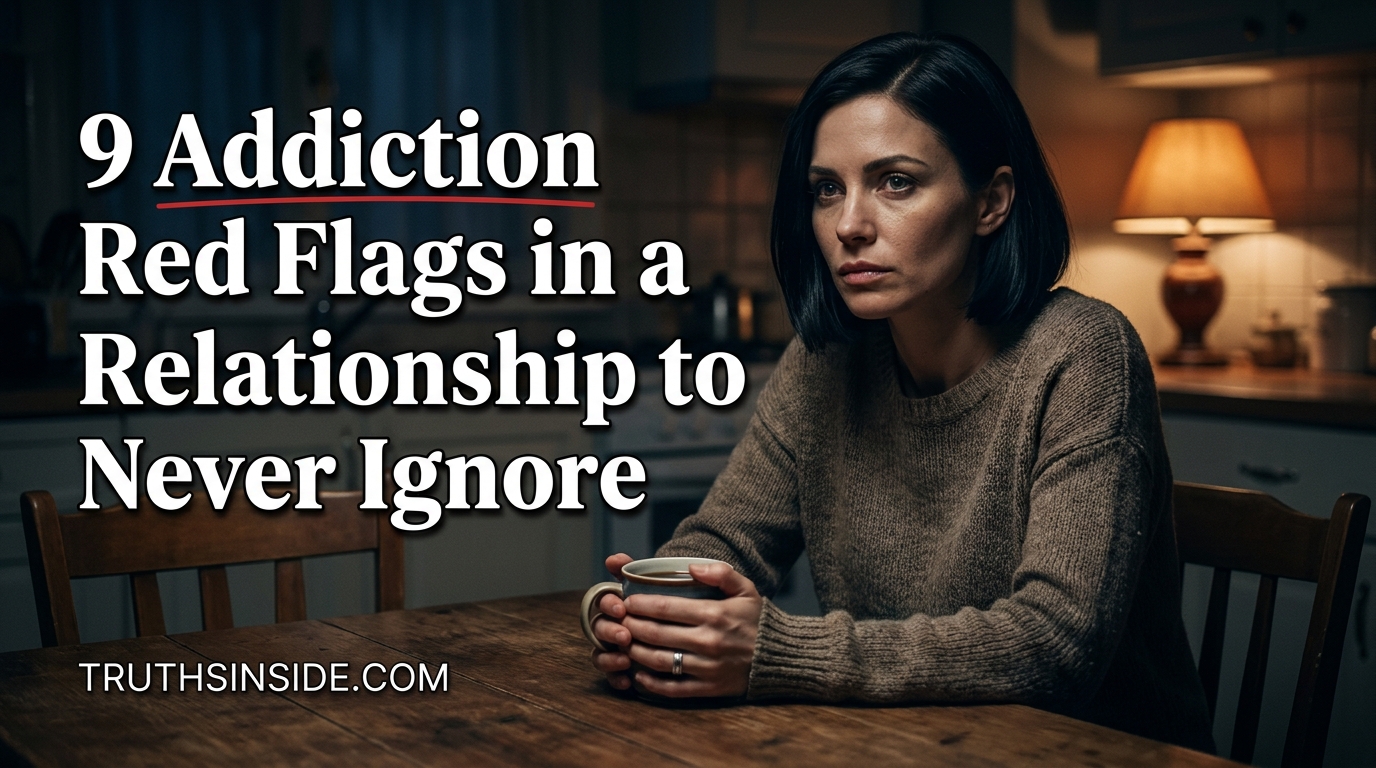
9 Addiction Red Flags in a Relationship You Should Never Ignore
1. They Consistently Choose the Substance Over Quality Time With You
In a healthy relationship, both partners prioritize each other. Time together is valued, protected, and genuinely enjoyed. When addiction enters the picture, that priority quietly shifts — and then not so quietly.
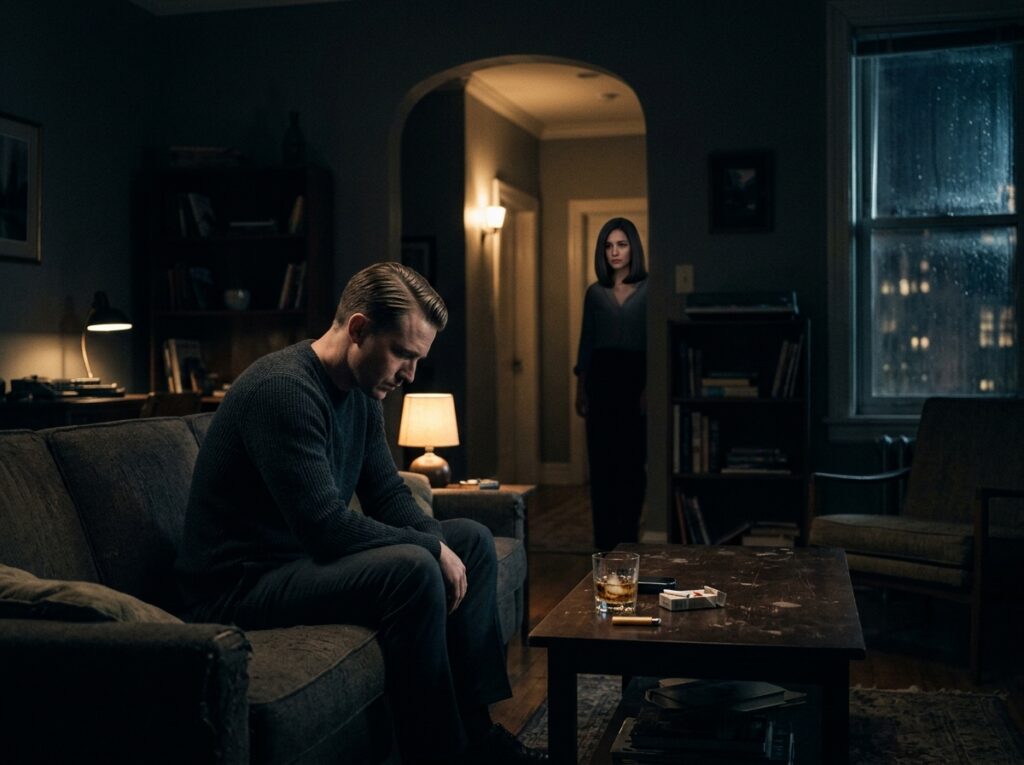
You may notice that plans get cancelled when they have been drinking or using. Events they once looked forward to are now skipped. Evenings that used to be shared become solo drinking sessions or unexplained absences. When you express disappointment, the response is often irritation, minimization, or blame.
This is one of the earliest and most telling addiction red flags in a relationship. The substance is not competing with you for their attention. In their neurologically rewired brain, it has already won.
2. Lying Has Become the Default — About Everything
Honesty is the structural foundation of every healthy relationship. When addiction is present, that foundation begins to crack — and then crumble.
Lies in addiction-affected relationships are rarely limited to hiding substance use. They expand to cover finances, whereabouts, the amount consumed, promises made and broken, and the severity of the problem itself. Partners of people with addiction often describe a slow, disorienting shift from trusting everything to questioning everything.
Gaslighting frequently accompanies this pattern — where the person with addiction makes their partner feel irrational, hypersensitive, or paranoid for noticing things that are genuinely happening. If you have begun to doubt your own perception of reality in your relationship, that is not confusion. That is a significant warning sign.
3. Financial Instability That Cannot Be Fully Explained
Money disappearing without a clear explanation is one of the most concrete and measurable addiction red flags in a relationship. Sustaining an addiction is expensive — and that financial pressure inevitably bleeds into the shared life of a couple.
Watch for patterns such as unexplained withdrawals from joint accounts, frequent requests to borrow money, unpaid bills despite adequate income, hidden debt, pawned valuables, or an inability to account for where significant amounts of money have gone.
This financial chaos is not carelessness. It is the economic reality of funding a habit that the brain now treats as a biological necessity. And it is a pattern that escalates — rarely resolves on its own.
“When someone’s addiction becomes your financial, emotional, and psychological burden to carry — that is not love in crisis. That is a relationship in collapse.”
4. Dramatic Mood Swings Tied to Substance Use
Every human being experiences emotional ups and downs. But mood swings driven by substance use follow a distinctly different and recognizable pattern. There are periods of euphoria, unusual energy, or uncharacteristic warmth — followed by irritability, aggression, deep withdrawal, or emotional numbness — often cycling in direct correlation with when they last used or drank.
Learning to read these cycles is something partners of people with addiction do unconsciously and often without realizing it. You begin to gauge their mood before speaking. You learn when it is safe to bring something up and when it is not.
Walking on eggshells inside your own relationship is never normal. It is a red flag that demands to be taken seriously.
5. Their Social Circle Has Completely Changed
When addiction deepens, it typically reshapes a person’s social world. Old friends — particularly those who do not use — gradually fall away. New connections are formed almost exclusively with people who share or enable the habit.
If your partner has quietly but completely replaced their friendships with people who drink heavily, use substances, or enable their behavior — pay attention. This social restructuring is both a symptom and an accelerator of addiction. The new environment normalizes the behavior and removes accountability.
It also increasingly isolates both of you from the support systems that healthy couples rely on.
6. Promises Are Made and Broken in a Consistent Cycle
“I’ll stop after this weekend.” “I promise it won’t happen again.” “I’m cutting back starting Monday.”
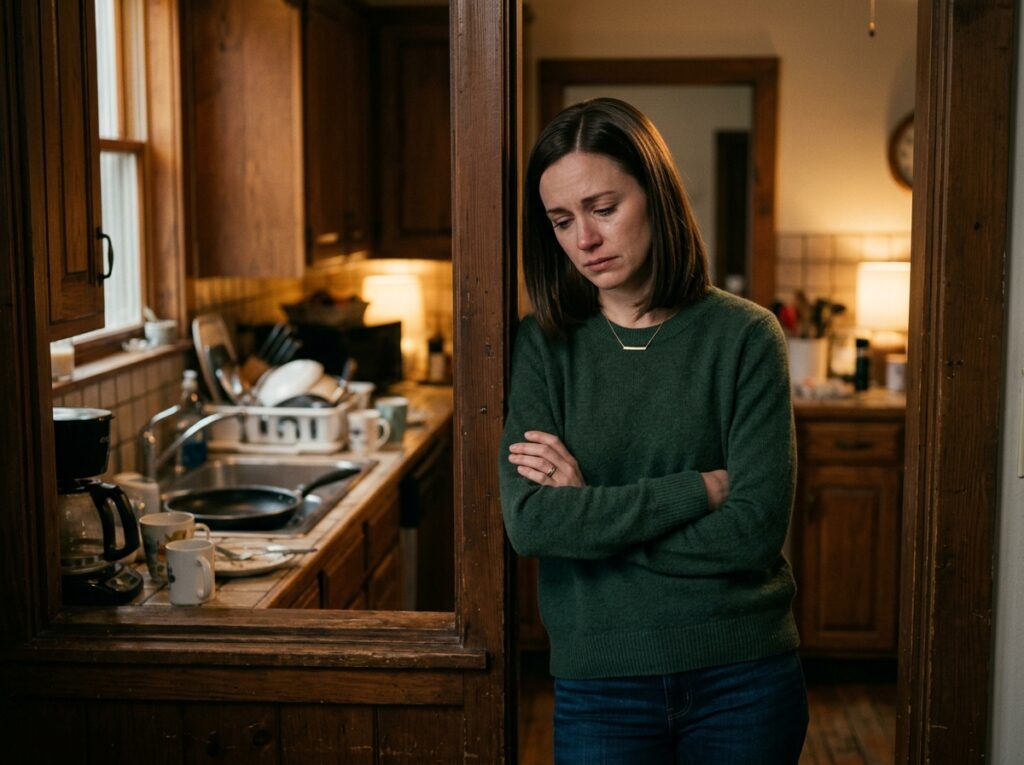
If these phrases sound familiar — and if the promises attached to them have been made and broken more times than you can count — you are witnessing one of the most emotionally exhausting patterns in addiction-affected relationships.
The promise cycle is not malicious in origin. People with addiction often genuinely intend to keep their word in the moment they make it. But intention without intervention rarely produces lasting change. The brain’s addiction pathways are more powerful than momentary resolve.
Each broken promise erodes trust. Each cycle of hope and disappointment chips away at your emotional resilience. And over time, you may find yourself becoming someone you do not recognize — anxious, hypervigilant, emotionally numb, or perpetually braced for the next letdown.
7. They Minimize, Deny, or Become Defensive About Their Use
One of the hallmark psychological features of addiction is denial — not always conscious deception, but a genuine inability or unwillingness to see the problem with accurate clarity.
When you express concern, they minimize: “I only had a few.” When you present evidence, they deny: “You’re exaggerating.” When you set a boundary, they become defensive or turn the conversation back on you: “You’re the reason I drink.”
This pattern — minimize, deny, deflect — is a protective psychological mechanism the addicted brain uses to preserve access to the substance. Understanding this does not mean accepting it. It means recognizing that your concern is valid, your perception is accurate, and the resistance you are experiencing is part of the disorder — not a reflection of your worth.
8. Your Emotional and Physical Safety Has Been Compromised
This point requires the most direct and urgent language possible: if substance use has ever led to physical aggression, verbal abuse, sexual coercion, emotional cruelty, or any situation in which you felt genuinely unsafe — that is beyond a red flag. That is a crisis.
Substance use significantly lowers impulse control and dramatically increases the risk of domestic violence. Research from the National Institute on Drug Abuse indicates that alcohol and drug use are involved in a significant majority of domestic violence incidents across the United States.
Your love for someone does not obligate you to remain in a situation that threatens your safety. Leaving is not abandonment. It is survival. And it may be the only action that creates enough consequence for real change to become possible.
9. You Have Started to Lose Yourself in the Relationship
This final red flag is the one most people notice last — because it happens so gradually that by the time you see it, you have already drifted far from who you used to be.
Partners of people with addiction often develop what psychologists call codependency — a pattern where your emotional state, identity, and sense of purpose become entirely consumed by managing, monitoring, or rescuing your partner.
Your needs go unmet because theirs always feel more urgent. Your social life shrinks. Your joy becomes conditional on whether they are having a good day. You have stopped making decisions based on what you want and started making them entirely based on what might keep the peace.
Losing yourself in the chaos of someone else’s addiction is not love. It is slow emotional erosion. And recognizing it is the first step toward reclaiming who you are.
What to Do When You Recognize These Red Flags
Recognizing addiction red flags in your relationship does not automatically mean the relationship must end. But it does mean something must change — and that change cannot come from you alone.
Steps to take when you recognize these patterns:
- Stop enabling. Covering for their behavior, making excuses to others, or financially supporting their habit are acts that delay consequences and slow the possibility of recovery
- Set clear, firm boundaries — and follow through on them consistently, regardless of how uncomfortable that feels
- Seek support for yourself. Al-Anon, therapy, and support groups for partners of people with addiction are powerful resources that remind you that you are not alone and not responsible for fixing this
- Have a direct, calm, and honest conversation about what you are observing and what you need — preferably with a therapist present
- Know your non-negotiables. Before love can save a relationship touched by addiction, safety must come first — always
“You cannot love someone into sobriety. But you can love yourself enough to stop accepting a relationship where you come second to a substance.”
The Hardest Truth About Loving Someone With Addiction
The most painful truth about addiction in relationships is this: you cannot want recovery for your partner more than they want it for themselves. You cannot sacrifice enough, love enough, or endure enough to make someone choose sobriety if they are not ready to make that choice.
This is not a failure of your love. It is the nature of the disorder.
What you can control is your own choices — where you place your energy, what you will and will not accept, and whether the life you are living reflects the love and respect you genuinely deserve.
Some partners with addiction do choose recovery. They do the work. They rebuild trust brick by brick. And those relationships can become something genuinely beautiful — forged in honesty and mutual growth.
But that outcome requires two willing participants. Not one person carrying the entire weight of a relationship while the other surrenders their presence to a substance.
You deserve to be someone’s first choice. Not their second. Not their afterthought. Their first.
Final Thoughts
Addiction red flags in a relationship rarely scream. They whisper — quietly, persistently, and over time — until the whisper becomes impossible to ignore.
If you recognized yourself or your relationship in any part of this article, please do not dismiss what you felt while reading it. That recognition is important. That discomfort is telling you something true.
You are allowed to love someone deeply and still acknowledge that the relationship as it currently exists is causing you harm. Those two things are not contradictions. They are the painful, honest intersection of love and self-preservation.
And navigating that intersection with clarity and courage is one of the bravest things a human being can do.
💾 Save this article so you can come back to it when you need the clarity and strength to see your situation clearly.
📤 Share this with someone who needs to hear that recognizing red flags is not giving up — it is waking up.
👣 Follow Truthsinside.com for more honest, psychology-backed articles on relationships, red flags, and the love you actually deserve.
📃 Related article: Signs He Likes You But Is Scared: 18 Behaviors Men Show When Afraid to Commit
Frequently Asked Questions
1. Can a relationship survive one partner’s addiction?
Yes — but only under specific conditions. Recovery must be genuinely pursued by the person with addiction, not just promised. Both partners typically need professional support, including individual therapy and couples counseling. Trust must be rebuilt slowly and consistently over time. Survival and genuine flourishing are possible, but they require real work from both people — not just endurance from one.
2. What is the difference between supporting a partner with addiction and enabling them?
Supporting a partner with addiction means encouraging professional help, maintaining honest communication, and holding firm boundaries. Enabling means covering up consequences, providing financial resources that fund the habit, making excuses to others, or tolerating behavior that crosses your stated boundaries. The line between the two can feel blurry when you love someone — but the distinction is critically important.
3. How do I know if I have become codependent in my relationship?
Signs of codependency include making your partner’s needs consistently more important than your own, deriving your self-worth from their behavior, feeling responsible for managing their emotions, losing your own identity and interests, and staying in the relationship primarily out of fear of what will happen to them if you leave. If several of these resonate, speaking with a therapist who specializes in codependency is strongly recommended.
4. Should I give my partner an ultimatum about their substance use?
An ultimatum should only be issued if you are genuinely prepared to follow through — otherwise it becomes another broken boundary that erodes your credibility and self-respect. If you reach a point where your safety, financial stability, or emotional health is severely compromised, expressing clearly what you will and will not accept — and meaning it — is not manipulation. It is self-advocacy.
5. Where can I find support if I am in a relationship affected by addiction?
Al-Anon and Nar-Anon are free, widely available support groups specifically designed for family members and partners of people with addiction. The SAMHSA National Helpline (1-800-662-4357) is available 24 hours a day, 7 days a week, and provides confidential referrals to treatment and support services. Individual therapy with a counselor who specializes in addiction and relationship trauma is also highly recommended.
🎵 Music
Maren Lull is a singer-songwriter who writes from the places most people don’t talk about out loud.
Not the dramatic grief. Not the obvious heartbreak. The quiet kind — the ordinary Tuesday emptiness, the habit of reaching for someone who isn’t there anymore, the particular exhaustion of being strong for so long that the strength itself wears thin.
Her music lives at the intersection of emotional honesty and soft beauty — breathy vocals over gentle piano, slow tempos, lyrics that feel less like songs and more like something you wrote in a private notebook at two in the morning and never showed anyone.
Maren Lull writes for the people who feel everything deeply and say very little about it. For the ones who listen to sad music not because they want to feel worse — but because being understood, even by a song, makes the feeling easier to carry.
📱 Follow Maren Lull:
→ Spotify
→ Apple Music
→ Youtube
→ Audiomack