There is a specific kind of exhaustion that comes not from working too hard or sleeping too little — but from constantly defending your right to exist on your own terms inside a relationship. If you have ever felt like you were always explaining yourself, always justifying your needs, always apologizing for having limits in the first place, you already know what boundary violation feels like from the inside. And you are far from alone. According to a 2021 survey by the American Psychological Association, nearly 67 percent of adults reported feeling that their personal boundaries had been disrespected by someone close to them — a partner, family member, or close friend.
Boundary violation red flags are not always loud. They don’t always arrive as explosive arguments or obvious acts of control. More often, they are quiet, cumulative, and dressed in the language of love, concern, or humor. They are the partner who “just wants to know where you are at all times.” The friend who guilt-trips you every time you say no. The family member who dismisses your feelings as dramatic and then does the exact same thing again the following week.
What makes these violations so damaging is not just the individual act — it is the message that each one sends: your needs don’t matter as much as mine. Over time, that message becomes a belief. And that belief quietly dismantles your sense of self-worth, your trust in your own instincts, and your ability to recognize what healthy love actually looks like. This article is your honest, psychology-backed guide to identifying every major boundary violation red flag before it costs you your peace, your confidence, or your sense of self.

Why Boundary Violation Red Flags Are So Dangerous to Ignore
Understanding what boundary violations actually are — at a psychological level — is the first step in recognizing them clearly. Boundaries are not demands. They are not ultimatums. They are not signs of emotional unavailability or being difficult to love. According to licensed therapist and author Nedra Tawwab, boundaries are “expectations and needs that help you feel safe and comfortable in your relationships.”
When someone violates those boundaries, they are not simply making a mistake or misunderstanding your needs. They are, consciously or unconsciously, prioritizing their own comfort over your clearly stated wellbeing. And when that happens repeatedly — after you have communicated, after you have explained, after you have asked — it stops being an accident and becomes a pattern.
Psychologists have long established that chronic boundary violations are a foundational feature of emotionally abusive relationship dynamics. Research published in the Journal of Interpersonal Violence found that individuals in relationships where their boundaries were consistently ignored showed significantly higher rates of anxiety, depression, low self-esteem, and post-traumatic stress symptoms.
The reason these red flags are so dangerous to ignore is that they rarely stay the same size. A boundary violation that begins as something small — a partner who reads your messages without asking — tends to escalate gradually into something far more controlling. And by the time the violations become undeniable, many people have already been conditioned to doubt their own perceptions. That conditioning is precisely the point.
9 Alarming Boundary Violation Red Flags You Should Never Ignore
Red Flag 1: They Dismiss Your Boundaries as Overreacting
One of the most universal and insidious boundary violation red flags is when someone responds to your stated limit with minimization. You say “I’m not comfortable with that.” They say “You’re so sensitive” or “Why do you always make everything such a big deal?” or “I was just joking — can’t you take a joke?”
This response is not confusion. It is a refusal to take your needs seriously — wrapped in language designed to make you feel like the problem. When someone consistently responds to your boundaries by questioning your emotional validity rather than adjusting their behavior, they are not trying to understand you. They are trying to make you stop having needs that inconvenience them.
This is also a foundational gaslighting technique. And it is extraordinarily effective because it redirects the conversation from their behavior to your reaction — which means their violation never has to be addressed.
Red Flag 2: They Keep Testing the Same Boundary Repeatedly
A genuinely respectful partner, when told something makes you uncomfortable, will make an honest effort not to do it again. They may not always succeed perfectly — humans are imperfect — but the effort is there, and improvement is visible over time.
Someone who violates your boundaries repeatedly, for the same thing, after multiple clear conversations, is not forgetting. They are choosing. There is a significant and important difference between someone who struggles to change a habit and someone who has decided your limit is optional based on their mood or convenience on any given day.
Pay close attention to how many times you have had the same conversation about the same boundary. That number tells you something critical about how seriously your needs are being taken.
Red Flag 3: They Use Guilt as a Boundary Demolition Tool
“After everything I’ve done for you, you won’t do this one thing for me?” “If you really loved me, you wouldn’t need to set limits with me.” “I guess I just don’t matter to you.”
Guilt-tripping in response to a boundary is one of the most manipulative boundary violation tactics that exists — and one of the most effective, particularly with people who have a strong empathetic nature. When someone weaponizes your care for them against your need for self-protection, they are not expressing hurt. They are applying pressure designed to make you abandon your own limits to relieve their discomfort.
Healthy relationships involve two people who can tolerate the discomfort of boundaries being set — because they understand that those boundaries are not personal rejection. They are personal necessity.
“A person who truly loves you will not require you to abandon yourself to prove it. Boundaries are not barriers to love — they are the architecture of it.”
Red Flag 4: They Ignore Consent in Physical or Emotional Spaces
Boundary violations extend far beyond emotional conversations. They show up in physical space — a partner who touches you after you’ve asked them not to, who enters your personal space when you’ve signaled you need distance, or who refuses to accept “no” in any physical context.
They also show up in emotional space — someone who demands emotional labor from you when you’ve clearly communicated you are not in a place to give it. Someone who forces emotional conversations at 2 AM when you’ve said you need to sleep. Someone who shares your private information with others without your permission, framing it as “not a big deal.”
Physical and emotional consent are not different categories. They are both forms of basic human respect. When either is consistently ignored, it is a serious and alarming red flag.
Red Flag 5: They Make Your Private Information Public
You shared something vulnerable — something personal, painful, or private — with someone you trusted. And they told other people. Maybe they framed it as concern. Maybe they said they needed advice. Maybe they just didn’t think it was a big deal.
Sharing someone’s private information without their consent is a profound boundary violation. It communicates that your trust is not safe with this person, that your privacy is not something they consider worthy of protection, and that their need to share outweighs your right to control your own story.
Watch how someone handles what you tell them in confidence. It will tell you everything about whether they view your trust as a gift or as content.
Red Flag 6: They Frame Control as Care
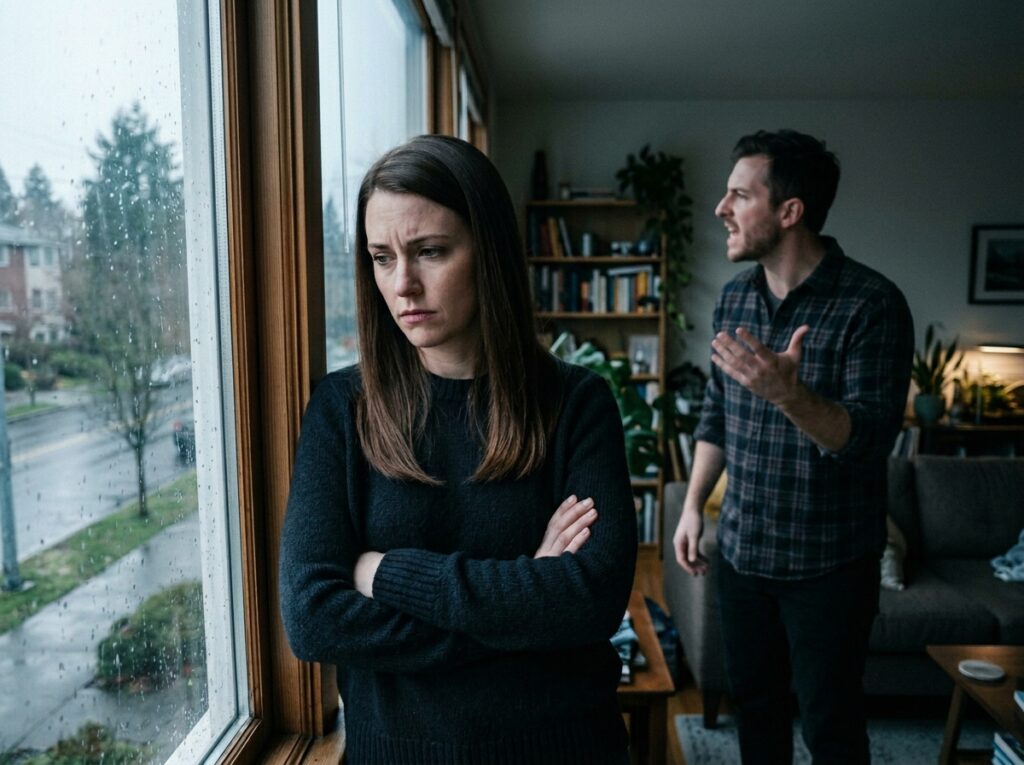
“I only check your phone because I love you and I worry.” “I don’t want you seeing those friends because they’re a bad influence on you.” “I’m just trying to protect you.”
This is one of the most sophisticated boundary violation red flags because it disguises control in the language of devotion. It is designed to make you feel that accepting the violation is actually proof of your love for them — and that resisting it is selfishness or ingratitude.
Genuine care looks like support, encouragement, and trust. It does not look like surveillance, isolation, or overriding your stated preferences under the banner of protection. When someone’s “love” consistently requires you to surrender your autonomy, what they are expressing is not love. It is ownership.
Red Flag 7: They Punish You for Having Boundaries
The punishment doesn’t have to be dramatic to be real. It can be the cold shoulder that lasts for days after you said no to something. The sudden emotional withdrawal that only ends when you apologize for having a limit. The passive-aggressive comments that make the atmosphere unbearable until you relent.
When someone punishes you — in any form — for maintaining your boundaries, they are training you. Consciously or not, they are teaching you that there is a cost for self-protection — and that cost is their love, their warmth, their presence. Over time, most people learn to stop asserting limits simply to avoid the punishment. This is how boundary erosion works in practice.
Red Flag 8: They Rewrite What You Said
You clearly communicated a boundary. Later, when you reference it, they tell you that’s not what you said. Or that you said it differently. Or that you agreed to something you have no memory of agreeing to.
This is gaslighting applied specifically to boundary conversations — and it is one of the most destabilizing experiences a person can have in a relationship. When your memory of what you said is consistently contradicted by someone else’s version, you begin to doubt yourself. And self-doubt is the most effective dismantler of healthy boundaries that exists.
If you find yourself second-guessing conversations you remember clearly, or frequently apologizing for things you’re not sure you actually did wrong, this red flag deserves serious and immediate attention.
Red Flag 9: They Treat Your “No” as the Beginning of a Negotiation
“No” is a complete sentence. In a relationship built on mutual respect, it does not require justification, elaboration, or defense. When someone receives your “no” as an opening bid in a negotiation — pushing back, wearing you down, asking “but why?” repeatedly until you either justify yourself exhaustively or give in out of exhaustion — they are not respecting your boundary.
They are simply working to eliminate it through persistence. And the danger of this pattern is that it teaches you to either over-explain every limit you have or to simply stop setting them — because the energy required to defend them isn’t worth it anymore.
That is exactly the outcome the violation is designed to produce.

The Psychology Behind Why People Violate Boundaries
Understanding why people violate boundaries doesn’t excuse the behavior — but it does help you recognize it more clearly and stop internalizing it as your fault.
Some people violate boundaries because they grew up in environments where boundaries were never modeled or respected. They genuinely don’t have a framework for understanding that other people’s limits are real and deserve honor. This doesn’t make the violation acceptable, but it does suggest that with significant self-awareness and therapeutic work, change is possible.
Others violate boundaries because they are operating from a place of insecurity, fear, or need for control. When a person is deeply afraid of losing someone, they may attempt to eliminate the emotional distance that healthy boundaries create — not because they want to hurt you, but because your autonomy feels threatening to their attachment.
And some people violate boundaries because they have a fundamental belief that their needs are more important than yours — that your limits are obstacles to their desires rather than legitimate expressions of your humanity. This is the most concerning category, because it is the least likely to change without significant external intervention.
The most important thing to understand is this: regardless of the reason behind a boundary violation, the impact on you is real. Your feelings are valid. Your needs are legitimate. And the pattern — not the explanation — is what you need to evaluate when deciding what to do next.
What to Do When You Recognize These Red Flags
Recognizing boundary violation red flags is the first step. Knowing what to do with that recognition is the second — and often harder — one.
Name it clearly. Stop softening your language to protect their feelings at the expense of your clarity. “When you do X after I’ve asked you not to, that is a boundary violation and it is not okay” is more effective — and more honest — than “I just feel like maybe sometimes you don’t really hear me.”
Stop over-explaining. You do not owe anyone a dissertation on why you have a limit. The moment you begin justifying your needs in exhaustive detail to avoid someone’s displeasure, you have already begun to cede ground. State your boundary clearly, once, without apology.
Watch behavior — not promises. Someone who genuinely respects you will show it through consistent changed behavior — not through repeated apologies followed by the same actions. Words are easy. Patterns are the truth.
Protect your energy. If someone consistently violates your boundaries despite clear communication, the most self-respecting thing you can do is reduce or eliminate their access to you. Boundaries without consequences are simply preferences. And preferences, in the absence of respect, are ignored.
Seek support. A therapist, counselor, or trusted support system can help you process whether what you’re experiencing is a violation, help you strengthen your ability to enforce limits, and support you through whatever decision you ultimately make about the relationship.
“The people who get angry when you set boundaries are the exact people those boundaries were designed for. Don’t let their reaction convince you that your limit was wrong.”
The Bottom Line: You Are Allowed to Have Limits
Boundary violation red flags are not minor inconveniences or personality quirks to be tolerated in the name of love. They are signals — sometimes quiet, sometimes loud — that someone in your life does not view your needs as deserving of the same respect they expect for their own.
You are not too sensitive for having limits. You are not controlling for enforcing them. You are not unlovable for expecting them to be honored. You are simply a person who understands their own worth — and that understanding is one of the most powerful things you can bring to any relationship.
The right people — the ones worthy of your trust, your time, and your heart — will not need to be convinced that you deserve respect. They will offer it freely, consistently, and without condition.
And the ones who don’t? They are telling you exactly who they are. Believe them the first time.
CTA
💾 Save this article so you can come back to it whenever you need a clear reminder of what boundary respect actually looks like — and what it doesn’t.
📤 Share it with someone who needs to see this today. You might not know it, but this could be exactly what they’ve been searching for words to describe.
👣 Follow Truthsinside.com for more honest, psychology-backed content on red flags, toxic patterns, and building the relationships you actually deserve.
📃 Related article: 15 Subtle Red Flags in a New Relationship Most People Miss
FAQ
Q1: What is the difference between a boundary and a controlling demand?
A boundary is a limit you set to protect your own emotional, physical, or mental wellbeing — it governs your own behavior and what you will accept. A controlling demand attempts to govern someone else’s behavior, choices, or autonomy. Healthy boundaries say “here is what I will and won’t accept.” Controlling demands say “here is what you are and aren’t allowed to do.”
Q2: What if the person violating my boundaries says they didn’t know they were doing it?
“I didn’t know” is a valid explanation the first time — it is not a valid explanation for the fifth. After you have clearly communicated a boundary, continued violations are no longer a matter of ignorance. They are a matter of priority. Pay attention to whether the behavior changes after you communicate, not just to whether they apologize.
Q3: Can someone who violates boundaries change?
Change is possible, but it requires genuine self-awareness, a sincere desire to do better, and consistent effort — usually supported by professional help such as therapy. The key indicator of real change is sustained behavioral difference over time, not promises made during conflict. Be cautious of mistaking repeated apologies for actual growth.
Q4: Is it okay to end a relationship over boundary violations?
Absolutely. Ending a relationship because your fundamental needs are not being respected is not an overreaction — it is an act of self-preservation. You are under no obligation to remain in any relationship where your basic dignity and limits are consistently disregarded.
Q5: How do I know if my boundaries are reasonable?
Reasonable boundaries are those that protect your physical safety, emotional health, and personal integrity without requiring you to control another person’s life. If your limits are driven by a need to feel safe, respected, and comfortable in your own skin, they are reasonable. If you find yourself uncertain, speaking with a therapist can help you gain clarity and confidence in your own needs.
🎵 Music
Maren Lull is a singer-songwriter who writes from the places most people don’t talk about out loud.
Not the dramatic grief. Not the obvious heartbreak. The quiet kind — the ordinary Tuesday emptiness, the habit of reaching for someone who isn’t there anymore, the particular exhaustion of being strong for so long that the strength itself wears thin.
Her music lives at the intersection of emotional honesty and soft beauty — breathy vocals over gentle piano, slow tempos, lyrics that feel less like songs and more like something you wrote in a private notebook at two in the morning and never showed anyone.
Maren Lull writes for the people who feel everything deeply and say very little about it. For the ones who listen to sad music not because they want to feel worse — but because being understood, even by a song, makes the feeling easier to carry.
📱 Follow Maren Lull:
→ Spotify
→ Apple Music
→ Youtube
→ Audiomack