
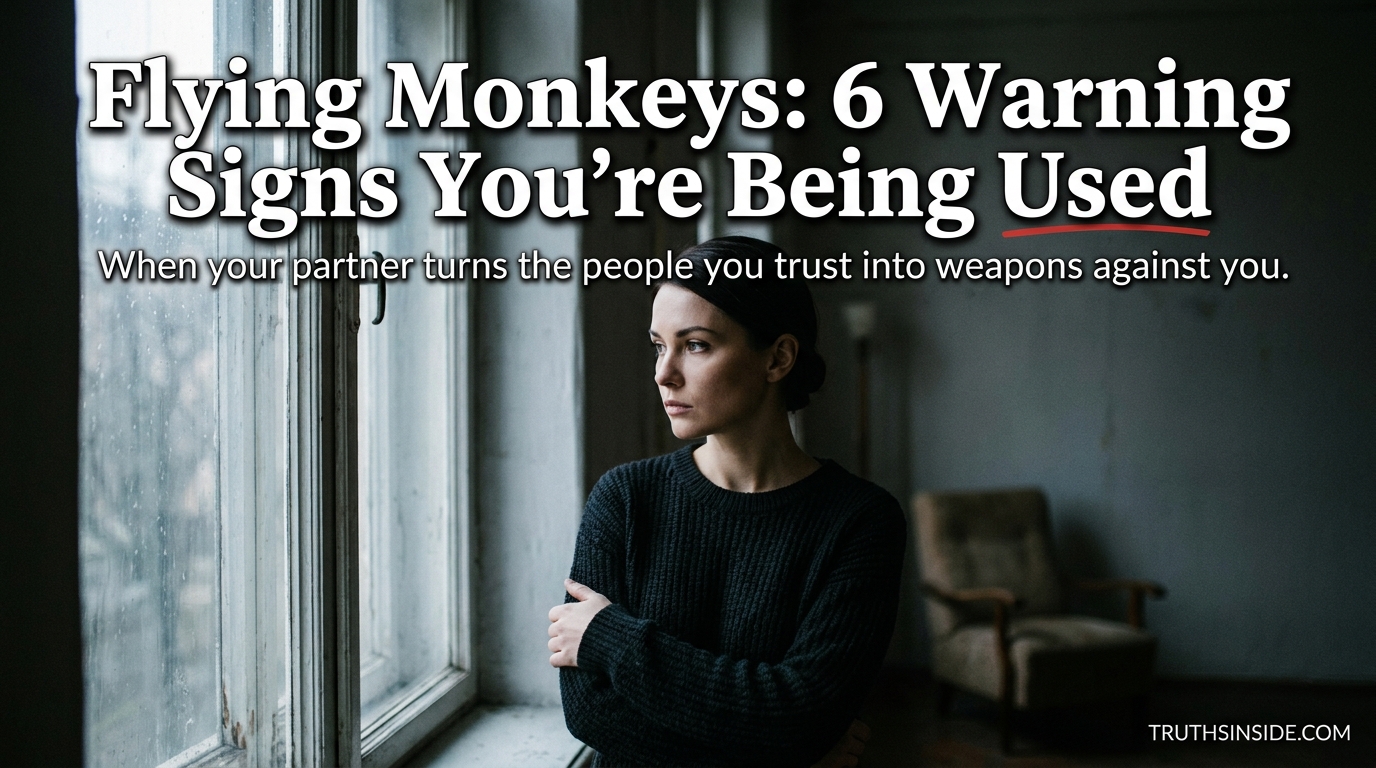
Flying Monkeys: Red Flags Your Partner Uses Others Against You
If you have ever had a friend, sibling, or coworker suddenly turn cold toward you after taking your partner’s side in a fight they weren’t even part of, you have likely met flying monkeys without knowing the term. Psychologists who study narcissistic abuse note that manipulators rarely fight their battles alone. Instead, they recruit others, often without those people realizing it, to pressure, shame, or isolate the person they are targeting.
The term comes from the Wizard of Oz, where the Wicked Witch sends winged monkeys to do her dirty work. In relationship psychology, flying monkeys are the friends, family members, or mutual acquaintances a manipulative partner enlists to reinforce control. They may show up as concerned messages, guilt trips, or one-sided lectures, all delivered by people who genuinely believe they are helping.
This article breaks down exactly what flying monkeys are, why manipulative partners rely on them, the six clearest warning signs that someone is using them against you, and how to protect yourself without losing the relationships caught in the crossfire. Recognizing this pattern is often the first step toward reclaiming your sense of reality.
What Are Flying Monkeys in a Relationship?
Flying monkeys are third parties recruited, consciously or unconsciously, to carry out a manipulator’s agenda. They are rarely villains themselves. Most are ordinary friends or family members who have only heard one side of the story and genuinely believe they are protecting someone they care about. That sincerity is exactly what makes this tactic so effective.
A manipulative partner will often present a curated, one-sided version of events to people outside the relationship. By the time these messengers reach out to “check in” or “just be honest,” they are already operating on distorted information. They may not even know they are being used. This is part of why the experience can feel so disorienting to the person on the receiving end, because the pressure comes wrapped in apparent concern rather than obvious hostility.
Therapists who specialize in narcissistic abuse recovery describe this dynamic as an extension of the manipulator’s control, reaching into spaces the manipulator cannot access directly. If a partner cannot convince you that you are overreacting, a recruited third party can do it for them, often more convincingly, because the message now comes from someone you trust.
📃 Related article: Enmeshment: 7 Toxic Signs of Suffocating Love
Why Manipulative Partners Use Flying Monkeys
Manipulators use flying monkeys because direct control has limits. A partner can only pressure you so much before the manipulation becomes obvious. Recruiting others extends that pressure outward, creating a chorus of voices that all seem to agree the manipulator is right and you are the problem. This tactic is especially common in relationships involving narcissistic or covert manipulation, where maintaining a likable public image matters deeply.
This dynamic also serves to isolate the target. When friends and family start echoing the manipulator’s narrative, the person being targeted often withdraws from those relationships entirely, not because the relationships were bad, but because engaging with them feels exhausting and unsafe. This isolation benefits the manipulator directly, since a partner with fewer outside connections is easier to control.
Finally, the tactic allows the manipulator to avoid accountability. Instead of directly attacking you, the manipulator can simply mention a grievance to a friend or relative, then step back and let that person deliver the pressure. If you push back, the manipulator can claim innocence, insisting they never said anything harsh themselves. This gives manipulators plausible deniability while still achieving the same controlling result.
“The cruelest part of flying monkeys is that the messenger usually has no idea they’re delivering someone else’s manipulation as their own concern.”
6 Warning Signs Flying Monkeys Are Being Used Against You
This pattern can be difficult to spot because the people involved rarely intend harm. These six signs tend to appear consistently across relationships where a partner uses others to maintain control.
1. Sudden, unsolicited messages from mutual contacts. Friends or family members you rarely hear from suddenly reach out with concerns about your relationship, almost word-for-word matching your partner’s complaints.
2. The messages feel scripted. These third parties often repeat specific phrases or accusations that sound suspiciously similar to things your partner has said directly to you, suggesting a shared script rather than independent observation.
3. You’re accused of things out of context. They frequently confront you about incidents they were not present for, armed with only one side of the story, presented as fact.
4. Pressure to apologize without explanation. You’re told to “just make peace” or “apologize for the sake of the relationship,” without anyone actually asking what happened from your perspective.
5. Isolation increases after contact. Every interaction with a recruited messenger seems to end with you feeling more alone, more distrusted by mutual friends, or less willing to reach out to your support system.
6. Your partner denies involvement. When you mention what was said, your partner insists they never asked anyone to intervene, even though the language and timing suggest otherwise.
Noticing even a few of these patterns is a strong signal that flying monkeys have entered your relationship dynamic, whether your partner orchestrated it deliberately or simply allowed it to happen.

How This Tactic Distorts Your Sense of Reality
One of the most damaging effects of flying monkeys is the way they reinforce gaslighting. When one person tells you that you’re overreacting, it’s possible to dismiss it. When three or four people, all seemingly independent, tell you the same thing, doubt creeps in even when your original perception was accurate. This is precisely why the tactic is so powerful, it multiplies the pressure without the manipulator lifting a finger.
Victims often describe a specific kind of confusion, wondering whether they are truly the problem, since so many people appear to agree. What they don’t see is the curated narrative feeding each conversation. These messengers rarely have access to full context, screenshots, timelines, or your actual explanation, because the manipulator controls what information reaches them.
Over time, repeated exposure to this pressure can erode self-trust. People who were once confident in their own judgment start second-guessing basic reactions, apologizing for things they didn’t do, and shrinking themselves to avoid triggering another wave of outside pressure. This erosion of self-trust is often the actual goal, whether the manipulator names it that way or not.
“Flying monkeys don’t just carry a manipulator’s message. They carry enough weight to make you doubt what you already know is true.”

Flying Monkeys vs Genuine Concern
Not everyone who raises a concern about your relationship is one of them. Genuine friends and family members sometimes notice real red flags and speak up out of authentic care. The difference lies in the approach. Genuine concern usually comes with curiosity, asking questions, wanting to understand your side, and respecting your answer even if they disagree.
Recruited messengers, by contrast, arrive with conclusions already formed. There is little interest in your perspective, only pressure to agree with a narrative that was handed to them. Genuine concern tends to soften when you explain your side. This tactic often escalates instead, repeating the same accusations regardless of what you say, because the goal was never mutual understanding, it was delivering a message.
Another distinction is timing. This kind of pressure tends to appear immediately after conflict with your partner, almost too conveniently aligned with the argument’s timeline. Genuine concern usually builds gradually, based on patterns someone has observed directly over time, not a single retelling from one biased source.
📃 Related article: Discard Phase: 6 Shocking Red Flags to Know Now
Protecting Yourself From Flying Monkeys
The first step is recognizing the pattern without blaming the messenger too harshly. Most people playing this role are unaware they are being used, and treating them as enemies can deepen the isolation the manipulator is counting on. Instead, calmly and briefly share your side without over-explaining or becoming defensive, since they often only have one version of events.
It also helps to set clear boundaries directly with the people relaying pressure. You can acknowledge their concern while declining to relitigate the relationship through a third party. A simple response like, “I appreciate you caring, but this is between me and my partner,” reduces the manipulator’s ability to use others as a proxy for pressure.
Documenting patterns can also help you see the bigger picture. If you notice this kind of outreach consistently appearing after specific disagreements, that timing itself becomes useful evidence of what is really happening. Sharing this pattern with a therapist or a trusted, unbiased friend can help validate your experience and counter the self-doubt it’s designed to create.
Finally, consider limiting how much relationship detail your partner has access to share with others, especially if flying monkeys have become a repeated pattern. This is not about hiding wrongdoing, it is about removing the raw material a manipulator needs to recruit new messengers. Protecting your peace sometimes means protecting your information.

Frequently Asked Questions About Flying Monkeys
Are flying monkeys always aware they’re being used?
No. Most genuinely believe they are helping and have no idea they are repeating a manipulator’s narrative rather than forming their own independent judgment.
Can family members become flying monkeys too?
Yes. Family members are especially common recruits because manipulators often build trust with them early, positioning themselves as the reasonable, likable partner long before any conflict arises.
How do I respond to a flying monkey without starting a bigger conflict?
Keep your response short, calm, and boundaried. Acknowledge their concern, briefly clarify your side if you choose to, and avoid getting pulled into a lengthy debate about the relationship.
Is it possible to stop flying monkeys from being recruited in the first place?
You can’t fully control what your partner tells others, but limiting how much private relationship information you share can reduce the material available for a manipulator to use.
Does their presence confirm a relationship is abusive?
Not on its own, but a consistent pattern of third-party pressure, combined with other manipulation tactics like gaslighting or isolation, is a strong indicator worth taking seriously.
If this article helped you recognize a pattern in your own relationship, save it so you can revisit these signs when you need clarity, share it with someone who might be facing the same pressure from people they trust, and follow Truthsinside.com for more honest, research-backed breakdowns of the red flags that hide in plain sight.
🎵 Music
Maren Lull is a singer-songwriter who writes from the places most people don’t talk about out loud.
Not the dramatic grief. Not the obvious heartbreak. The quiet kind — the ordinary Tuesday emptiness, the habit of reaching for someone who isn’t there anymore, the particular exhaustion of being strong for so long that the strength itself wears thin.
Her music lives at the intersection of emotional honesty and soft beauty — breathy vocals over gentle piano, slow tempos, lyrics that feel less like songs and more like something you wrote in a private notebook at two in the morning and never showed anyone.
Maren Lull writes for the people who feel everything deeply and say very little about it. For the ones who listen to sad music not because they want to feel worse — but because being understood, even by a song, makes the feeling easier to carry.
📱 Follow Maren Lull:
→ Spotify
→ Apple Music
→ Youtube
→ Audiomack