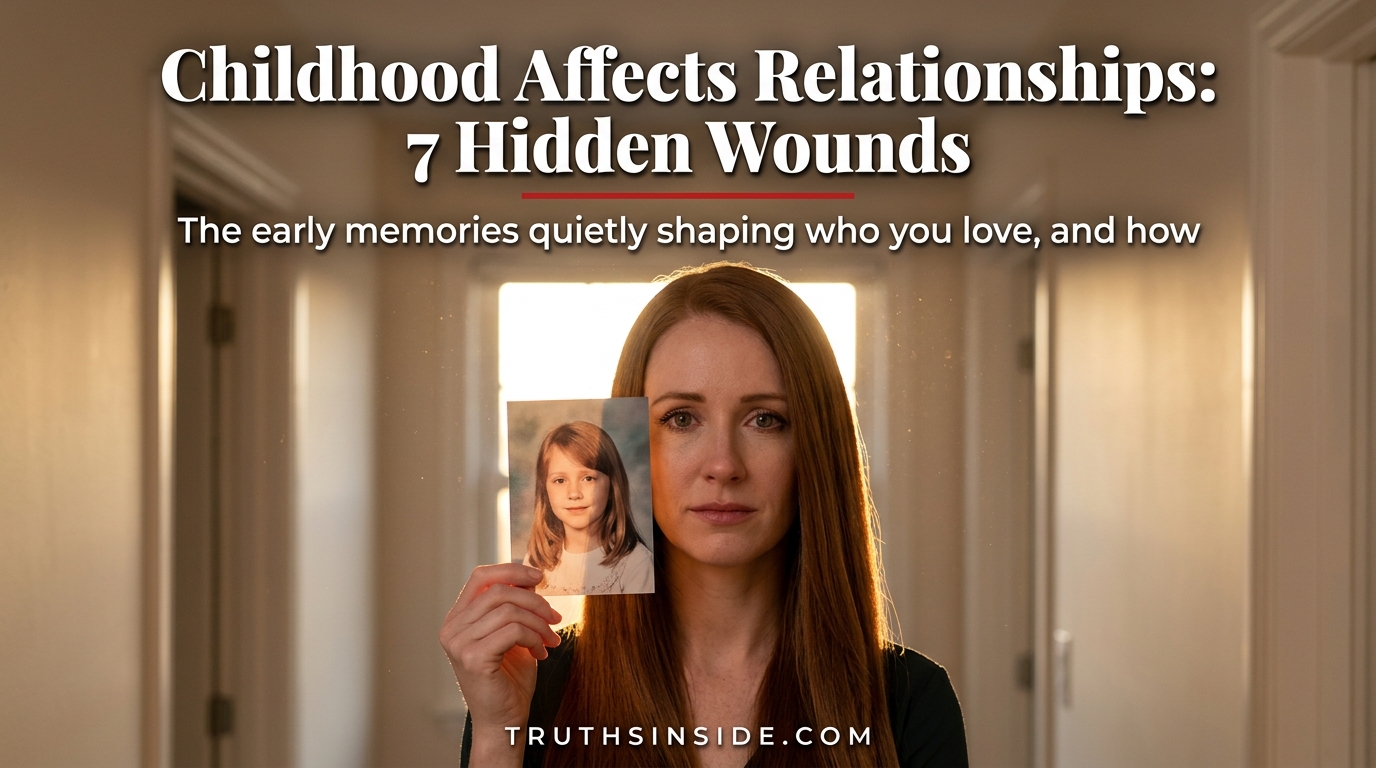
How Your Childhood Affects Your Adult Relationships
Understanding how childhood affects relationships can feel like finally finding the missing page of your own story. Maybe you panic when a text goes unanswered, or pull away just as someone gets close. You are not broken or dramatic. You are carrying a map drawn long before you could read.
The science backs this up. According to the CDC and the landmark Adverse Childhood Experiences study, roughly two-thirds of American adults report at least one adverse experience before age 18, and about one in six report four or more. Those early experiences shape stress responses, trust, and the way we give and receive love, which is exactly why childhood affects relationships decades later.
In this guide, you will learn seven ways your early years show up in adult love, how attachment styles form, why your nervous system repeats old patterns, and what research says about healing. No blame, and no labels that trap you. Just clarity and a path forward.
How Childhood Affects Relationships: The Science of Early Bonds
British psychiatrist John Bowlby proposed that human infants are biologically wired to seek closeness with a caregiver, because closeness meant survival. When a caregiver responds reliably, a child learns that needs are acceptable and people can be trusted. When responses are inconsistent, cold, or frightening, the child adapts. Those adaptations are intelligent survival strategies, yet they become the template for how childhood affects relationships years later.
In the 1970s, developmental psychologist Mary Ainsworth observed toddlers during brief separations from their parents and identified distinct patterns, now called secure, anxious, and avoidant attachment. In 1987, psychologists Cindy Hazan and Phillip Shaver showed that adults display strikingly similar patterns in romantic love. That research gave us the modern framework for understanding how childhood affects relationships in adulthood.
Bowlby described the mental blueprint as an internal working model: a set of beliefs about yourself and other people. Beliefs like “I am lovable,” “people stay,” or “my needs are too much” form long before you can put them into words. Because these beliefs operate in the background, you rarely question them. You simply live as though they are facts.
📃 Related article: Signs of Gaslighting: 7 Shocking Hidden Tactics
Why Childhood Affects Relationships Even When You Do Not Remember It
Most of our earliest learning is implicit, which means it is stored in the body rather than in a story. You may not remember specific scenes from age four, yet your nervous system remembers what safety felt like, what a raised voice meant, and how long it took for comfort to arrive. This is one reason childhood affects relationships so powerfully: the lessons live below conscious thought.
It also explains why logic alone rarely solves the problem. You can know that your partner is not angry and still feel your chest tighten. Psychologists describe this as the nervous system responding to the past rather than the present. Sigmund Freud called the tendency to recreate old dynamics “repetition compulsion,” and modern clinicians often describe it more simply: the familiar feels safe, even when it hurts.
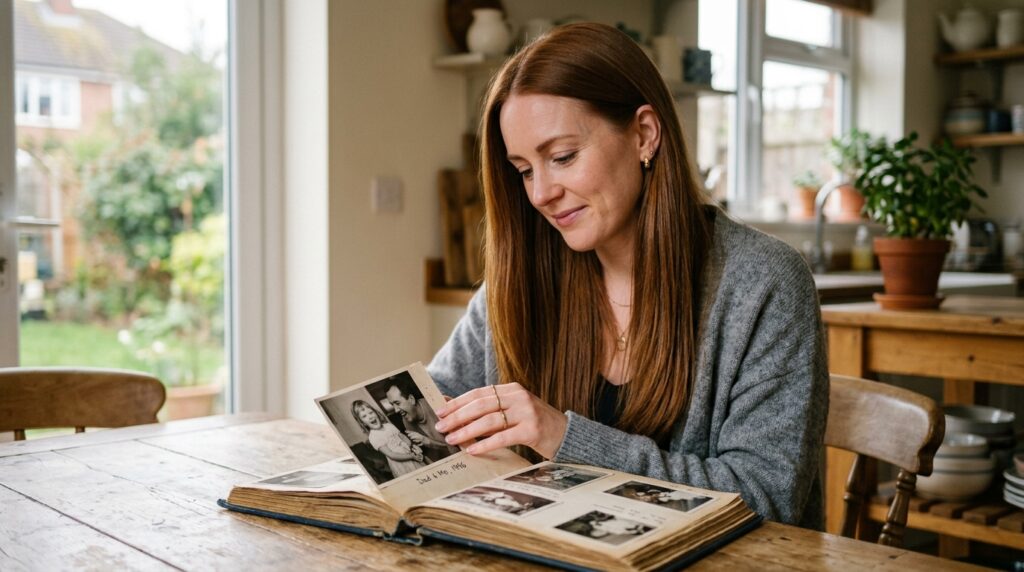
Children also tend to assume they are the cause of what happens at home. If a parent was distant, a child may conclude, “I am not interesting enough.” If a parent was volatile, the child may conclude, “I must be careful.” Those early conclusions harden into adult shame, which is why learning how childhood affects relationships can feel so emotional. You are not only studying a theory. You are meeting your younger self.
Siblings raised in the same home often leave with different patterns, which shows that the way childhood affects relationships depends on temperament, birth order, and how each child was treated, not only on major events. One child becomes the peacekeeper while another becomes the rebel. Both are responding to the same environment in different ways, and both carry those roles into adult love.
The patterns that once protected you can quietly block the closeness you want now.
7 Ways Childhood Affects Relationships in Adulthood
Every story is different, and having one of these patterns does not mean you had a bad childhood. Still, these seven themes appear again and again in research and in therapy rooms. Read them with curiosity, not judgment.
1. You Choose What Feels Familiar, Not What Feels Healthy
Have you ever felt bored by a kind, steady person and electrified by someone hot and cold? That spark is often familiarity, not chemistry. If love in your home came with unpredictability, your body may read inconsistency as intensity. This is one of the clearest ways childhood affects relationships: you gravitate toward the emotional climate you already know.
Healthy love can feel unfamiliar at first, even uncomfortable. Calm may feel like something is missing. Noticing that gap is powerful, because it lets you pause and ask, “Is this attraction, or is this recognition?”
2. You Fear Closeness, or You Fear Being Alone
People with anxious attachment tend to crave reassurance, worry about abandonment, and read silence as rejection. People with avoidant attachment tend to prize independence, feel smothered by closeness, and withdraw when emotions rise. Both patterns are strategies. The anxious child learned to turn the volume up to be noticed. The avoidant child learned to turn the volume down to avoid disappointment.
Many adults swing between the two. In couples, an anxious partner and an avoidant partner often trigger each other, creating a painful chase-and-retreat cycle. Understanding that this is learned, not a character flaw, softens the blame on both sides.
3. You Struggle With Conflict
Some people fight, some flee, some freeze, and some fawn, meaning they appease others to keep the peace. These stress responses are often practiced in childhood. A child who watched explosive arguments may go silent during disagreements as an adult. A child who was punished for speaking up may say “whatever you want” while resentment builds. This is how childhood affects relationships during the exact moments you most need to communicate.
The Gottman Institute’s research on couples highlights criticism, defensiveness, and stonewalling as patterns that predict relationship distress. Notice that stonewalling, withdrawing completely, often looks like the freeze response that once protected someone as a kid.
4. You Over-Give or Over-Control
Children who took care of a parent’s emotions, sometimes called parentification, often become adults who equate love with usefulness. They become the fixer, the planner, the one who never asks for anything. Others learned that unpredictability was dangerous, so they try to control details, schedules, and even other people’s moods. Both are attempts to create safety.
The cost is exhaustion and imbalance. Partners may feel either overly relied upon or tightly managed. Learning to receive care, and to tolerate uncertainty, is often the real growth edge.
5. You Have Trouble Trusting
If a caregiver broke promises, lied, or disappeared emotionally, trust becomes a risk calculation rather than a feeling. You may test partners, check phones, or keep one foot out the door. Or you may trust too quickly, mistaking intensity for intimacy.
Trust issues are rarely about the current partner. They are about an old lesson that said, “People who say they care might leave.” Naming this lesson helps you separate real red flags from old alarms. Trust is rebuilt through consistent small experiences, and that is true for you as well as for your partner.
6. You Cannot Name or Express What You Feel
In some homes, feelings were mocked, ignored, or punished. Children in these homes learn to hide emotions to stay safe. As adults, they may say “I don’t know” when asked how they feel, or they may only feel anger because it seemed like the one acceptable emotion. This is another way childhood affects relationships, because intimacy depends on emotional honesty.
Psychologists call severe difficulty identifying emotions alexithymia, but milder versions are very common. Start small: pause, name one word for what you feel, and share it once a day with someone safe.
7. You Believe Love Must Be Earned
If affection arrived only after good grades, good behavior, or good moods, you may have learned that love is a reward. As an adult, this can look like perfectionism, people pleasing, or a constant fear of being “too much” or “not enough.” You may work hard to be impressive instead of simply being present.
Rest, honesty, and imperfection feel risky when love once felt conditional. Yet real intimacy needs exactly those things. The question to carry is, “Can I be loved when I am not useful, perfect, or easy?” The healthiest relationships answer yes.

Childhood Affects Relationships Beyond Romance
Romantic partners are not the only place where childhood affects relationships. It shows up in friendships, where you might keep people at arm’s length or cling too tightly. It shows up at work, where criticism from a manager can feel like a parent’s disapproval. It shows up in parenting, where you may find yourself repeating, or fiercely resisting, what you experienced at home.
Recognizing how childhood affects relationships in these other areas can be a relief, because it means your struggles are not only about one partner. They are patterns, and patterns can be tracked across settings. If you notice the same reaction with a friend, a boss, and a partner, you have discovered something about your history, not about anyone’s character.
The Four Attachment Styles and How Childhood Affects Relationships
Attachment theory gives a useful map, though no label defines you. Think of these four styles as tendencies that shift with context and with healing.
- Secure: Comfortable with both closeness and independence, able to express needs, and able to recover after conflict. Often linked to caregivers who were responsive most of the time.
- Anxious: Craves closeness, fears abandonment, and needs frequent reassurance. Often linked to inconsistent care.
- Avoidant: Values self-reliance and feels uneasy with emotional intensity. Often linked to caregivers who were dismissive or emotionally unavailable.
- Disorganized (fearful-avoidant): Wants closeness and fears it at the same time. Often linked to frightening or chaotic caregiving.
Many adults show a mix of styles, and the same person can feel secure with a friend and anxious with a partner. That flexibility is a sign that these patterns are learned responses, not fixed identities.
No style is a life sentence. Knowing where you tend to land simply helps you predict your reactions and choose a different response. The more clearly you see how childhood affects relationships in your own life, the less these patterns run on autopilot.
When Childhood Affects Relationships Between Two People
Relationships are rarely about one person’s history. They are two histories meeting. An anxious partner’s request for reassurance can feel like pressure to an avoidant partner, who pulls away, which confirms the anxious partner’s fear. Neither is the villain. Both are protecting themselves in ways that once worked.
When couples understand how childhood affects relationships for each of them, conversations shift from “What is wrong with you?” to “What does this remind you of?” That one question can turn a fight into a moment of connection.
It also helps to notice the same patterns with friends, family, and coworkers. A boss’s casual criticism may sting more than it should. A friend’s delayed reply may feel like rejection. When your reaction is bigger than the moment, there is often an older moment underneath it.
📃 Related article: Obsessive Love: 7 Critical Signs It Has Gone Too Far
Myths About How Childhood Affects Relationships
A few misunderstandings keep people stuck, so it helps to clear them up:
- Myth: Only severe trauma matters. Truth: Quiet emotional neglect, constant criticism, or a parent who was simply too busy can also shape adult love. Childhood affects relationships through everyday experiences as well as dramatic ones.
- Myth: If you had a loving family, none of this applies. Truth: Even caring families miss moments, and every child adapts in some way.
- Myth: Understanding the past means blaming your parents. Truth: Insight is about clarity, not accusation. Most parents did what they could with what they knew.
- Myth: You are doomed to repeat it. Truth: Patterns are habits of the nervous system, and habits can change with practice and safe connection.
Can You Change How Childhood Affects Relationships?
Yes. Attachment researcher Mary Main described “earned security,” the pattern seen in adults who had difficult childhoods but developed secure ways of relating by making sense of their past and experiencing safe relationships. In other words, your history shapes you, but it does not seal your fate. The brain keeps its capacity to learn throughout life, and new relational experiences can rewrite old expectations.
The Harvard Study of Adult Development, which has followed participants for more than eighty years, found that the quality of our relationships is among the strongest predictors of long-term health and happiness. That is encouraging news, because relationship skills can be learned at any age.
6 Practical Steps to Heal How Childhood Affects Relationships
Healing is not about blaming your parents or rewriting history. It is about giving your adult self more choices than your younger self had. These steps are a gentle starting point:
- Map your story. Write down three beliefs about love you absorbed growing up, such as “needs are a burden” or “people leave.” Seeing them on paper loosens their grip.
- Notice your triggers. When your reaction feels bigger than the moment, ask yourself, “How old do I feel right now?” The answer often points to the original wound.
- Pause before reacting. Take a slow breath, unclench your jaw, and give your nervous system ninety seconds to settle before replying.
- Make honest requests. Say “I could use some reassurance tonight” instead of testing your partner or going silent.
- Choose steady people. Spend time with friends and partners whose words and actions match. Safe connection is the most powerful teacher.
- Consider professional support. Therapists trained in attachment-based approaches, such as emotionally focused therapy or schema therapy, can guide this work.
If your childhood involved abuse or serious neglect, working with a licensed mental health professional is especially important. You deserve support that moves at your pace.
Keep in mind that how childhood affects relationships is not a verdict on your parents or on you. It is a description of what you learned, and what you learned can be revised.
Healing does not erase your past. It changes how much power your past has over your next conversation.

FAQ: How Childhood Affects Relationships
How does childhood affect adult relationships?
Early experiences with caregivers teach you what to expect from love, how safe it is to express needs, and how to handle conflict. This is how childhood affects relationships: through beliefs and nervous system habits formed long before adulthood, which then shape who you choose and how you react.
Can a difficult childhood prevent a healthy relationship?
No. A difficult past makes some patterns more likely, but it does not decide your future. Research on earned security shows that insight, therapy, and safe relationships can help adults build healthy, stable bonds.
Why do I keep dating the same type of person?
Familiarity often feels like chemistry. If you grew up around inconsistency, distance, or criticism, you may feel drawn to people who recreate that atmosphere. Recognizing how childhood affects relationships in your own choices is the first step toward choosing differently.
How long does it take to change these patterns?
There is no fixed timeline. Many people notice small shifts within months of consistent effort, while deeper change can take years. Progress usually looks like noticing patterns faster, recovering from triggers sooner, and responding with more choice.
Is it my parents’ fault that childhood affects relationships this way?
Fault is rarely the most useful question. Most caregivers pass on what they were taught. You can acknowledge real hurt and still choose to focus on what you can change now. Understanding how childhood affects relationships is about taking back choice, not assigning blame.
Final Thoughts
Seeing how childhood affects relationships is not about assigning blame. It is about understanding why you love the way you do, and giving yourself permission to love differently. The child you were did their best with what they had. The adult you are now can offer that child something new: patience, safety, and a voice that finally gets heard.
Save this article for the days when old patterns feel loud. Share it with someone who is learning to love without fear. Follow Truthsinside.com for more honest insight into relationships and psychology.
🎵 Music
Maren Lull is a singer-songwriter who writes from the places most people don’t talk about out loud.
Not the dramatic grief. Not the obvious heartbreak. The quiet kind — the ordinary Tuesday emptiness, the habit of reaching for someone who isn’t there anymore, the particular exhaustion of being strong for so long that the strength itself wears thin.
Her music lives at the intersection of emotional honesty and soft beauty — breathy vocals over gentle piano, slow tempos, lyrics that feel less like songs and more like something you wrote in a private notebook at two in the morning and never showed anyone.
Maren Lull writes for the people who feel everything deeply and say very little about it. For the ones who listen to sad music not because they want to feel worse — but because being understood, even by a song, makes the feeling easier to carry.
📱 Follow Maren Lull:
→ Spotify
→ Apple Music
→ Youtube
→ Audiomack