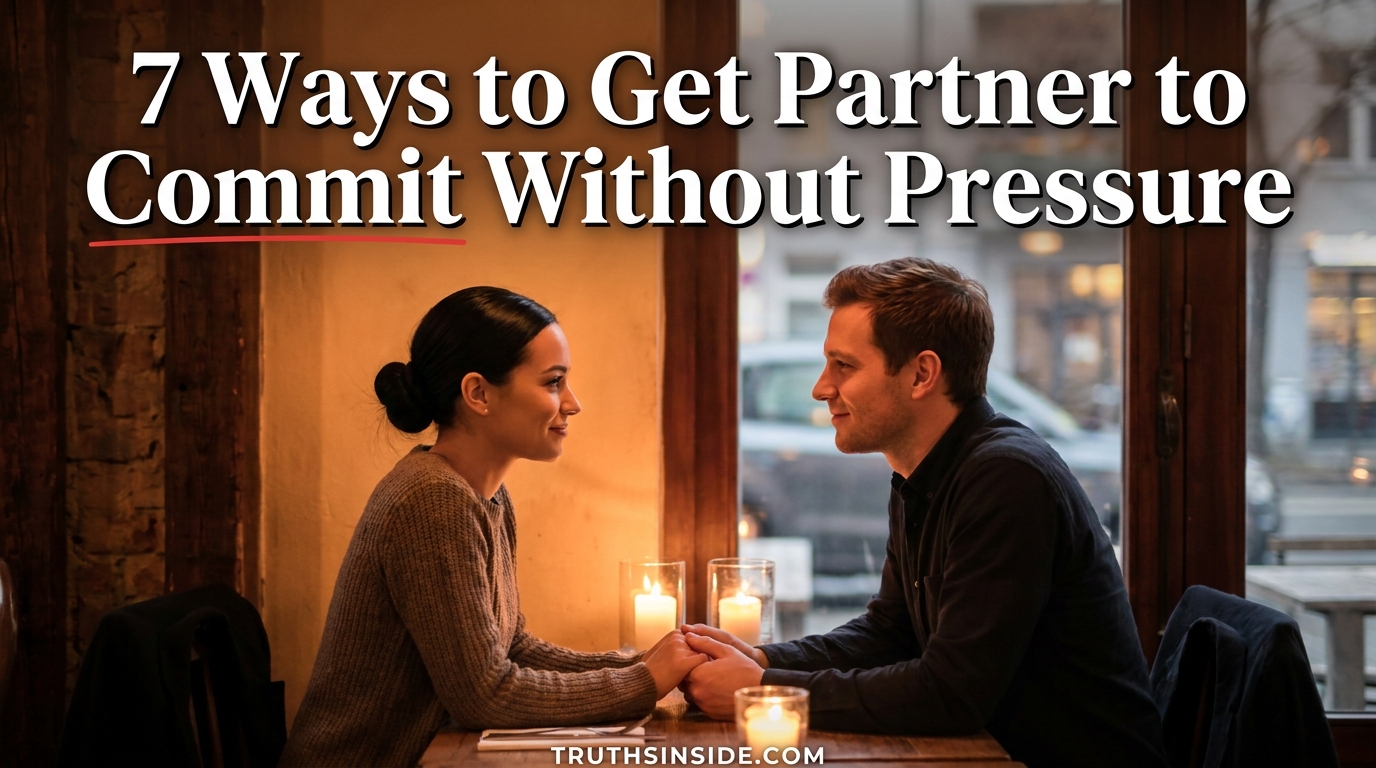
Have you ever felt like you were holding your breath — waiting, hoping, quietly wondering if the person you love truly sees a future with you? You are not alone. Millions of people navigate the painful space between deep emotional investment and uncertain commitment every single day.
According to a 2022 study published in the Journal of Social and Personal Relationships, nearly 40% of people in long-term relationships report feeling anxious about their partner’s level of commitment. That anxiety is real, valid, and deeply human.
But here is what most people get wrong: they respond to that anxiety with pressure — ultimatums, repeated conversations, emotional withdrawal — and it almost always backfires. The good news? There is a smarter, more powerful way to get your partner to commit, and it starts with understanding human psychology, not manipulation.
Why Pressure Almost Always Kills Commitment
When most people feel uncertain about where their relationship is heading, their instinct is to push. They bring up “the talk” repeatedly. They drop hints. They compare their relationship to others. They issue ultimatums wrapped in frustration.
And while these reactions are completely understandable, they tend to produce the exact opposite of what you want.
Psychologically speaking, humans are wired to resist feeling controlled. Researchers call this reactance theory — when someone feels their freedom is being threatened, they instinctively pull away to reclaim autonomy. This is not a personality flaw in your partner. It is a deeply embedded survival response.
When commitment feels like something being demanded rather than something naturally desired, the emotional experience of the relationship shifts. What was once a source of joy becomes a source of stress. And nobody commits enthusiastically to something that stresses them out.
This is why your strategy matters just as much as your intention. You can genuinely want love and still push the very person you love further away — simply by approaching commitment the wrong way.

The Psychology Behind Genuine Commitment
Before you can get your partner to commit, it helps to understand what makes anyone want to commit in the first place.
Commitment is not a decision made from obligation. It is not something that happens because someone was pressured long enough. Genuine, lasting commitment is an emotional response — it emerges when a person feels safe, valued, chosen, and genuinely excited about the relationship they are already in.
Psychologist Dr. John Gottman, after decades of studying couples, identified that the most committed partners are not those who were pressured into staying — they are those who felt a deep sense of friendship, respect, and positive sentiment within the relationship. Commitment naturally followed those emotional conditions.
This means your job is not to convince your partner to commit. Your job is to create the emotional conditions under which commitment feels like the obvious, natural next step for them.
That distinction changes everything.
“Commitment is not something you demand from someone. It is something they discover when being with you feels undeniably right.”
Build Emotional Safety First
One of the most powerful things you can do to encourage commitment is to make your relationship feel emotionally safe. This means your partner should feel that they can be honest with you without fear of judgment, withdrawal, or punishment.
Emotional safety is built through consistent, calm, and compassionate communication. It is built when your partner sees that disagreements do not destroy the relationship. It is built when vulnerability is met with empathy, not criticism.
If your partner hesitates to commit, part of that hesitation may be fear — fear of being trapped, fear of making the wrong decision, or fear rooted in past relationship wounds that have nothing to do with you personally.
When you respond to their hesitation with patience rather than panic, you signal something powerful: I am someone you can trust with the real, unfiltered version of yourself.
That signal is more attractive than any ultimatum you could ever deliver.
Practical steps to build emotional safety:
- Listen actively without immediately defending yourself
- Avoid bringing up past conflicts during new disagreements
- Express your feelings using “I” statements rather than accusations
- Give your partner space to process emotions without chasing immediate resolution
- Acknowledge their perspective even when you disagree
Stop Chasing — Start Attracting
There is a fundamental difference between chasing commitment and attracting it. Chasing commitment looks like constant reassurance-seeking, monitoring your partner’s behavior for signs of withdrawal, and making the relationship revolve entirely around whether or not they will commit.
Attracting commitment looks entirely different. It looks like a person who is genuinely fulfilled — someone with their own goals, social life, passions, and identity. Someone who loves deeply but does not need validation to feel whole.
This is not about playing games or manufacturing distance. It is about genuinely investing in your own life.
When your partner sees that you are a complete, confident, emotionally grounded person — someone who adds richness to their life rather than depending on them for emotional survival — commitment becomes far more desirable.
Research supports this. A 2019 study in the Journal of Personality and Social Psychology found that individuals with secure attachment styles — characterized by independence, emotional regulation, and self-confidence — were significantly more likely to attract long-term commitment from their partners.
You become most attractive not when you are desperate for their yes, but when your own life is genuinely worth saying yes to.

Have Honest Conversations — Without the Ultimatum Energy
There comes a point in every serious relationship where the conversation about the future must happen. And that conversation is absolutely necessary. Avoiding it is not a strategy — it is avoidance.
The key is how you have that conversation.
Most people approach the “where is this going” conversation from a place of anxiety, which means it often comes out as an interrogation or an ultimatum. The energy behind the words matters just as much as the words themselves.
Instead, approach this conversation from a place of calm clarity and genuine curiosity. Express what you want — not as a demand, but as an honest sharing of your feelings and vision for your life. Make it a conversation, not a confrontation.
Try something like:
“I really love what we have together, and I’ve been thinking about what I want for my future. I’d love to hear where you see this going for you.”
This approach does several things at once. It affirms the relationship. It expresses your desires without pressure. It invites your partner into an honest dialogue rather than backing them into a corner.
And crucially — it gives you real information. Their response will tell you a great deal about whether this relationship has a future you actually want to be part of.
“The right person will not run from your honesty. They will run toward it.”
Understand Their Commitment Timeline
Not everyone arrives at commitment at the same speed, and that does not automatically signal a red flag. Some people — particularly those with avoidant attachment styles or painful past relationships — genuinely need more time to feel safe enough to commit.
Understanding this does not mean accepting an indefinite holding pattern where your needs go unmet for years. It means approaching the situation with nuance rather than a one-size-fits-all deadline.
Have an open, compassionate conversation about their relationship history. Ask gently about what commitment means to them. Ask what makes them feel safe in a relationship. You might discover that their hesitation is rooted in genuine fear rather than disinterest — and that information changes how you respond.
At the same time, know your own timeline. Know what you are and are not willing to accept. Compassion for your partner’s process does not require you to abandon your own emotional needs. Both things can be true simultaneously.
Signs that your partner’s timeline is reasonable:
- They are actively investing in the relationship emotionally and practically
- They openly communicate about their hesitations rather than shutting down
- You are consistently growing closer, not standing still
- They speak about the future in ways that include you
Signs that patience has become an unhealthy pattern:
- Years have passed with no meaningful progress toward commitment
- They dismiss or avoid conversations about the future entirely
- You consistently feel like a low priority
- Your emotional needs go unacknowledged
Make the Relationship Worth Committing To
This point is often overlooked because it requires a level of honest self-reflection that can feel uncomfortable. But it is essential.
Ask yourself: Is this relationship genuinely enjoyable on a day-to-day basis? Are both of you showing up with kindness, curiosity, and effort? Is there joy, laughter, and genuine connection happening regularly?
Sometimes the reason a partner hesitates to commit is not fear or avoidance — it is because the relationship itself has drifted into a pattern of conflict, tension, or emotional disconnection. If most of your conversations revolve around the topic of commitment, you may have accidentally made the relationship about commitment rather than about connection.
Invest in the experience of the relationship itself. Plan meaningful experiences together. Nurture your friendship. Bring lightness and laughter back into your dynamic. Remind both of you why you chose each other in the first place.
When the relationship itself becomes a source of genuine joy rather than a battleground over the future, commitment often follows naturally — without a single ultimatum ever being necessary.

Know Your Worth — And Act Like It
Here is perhaps the most important truth in this entire article: no strategy, no amount of patience, and no degree of emotional intelligence will make the wrong person commit to you long-term. And you would not actually want them to.
Knowing your worth is not arrogance. It is clarity. It is the foundation from which every healthy relationship is built.
When you genuinely know your worth, you stop shrinking yourself to make someone else comfortable with loving you. You stop accepting crumbs of affection and calling it a meal. You stop negotiating your own emotional needs as if they are optional extras.
A partner who is truly right for you will not need to be convinced, pressured, or coerced into choosing you. They will recognize what they have — and they will want to hold onto it.
Your role is not to perform enough, be enough, or sacrifice enough to earn someone’s commitment. Your role is to be authentically, beautifully yourself — and to choose a partner who chooses you back with the same energy and enthusiasm.
That is what real commitment looks like.
Final Thoughts
Getting your partner to commit without pressure is not about tricks, timelines, or tests. It is about creating a relationship environment where commitment feels like the most natural, obvious, and joyful choice your partner could make.
It requires emotional intelligence. It requires honest communication delivered from a place of calm confidence rather than anxiety. It requires you to invest in both the relationship and in yourself simultaneously.
And sometimes — if you have done all of this with genuine effort and your partner still cannot or will not commit — it requires the courage to ask yourself whether this is truly the relationship you deserve.
Because the goal has never just been commitment. The goal has always been a love that is mutual, chosen, and whole.
💾 Save this article for the next time you need a reminder that love should feel chosen, not forced.
📤 Share this with a friend who deserves to know their worth in a relationship.
👣 Follow Truthsinside.com for more honest, psychology-backed relationship advice delivered with empathy and clarity.
📃 Related article: 15 Signs She Is Testing You: Why Women Test Men and What to Do
Frequently Asked Questions
1. How long should I wait for my partner to commit?
There is no universal timeline, but a general guideline is that after 1–2 years of dating, a conversation about commitment is completely reasonable. What matters most is whether the relationship is moving forward emotionally, not just chronologically. If years pass with no meaningful progress and your needs remain unacknowledged, that is important information worth acting on.
2. Is it possible to get someone to commit if they have commitment issues?
Yes — but it requires patience, emotional safety, and honest communication rather than pressure. People with commitment issues can and do build deeply committed relationships when they feel genuinely safe. However, they often benefit from therapy or personal growth work, and your role is not to be their therapist. You can support their growth without sacrificing your own emotional health.
3. Does playing hard to get actually work for getting commitment?
Not in a healthy or sustainable way. Manufactured distance or game-playing may create short-term attraction, but it rarely produces genuine commitment. What works far better is authentic confidence — genuinely living a full, satisfying life while being emotionally available and honest within the relationship.
4. What are the signs that my partner will never commit?
Key signs include consistent avoidance of future conversations, a pattern of hot-and-cold behavior, never being introduced to important people in their life, and a significant mismatch between their words and actions over an extended period. If the pattern persists despite honest conversations, trust that pattern more than their reassurances.
5. Should I give an ultimatum to get my partner to commit?
Ultimatums should be a last resort, not a first strategy — and they should only be used when you are genuinely prepared to follow through. An ultimatum delivered out of desperation typically backfires. But an honest, calm expression of your needs and boundaries — communicated from a place of self-respect rather than manipulation — is always appropriate and necessary.
🎵 Music
Maren Lull is a singer-songwriter who writes from the places most people don’t talk about out loud.
Not the dramatic grief. Not the obvious heartbreak. The quiet kind — the ordinary Tuesday emptiness, the habit of reaching for someone who isn’t there anymore, the particular exhaustion of being strong for so long that the strength itself wears thin.
Her music lives at the intersection of emotional honesty and soft beauty — breathy vocals over gentle piano, slow tempos, lyrics that feel less like songs and more like something you wrote in a private notebook at two in the morning and never showed anyone.
Maren Lull writes for the people who feel everything deeply and say very little about it. For the ones who listen to sad music not because they want to feel worse — but because being understood, even by a song, makes the feeling easier to carry.
📱 Follow Maren Lull:
→ Spotify
→ Apple Music
→ Youtube
→ Audiomack