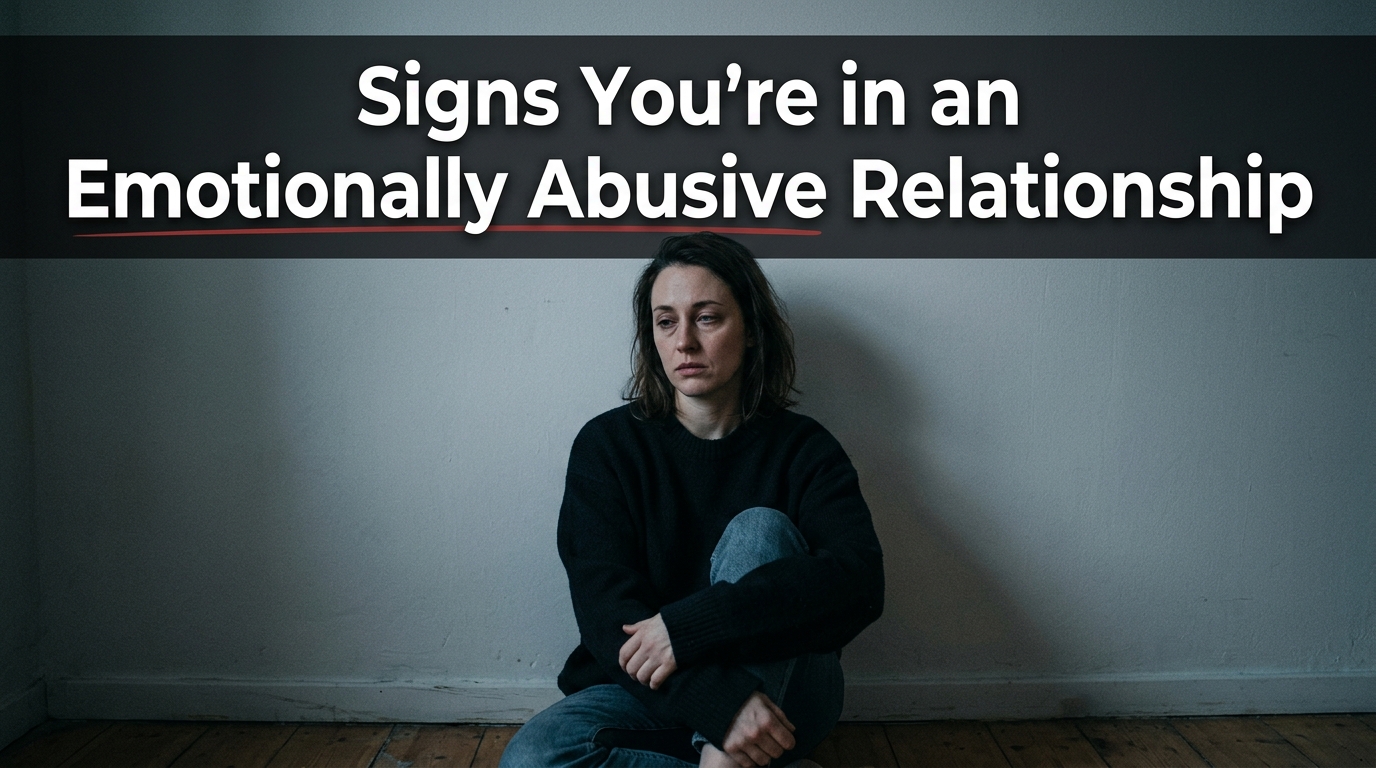
There is a particular kind of exhaustion that comes from being in an emotionally abusive relationship — one that is almost impossible to explain to someone who has never experienced it. It is not the exhaustion of hard work or late nights. It is the bone-deep tiredness of constantly questioning your own reality, managing someone else’s emotions, and losing pieces of yourself so gradually that you barely noticed they were gone. Signs you’re in an emotionally abusive relationship are often invisible to the outside world — and disturbingly easy to rationalize from the inside.
According to the National Domestic Violence Hotline, approximately 48% of both men and women in the United States report experiencing at least one psychologically aggressive behavior from a partner — yet emotional abuse remains one of the most underreported and misunderstood forms of relationship harm in existence. If something in your relationship has always felt deeply wrong but you have struggled to name it, this article is written for you.
This is not about diagnosing your partner. It is about giving you clarity — the kind of clear, honest information that helps you see your situation without the fog that emotional abuse creates.
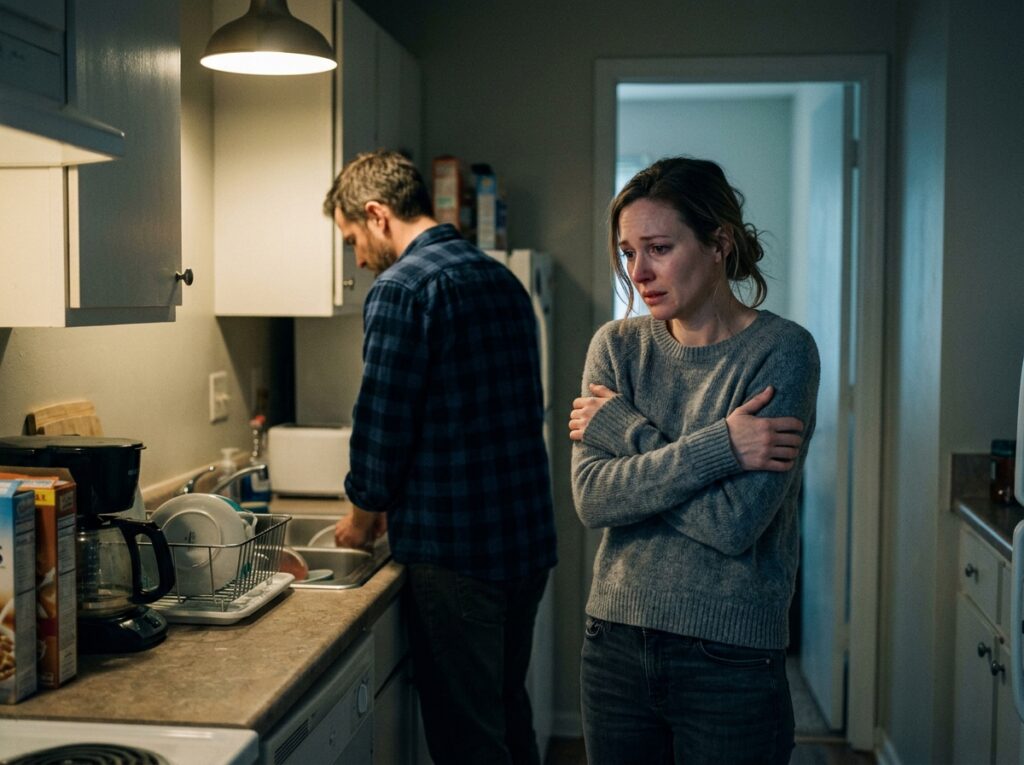
What Emotional Abuse Actually Is — And Why It’s So Hard to Name
Before we walk through the specific signs you’re in an emotionally abusive relationship, it is essential to understand what emotional abuse actually is — because the popular understanding of it is often incomplete and sometimes misleading.
Emotional abuse is a pattern of behavior designed — consciously or unconsciously — to control, diminish, isolate, or destabilize another person’s sense of self, reality, and worth. The word “pattern” is critical here. A single unkind comment, a bad day that produces a harsh reaction, a moment of unfairness — these things are painful but they are not abuse. Abuse is a sustained, recurring dynamic that systematically erodes the target’s psychological wellbeing and sense of reality over time.
This distinction matters because it explains why emotional abuse is so difficult to identify from inside the relationship. Each individual incident — the criticism, the dismissal, the cold silence — can be rationalized, explained away, or absorbed. It is only when you step back and see the cumulative pattern that the full picture becomes visible.
Emotional abuse also does not require shouting, threats, or dramatic confrontations. Some of the most devastating forms of emotional abuse are quiet — a perpetual undercurrent of contempt, a consistent pattern of dismissal, a systematic dismantling of confidence so gradual it feels like weather rather than assault.
And critically: emotional abusers are not always consciously malicious. Some genuinely do not recognize their own patterns. This does not reduce the harm they cause — but it does explain why many targets spend years trying to reach the “real” person they believe is underneath the behavior, waiting for understanding to arrive that may never come.
Sign 1: You Constantly Feel Like You’re Walking on Eggshells
This is perhaps the most universally reported experience among people in emotionally abusive relationships — and one of the earliest signs that something is fundamentally wrong with the relational dynamic.
Walking on eggshells means living in a constant state of hypervigilance around your partner. You monitor their mood before you speak. You choose your words carefully — not because you want to communicate clearly, but because you are trying to preemptively avoid a reaction you have learned to fear. You scan the environment when they enter a room. You adjust your behavior, your tone, your needs — all to manage an atmosphere that never feels fully safe.
This is not the discomfort of navigating a complex personality or respecting a partner’s preferences. This is chronic anxiety generated by an environment of emotional unpredictability. When you consistently feel responsible for managing another person’s emotional state at the expense of your own — when you feel afraid of their reaction to normal human behavior — that fear is telling you something important.
Healthy relationships contain space for both people’s emotional realities. They are not perfect and never conflict-free. But they do not require one person to perpetually shrink, monitor, and self-censor just to maintain a tenuous peace.

Sign 2: Your Reality Is Constantly Being Questioned — Gaslighting
Gaslighting is one of the most psychologically damaging forms of emotional abuse — and one of the most insidious because it targets the very tool you would use to recognize what is happening: your own perception.
The term comes from the 1944 film Gaslight, in which a husband systematically manipulates his wife into believing she is losing her mind. In modern relationships, gaslighting looks like this:
You remember something clearly. Your partner tells you it never happened — or happened completely differently. You raise a concern about their behavior. They tell you you are imagining things, being too sensitive, or making it up. You feel hurt by something they said. They insist you misheard, misunderstood, or are deliberately twisting their words to make them look bad.
Over time, this sustained contradiction of your reality produces a deeply disorienting effect. You begin to doubt your own memory. You second-guess your perceptions before you even voice them. You start to believe that your emotional responses are evidence of instability — rather than evidence of real experiences that are not being acknowledged.
Dr. Robin Stern, author of The Gaslight Effect, identifies a hallmark sign of gaslighting: the persistent, unexplainable feeling that you are “going crazy” — combined with an equally persistent need to get your partner to simply acknowledge what happened. That compulsive need for acknowledgment is not weakness. It is the mind’s healthy attempt to restore a reality that keeps being taken from it.
“Gaslighting doesn’t just make you doubt the event. It makes you doubt the self that experienced it. And that is where its deepest damage lives.”
Sign 3: You Are Criticized Constantly — But It’s Framed as Help
In an emotionally abusive relationship, criticism is rarely labeled as such. It arrives dressed as concern, humor, helpfulness, or honesty. And that disguise is precisely what makes it so corrosive.
It sounds like: “I’m just trying to help you be better.” It sounds like: “You’re so sensitive — I was only joking.” It sounds like: “Someone needs to be honest with you.” It sounds like feedback on how you dress, how you speak, how you parent, how you eat, how you handle money, how you interact with others — delivered with a consistency and a sharpness that communicates not “I want you to grow” but “I find you fundamentally inadequate.”
The cumulative effect of constant criticism — regardless of how it is framed — is the systematic erosion of self-confidence. A person who is regularly told, in overt or subtle ways, that they are not smart enough, capable enough, attractive enough, or good enough will eventually begin to believe it. And a person who believes they are fundamentally inadequate is far less likely to trust their own judgment, assert their own needs, or leave a relationship that is harming them.
This is not accidental. Diminishment is a control mechanism — whether the person using it fully understands that or not.
Sign 4: Your Emotions Are Used Against You
In a healthy relationship, emotional vulnerability is met with care. When you share that you are hurting, your partner moves toward you with empathy, not weaponry.
In an emotionally abusive relationship, the opposite is often true. What you share in vulnerable moments — your fears, your insecurities, your past wounds — becomes material that can be deployed against you in conflict. The thing you confided during a moment of trust becomes the thing used to wound you during a moment of anger.
This might look like your partner bringing up your childhood trauma to explain why “you’re the one with the problem.” It might look like using your known insecurities as ammunition during arguments. It might look like mocking the fears or needs you expressed in a private, tender moment.
The result is a deeply painful double bind: you need emotional intimacy and connection — it is a fundamental human need — but the relationship has taught you that being vulnerable is dangerous. So you close off. And then the relationship suffers from the emotional distance you were forced to create for your own protection.
Sign 5: Isolation From People You Love
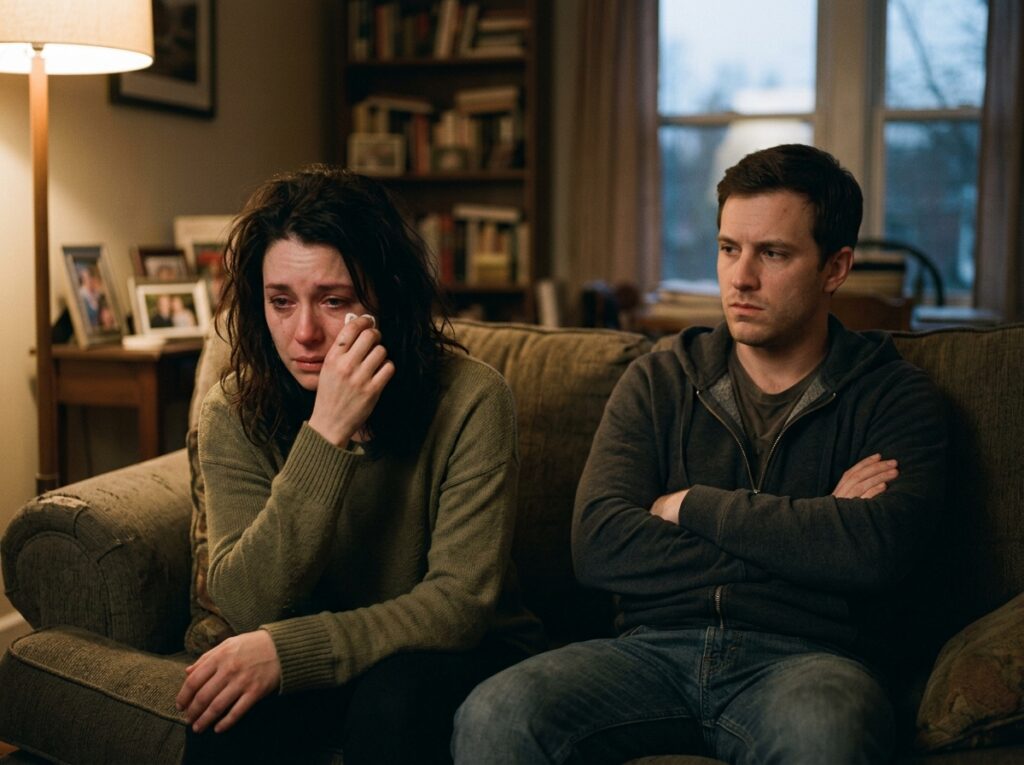
Emotional abusers frequently — and often gradually — work to reduce their partner’s connections to the outside world. Friends, family members, colleagues — the people who might offer an outside perspective, emotional support, or simply the grounding reminder that the world outside this relationship exists.
Isolation rarely announces itself. It begins as preference: “I just want you to myself.” It continues as criticism: subtle or overt negative commentary about your friends and family — they are bad influences, they do not really care about you, they cause drama, they are not good for you. It escalates to control: monitoring who you spend time with, creating conflict around your relationships with others, making you feel guilty for time spent away from them.
The goal — again, whether conscious or not — is to make you increasingly dependent on the abuser as your primary or sole source of emotional support, validation, and reality-checking. When the only perspective you have access to is the one that tells you that you are the problem, it becomes extraordinarily difficult to see that you are not.
If you have noticed that your social world has dramatically shrunk since being in this relationship — if you feel guilty for seeing friends, if you have distanced yourself from family, if your partner is consistently the most important relationship in your life to the exclusion of all others — that pattern deserves serious attention.
“Isolation is not love that wants you close. It is control that needs you alone.”
Sign 6: Threats, Ultimatums, and Emotional Hostage-Taking
Emotional abuse frequently involves the use of threats and ultimatums as tools of control — not always threats of physical harm, but emotional threats that carry significant psychological weight.
These might include threats to leave the relationship every time a conflict arises — creating a climate where you are constantly afraid of abandonment and therefore willing to do almost anything to prevent it. They might include threats to harm themselves if you do not comply — an extraordinarily manipulative use of emotional vulnerability that places the responsibility for another person’s wellbeing entirely on your shoulders. They might include ultimatums about your behavior, your relationships, your choices — communicated with the implicit message that your compliance is the price of continued love.
This kind of emotional hostage-taking produces a particular kind of psychological captivity. You are not physically prevented from leaving or acting freely. But you are emotionally tethered by fear, guilt, and the manufactured belief that your actions are directly responsible for another person’s suffering.
That is not love. That is leverage.
Sign 7: You Feel Responsible for Everything That Goes Wrong
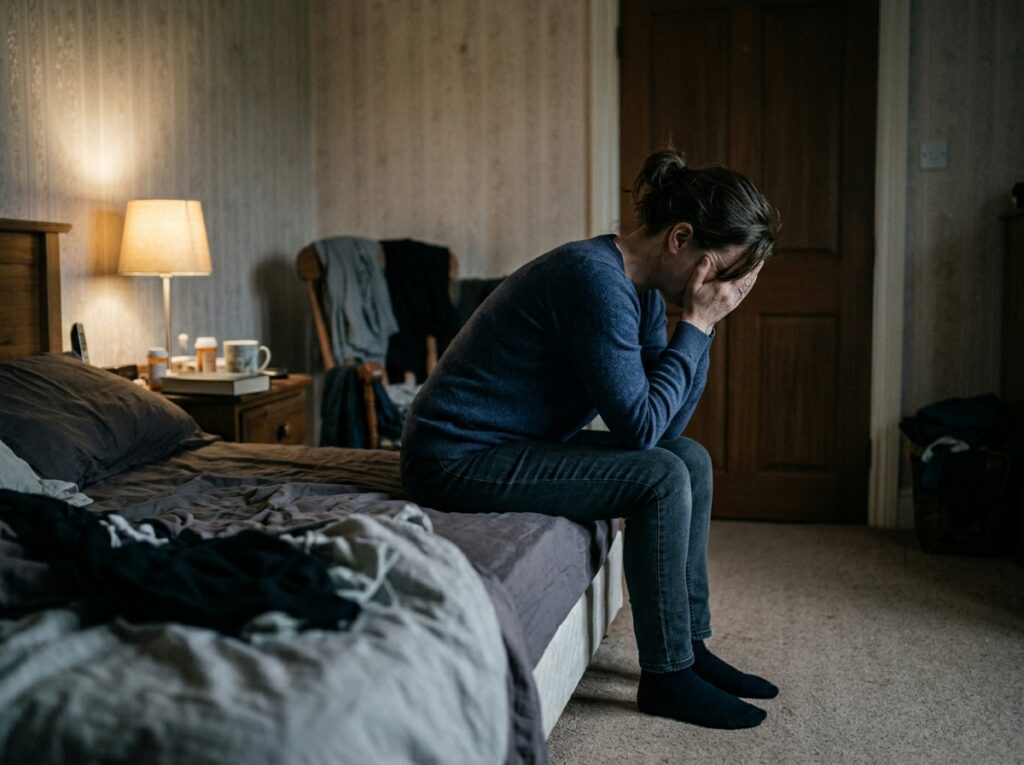
One of the most reliable internal signs of emotional abuse is a persistent, pervasive sense that everything that is wrong in the relationship is your fault.
Emotional abusers are extraordinarily skilled at deflecting responsibility. Arguments that begin with legitimate concerns about their behavior somehow always end with you apologizing. Your needs become “demands.” Your feelings become “attacks.” Your attempt to address a real problem becomes evidence that you are the one causing problems.
Over time, in a relationship where accountability is never mutual and responsibility always flows in one direction, you internalize the narrative. You begin to believe that if you were just better — more patient, more understanding, less sensitive, less needy — the relationship would work. You become the author of all the damage, even the damage that was done to you.
This is a profound psychological effect of sustained emotional abuse, and it is one of the primary reasons people stay long after the relationship has stopped being safe. Because if everything is your fault, then the solution is to fix yourself — not to leave. The frame itself is a trap.
Sign 8: Love Feels Conditional and Inconsistently Given
In a healthy relationship, love and basic respect are consistent. They do not disappear when your partner is displeased. They do not require perfect behavior as their price.
In an emotionally abusive relationship, love and warmth are frequently deployed strategically — available when you comply, withheld when you do not. This creates what psychologists call an intermittent reinforcement pattern — one of the most psychologically powerful and addiction-like dynamics in human behavior.
Intermittent reinforcement works like this: the relationship cycles between periods of warmth, closeness, and affection — and periods of coldness, criticism, or punishment. The unpredictability of which version you will get creates a compulsive quality to the attachment. You begin to work harder for the warmth. You begin to associate the effort of earning love with love itself. The relief of the good times feels disproportionately intense because of the suffering that preceded them — and that contrast keeps you anchored in a dynamic that is causing you significant harm.
This pattern is not unique to emotionally abusive relationships, but it is extraordinarily common within them. It is also one of the central reasons why leaving feels so difficult — because intermittent reinforcement produces a bond that is neurologically similar to addiction, complete with withdrawal symptoms when the relationship ends.
Sign 9: You No Longer Recognize Yourself
Perhaps the most heartbreaking sign of all — and one that is easy to overlook precisely because it happens so gradually — is the erosion of your sense of self.
You had opinions before this relationship. You had interests, friendships, ways of dressing, ways of speaking, ways of spending your time that were authentically yours. You had a relationship with your own judgment that you trusted.
If you find yourself looking back and struggling to recognize the person you were before this relationship began — if your world has narrowed, your confidence has diminished, your opinions have quieted, your interests have faded — that is not the natural evolution of partnership. Partnership expands people. It does not reduce them.
Emotional abuse, over time, produces a kind of psychological disappearing act. The self does not vanish all at once. It retreats, piece by piece, in response to an environment that consistently communicates that it is too much, not enough, or simply wrong. And one day you look in the mirror and realize that the person looking back at you is a much smaller version of who you actually are.
That person — the fuller version of you that existed before — is not gone. They are waiting. And they can come back.

Why People Stay — And Why That Deserves Compassion, Not Judgment
One of the most harmful misconceptions about emotionally abusive relationships is embedded in the question: “Why didn’t they just leave?”
That question assumes that leaving is simple — that the primary obstacle is a lack of awareness or courage. It is neither.
People stay in emotionally abusive relationships for reasons that are psychologically profound and deeply human. They stay because the abuse has dismantled their confidence to the point where they no longer trust their own perception of what is happening. They stay because intermittent reinforcement has created a bond that mimics addiction. They stay because they love the person — or the person that person was, or the person they believed they could become. They stay because leaving feels more dangerous, emotionally or practically, than remaining. They stay because they have been isolated from the support systems that might help them go.
They stay because emotional abuse, by its very design, makes leaving feel impossible.
If you recognize yourself in this article — if reading through these signs has brought a quiet, heavy recognition — please know this: recognizing what is happening is not a small thing. It is, in fact, the beginning of everything. Clarity is the first act of reclaiming yourself.
What to Do If You Recognize These Signs
This section is not a prescription. Every situation is different, and your safety — emotional and physical — is the first priority in any decision you make.
If you recognize multiple signs in this article as patterns in your current relationship, here are honest, grounded steps toward clarity and support.
Trust your internal experience. The voice inside you that says something is wrong has been trying to be heard, possibly for a long time. The fog of emotional abuse is real, but beneath it your perception is working. Trusting it — even slightly, even imperfectly — is where agency begins to return.
Reach out to someone outside the relationship. A friend, a family member, a therapist, a crisis line — anyone who can offer an external perspective that has not been shaped by the relational dynamic you are inside. The National Domestic Violence Hotline (1-800-799-7233) provides support for emotional abuse specifically and can be accessed confidentially.
Seek professional support. A therapist who specializes in trauma and abusive relationship dynamics can provide the kind of structured, safe, informed support that is difficult to access anywhere else. Healing from emotional abuse is real and possible — but it is significantly easier with professional guidance.
Make decisions at your own pace. You do not have to leave tomorrow. You do not have to have a plan fully formed before you take the first step. Each small act of clarity, each small reclamation of self, is movement. Allow yourself to move at the pace that feels survivable — and build from there.
Know that you deserve safety. Not as a reward for perfect behavior. Not after you have tried hard enough, been patient enough, loved well enough. Right now, exactly as you are, you deserve a relationship that does not cost you your sense of reality, your self-worth, or your peace.
You Are Not the Problem — And You Are Not Alone
Emotional abuse is not always easy to name. It hides behind love, behind good days, behind the version of the person you fell for and still catch glimpses of. It creates a reality in which the most natural response is to blame yourself, try harder, and believe that the right combination of effort and patience will make things different.
But a relationship in which one person is systematically diminished, controlled, isolated, or made to doubt their own reality is not a relationship that patience alone can fix. It requires recognition — and then, when you are ready, action.
If you are reading this article and something in it has named what you have been living — please hear this: you are not too sensitive. You are not crazy. You are not the problem. You are someone whose reality has been deliberately obscured, whose worth has been quietly stolen, and whose voice has been slowly silenced.
And that voice — your voice — still knows the truth.
💾 Save this article — for yourself or for someone who needs it.
📤 Share it — someone in your life may be living this right now and not have the words for it.
👣 Follow Truthsinside.com for honest, psychology-backed content on relationships, emotional health, and the signs that matter.
📃 Related article: Gaslighting in Relationships: How to Recognize, Name, and Leave It
Frequently Asked Questions
Q1: What is the difference between a difficult relationship and an emotionally abusive one?
All relationships go through difficult periods involving conflict, miscommunication, and hurt feelings. The defining difference between difficulty and abuse is pattern and power. Emotional abuse is a sustained, recurring pattern in which one partner consistently uses behavior — criticism, gaslighting, isolation, threats, or contempt — to control or diminish the other. Difficult relationships involve two imperfect people navigating genuine complexity. Abusive relationships involve a systematic imbalance of power in which one person’s reality, worth, and autonomy are chronically undermined.
Q2: Can emotional abuse happen without the abuser realizing it?
Yes — and this is one of the most important things to understand about emotional abuse. Many emotionally abusive behaviors are rooted in the abuser’s own unprocessed trauma, attachment wounds, and learned patterns from their family of origin. This does not excuse the behavior or reduce its harm — but it explains why many emotionally abusive partners genuinely believe they are acting out of love, concern, or self-defense. The absence of conscious malicious intent does not make the impact less real.
Q3: Can an emotionally abusive relationship change?
Change is possible — but it requires the abusive partner to genuinely acknowledge the patterns, take full and undefended responsibility for their impact, and commit to sustained, professionally supported work on themselves. This is not common, and it cannot be achieved through the patience or effort of the person being harmed. If change is being promised without concrete, consistent evidence of it over time — promises alone are not change.
Q4: How does emotional abuse affect mental health long-term?
Research consistently links sustained emotional abuse with elevated rates of depression, anxiety, complex PTSD, low self-esteem, difficulty trusting others, and challenges in future relationships. The impact on the nervous system — particularly the development of chronic hypervigilance — can persist long after the relationship ends. Professional therapeutic support, particularly trauma-informed approaches, is one of the most effective pathways to genuine healing.
Q5: Where can I get help if I think I’m in an emotionally abusive relationship?
The National Domestic Violence Hotline is available 24/7 at 1-800-799-7233 and covers emotional abuse specifically — not only physical violence. The Crisis Text Line is available by texting HOME to 741741. A therapist specializing in trauma or abusive relationship dynamics can provide individualized, confidential support. If you are outside the United States, most countries have equivalent national support organizations — a simple search for “domestic abuse helpline” in your country will connect you with local resources.
🎵 Music
Maren Lull is a singer-songwriter who writes from the places most people don’t talk about out loud.
Not the dramatic grief. Not the obvious heartbreak. The quiet kind — the ordinary Tuesday emptiness, the habit of reaching for someone who isn’t there anymore, the particular exhaustion of being strong for so long that the strength itself wears thin.
Her music lives at the intersection of emotional honesty and soft beauty — breathy vocals over gentle piano, slow tempos, lyrics that feel less like songs and more like something you wrote in a private notebook at two in the morning and never showed anyone.
Maren Lull writes for the people who feel everything deeply and say very little about it. For the ones who listen to sad music not because they want to feel worse — but because being understood, even by a song, makes the feeling easier to carry.
📱 Follow Maren Lull:
→ Spotify
→ Apple Music
→ Youtube
→ Audiomack