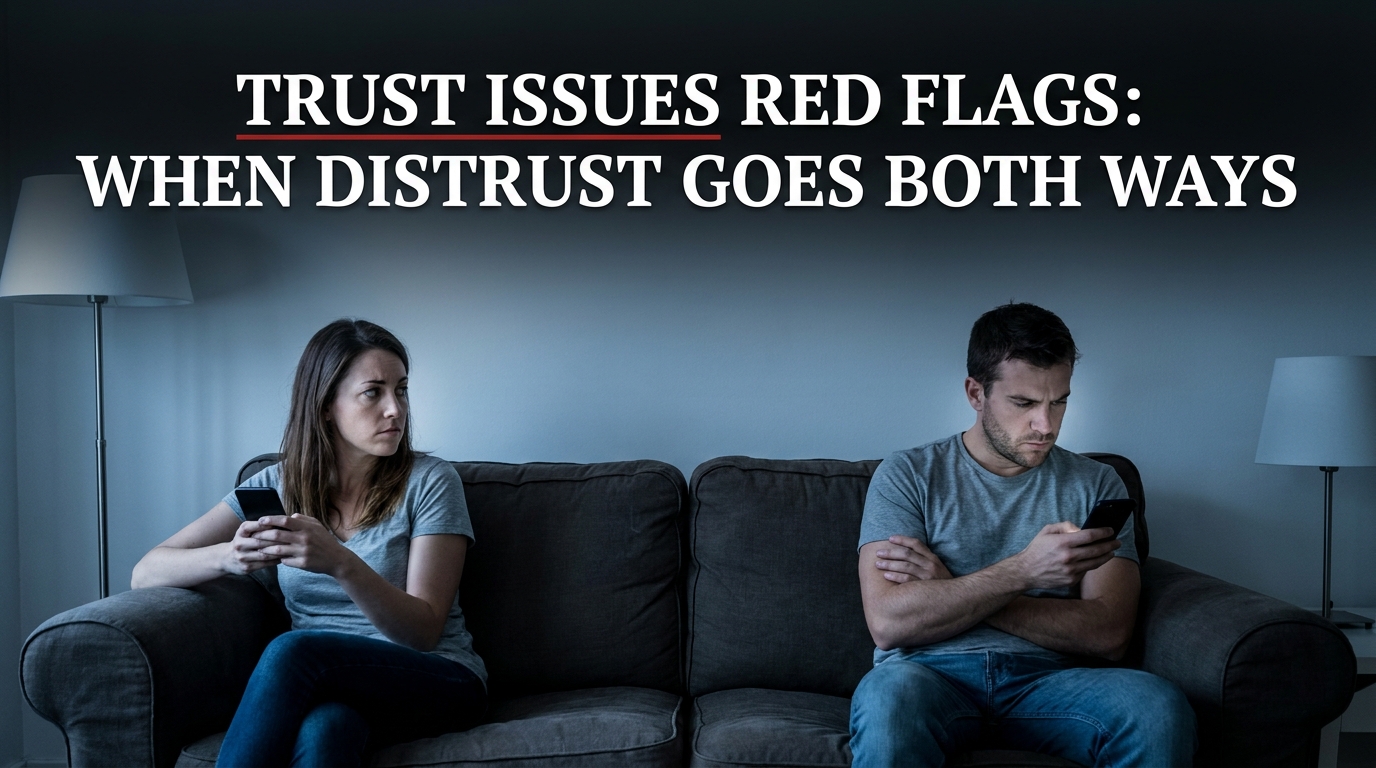
Most people think of trust issues as a one-sided problem — one insecure partner making the other person’s life smaller through jealousy, suspicion, and control. But research tells a more complicated story. A 2019 study published in the Journal of Social and Personal Relationships found that in relationships where one partner exhibits chronic distrust, the other partner frequently develops secondary trust issues in response — creating a cycle in which mutual suspicion becomes the architecture of the relationship itself.
Trust issues red flags are not always about one person being the problem. Sometimes the distrust has spread so thoroughly through the relationship that both people are now living inside it, shaped by it, and sustaining it — without either fully recognizing what has happened. That is the version of trust problems that rarely gets addressed honestly. Not the clear-cut story of one jealous, controlling partner and one innocent victim — but the messier, more human reality of two people who have wounded each other, misread each other, or brought their separate histories of hurt into a shared space where those histories collide and compound.
This article is about that reality. The trust issues red flags that show up on both sides, the cycles they create, and the honest truth about when distrust has become too embedded to ignore.
Why Trust Issues Rarely Stay One-Sided
Understanding how distrust spreads through a relationship requires understanding what trust actually is neurologically and psychologically.
Trust is not a belief. It is a felt state — a nervous system assessment of safety that operates largely below conscious awareness. When you trust someone, your threat-detection system is quiet in their presence. When you distrust them, it is not.
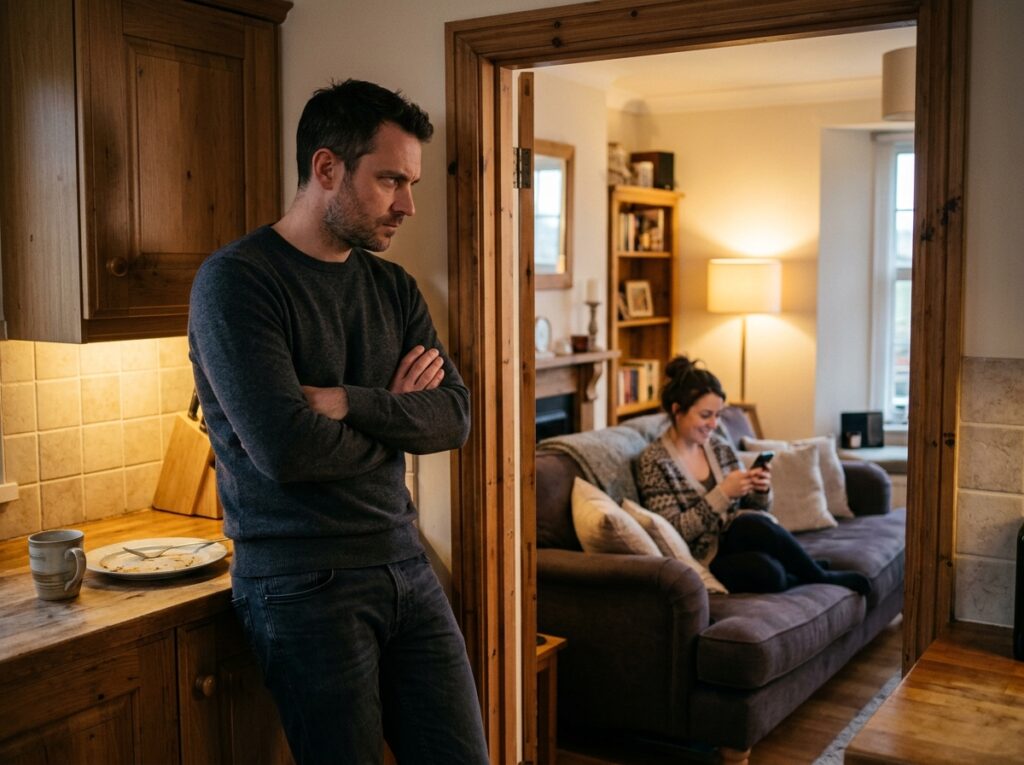
The problem is that chronic distrust from one partner creates an environment that genuinely activates the other partner’s threat response. If your partner regularly checks your phone, questions your whereabouts, or interprets neutral behavior as suspicious, your nervous system begins to register the relationship itself as a source of threat. And a nervous system registering threat begins to behave defensively.
Defensive behavior — becoming guarded, less transparent, emotionally withdrawn — then reads to the distrusting partner as confirmation of their suspicions. Their distrust increases. Your defensiveness increases in response. The cycle becomes self-reinforcing, and what began as one person’s insecurity has now genuinely become a mutual dynamic.
Neither person is entirely innocent at this point. Neither person is entirely to blame. Both people are responding, in human and understandable ways, to an environment that the relationship has created together.
Trust Issues Red Flags That Come From the Distrusting Partner
Constant Phone and Account Monitoring
Checking a partner’s phone, reading their messages, monitoring their social media activity or location — these behaviors are among the most universally recognized trust issues red flags, and for good reason.
The impulse often originates in genuine anxiety — a fear of being deceived or abandoned that feels too urgent to resist. But the behavior itself communicates something destructive: that the partner is presumed guilty until proven innocent. Repeatedly. In perpetuity.
What makes this particularly damaging is that it does not work. Finding nothing does not resolve the anxiety — it only delays it until the next check. The reassurance lasts minutes, not days. And over time, the partner being monitored invariably becomes aware of the surveillance and begins to feel the profound indignity of being treated as a suspect in their own relationship.
The monitoring also subtly but meaningfully changes their behavior — not because they have something to hide, but because privacy is a basic human need. When privacy is consistently violated, people begin protecting it more deliberately. Which looks, to the monitoring partner, like hiding something.
Interrogating Normal Social Activity
Questions about who they were with, why it took so long, who texted them, what they talked about, why they seemed distracted — when these questions occur occasionally, they are normal relationship communication. When they occur consistently, after every social interaction, with an undertone of accusation rather than genuine curiosity, they are a trust issues red flag with serious consequences.
Chronic interrogation communicates that the partner’s ordinary social life is under trial. It creates a dynamic where the person being questioned begins mentally rehearsing explanations before they even get home. They begin editing their social life — avoiding situations that will require complicated explanations, declining invitations that might trigger suspicion. Gradually, their world gets smaller — not because they want it to, but because the cost of maintaining it has become exhausting.
Demanding Constant Access and Availability
The expectation that a partner must be reachable at all times — responding to messages immediately, providing location updates, checking in throughout the day — is frequently rationalized as care or closeness. In reality, it is a control mechanism rooted in distrust.
A partner who does not respond to a message within ten minutes is not necessarily being deceptive. They are possibly working, sleeping, in a conversation, or simply not looking at their phone. The anxiety that transforms a delayed response into a crisis is not a reasonable relationship expectation — it is a trust issue expressing itself through the language of communication needs.
“Distrust does not protect you from the thing you fear. It only guarantees that the relationship becomes small enough, controlled enough, and joyless enough that eventually there is nothing left worth protecting.”
Trust Issues Red Flags That Come From the Defensive Partner
Excessive Secrecy Without Cause
There is a meaningful difference between privacy — the reasonable maintenance of individual space and information — and secrecy that is designed to prevent a partner from knowing things they have a legitimate interest in knowing.
When one partner becomes excessively secretive — changing passwords without discussion, declining to share their plans, becoming defensive when asked ordinary questions — it is worth examining honestly what that secrecy is serving.
Sometimes excessive secrecy is a response to a partner’s controlling behavior — a reclaiming of autonomy in the only space available. But sometimes it is its own trust issues red flag: a pattern of withholding that is less about privacy and more about managing the partner’s perception, avoiding accountability, or maintaining the freedom to behave in ways that would not survive transparency.
The honest question to sit with is: would you behave differently if your partner could see everything you do? If the answer is yes — that is worth examining.
Deflecting Every Concern With Counter-Accusations
When one partner raises a trust concern and the other responds not by engaging with the concern but by immediately launching a counter-accusation — “You are accusing me? What about when you did X?” — the conversation has moved from a trust discussion to a defensive attack.
This deflection pattern is a significant trust issues red flag because it makes genuine repair impossible. Every attempt to address a concern becomes a battle for the moral high ground rather than an honest conversation about what is happening in the relationship.
It also, over time, trains the concerned partner to stop raising issues — because doing so reliably results in feeling attacked rather than heard. The silence that follows is not resolution. It is the accumulation of unaddressed hurt.
Lying About Small Things
This one is particularly insidious because the lies seem inconsequential. A minor exaggeration. A detail quietly omitted. A small misdirection about where they were or who they were with — nothing that seems to matter on its own.
But the pattern of small lies is one of the clearest trust issues red flags available, for a simple reason: people who lie about small things when the truth would cause no real harm are demonstrating that honesty is not their default. It is a choice they make selectively based on convenience. And if honesty is optional in the small moments, it is unreliable in the large ones.
Small lies also compound. Once a partner catches one — even an apparently trivial one — it retroactively calls everything else into question. The trust damage from a small lie is disproportionate to its content precisely because of what it reveals about the pattern beneath it.
The Cycle: How Both Sides Feed Each Other
The most important thing to understand about trust issues red flags is not the individual behaviors in isolation — it is the self-reinforcing cycle they create together.
It typically begins with an originating wound. One partner has a history of betrayal — in this relationship or a previous one — and brings heightened vigilance into the dynamic. Or one partner genuinely behaves in ways that create reasonable doubt. Or both people arrive with separately damaged trust histories that resonate destructively with each other.
From that point, the cycle typically moves through predictable stages:
Stage 1 — Surveillance and Restriction. The distrusting partner begins monitoring, questioning, or restricting the other’s behavior. This may be subtle at first — a casual question here, a glance at a phone there.
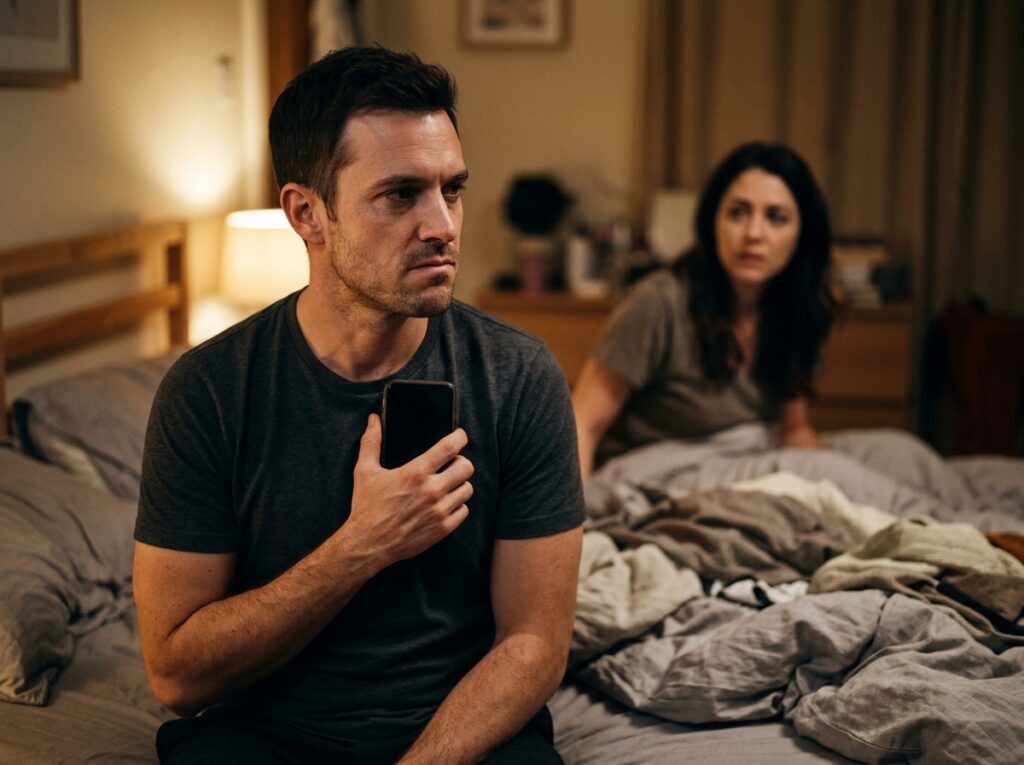
Stage 2 — Defensive Withdrawal. The monitored partner begins to feel watched and judged. They become more guarded — less spontaneously transparent, more careful about what they share. Their emotional warmth toward the relationship begins to cool.
Stage 3 — Confirmation of Suspicion. The distrusting partner observes the withdrawal and guardedness and interprets it as evidence of their original suspicion. Their monitoring intensifies.
Stage 4 — Active Distrust From Both Sides. The monitored partner begins to resent the surveillance enough that they start genuinely withholding — not to deceive, but to reclaim some sense of autonomy. The distrusting partner finds the withholding intolerable and escalates. Both people now distrust each other, for reasons that feel legitimate to each of them.
Stage 5 — The Relationship Becomes the Problem. At this point, the relationship itself has become a source of chronic stress for both partners. The original wound — whatever started the cycle — is buried under so many layers of mutual reactivity that it is almost impossible to identify or address.
Breaking this cycle requires something neither partner can typically do alone: the willingness to stop responding to the cycle and start addressing what is underneath it.

When Trust Issues Are Actually About Something Real
Not every trust concern is a red flag in the person raising it. Sometimes the distrust is warranted — a legitimate response to real behavior that deserves to be addressed rather than pathologized.
It is important to distinguish between:
Anxiety-based distrust — suspicion that originates in the person’s own history, attachment wounds, or insecurity, without meaningful behavioral evidence from the current partner. This kind of distrust is a personal issue that deserves individual attention. The partner is not its cause and cannot be its solution.
Evidence-based distrust — concern that arises from actual patterns of behavior: inconsistent stories, discovered lies, genuinely secretive behavior, violated agreements, or a history within the relationship of broken trust. This kind of distrust is a relational issue that deserves direct, honest engagement from both partners.
The distinction matters because the appropriate response is entirely different. Anxiety-based distrust that is treated as evidence-based will have the monitoring partner endlessly demanding their partner prove innocence for things the partner has not actually done. Evidence-based distrust that is treated as anxiety-based will have the concerned partner continuously gaslit — told their concerns are irrational when they are, in fact, responding to real information.
Honest self-examination — and sometimes the outside perspective of a therapist — is often required to make this distinction clearly.
The Specific Red Flags That Signal Trust Has Become the Relationship
Beyond the individual behaviors, there are specific signs that distrust has become so embedded in the relationship that it is now structuring everything:
Every neutral interaction is filtered through suspicion. A delayed text response, a new contact in the phone, a good mood that came from somewhere unknown — all are automatically interpreted through the lens of potential deception rather than considered neutrally.
Neither partner feels free to be honest. The distrusting partner withholds their surveillance behavior. The monitored partner withholds ordinary details of their life. Both are managing the other’s perception rather than being authentic. The relationship has become a performance.
Repair attempts do not land. When one partner tries to reconnect, reassure, or address the issue, the other cannot receive it. The reservoir of goodwill has been depleted to the point where even genuine attempts at connection are met with suspicion about their motive.
The relationship consumes enormous emotional energy for both people. Living inside chronic distrust is physiologically exhausting. Both partners are in a state of sustained low-level threat response — elevated cortisol, persistent tension, hypervigilance to signals that confirm their fears. The relationship that should be a source of safety has become a source of chronic stress.
Neither person remembers what the relationship felt like before the distrust took over. This is perhaps the saddest indicator — when both people have lost access to the memory of what genuine ease and warmth between them felt like. When the current state has become so normalized that it feels like simply “what relationships are.”

What Actually Helps — And What Does Not
What does not help:
Demanding trust without demonstrating trustworthiness. Expecting your partner to simply choose to trust you while continuing behaviors that reasonably undermine trust is not a solution. Trust is rebuilt through sustained, consistent, transparent behavior over time — not through declarations.
Continuing to monitor while claiming to be working on trust. Surveillance and trust recovery are mutually exclusive. Every check of a partner’s phone restarts the cycle and communicates that the stated commitment to rebuilding is not the actual operating principle.
Raising the history as ammunition in current arguments. If past violations are regularly excavated and used as weapons in present disagreements, the past is not being processed — it is being weaponized. Weaponized history does not heal. It entrenches.
What actually helps:
Both partners being willing to acknowledge their role in the cycle — not equally, necessarily, but honestly. The distrusting partner acknowledging the impact of their surveillance. The defensive partner acknowledging the impact of their withholding or, where applicable, their actual behavior.
Individual therapy for both partners. Trust issues that are rooted in personal history — past betrayal, attachment wounds, childhood experiences of unreliability — cannot be resolved by the current relationship alone. The work has to happen inside the individual before it can happen between them.
Couples therapy with a therapist skilled in trust repair. Structured, mediated conversation between two people who have been in the distrust cycle long enough to have lost the ability to hear each other clearly is significantly more productive than the same conversation attempted without support.
Explicit, mutual agreements about what trust looks like behaviorally in the relationship going forward. Not abstract commitments — specific, agreed-upon behaviors that both partners commit to and can reference when the cycle begins again.
“Trust is not rebuilt in one conversation. It is rebuilt in a thousand small moments of choosing transparency when concealment would be easier, and choosing to believe when suspicion would feel safer.”
When the Distrust Cannot Be Healed
The honest final question is the one that most relationship articles avoid: when is the trust damage genuinely irreparable?
Some indicators that the distrust may be beyond what the relationship can recover from include: a history of repeated, deliberate deception that has never been genuinely accountable for. A partner who consistently refuses to acknowledge the impact of their monitoring or controlling behavior. A cycle so entrenched that both people have effectively given up on believing it can change. The presence of genuine contempt — not just hurt or anger, but settled disdain — in either or both partners.
Trust that is gone is not always trust that can return. And a relationship sustained primarily by obligation, sunk cost, or fear of what ending it means is not a relationship. It is a holding pattern.
Ending a relationship where trust has fundamentally broken down — and cannot be rebuilt despite genuine effort — is not failure. It is honesty. And sometimes honesty, even when it is painful, is the most loving thing available.
Final Thoughts
Trust issues red flags do not always belong to one person. They spread. They compound. They create cycles that both people sustain and both people suffer inside of.
Recognizing which side of the cycle you are on — or recognizing that you are on both sides simultaneously — is the beginning of something. Not necessarily the beginning of saving the relationship. But the beginning of seeing it clearly.
And seeing clearly, whatever you decide to do with what you see, is always worth the courage it requires.
Save this article — for the moment you need to name what has been happening honestly.
Share it with someone who is struggling to understand why their relationship feels like a constant state of low-level war.
Follow Truthsinside.com for more honest, psychology-informed content on relationships, red flags, and finding your way back to yourself.
Related article: What Does It Actually Feel Like to Fall in Love? Science + Real Stories
Frequently Asked Questions
Q1: Can a relationship recover from serious trust violations?
Yes — but only under specific conditions. Both partners must genuinely want recovery, not just the continuation of the relationship. The partner who violated trust must take full accountability without minimization. The betrayed partner must be willing to eventually choose trust again — not blindly, but based on sustained changed behavior. And both must be willing to do the work, typically with professional support, that genuine repair requires. Recovery is possible. It is also not guaranteed.
Q2: How do I know if my trust issues are about my partner or my own history?
A useful question is: have you experienced this specific pattern of distrust in previous relationships? If the same fears and the same monitoring impulses appeared with a different person who did not betray you, that is a strong indicator that the issue is primarily within you rather than about your current partner. Individual therapy is the most effective tool for making this distinction clearly and doing something constructive with it.
Q3: Is it a red flag if someone says they have trust issues from past relationships?
Not inherently. Self-awareness about past wounds is actually a positive indicator — it suggests someone who has reflected on their patterns. The red flag is not the acknowledgment of trust issues but what the person does with that acknowledgment. Do they take responsibility for managing those patterns? Do they seek support? Or do they use their past as justification for current controlling or surveillance behavior?
Q4: What is the difference between healthy concern and a trust issue?
Healthy concern arises from specific, observable behavior and is communicated directly and proportionately. A trust issue is generalized, persistent, not proportionate to specific evidence, and tends to drive surveillance and controlling behavior rather than honest conversation. The simplest test: are you responding to what your partner has actually done, or to what you fear they might do?
Q5: Can someone with severe trust issues ever have a healthy relationship?
Yes — but typically not without meaningful personal work first. Severe trust issues that originate in personal history, attachment wounds, or past trauma do not resolve through finding the “right” person who never gives cause for doubt. They resolve through the individual doing the work — in therapy, in self-examination, in developing a more secure relationship with their own sense of worth and safety. A healthy relationship can support that work. It cannot substitute for it.
🎵 Music
Maren Lull is a singer-songwriter who writes from the places most people don’t talk about out loud.
Not the dramatic grief. Not the obvious heartbreak. The quiet kind — the ordinary Tuesday emptiness, the habit of reaching for someone who isn’t there anymore, the particular exhaustion of being strong for so long that the strength itself wears thin.
Her music lives at the intersection of emotional honesty and soft beauty — breathy vocals over gentle piano, slow tempos, lyrics that feel less like songs and more like something you wrote in a private notebook at two in the morning and never showed anyone.
Maren Lull writes for the people who feel everything deeply and say very little about it. For the ones who listen to sad music not because they want to feel worse — but because being understood, even by a song, makes the feeling easier to carry.
📱 Follow Maren Lull:
→ Spotify
→ Apple Music
→ Youtube
→ Audiomack