Can you love two people at the same time — really, truly, deeply love them both? It is one of the most quietly asked questions in the human experience, whispered in therapy rooms, typed into search engines at 2 a.m., and carried silently by people who feel too ashamed to say it out loud.
You are not alone in asking it. And the answer — backed by psychology, neuroscience, and thousands of years of human behavior — is more honest and more complicated than a simple yes or no.
Research from the University of Chicago found that humans are capable of forming multiple deep emotional bonds simultaneously, challenging the culturally dominant idea that “true love” is always singular and exclusive. What you feel may not be confusion. It may simply be human.
What Does It Mean to Love Two People at the Same Time?
When we talk about the ability to love two people at the same time, we have to be precise — because the word “love” is doing enormous work in that sentence, and it is not always doing the same work twice.
Love is not a single, unified emotion. Psychologist Robert Sternberg’s Triangular Theory of Love identifies three core components of romantic love: intimacy, passion, and commitment. These components do not always appear in equal measure, and they do not always attach themselves to the same person at the same time.
You might share deep intimacy and history with one person — the kind of love built on years of knowing each other, shared language, mutual comfort. And simultaneously feel an intense passion and aliveness with another person — something newer, electric, awakening parts of you that had gone quiet.
Both of those feelings are real. Both of those feelings qualify as love in some meaningful sense. And both of them can exist inside the same heart at the same time without either one being a lie.
This is not a moral statement. This is not a permission slip. This is simply what the psychology tells us about how human beings are capable of loving.
The Neuroscience of Loving More Than One Person
To understand whether you can love two people at the same time, it helps to look at what love actually does inside the brain — because it does not behave the way we are taught to expect.
Helen Fisher, a biological anthropologist at Rutgers University, spent decades studying the brain activity of people in love using functional MRI imaging. What she found was that romantic love activates the brain’s reward circuitry — particularly the ventral tegmental area and the caudate nucleus — flooding the system with dopamine in a way that closely resembles the neural response to cocaine.
Here is what makes this relevant: Fisher’s research also revealed that the brain systems associated with romantic love, attachment, and sexual drive are neurologically distinct from one another. They can operate independently. And critically, they can be directed toward different people simultaneously.
In one of Fisher’s studies, participants showed strong neural activity associated with romantic love for a current partner while simultaneously reporting persistent emotional attachment to a former partner. The brain, in other words, does not automatically switch off love when a new love begins — or when a relationship ends.
This has profound implications for the question at the center of this article. If the brain systems that generate love are capable of running in parallel — directed at more than one person — then loving two people at the same time is not a character flaw. It is a neurological possibility built into the architecture of being human.
“Love is not a finite resource that gets divided when it is shared. It is a capacity that can expand — even when expanding it creates impossible choices.”

Why It Happens: The Psychological Roots of Divided Love
Understanding why someone falls in love with two people at the same time requires looking at what was happening — or not happening — before that second love entered the picture.
Unmet Needs Within the Primary Relationship
One of the most common psychological pathways to divided love is the slow accumulation of unmet emotional needs within an existing relationship. This does not always mean the relationship is bad. It may mean that the relationship has evolved, that both people have grown in different directions, or that certain emotional or intellectual needs have gone unaddressed for a long time.
When someone new enters the picture who meets those needs — who sees you differently, who engages the parts of you that have been quiet — the emotional response can be immediate and overwhelming. It does not mean you have stopped loving your partner. It means a part of you that was not being nourished found nourishment somewhere else.
Attachment Style and Emotional Hunger
People with anxious attachment styles, formed in childhood through inconsistent or emotionally unpredictable caregiving, often experience love with a particular intensity and urgency. They may form emotional bonds more quickly and deeply than others, and they may struggle with the ambivalence of loving someone deeply while simultaneously fearing that love is not enough.
For someone with an anxious attachment style, the emotional pull toward a second person can sometimes be rooted not in genuine love, but in the familiar discomfort of uncertainty — the anxious brain chasing reassurance in multiple directions simultaneously.
The Novelty Effect and Neurochemistry
New relationships trigger a flood of neurochemicals — dopamine, norepinephrine, and phenylethylamine — that create the sensation known as “falling in love.” This neurochemical cocktail is powerful, intoxicating, and by its nature temporary. Long-term relationships, by contrast, tend to shift from this passionate, chemistry-driven phase into one anchored more in oxytocin and attachment.
When someone in a long-term relationship encounters someone new, the contrast between established attachment and new-relationship neurochemistry can be mistaken for the discovery of a deeper or truer love. It may not be. It may simply be biology doing what biology does — responding intensely to novelty.
This does not invalidate the feeling. But it does mean that the feeling deserves careful, honest examination before it is acted upon.
Different Kinds of Love for Different People
One of the most important distinctions in this conversation is that loving two people at the same time does not always mean loving them in the same way.
We carry different kinds of love for different people across the course of our lives — and sometimes those different loves coexist in the same season of life rather than appearing sequentially.
There is the love that feels like home. Steady, familiar, deeply rooted in shared history and mutual knowing. This love does not always announce itself loudly. It is the love that shows up in small moments — in the way someone knows exactly how you take your coffee, in the shorthand language of years spent building a life together.
And there is the love that feels like discovery. Urgent, consuming, full of the intoxicating electricity of being truly seen by someone new. This love often arrives with an intensity that is impossible to ignore — and equally impossible to fully trust, because it has not yet been tested by time, by difficulty, by the ordinary weight of real life.
Both of these can be real love. They are simply different expressions of love’s spectrum — and the heart, which was never designed to be purely rational, does not always experience them one at a time.
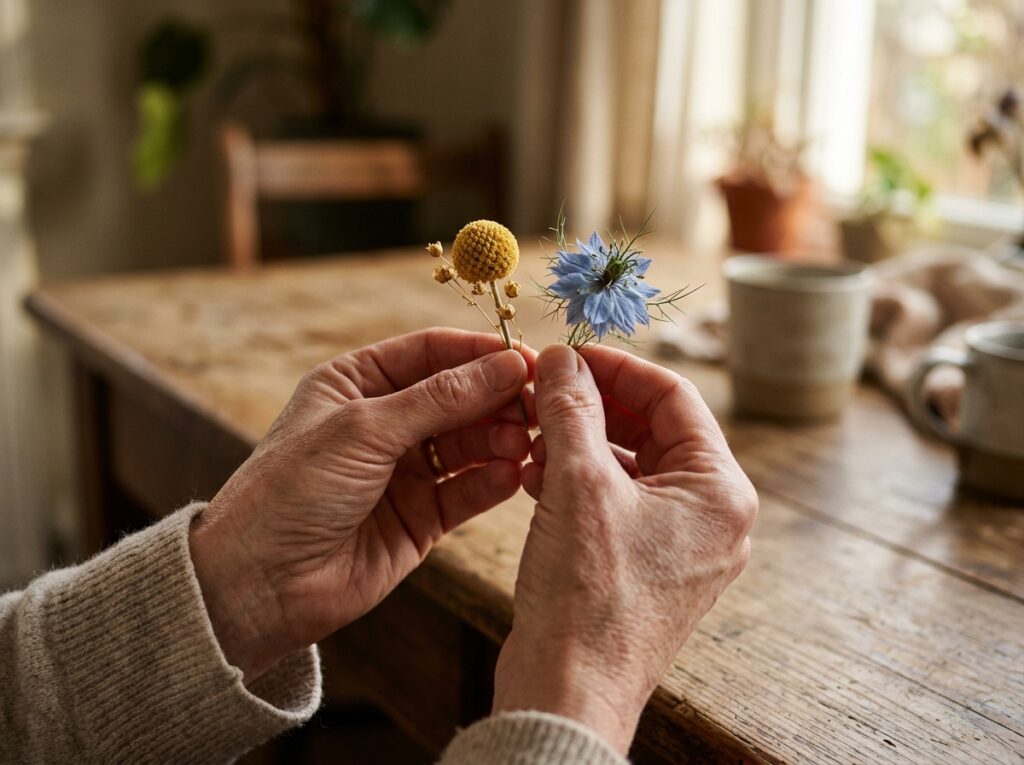
“The heart does not love in categories. It loves in moments, in feelings, in recognitions — and it does not always ask for permission before it begins.”
The Ethical Question: What Do You Do With This?
Acknowledging that it is psychologically possible to love two people at the same time is not the same as saying that all expressions of that love are ethical or without consequence.
This is where the conversation moves from psychology into character — and where the honest answers get harder.
The Impact on the People Involved
Every person in this triangle is a full human being with their own emotional reality, their own vulnerability, their own right to make informed choices about their own life and love. When divided feelings are acted upon in secret — through emotional or physical affairs — the people who are being deceived are denied the ability to choose. They are kept in a relationship under false pretenses, and the psychological damage of discovering that betrayal can be long-lasting and profound.
Research published in the Journal of Social and Personal Relationships found that people who discovered a partner’s emotional affair often reported experiencing symptoms consistent with post-traumatic stress — including intrusive thoughts, hypervigilance, and a lasting collapse of trust not just in the relationship, but in their own perception of reality.
The Question of Honesty
If you find yourself loving two people at the same time, the most important question is not “which one do I choose?” It is “what am I willing to be honest about, and with whom?”
Honesty is not the same as cruelty. You do not owe anyone a detailed confession of every feeling you experience. But you do owe the people in your life — and yourself — the integrity of not building a relationship on concealment.
Some people navigate this through ethical non-monogamy or polyamory — relationship structures where all parties are aware and consenting. For those people, loving two people at the same time does not require secrecy or betrayal. It requires communication, clear agreements, and a level of emotional maturity that many people underestimate.
The Question of Choice
Feeling love is not a choice. Acting on it always is. And within that space between feeling and action lies everything that defines who you are in your relationships — your integrity, your compassion, your courage to be honest even when honesty is costly.
Polyamory, Open Relationships, and Loving Openly
For a growing number of people, the answer to “can you love two people at the same time” is not just “yes” — it is “yes, and here is how we structure that openly.”
Polyamory — the practice of engaging in multiple romantic relationships with the knowledge and consent of all involved — is increasingly recognized by psychologists not as a disorder or a moral failing, but as a valid relationship orientation for people who experience love in naturally non-exclusive ways.
A 2021 study published in Frontiers in Psychology found that polyamorous individuals reported relationship satisfaction levels comparable to monogamous individuals, with notably higher levels of trust and communication within their relationships.
This does not mean polyamory is for everyone. Many people experience love as inherently singular and exclusive — and for them, the depth of commitment required by monogamy is not a limitation. It is the very thing that makes love feel meaningful.
The point is not to advocate for one structure over another. The point is to acknowledge that human love is more varied, more complex, and more honest than the single narrative we are most often given — and that the conversation about loving two people at the same time deserves that full complexity.
How to Navigate These Feelings With Integrity
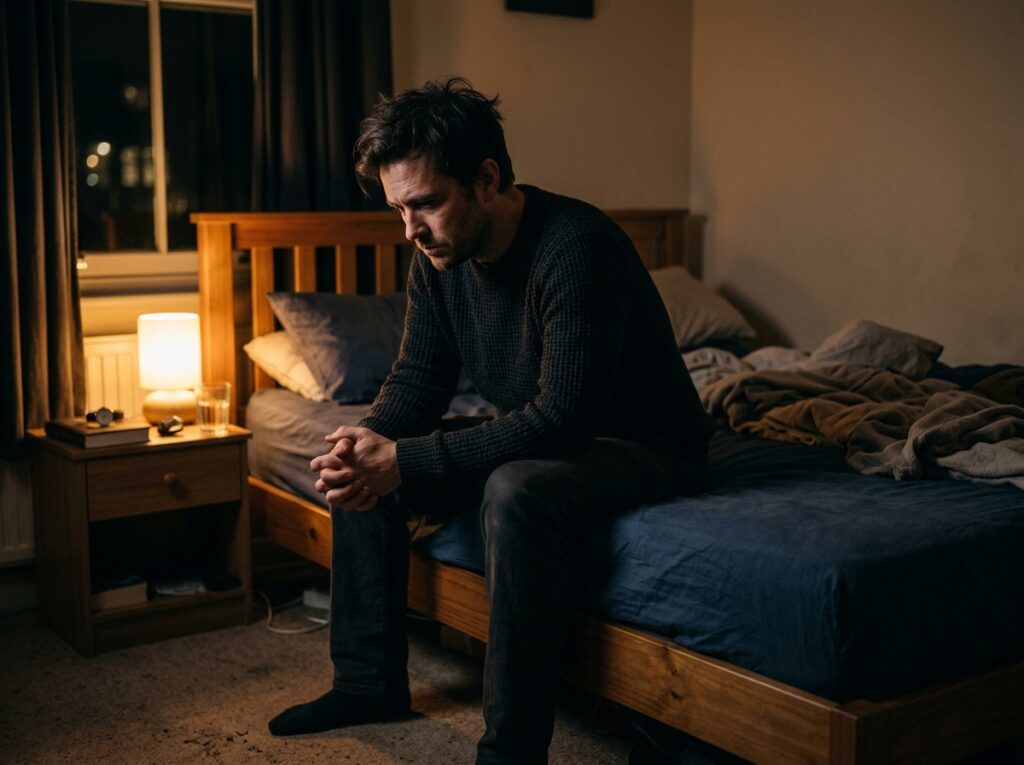
If you are currently experiencing love for two people at the same time, these steps are not about telling you what to decide. They are about helping you move through this with clarity, honesty, and respect for everyone involved — including yourself.
Step 1: Stop and Be Honest With Yourself First
Before you can make any meaningful decisions, you need to be rigorously honest with yourself about what you are actually feeling. Is this love — or is it infatuation, escapism, or the neurochemical rush of novelty? Is there something missing in your current relationship that this new connection represents? Are you running toward something new or running away from something uncomfortable?
Journaling, therapy, or even long periods of uninterrupted reflection can help you separate the signal from the noise of intense emotion.
Step 2: Understand What Each Connection Represents
Sometimes we fall for someone new not because we love them, but because they represent something — freedom, validation, a version of ourselves we miss, a life we did not choose. Understanding what each connection actually represents to you is essential before any decisions are made.
Step 3: Consider the Full Human Consequences
Every decision you make in this situation affects real people. Sit with that. Not with guilt — guilt is not productive here — but with genuine empathy for the full humanity of everyone involved, including the people who trust you.
Step 4: Have Honest Conversations
At some point, integrity requires honesty — with your partner, with yourself, possibly with the person you have developed feelings for. These conversations are hard. They carry risk. But a life built on concealment is not the life you or anyone else deserves.
Step 5: Seek Professional Guidance
A therapist — ideally one experienced in relationship psychology or attachment theory — can provide the kind of objective, compassionate guidance that friends and family, despite their best intentions, often cannot. This is not a situation that benefits from advice rooted in someone else’s emotional reaction to your circumstances.

What the Experience of Divided Love Can Teach You
Here is something that rarely gets said in this conversation: the experience of loving two people at the same time, as painful and disorienting as it is, can be one of the most profound teachers you will ever encounter in your emotional life.
It forces you to examine what you truly need from love. It reveals which of your needs are being met and which have been quietly starving. It challenges you to be more honest — with yourself and with others — than most comfortable relationships ever require.
It asks you to confront the gap between the love you are giving and the love you are actually living.
That confrontation, however uncomfortable, is valuable. The people who move through this experience with integrity — who choose honesty over secrecy, who take responsibility for their feelings without weaponizing them — often emerge with a far clearer understanding of what they want, who they are in relationship, and what kind of love they are willing to build their life around.
You Are Not a Bad Person for Feeling This
One of the most damaging things about this experience is the shame that comes with it. The internal voice that says: “What kind of person feels this way? What does this say about me?”
What it says about you is that you are human. That your heart is capable of connection and depth. That love, in your experience, has found more than one place to land.
You are not a bad person for feeling this. You become accountable when you decide what to do with what you feel.
The feeling is not the failure. The choice to be dishonest — with yourself or with others — is where integrity enters the picture. And integrity, unlike love, is always a choice.
Frequently Asked Questions
Q1: Is it possible to be genuinely in love with two people, or is one of the feelings always less real?
Both feelings can be entirely genuine. Psychology does not require love to be singular in order to be real. What often differs is the nature and depth of the two connections — one may be rooted in long-term attachment and history, while the other may be driven more by passion and novelty. Neither automatically outranks the other in authenticity, but they are rarely identical in their emotional composition.
Q2: Does loving two people mean I am not truly committed to either of them?
Not necessarily. Commitment is a behavioral and values-based choice — it is what you do with your feelings, not simply what you feel. Many people experience love for more than one person while remaining fully committed to their primary partner through transparency, boundary-setting, and active choice. Feeling is not the same as acting, and commitment is defined by action.
Q3: How do I know if what I feel for the second person is real love or just infatuation?
Time and depth are the most reliable indicators. Infatuation is typically characterized by idealization, intense preoccupation, and a focus on how the person makes you feel. Real love includes acceptance of the person’s full reality — their flaws, their complexity, their ordinariness. If you have never seen this second person in a moment of difficulty, failure, or emotional rawness, you may be in love with the idea of them more than the reality.
Q4: Can a relationship survive one partner loving someone else?
It depends enormously on the context, the honesty with which the situation is handled, and the willingness of both partners to engage in serious, supported work. Relationships have survived emotional connections to others — but only when both partners choose honesty, seek help, and rebuild trust through demonstrated behavioral change over time. It is not common, and it is not easy. But it is not impossible.
Q5: Is it selfish to love two people at the same time?
Feeling love is not selfish — feelings are not moral choices. What can become selfish is acting on divided feelings in ways that prioritize your own emotional comfort over the well-being and informed consent of the people involved. The most important ethical question is not what you feel, but whether the people who trust you are being given the truth they deserve to make their own choices about their own lives.
Save This. Share This. Follow For More.
💾 Save this article — because these are the questions worth sitting with more than once.
📤 Share this with someone you know is carrying this question silently. You might give them the language they have been looking for.
👉 Follow Truthsinside.com for honest, deeply researched content on love, emotions, relationships, and the psychology that connects them all.
📃 Related article: The 5 Love Languages Explained: Which One Are You?
Because the truth about love — all of it — is always worth understanding.
🎵 Music
Maren Lull is a singer-songwriter who writes from the places most people don’t talk about out loud.
Not the dramatic grief. Not the obvious heartbreak. The quiet kind — the ordinary Tuesday emptiness, the habit of reaching for someone who isn’t there anymore, the particular exhaustion of being strong for so long that the strength itself wears thin.
Her music lives at the intersection of emotional honesty and soft beauty — breathy vocals over gentle piano, slow tempos, lyrics that feel less like songs and more like something you wrote in a private notebook at two in the morning and never showed anyone.
Maren Lull writes for the people who feel everything deeply and say very little about it. For the ones who listen to sad music not because they want to feel worse — but because being understood, even by a song, makes the feeling easier to carry.
📱 Follow Maren Lull:
→ Spotify
→ Apple Music
→ Youtube
→ Audiomack