Have you ever swiped until your thumb was numb, matched with someone who seemed perfect, and then… nothing? No real spark. No meaningful conversation. Just another dead-end chat that faded into silence. If that sounds familiar, you are not alone — and there is actual science behind why this keeps happening.
Studies show that over 370 million people use dating apps globally, yet more than 50% report feeling more lonely after extended use. That is a striking contradiction. More access to potential partners than ever before, yet deeper feelings of disconnection. The problem is not the apps themselves. The problem is how most people are using them — without strategy, without self-awareness, and without a real understanding of what modern digital connection actually requires.
In 2025, online dating has evolved dramatically. Artificial intelligence is now embedded in matching algorithms, video profiles are standard, and emotional burnout from swiping culture is being studied as a genuine psychological phenomenon. To find something real in this landscape, you need tips that go beyond “use a good photo.” You need an honest, grounded, and research-backed approach — and that is exactly what this article delivers.

1. Understand Why Most People Fail at Online Dating First
Before diving into tactics, let us talk about mindset — because most online dating failures begin long before the first message is sent.
The number one mistake people make is treating dating apps like a slot machine. Swipe, match, repeat. This behavior triggers the same dopamine loop as gambling, which is by design. App developers build in variable reward patterns specifically to keep you engaged. The result is that most users spend more time collecting matches than actually building connections.
Research from the University of New Hampshire found that people who approach online dating with clear intentions and defined personal values are significantly more likely to report satisfying outcomes than those who swipe impulsively. Clarity is not romantic — it is strategic.
Ask yourself three honest questions before you even open an app: What kind of relationship am I actually looking for right now? What are my non-negotiable values in a partner? Am I emotionally available, or am I still healing from something?
Your answers will shape everything from the platform you choose to the way you write your bio. Skipping this step is like driving without a destination. You will burn fuel and end up nowhere.
2. Choose the Right Platform for What You Actually Want
Not all dating apps are built the same, and using the wrong one for your relationship goals is one of the most common and easily avoidable mistakes people make.
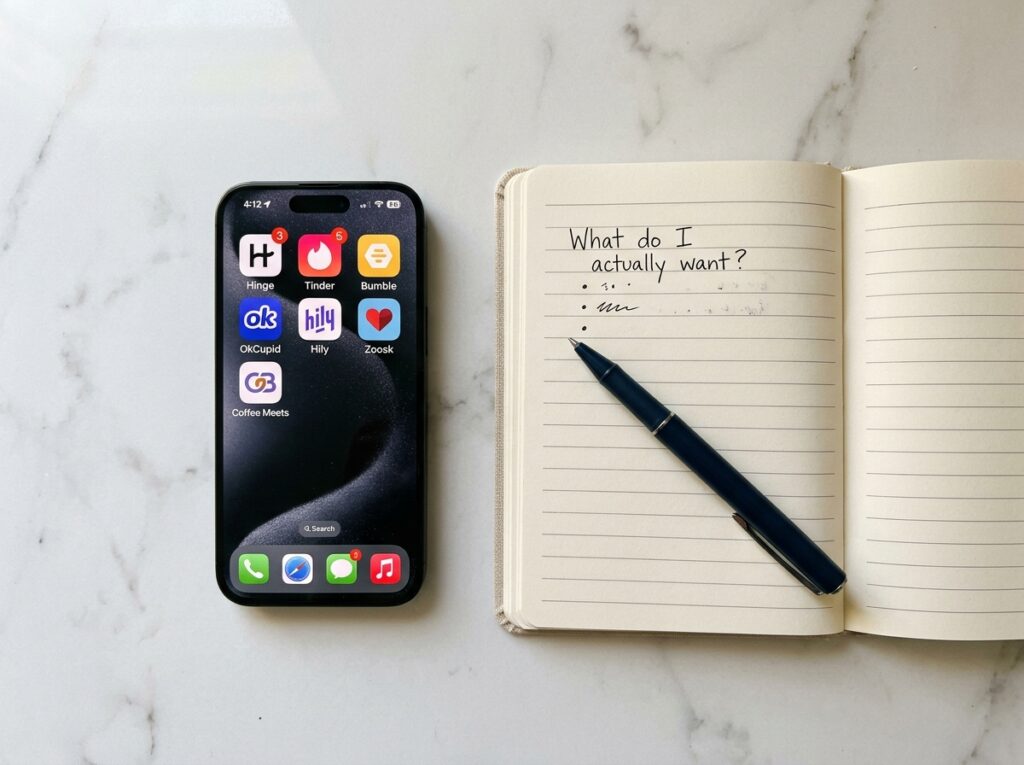
In 2025, the major platforms have become increasingly specialized. Tinder and Bumble are still dominant, but they skew toward casual connections in most demographics. Hinge has repositioned itself aggressively around serious relationships and its algorithm has become genuinely impressive at matching based on behavioral compatibility rather than just appearance.
Apps like Lox Club, The League, and Thursday cater to very specific lifestyle niches. Faith-based platforms like eHarmony and Christian Mingle serve users for whom values and spirituality are central to compatibility. If you are LGBTQ+, Grindr remains the largest community, while HER and Lex serve lesbian and queer women with strong community-focused features.
The key insight here is this: your success on any platform depends on how well your goals align with the platform’s actual user base and design intent.
Spend 20 minutes researching the app before downloading it. Read recent user reviews. Look at who the platform is actually marketing to. This single step will save you weeks of frustration. You would not walk into a jazz club if you were looking for a salsa dance partner — the same logic applies here.
3. Build a Profile That Does the Heavy Lifting for You
Your profile is not just a first impression — it is a filter. A powerful, well-crafted profile should attract the right people while naturally discouraging those who are not a fit. Most people have this completely backwards.
Start with your photos — because yes, they matter enormously.
Your first photo should show your face clearly, ideally smiling, in natural outdoor or soft indoor light. Research from PhotoFeeler found that photos taken outdoors in natural light receive up to 30% more positive responses than dark or indoor-flash photos. Ditch the bathroom selfies. Use images that show you doing something you genuinely love — hiking, cooking, playing an instrument, laughing with friends.
Include at least one full-body photo. Not for vanity reasons, but because hiding your appearance reads as dishonest to potential matches, and honesty is the foundation you want to build on from the very first swipe.
Now, your bio.
Here is what most people write: “I love to travel, laugh, and try new restaurants. Looking for my partner in crime.” Here is why that bio fails completely: it says nothing specific, nothing memorable, and nothing that gives a potential match a genuine hook to respond to.
Instead, use the “specific detail” technique. Write one sentence that reveals something true and particular about who you are. “I make the best homemade ramen you will ever taste and I take that claim extremely seriously.” That line creates curiosity, shows personality, and gives someone an easy and fun conversation starter.
End your bio with a soft, warm call to action. Something like, “If you know a great hole-in-the-wall restaurant, I am already interested.” This removes the friction of the first message and makes it easy for someone to reach out.
“Your dating profile is not your resume. It is the door to your personality. Make sure it is the kind of door people actually want to knock on.”
4. The First Message Is Everything — Here Is How to Get It Right
Matching is easy. Starting a real conversation is where most people completely fall apart.
Generic openers fail every single time. “Hey,” “How’s your week going?” and “You’re cute” are forgettable within seconds. In a pool of dozens of matches, the person who stands out is the one who makes the other person feel seen.
The best-performing first messages in 2025 follow a simple formula: Reference something specific from their profile plus Add a genuine observation or question plus Keep it light and low pressure.
For example, if someone’s bio mentions they are training for a marathon, you might say: “Training for a marathon while also having a full-time job is basically a personality disorder — a very impressive one. What got you started?” That message is specific, slightly playful, shows you actually read their profile, and ends with a question that invites them to talk about something they care about.
Study published in Computers in Human Behavior confirmed that personalized opening messages receive response rates up to 84% higher than generic ones. The math is not complicated. Put in the effort.
Avoid complimenting physical appearance in your opening message. It places pressure on the interaction immediately and signals that you swiped primarily on looks. Save compliments for once the conversation has established some warmth and rapport.
5. Move From App to Real Life — Strategically and Safely
One of the biggest online dating mistakes people make in 2025 is keeping conversations alive on an app for weeks without ever moving toward an actual meeting.
Extended app-based conversation creates what psychologists call a “parasocial intimacy illusion” — the feeling that you know someone deeply when in reality you only know their curated digital version. This false familiarity often leads to massive disappointment when you finally meet in person and the real human does not match the fantasy you have built up.
The ideal timeline, based on behavioral research, suggests moving to a real phone or video call within 5 to 7 days of matching, and proposing an in-person meeting within 2 to 3 weeks. This keeps momentum real and prevents the emotional investment from outpacing the actual relationship.
When suggesting a first date, keep it simple, public, and low pressure. A coffee, a short walk, a casual lunch. Not a fancy dinner or a concert. You need flexibility to leave early if there is no connection, and you need a low-stakes environment where both people can be authentic rather than performative.
Safety note: Always tell a friend where you are going and who you are meeting. Share the person’s profile or name with someone you trust. This is not paranoia — it is basic self-respect and responsible dating practice for everyone, regardless of gender.

6. Manage Dating App Burnout Before It Manages You
Dating app burnout is now recognized by mental health professionals as a genuine form of emotional exhaustion, and it is more common than most people admit.
The symptoms are easy to recognize: You open the app out of habit, not hope. Every match feels like a chore. You are more irritable after swiping. You have started to believe that there is no one good out there. These are not character flaws — they are signs your nervous system is overwhelmed by a process that was never designed for human emotional sustainability.
Here is how to handle it with intention:
Set strict time limits on app use. Research suggests that more than 35 minutes per day on dating apps is associated with increased feelings of inadequacy and loneliness. Use screen time controls if needed.
Take scheduled breaks — not quitting, but intentional pauses. A week or two fully off can reset your emotional baseline and return you to the process with fresh eyes and genuine hope rather than exhausted cynicism.
Focus on quality over quantity. Having five meaningful conversations is exponentially more valuable than 50 shallow exchanges. Prune your match list regularly. If a connection has not progressed in a week, it is okay to let it go.
Your emotional wellbeing is not a sacrifice worth making for any app. Protect it with the same seriousness you would protect your physical health.
“Online dating should feel like possibility, not punishment. The moment it starts feeling like a second job, it is time to rest — not quit, just breathe.”
7. Online Dating Tips for Long-Term Success: Think in Seasons, Not Swipes
The people who find lasting love through dating apps are rarely the ones who found it fastest. They are the ones who approached the process with patience, self-awareness, and a willingness to keep learning.
Think of your dating life as a season rather than a single event. There will be periods of active searching, periods of genuine connection and growth, and periods of stepping back to heal and recharge. All of these phases are valid. None of them are failures.
Keep a private journal of your dating experiences — not to obsess, but to notice patterns. Are you consistently attracted to people who are emotionally unavailable? Do your conversations always die at a certain point? Are you self-sabotaging when things start going well? Patterns that remain invisible keep repeating. Patterns you name and examine can be changed.
Invest in your offline life with the same energy you put into your online presence. People who have rich, fulfilling lives — hobbies, friendships, purpose, physical wellness — bring genuine attractiveness to their dating profiles and their first dates. You cannot pour from an empty cup, and you cannot attract depth when you are emotionally depleted.
Finally, remember that the goal is not to be liked by everyone. The goal is to be genuinely known by the right one. Let your profile, your messages, and your dates reflect who you truly are — even the parts that are still a work in progress. Authenticity is not a vulnerability. In 2025, in a landscape saturated with performance and filters, it is your single greatest competitive advantage.
Quick Recap: Online Dating Tips That Actually Work in 2025
- Get clear on your intentions before downloading any app
- Choose the right platform for your specific relationship goals
- Build a profile that reflects your real personality with specific, memorable details
- Write personalized first messages that make the other person feel genuinely seen
- Move from app conversation to real life within a strategic and safe timeline
- Protect your mental health by setting time limits and taking intentional breaks
- Approach online dating as a long-term season of self-discovery, not a quick transaction
CTA Section
Save this article so you can come back to it every time you update your profile or start fresh on a new app.
Share it with a friend who has been complaining about their dating app experience — this might be exactly what they need to read today.
Follow Truthsinside.com for more honest, research-backed articles on relationships, psychology, red flags, and everything in between.
Related article: What Does It Actually Feel Like to Fall in Love? Science + Real Stories
FAQ: Online Dating Tips That Actually Work in 2025
Q1: How long should I wait before asking someone out from a dating app?
Most relationship experts and behavioral researchers suggest proposing a real meeting within 2 to 3 weeks of matching. Long app-based conversations before meeting can create unrealistic expectations and emotional investments that the in-person reality struggles to match. When there is natural conversation flow and mutual interest, suggest a low-pressure public meeting sooner rather than later.
Q2: How many dating apps should I use at the same time?
Using more than two or three apps simultaneously is associated with higher rates of burnout and lower quality engagement. It is far more effective to choose one or two platforms that match your relationship goals and give them your full attention and energy rather than spreading yourself thin across five or six apps and engaging shallowly on all of them.
Q3: What should I do if I feel like online dating is hurting my self-esteem?
This is a very common and completely valid experience. Take an intentional break — even just one to two weeks — and focus on activities that reinforce your sense of self-worth outside of romantic validation. Journal, reconnect with friends, pursue a hobby, exercise. If the self-esteem impact feels persistent or severe, speaking with a therapist who specializes in modern relationships and digital culture can be genuinely transformative.
Q4: Is it weird to bring up what I am looking for on a first date?
Not at all — in fact, it is mature and efficient. You do not need to lead with it in the first five minutes, but by the end of a first or second meeting, it is entirely appropriate and actually very attractive to communicate clearly that you are looking for something real and long-term, if that is true. People who know what they want are perceived as confident, not desperate.
Q5: How do I know if someone from a dating app is being genuine or just playing games?
Pay attention to consistency over time rather than intensity in the beginning. Genuine interest shows up in reliable communication, follow-through on plans, and increasing openness and vulnerability as you get to know each other. Red flags include excessive compliments very early on, reluctance to video call or meet in person, inconsistent stories, and conversations that always turn toward flattery without substance. Trust your gut — and trust the patterns more than the words.
🎵 Music
Maren Lull is a singer-songwriter who writes from the places most people don’t talk about out loud.
Not the dramatic grief. Not the obvious heartbreak. The quiet kind — the ordinary Tuesday emptiness, the habit of reaching for someone who isn’t there anymore, the particular exhaustion of being strong for so long that the strength itself wears thin.
Her music lives at the intersection of emotional honesty and soft beauty — breathy vocals over gentle piano, slow tempos, lyrics that feel less like songs and more like something you wrote in a private notebook at two in the morning and never showed anyone.
Maren Lull writes for the people who feel everything deeply and say very little about it. For the ones who listen to sad music not because they want to feel worse — but because being understood, even by a song, makes the feeling easier to carry.
📱 Follow Maren Lull:
→ Spotify
→ Apple Music
→ Youtube
→ Audiomack