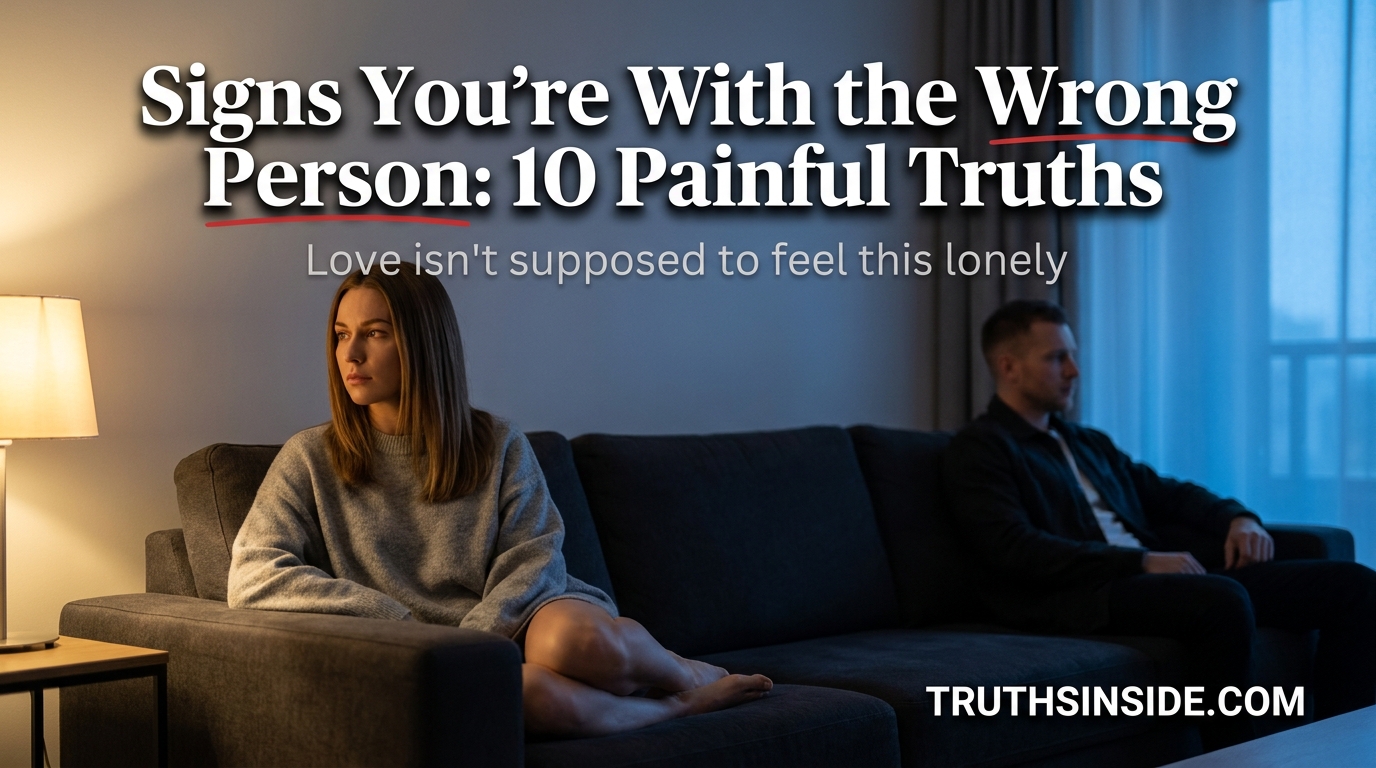
Signs you’re with the wrong person are rarely loud, obvious, or easy to name in the moment you most need to see them. They don’t typically announce themselves as dealbreakers. They arrive quietly — as a persistent unease you keep explaining away, a recurring ache you keep attributing to stress or circumstance, a voice in the back of your mind you keep silencing because listening to it would require you to face something you’re not yet ready to face. And so you stay. You try harder. You love more. You wonder what’s wrong with you — when the real question, the harder and more necessary question, is whether this is simply the wrong relationship for you.
According to research published in the Journal of Personality and Social Psychology, people in chronically unsatisfying relationships show measurable declines in self-esteem, emotional regulation capacity, and overall life satisfaction over time — declines that often persist long after the relationship has ended. The wrong relationship doesn’t just make you unhappy in the present. It reshapes how you see yourself, how you relate to others, and how much you believe you deserve — leaving marks that outlast the relationship itself by years.
This article is not about catastrophizing ordinary relationship difficulties or encouraging impulsive decisions. Every relationship has seasons of disconnection, friction, and doubt — and those seasons do not automatically mean you’re with the wrong person. What this article is about is the deeper, more consistent patterns that indicate a fundamental mismatch between you and your partner — patterns that persist not because either of you is failing to try hard enough, but because the relationship itself is asking both of you to be something you genuinely are not. These are 10 painful truths about the signs you’re with the wrong person — and they deserve to be read honestly.
The Difference Between a Hard Relationship and the Wrong Relationship
Before we examine the 10 signs, one distinction must be made clearly — because it is the distinction that separates useful self-reflection from unnecessary relationship destruction.
Every relationship, including the right ones, goes through genuinely hard seasons. Seasons of miscommunication, emotional distance, competing priorities, unresolved conflict, and the particular grinding difficulty of two imperfect people trying to build something together across a lifetime of change and challenge. Hardness alone is not evidence of wrongness.
The difference between a hard relationship and the wrong relationship lies not in the presence of difficulty but in what the difficulty reveals. A hard season in the right relationship reveals two people who, despite the difficulty, are fundamentally oriented toward each other — willing to do the work, capable of repair, genuinely invested in each other’s wellbeing even when that investment costs something real.
The wrong relationship, by contrast, reveals — through its particular patterns and persistent dynamics — a fundamental incompatibility that effort alone cannot resolve. Not because either person is bad, broken, or unworthy of love. But because these two specific people, in this specific configuration, cannot consistently meet each other’s most essential needs — and sustaining the relationship requires both of them to be continuously less than fully themselves.
With that distinction in mind, the signs that follow are not about the hard seasons. They are about the deeper pattern.
Sign #1: You Feel More Lonely With Them Than Without Them
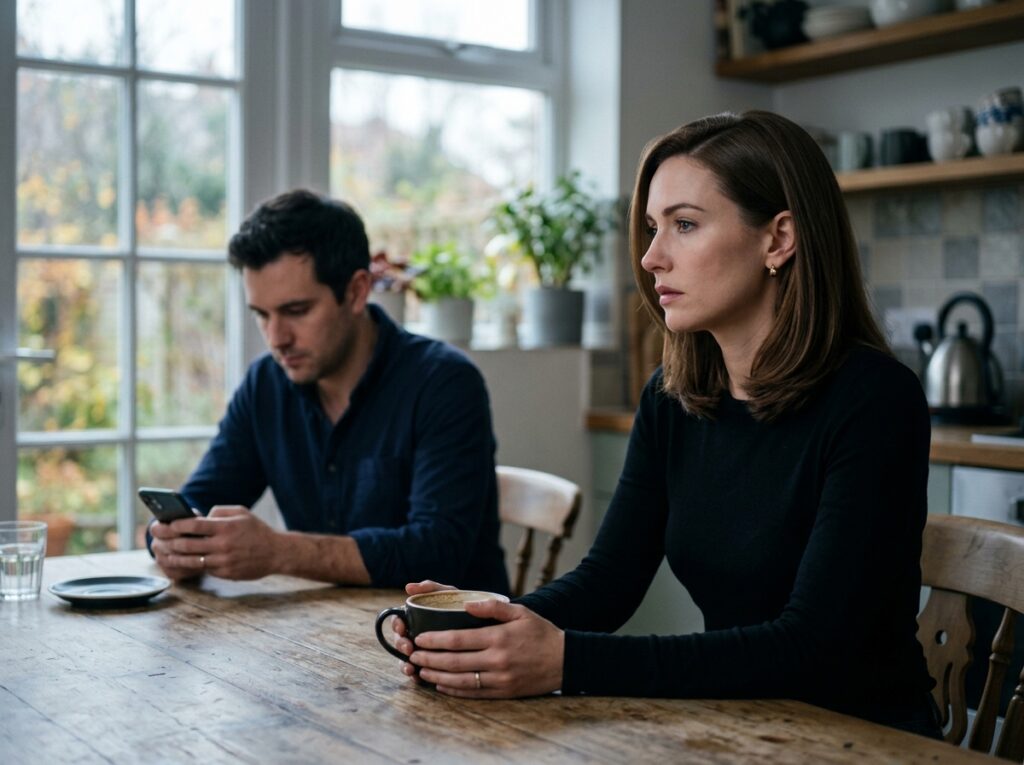
Of all the signs you’re with the wrong person, this one may be the most quietly devastating — and the most commonly described by people reflecting on relationships they eventually left. Loneliness is expected when you are alone. It is a profound signal when it is your dominant emotional experience inside a relationship with another person.
Feeling lonely within a partnership is not the same as simply wanting more time together or navigating a temporary period of emotional distance. It is the sustained, pervasive experience of being fundamentally unseen, unknown, and unreached by the person who is supposed to be your closest person in the world.
When you cannot share what genuinely matters to you because you know it won’t land. When you stop bringing your real thoughts, fears, and feelings to your partner because experience has taught you they won’t be received with genuine interest or care. When you feel more yourself — more alive, more connected, more understood — in the company of friends, family, or even strangers than in the presence of the person you’re supposed to be building a life with.
That specific loneliness — the loneliness of being unseen within proximity — is not a phase. It is not something that resolves with more time or more effort on your part alone. It is one of the most honest signals a relationship can send about a fundamental disconnection at its core.
📃 Related article: Signs He Likes You But Is Scared: 18 Behaviors Men Show When Afraid to Commit
Sign #2: You Consistently Feel Like You’re Too Much — Or Not Enough
In the right relationship, you feel fundamentally acceptable as you are — not perfect, but genuinely enough. Your partner’s response to who you are, expressed consistently across hundreds of ordinary interactions, communicates that you are loved and valued in your actual form — not a curated, edited, or carefully managed version of yourself.
In the wrong relationship, the opposite experience becomes the norm. You find yourself constantly monitoring how you come across — shrinking your emotions because they’re “too intense,” suppressing your opinions because they cause friction, managing your needs because expressing them leads to conflict or withdrawal. Or conversely — feeling perpetually inadequate, as though you are always failing some unspoken standard the relationship holds you to but never quite defines.
Both experiences — feeling too much and feeling not enough — share the same root: a relationship dynamic in which who you genuinely are does not fit comfortably. And a relationship that consistently asks you to be less of yourself in order to function is not the wrong phase of the right relationship. It is the right signal of the wrong relationship.
Sign #3: The Relationship Brings Out a Version of You That You Don’t Recognize or Like
One of the most reliable and most unsettling signs you’re with the wrong person is when you notice that the relationship is consistently bringing out qualities in you that you neither recognize as authentically yours nor like in yourself. You become more anxious than you have ever been. More defensive. More jealous, more controlling, more emotionally reactive — or more withdrawn, more shut down, more emotionally unavailable than you’ve ever been with anyone else.
This is important to examine carefully, because the instinct is often to assign this change entirely to yourself — to conclude that you are simply an anxious, jealous, or difficult person. But relationship research consistently shows that we are not the same person across all relational contexts. We are profoundly shaped by the relational environment we inhabit.
A relationship characterized by chronic insecurity, inconsistent emotional availability, poor communication, or subtle undermining will reliably produce anxiety, reactivity, and emotional dysregulation in people who do not exhibit those qualities in other contexts of their lives.
If you were emotionally healthy and relatively stable before this relationship — and you no longer recognize yourself within it — that is not exclusively a you problem. It is, at least in significant part, a relationship problem. And it deserves to be examined as such.
“The wrong relationship doesn’t just make you unhappy. It makes you someone you never planned to become — and then quietly convinces you that person is who you’ve always been.”
Sign #4: You Stay for Reasons That Have Nothing to Do With Wanting to Be There
Take an honest inventory of the reasons you are in this relationship. Not the reasons you give other people, and not the reasons you reach for when doubt surfaces. The real reasons — the ones that operate beneath the surface of your conscious justifications.
If the primary reasons you stay involve fear — fear of being alone, fear of the logistical disruption of leaving, fear of what your partner will do or say or feel if you go, fear of having to start over, fear of confirming that the relationship failed — that is a significant signal.
Fear-based staying is not the same as love-based choosing. People in the right relationship sometimes feel afraid of losing what they have. People in the wrong relationship often stay primarily because leaving feels more frightening than remaining — regardless of how the relationship actually makes them feel day to day.
The distinction is important because fear is not a foundation. It is a cage that looks, from the inside, like a home. And decisions made from fear — to stay, to try harder, to minimize your own experience in order to preserve the structure — rarely lead to the kind of relationship that either person genuinely deserves.
Sign #5: Your Core Values Point in Fundamentally Different Directions
Compatibility in a long-term relationship does not require identical personalities, identical interests, or identical life experiences. It does require a sufficient alignment of core values — the deepest held beliefs about what matters, how to live, what kind of people you both want to be, and what kind of future you are each working toward.
When core values are fundamentally misaligned — when one partner deeply values family and the other is genuinely uninterested in parenthood, when one partner’s spiritual or religious life is central to their identity and the other finds it alienating, when fundamental beliefs about honesty, commitment, or financial responsibility are in direct conflict — no amount of love, effort, or goodwill can permanently bridge that gap.
Values conflicts of this magnitude don’t resolve through compromise in the way that preference differences do. They resurface, repeatedly, in the most significant decisions a couple faces — children, finances, lifestyle, community, commitment. And the couple that manages them through avoidance eventually reaches a point where avoidance is no longer possible and the incompatibility can no longer be minimized.
If you and your partner consistently find yourselves wanting fundamentally different lives — not just different habits or preferences, but different lives — that is not a problem that love alone can solve.
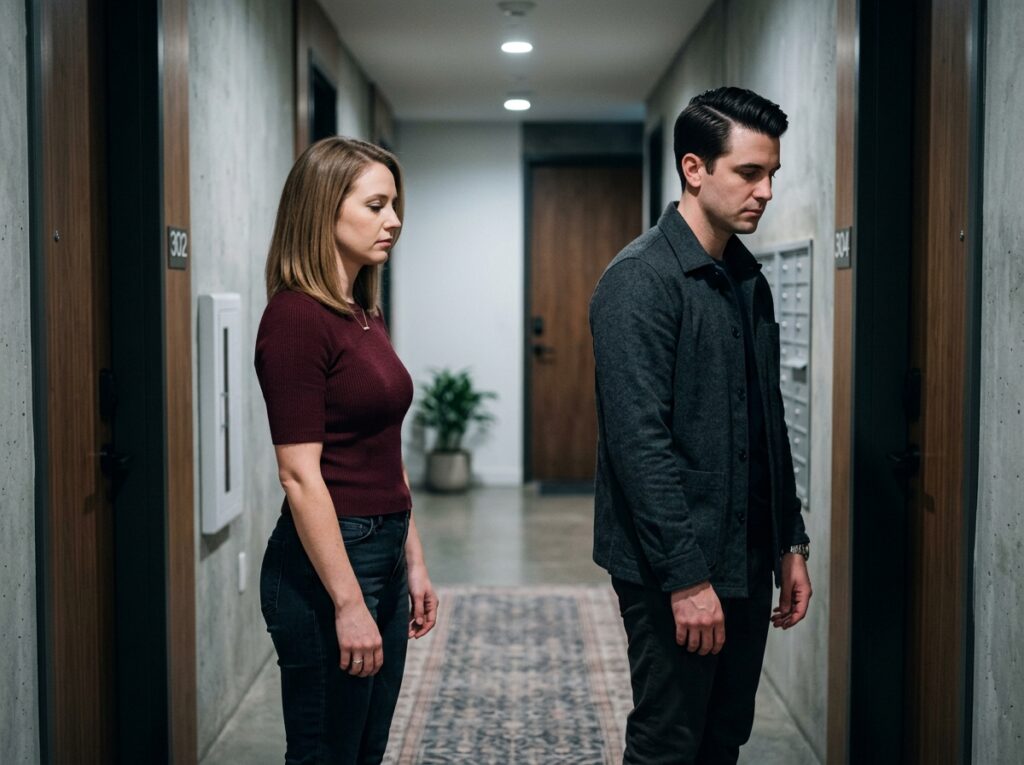
Sign #6: Conflict Leaves You Feeling Worse About Yourself — Not Just About the Situation
Conflict in healthy relationships is uncomfortable — but it is productive discomfort. When two people who are genuinely right for each other navigate a disagreement, even a serious one, the process — however imperfect — ultimately moves toward understanding, repair, and a deeper knowledge of each other. You may feel temporarily hurt, frustrated, or sad. But you do not consistently emerge from conflict feeling fundamentally worse about who you are as a person.
In the wrong relationship, conflict has a different texture and a different aftermath. Arguments leave you feeling attacked, diminished, or ashamed rather than heard. Your partner’s conflict style involves contempt, blame-shifting, or the kind of weaponized personal criticism that targets your character rather than the behavior in question. Or perhaps the conflict simply never resolves — cycling endlessly through the same arguments without genuine repair, leaving behind a growing residue of resentment and hopelessness.
Dr. John Gottman’s research identifies contempt — the expression of moral superiority over a partner — as the single greatest predictor of relationship failure. Contempt in conflict is not a communication style that can be easily corrected. It reflects a fundamental erosion of respect. And a relationship where either partner consistently feels diminished, shamed, or attacked through conflict is not a relationship that is simply struggling. It is a relationship that is causing genuine harm.
📃 Related article: The 5 Love Languages Explained: Which One Are You?
Sign #7: You Have Stopped Imagining a Future Together
In the early stages of a relationship, imagining the future together feels natural and exciting — a shared adventure that both people are eager to move toward. But even in established, long-term relationships, the continued presence of a shared and genuinely desired future vision is one of the clearest indicators of a relationship’s health.
When you notice that you have quietly stopped building that vision — that the future you imagine for yourself no longer naturally includes your partner, or that imagining a future together produces anxiety or emptiness rather than anticipation — that shift is worth taking seriously.
This is different from the natural evolution of early romantic idealism into the more grounded, realistic vision of long-term partnership. This is the specific experience of a future with this person feeling like something to be endured rather than built — a continuation of the present rather than a genuine horizon you are moving toward together.
People sometimes dismiss this sign as a temporary emotional state — a bad week, a difficult season, the natural fluctuation of long-term love. And sometimes, that is accurate. But when the inability to genuinely envision a desired future together is consistent, persistent, and not connected to any specific temporary stressor — it is one of the most honest signals the relationship is offering. Listen to it.
Sign #8: You Feel Relief When They’re Not Around
This sign is one of the most uncomfortable to acknowledge — and one of the most important. In a healthy relationship, a partner’s presence is, on balance, a source of comfort, warmth, and genuine pleasure. Their absence is something you notice and, in varying degrees, miss.
In the wrong relationship, the emotional mathematics can quietly reverse. You notice, if you are honest with yourself, that there is a particular quality of ease — a release of tension, a freedom to breathe — that arrives when your partner is not present. Not the healthy enjoyment of independent time that every person in a relationship deserves. But a specific relief at the temporary absence of something that has been feeling like a weight.
This relief is not a character flaw. It is your nervous system communicating with remarkable clarity about the emotional experience of being in this relationship. When someone’s presence consistently produces tension, guardedness, or the need to manage yourself carefully — and their absence consistently produces relief — that contrast is data.
Not all data requires immediate action. But it all deserves honest acknowledgment — because what your nervous system registers about the emotional texture of being in someone’s company is one of the most honest assessments of the relationship available to you.
“When their absence feels lighter than their presence — your body already knows something your heart hasn’t finished grieving yet.”
Sign #9: You’ve Lost Yourself Trying to Make It Work
There is a particular kind of relationship damage that is especially insidious because it looks, from the inside, like love and commitment. It is the gradual erosion of self that occurs when one partner — or both — consistently subordinates their own needs, desires, identity, and wellbeing to the demands of keeping the relationship functional.
You stopped pursuing the things that mattered to you before the relationship. You distanced yourself from people who loved you because they complicated the dynamic. You changed your opinions, your plans, your standards, and eventually your sense of who you are — not through the natural growth that good relationships invite, but through the slow accommodation of a relationship that kept asking for more than was healthy to give.
When you look at the person you are inside this relationship and feel a profound disconnection from the person you were before it — or the person you know yourself to be outside of it — that disconnection is not a sign that you need to work harder on the relationship. It is a sign that the relationship has been working on you in ways that deserve serious examination.
You are not the supporting character in your own life story. And a relationship that consistently casts you in that role is not the right relationship — regardless of how much you love the person it has organized itself around.
Sign #10: Deep Down, You Already Know
Perhaps the most honest sign of all requires the least explanation — and the most courage to acknowledge. Somewhere beneath the justifications, beneath the hope, beneath the love you genuinely feel and the investment you have genuinely made — you already know.
Not with the loud certainty of a dramatic revelation. But with the quiet, persistent, irrefutable knowing that lives in the body before it reaches the mind. The knowing that surfaces in the early morning before the day’s noise drowns it out. The knowing that the right conversations and the right distractions keep at bay but never fully silence.
You know what this relationship consistently gives you and what it consistently withholds. You know how you feel inside it, on the ordinary days and the hard ones. You know the version of yourself it produces and whether that version is someone you recognize and respect. You know whether the future you’re building with this person is genuinely the future you want — or the future that simply requires the least disruption to arrive at.
Acknowledging what you already know is not the same as knowing what to do with it. It is simply the beginning of the honest conversation — with yourself, first — that every important decision about love and life deserves to start from.

What to Do When You Recognize These Signs
Recognizing the signs you’re with the wrong person does not automatically tell you what to do next — and it shouldn’t. These are among the most significant and complex decisions a human being faces, and they deserve to be made with care, self-compassion, and genuine reflection rather than panic or impulsiveness.
Start with honesty — with yourself, before anyone else. Journal. Sit with what you’ve read and notice what resonated and what you wanted to dismiss. The things you most wanted to dismiss are often the most important to examine.
Consider couples therapy — not necessarily as a path to saving the relationship, but as a space where both of you can understand what the relationship actually is with the support of a trained professional. Sometimes therapy reveals a relationship that has more genuine potential than either partner could see from inside their own pain. Sometimes it confirms what one or both partners already knew.
Seek individual therapy as well. Whether or not the relationship continues, the patterns, the losses, and the self-examination that this recognition requires deserve professional support. A good therapist will not tell you what to do — but they will help you understand yourself clearly enough to make the decision from your truest self rather than from fear, guilt, or habit.
And know this: recognizing that you may be with the wrong person is not a failure. It is an act of profound self-awareness and self-respect — the kind that the right relationship, when it comes, will be built on.
💾 Save this article — return to it on the days when doubt resurfaces and clarity feels far away.
📤 Share it with someone you love who has been quietly describing a relationship that sounds like this.
👣 Follow Truthsinside.com for more honest, deeply researched content about love, relationships, and the signals that matter most.
📃 Related article: Gaslighting in Relationships: How to Recognize, Name, and Leave It
FAQ: Signs You’re With the Wrong Person
Q1: How do you know if you’re with the wrong person or just going through a rough patch?
The key distinction is pattern versus phase. A rough patch is time-limited, connected to specific stressors, and characterized by both partners maintaining genuine goodwill, effort, and the capacity for repair. Being with the wrong person produces consistent, recurring patterns — the same dynamics, the same feelings, the same outcomes — that persist regardless of external circumstances and that do not meaningfully improve despite genuine effort from both sides. Ask yourself honestly: is this a season, or is this the relationship?
Q2: Is it possible to love someone and still be with the wrong person?
Absolutely — and this is one of the most painful realities of romantic love. Love and compatibility are not the same thing. You can love someone deeply, genuinely, and completely — and still be fundamentally wrong for each other in ways that prevent the relationship from being healthy or sustainable for either of you. The presence of real love does not automatically mean the relationship is right. It means the loss of it, if you choose to leave, will be real too.
Q3: What if I’ve invested years in this relationship — does that change anything?
The time and emotional investment you’ve made in a relationship is real and significant — but it is not, on its own, a reason to stay in a relationship that is consistently causing harm or fundamental unhappiness. Psychologists call the tendency to stay based on past investment “sunk cost fallacy” — the error of allowing what has already been spent to determine future decisions rather than honest assessment of present and future wellbeing. The years you’ve given to this relationship are not wasted by leaving. They are part of your story — and they do not have to define the rest of it.
Q4: Can the wrong person become the right person over time?
People do grow and change — and some relationships that struggled early find genuine health and depth over time with both partners’ commitment and often professional support. However, the changes that would need to occur for a fundamentally wrong relationship to become right are significant — involving core values alignment, fundamental shifts in relational patterns, and genuine mutual commitment to sustained growth. These changes are possible but not guaranteed, and they require both partners to be genuinely willing and actively engaged. Hoping someone will become different is not the same as witnessing them actively becoming different.
Q5: How do I leave a long-term relationship when I still love the person?
With honesty, compassion, and professional support. The end of a relationship — particularly one involving genuine love — is a grief process, and it deserves to be treated as one. Be honest with your partner about your experience without weaponizing it. Seek individual therapy to support your own processing. Lean on your support network without triangulating them into the relationship’s end.
And give yourself genuine permission to grieve — not just the relationship, but the future you imagined within it, and the love you genuinely felt. Leaving someone you love is one of the hardest things a person can do. It is also sometimes the most loving thing — for both of you
🎵 Music
Maren Lull is a singer-songwriter who writes from the places most people don’t talk about out loud.
Not the dramatic grief. Not the obvious heartbreak. The quiet kind — the ordinary Tuesday emptiness, the habit of reaching for someone who isn’t there anymore, the particular exhaustion of being strong for so long that the strength itself wears thin.
Her music lives at the intersection of emotional honesty and soft beauty — breathy vocals over gentle piano, slow tempos, lyrics that feel less like songs and more like something you wrote in a private notebook at two in the morning and never showed anyone.
Maren Lull writes for the people who feel everything deeply and say very little about it. For the ones who listen to sad music not because they want to feel worse — but because being understood, even by a song, makes the feeling easier to carry.
📱 Follow Maren Lull:
→ Spotify
→ Apple Music
→ Youtube
→ Audiomack