
If you suspect your partner has feelings for someone else, the first thing you need to know is that your instincts are not nothing. That quiet, persistent unease — the feeling that something has shifted without any single identifiable moment you can point to — is one of the most psychologically significant signals the human mind produces. Research from the University of Southern California found that gut feelings about relationship betrayal are frequently accurate, rooted in the brain’s unconscious processing of subtle behavioral changes long before the conscious mind has assembled them into a clear picture.
A study published in the Archives of Sexual Behavior found that emotional infidelity — developing deep feelings for someone outside the relationship — is reported as more threatening and more painful by partners than physical infidelity alone. The slow, quiet nature of emotional involvement makes it particularly difficult to identify and equally difficult to confront. There are rarely dramatic moments. There are patterns. Subtle, accumulating, unmistakable patterns — once you know what to look for.
This article identifies nine specific signs that your partner may be developing or carrying feelings for someone else. These signs are rooted in psychology, behavioral science, and the lived experiences of people who have navigated this painful terrain. Reading them takes courage. But knowing the truth — whatever it turns out to be — is always more powerful than living inside the uncertainty.
1. Your Partner Has Feelings for Someone Else — Their Phone Behavior Has Completely Changed
One of the earliest and most consistent behavioral signals that something has shifted is a sudden and significant change in how a partner interacts with their phone. This is not about occasional privacy — everyone is entitled to personal space in a relationship. This is about a pattern of behavior that is markedly different from what existed before and that carries a specific quality of concealment.
Watch for a partner who now sleeps with their phone face down when they previously left it on the nightstand openly. Watch for someone who exits apps quickly when you approach, angles the screen away reflexively, or who has suddenly added passwords or biometric locks to devices that were previously open. Watch for the muted notification sounds, the phone taken to the bathroom, the screen that dims immediately when you sit beside them.
Individually, any one of these behaviors has an innocent explanation. As a sudden cluster of new behaviors in someone who previously had no such habits, they form a pattern worth paying serious attention to. The concealment itself is the signal — not necessarily what is being concealed, but the fact that concealment has become a consistent feature of someone who previously had no reason to hide their screen from the person they love.
“The heart rarely lies quietly when something is wrong. It speaks through instinct — long before the mind is ready to listen.”

2. They Have Become Emotionally Unavailable to You
Emotional availability — the willingness and capacity to be present, responsive, and engaged with a partner’s inner world — is one of the foundational pillars of a healthy relationship. When a partner begins investing significant emotional energy in someone outside the relationship, that energy is genuinely finite. What flows toward one person flows away from another.
A partner developing feelings for someone else frequently becomes emotionally distant in ways that are difficult to articulate but impossible to ignore. Conversations that once felt easy and connected begin to feel like interruptions. Attempts to share something meaningful are met with distraction, minimal responses, or a vague sense that their attention is somewhere else entirely. The emotional intimacy that once felt effortless begins to require increasingly exhausting effort to access.
Psychologist Shirley Glass, whose landmark research on infidelity produced the book Not Just Friends, found that emotional withdrawal from the primary relationship is consistently one of the earliest and most reliable indicators of emotional involvement outside it. The withdrawal often precedes any physical behavior and can exist for months before a partner consciously acknowledges what is driving it. If the emotional warmth that was once natural has become something you now have to ask for, pay attention to that shift.
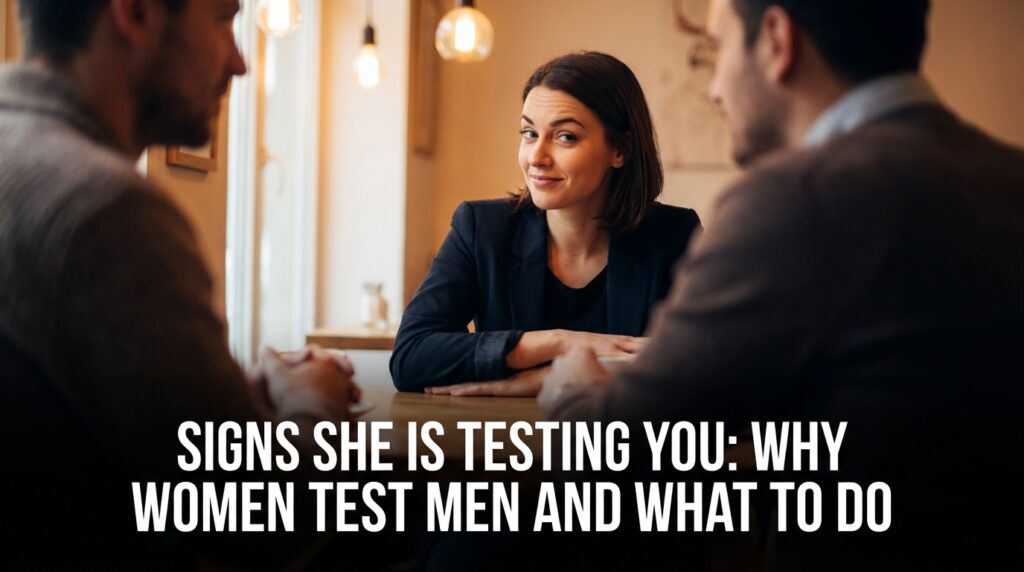
📃 Related article: 15 Signs She Is Testing You: Why Women Test Men and What to Do
3. A Specific Person’s Name Keeps Appearing
There is a particular pattern that appears consistently in the early stages of developing feelings outside a relationship — the unconscious or semi-conscious insertion of one specific person’s name into conversation. A colleague, a friend, a gym contact, a neighbor. The name begins appearing with a frequency and a context that eventually becomes impossible not to notice.
Sometimes this happens because the person carrying the feelings has not yet fully acknowledged them to themselves — they are simply talking about someone who occupies a significant amount of their mental space. Sometimes it happens as a testing behavior — introducing the person into conversation to gauge their partner’s reaction and to normalize the connection before it becomes undeniable. In either case, the pattern is meaningful.
Pay attention not just to frequency but to the quality of how the name is mentioned. Is there a subtle shift in energy — a slight brightening, a softening of expression, an added detail that was not solicited? Or conversely, a sudden overcorrection — a defensive dismissiveness when the name comes up that feels disproportionate to the question? Both extremes carry information. The name that appears too often — or the one that creates too strong a reaction when mentioned — deserves your honest attention.
4. Their Appearance and Self-Presentation Has Suddenly Shifted
A sudden, unexplained investment in personal appearance — new clothing, a new haircut, new gym routine, new cologne or perfume, new attention to grooming habits that previously received minimal effort — is one of the behavioral signals most commonly associated with the development of new feelings outside an existing relationship.
People dress and groom for an audience. When the primary audience in a person’s life shifts — even subtly and unconsciously — their self-presentation often shifts with it. If a partner who previously dressed casually around you suddenly begins putting significant effort into their appearance on specific days, at specific times, or for specific events that do not include you, that pattern is worth examining.
This sign must be read carefully and contextually. A new job, a professional shift, a personal health goal, or simply a renewed self-confidence can all produce similar changes with entirely innocent motivations. The signal is not in the change itself but in the combination — the new appearance paired with emotional distance, phone concealment, and the other behavioral patterns described in this article. Patterns, not individual behaviors, are where the truth lives.
5. They Become Defensive or Angry When You Ask Simple Questions
Defensiveness disproportionate to the question being asked is one of the most psychologically revealing behavioral signals in any relationship. A partner with nothing to hide does not respond to casual questions with sudden anger, dismissiveness, or accusations of jealousy and control. Disproportionate defensiveness is almost always a deflection mechanism — and deflection signals the presence of something that feels threatening to expose.
Watch for what happens when you ask simple, low-stakes questions. “Who were you texting?” asked casually becomes, in a defensive partner’s response, an accusation of surveillance. A general inquiry about their evening becomes evidence of your insecurity. The reaction is calibrated not to the question but to whatever the question feels threatening to reveal.
Psychologists refer to this pattern as DARVO — Deny, Attack, Reverse Victim and Offender. It is a well-documented defensive response pattern in which the person being questioned deflects by turning the concern back onto the person raising it. When a partner’s defensiveness consistently converts your legitimate questions into evidence of your own failings, that inversion itself is a significant signal worth sitting with honestly.
“It is not the question that makes a guilty person defensive. It is the answer they are not ready to give.”

6. Your Intimacy Has Significantly Decreased Without Explanation
A meaningful and sustained decline in physical and emotional intimacy — without a clear, acknowledged reason such as health, stress, or mutual life circumstances — is one of the most significant signs that something has fundamentally shifted in a partner’s emotional landscape. Intimacy, both physical and emotional, is a direct expression of present desire and relational investment.
When a partner is developing feelings for someone else, two simultaneous psychological processes are often at work. First, their desire and romantic attention is being partially redirected toward another person. Second, guilt — conscious or unconscious — creates an internal barrier to intimacy with their existing partner. These two forces combine to produce a withdrawal from closeness that can feel inexplicable and deeply painful to the person on the receiving end.
It is important to distinguish a temporary decrease in intimacy — caused by external stressors, fatigue, or identifiable life circumstances — from a sustained, unexplained withdrawal that coincides with other behavioral changes. The former is a normal rhythm of any long-term relationship. The latter, particularly when accompanied by emotional distance and the other signs described in this article, represents a meaningful pattern that deserves honest, direct conversation between partners.
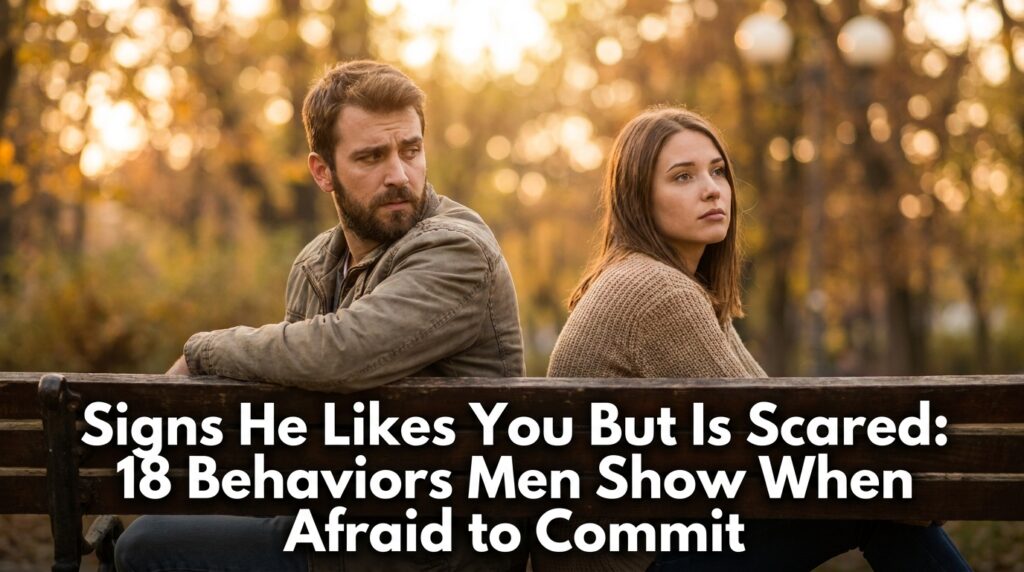
📃 Related article: Signs He Likes You But Is Scared: 18 Behaviors Men Show When Afraid to Commit
7. They Are Suddenly Highly Critical of You
A partner who begins finding fault with things they previously accepted, appreciated, or simply never noticed — your habits, your appearance, your opinions, your social behaviors — may be engaging in a psychological process called comparative devaluation. When someone begins idealizing another person, they unconsciously begin perceiving their existing partner through a more critical lens. The comparison, even when never stated, shifts their internal perception.
This criticism is rarely framed as comparison. It presents as suddenly heightened standards, new frustrations with long-standing behaviors, or a general shift in how warmly and patiently they engage with you. The person who once found your laugh charming finds it grating. The habits they once indulged they now openly criticize. The version of you they once celebrated now seems to attract increasing judgment.
This shift is deeply painful — and one of its cruelest aspects is that it tends to make the target of the criticism work harder, change more, and try to close a gap they cannot even accurately identify. Recognize that criticism of this nature says nothing true about your worth. It says everything about a comparison being made in someone else’s mind — a comparison that is itself a significant symptom of where their emotional energy is currently directed.
8. They Speak About This Person With Unusual Warmth or Reverence
Returning to the specific person who has begun appearing in your partner’s conversation — pay close attention to the quality of language used when they are mentioned. There is a particular quality to the way someone speaks about a person they have developing feelings for — a slight but detectable warmth, an added animation, a more careful choice of words, a subtle but visible brightening that is different from how they discuss anyone else.
This is not always obvious. It often presents as nothing more than slightly heightened enthusiasm when a particular topic or person comes up. A story about this person carries more detail than it needs to. Their name is said with a subtle care that other names do not receive. The body language shifts almost imperceptibly — a slight lean forward, a small private smile, a softening of expression that your gut registers before your mind identifies it.
Trust that registration. The human brain is exquisitely sensitive to social signals — and partners, who know each other’s baseline energy intimately, are particularly well-positioned to detect deviations from it. You may not be able to articulate exactly what feels different about the way they say that name. But the fact that it feels different at all is itself a piece of information that deserves honest consideration.
9. Your Gut Has Been Speaking — And You Have Been Silencing It
The final and perhaps most important sign that your partner has feelings for someone else is the one you brought with you before you read a single word of this article — the persistent, quiet, gut-level knowing that something is wrong. Human intuition, particularly within the context of intimate relationships, is not mystical. It is the brain’s sophisticated pattern-recognition system processing hundreds of micro-signals and behavioral deviations below the level of conscious awareness.
Research from the Association for Psychological Science confirms that intuitive judgments about social situations — particularly those involving close relationships — carry significant accuracy. The gut feeling you keep talking yourself out of, the unease you keep attributing to your own insecurity, the question you keep swallowing because you are afraid of the answer — these are not symptoms of anxiety. They are data.
This does not mean the worst-case scenario is guaranteed. It means your mind has registered something real, and that registration deserves honest examination rather than continued suppression. The bravest thing you can do — for yourself and for your relationship — is to bring what you have noticed into the open, to have the direct conversation, and to insist on the truth. Whatever that truth turns out to be, you deserve to build your life on it rather than around the fear of discovering it.
FAQ
Q1: What is the difference between emotional cheating and just a close friendship?
The line between close friendship and emotional affair lies primarily in secrecy, prioritization, and the nature of emotional intimacy being shared. A close friendship is something a partner speaks about openly, does not conceal, and does not emotionally prioritize over the relationship. An emotional affair involves a level of emotional intimacy, secrecy, and investment that begins to function as a parallel relationship — meeting needs that should be met within the primary partnership.
Q2: Should I confront my partner if I notice these signs?
Yes — but approach matters enormously. A calm, honest, non-accusatory conversation is always more productive than a confrontation built on accumulated tension. Choose a private, unhurried moment. Lead with what you have felt rather than what you have concluded. Saying “I have been feeling disconnected from you and I need us to talk honestly” opens dialogue in a way that accusations close. Your goal is truth — not victory.
Q3: Can a relationship survive if a partner had feelings for someone else?
Yes — many relationships not only survive but grow significantly stronger through honest confrontation and committed repair work. The critical variables are whether both partners are willing to engage honestly with what happened, whether the underlying needs or disconnections that allowed the feelings to develop are genuinely addressed, and whether both people are committed to rebuilding trust through consistent, transparent behavior over time.
Q4: Is it possible to misread these signs due to anxiety or insecurity?
Absolutely — and this is an important reality to hold honestly alongside the information in this article. Anxiety and insecurity can produce hypervigilance that interprets neutral behaviors as threatening. The key distinction is pattern versus isolated incident, and sudden change versus consistent baseline. If your concerns are rooted in one or two isolated behaviors rather than a pattern of changes across multiple areas, honest self-reflection about your own anxiety is also a worthwhile and courageous step.
Q5: What should I do if my partner denies everything but the signs are still present?
Trust the pattern over the denial — but also invest in honest conversation about your relationship’s overall health rather than focusing exclusively on the suspected third party. Sometimes the most productive path is couples therapy, where a neutral professional can help both partners examine what is actually happening — both within the relationship and within each person individually. Denial from a partner does not obligate you to dismiss your own perceptions.
Closing CTA
Recognizing that your partner may have feelings for someone else is one of the most difficult emotional experiences a person can navigate — and the courage it takes to look honestly at these signs rather than away from them is real and significant. Whatever you discover on the other side of this awareness, you deserve a relationship built entirely on honesty, presence, and mutual commitment. If this article helped you find clarity you needed, save it for when you need to return to it. Share it with someone you know who is quietly carrying this particular pain. And follow Truthsinside.com for honest, psychology-grounded content about relationships, love, and the signals that tell us what we need to know.
🎵 Music
Maren Lull is a singer-songwriter who writes from the places most people don’t talk about out loud.
Not the dramatic grief. Not the obvious heartbreak. The quiet kind — the ordinary Tuesday emptiness, the habit of reaching for someone who isn’t there anymore, the particular exhaustion of being strong for so long that the strength itself wears thin.
Her music lives at the intersection of emotional honesty and soft beauty — breathy vocals over gentle piano, slow tempos, lyrics that feel less like songs and more like something you wrote in a private notebook at two in the morning and never showed anyone.
Maren Lull writes for the people who feel everything deeply and say very little about it. For the ones who listen to sad music not because they want to feel worse — but because being understood, even by a song, makes the feeling easier to carry.
📱 Follow Maren Lull:
→ Spotify
→ Apple Music
→ Youtube
→ Audiomack