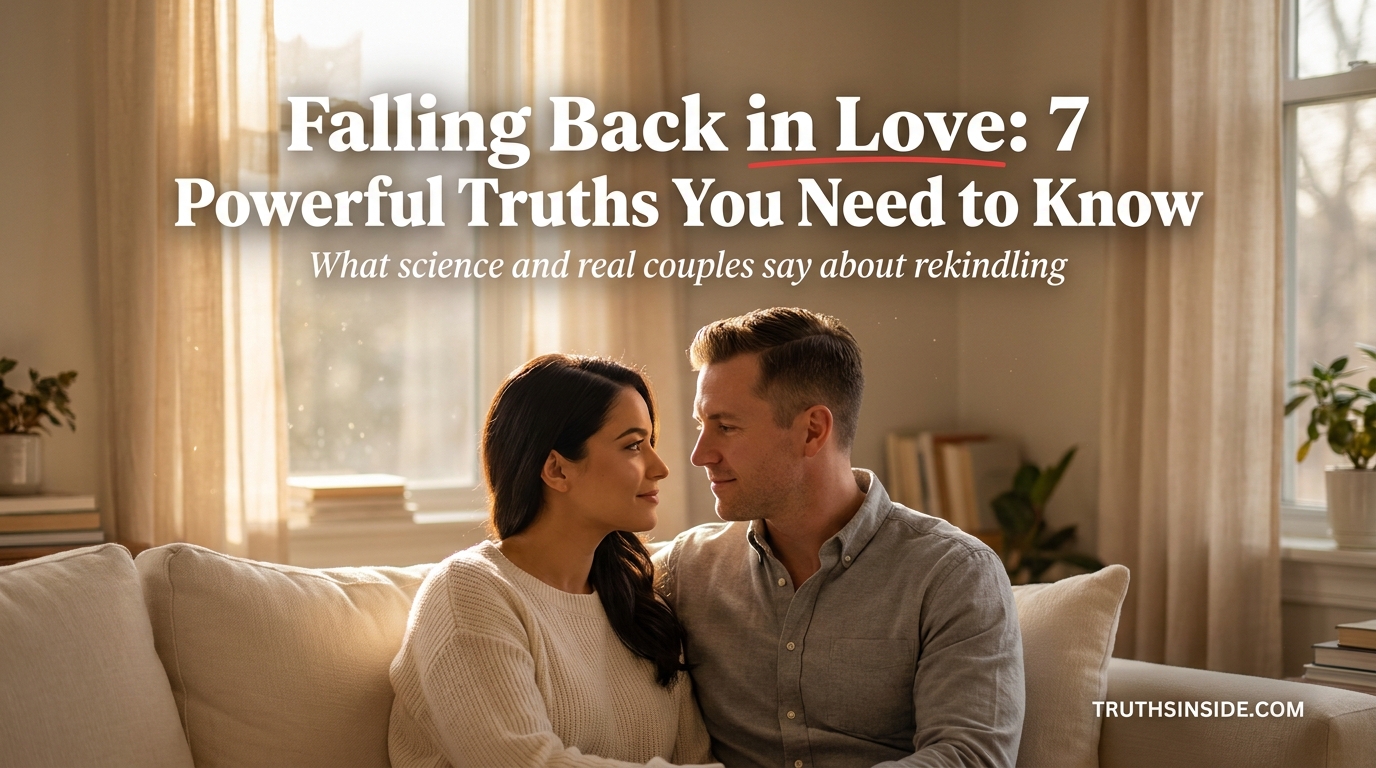
Falling Back in Love: Is It Really Possible?
Falling back in love with someone you once felt distant from is one of the most quietly hopeful questions a person can ask inside a struggling relationship. If you’ve ever looked at your partner and felt more like roommates than lovers, you’re not alone — and you’re not broken. Research from the Journal of Personality and Social Psychology found that couples who actively work to rebuild emotional closeness after disconnection report significantly higher satisfaction levels than those who never faced a crisis at all. That’s not just comforting — it’s a roadmap.
This article isn’t about toxic relationships or staying when you should leave. It’s about understanding whether love, once dimmed, can genuinely be rekindled — and what it actually takes to do it.
The truth is, most people mistake the natural evolution of love for the death of it. That initial rush of excitement — the racing heart, the constant thinking about someone — is driven by neurochemicals like dopamine and norepinephrine. Those chemicals were never meant to stay at peak levels forever. When they settle, many couples panic. They assume the love is gone. But what replaces that rush, when properly nurtured, is something far more powerful: secure, deep, chosen attachment.
So the answer to the question — is falling back in love really possible — is a carefully considered yes. But it comes with conditions, effort, and a few truths that most people aren’t told upfront. Let’s walk through all of them.
1. Falling Back in Love Starts With Understanding Why You Fell Out
Before you can rebuild something, you need to understand how it broke. Couples who successfully rekindle love almost always begin with an honest, non-blaming conversation about what shifted between them. Was it emotional neglect? Life stress? Resentment that was never addressed? Communication that quietly died?
Psychologist Dr. John Gottman, whose research spans over four decades, identified that the slow erosion of friendship — not dramatic betrayal — is the number one reason couples lose their loving feelings. In other words, it usually wasn’t one explosion. It was a thousand small moments of disconnection that nobody flagged in time.
When you name the specific drift, you stop feeling helpless. “We stopped being curious about each other” is actionable. “We just fell out of love” is a dead end. Start with the first one.
2. Love Is a Verb — And That’s Actually Good News
Here’s the truth that changes everything: love was never just a feeling. It’s a set of repeated behaviors, choices, and investments made toward another person. The feeling of being in love is the result of those actions — not the cause.
This means that if the behaviors that built love can be reintroduced intentionally, the feeling will follow. Not immediately. Not like magic. But reliably, over time. Neuroscience backs this up. When couples engage in new, exciting activities together, the brain releases dopamine in a way that mirrors early-stage romantic attraction. It’s sometimes called the “reevaluation effect” — your brain starts associating your partner with positive, stimulating experiences again.
Choosing love, even when you don’t feel it yet, is not fake. It’s not settling. It’s understanding that emotion is often downstream of action. You act your way into a feeling, not the other way around. This is one of the most liberating truths in all of relationship psychology — because it means you have more control than you thought.
📃 Related article: Signs Your Ex Wants You Back: 10 Signals & What to Do
“The couples who make it aren’t the ones who never stopped feeling love. They’re the ones who kept choosing each other even when the feeling went quiet.”
3. The Role of Resentment — The Silent Love Killer
You can do all the right things — plan date nights, communicate better, be physically present — and still feel nothing, if unresolved resentment is sitting underneath everything like a slow leak. Resentment is the accumulation of unexpressed hurt. It builds quietly when we swallow disappointments instead of addressing them, when we give without reciprocity for too long, when we feel unseen or unappreciated and never say so.
Falling back in love requires clearing the emotional debt. That doesn’t always mean big dramatic conversations. Sometimes it means simply saying, “I’ve been holding something that I need you to hear — not to fight, but because I want to feel close to you again.” That kind of vulnerability is terrifying. It’s also transformative.
Therapists often describe this as “clearing the field.” You cannot plant new seeds of love in soil choked with old weeds. Addressing resentment — ideally with a couples therapist, but also possible with mature communication — creates the emotional space for love to grow back.
4. Emotional Safety Is the Foundation Everything Else Is Built On
People do not fall back in love in unsafe emotional environments. Full stop. If one or both partners feel constantly criticized, dismissed, mocked, or emotionally unpredictable, the nervous system stays in a low-grade fight-or-flight mode. You cannot feel romantic, vulnerable, or open when you’re bracing for impact.
Dr. Sue Johnson, the creator of Emotionally Focused Therapy (EFT), argues that adult love is fundamentally an attachment bond — and attachment bonds require safety to thrive. When couples work on becoming emotionally safe for each other — responding with curiosity instead of contempt, with warmth instead of withdrawal — something shifts at a neurological level. The body begins to relax around that person. And when the body relaxes, the heart follows.
This is why simply “trying harder” without addressing emotional tone almost never works. You have to change the climate between you — not just the calendar. A relationship where both people feel genuinely safe to be imperfect, honest, and vulnerable is a relationship where love can be reborn.
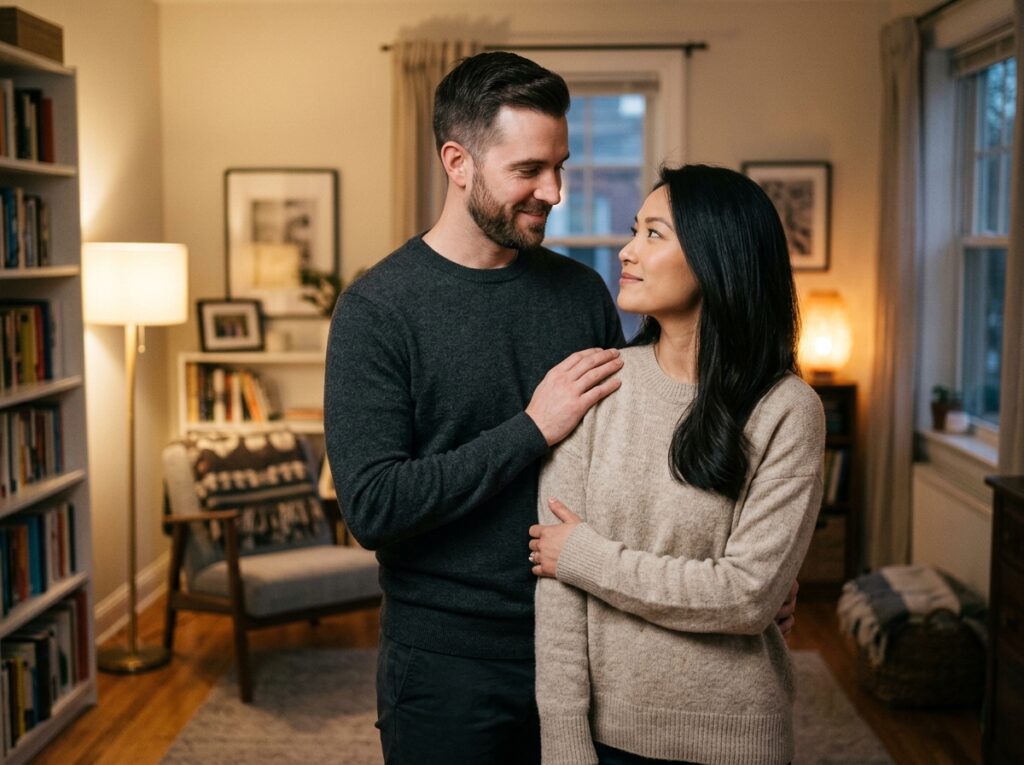
5. Falling Back in Love Requires Curiosity, Not Assumption
One of the most underrated killers of long-term love is the illusion that you already know everything about your partner. After years together, couples often stop asking questions. They stop being curious. They think they know how their partner will respond, what they’re thinking, what they want — and they stop checking.
But people change. Your partner at 35 is not the same person you fell in love with at 25. New fears, new dreams, new values may have emerged — and if you haven’t been asking, you may be deeply in love with an outdated version of who they are.
Gottman calls this building “love maps” — maintaining a detailed, current internal understanding of your partner’s inner world. Couples who regularly update their love maps by asking genuine questions and listening without agenda report dramatically higher levels of emotional intimacy and romantic satisfaction. Curiosity is foreplay for the heart. When your partner feels genuinely known and asked about — not assumed — they begin to turn toward you again. And you begin to see them again too.
📃 Related article: 15 Signs She Is Testing You: Why Women Test Men and What to Do
6. Physical Reconnection Matters More Than You Think
Touch is not a reward for emotional closeness — it’s a pathway to it. Research in affective neuroscience consistently shows that non-sexual physical affection — hand holding, hugging, sitting close, gentle touch — increases oxytocin, the bonding hormone, and directly reduces emotional distance.
Many couples who have grown apart quietly stop touching each other in these small, casual ways. The absence feels normal after a while. But it’s doing quiet damage to the emotional bond. Reintroducing intentional, non-pressured physical affection — a long hug before work, reaching for their hand during a movie, sitting close on the couch — signals safety and connection to the nervous system in ways that words alone cannot.
This is not about rushing back to physical intimacy. It’s about starting small and rebuilding the language of touch that created closeness in the first place. Many couples report that the simple practice of a 20-second hug daily produced noticeable emotional shifts within just a few weeks. Small. Consistent. Powerful.
“You don’t rebuild love in grand gestures. You rebuild it in the smallest, most repeated moments — a touch, a look, a question asked with real curiosity.”
7. Know When It’s Rekindling — and When It’s Rumination
This is the truth most articles won’t tell you. Not every relationship that feels cold is meant to be warmed back up. There is an important difference between a relationship that has drifted and one that has become genuinely harmful, misaligned, or one-sided. Falling back in love is possible — but it requires two people who both want to try. One person doing all the emotional labor while the other remains disengaged, dismissive, or unwilling is not rekindling. It’s prolonging pain.
Ask yourself honestly: Is this a relationship where both people still have basic respect for each other? Is there a version of this relationship — with real effort from both sides — that would be genuinely good? Or has the disconnection revealed a fundamental incompatibility that was always there?
Falling back in love is a beautiful, real possibility for couples who have drifted through neglect, stress, or life’s weight. It is not a guaranteed outcome for every relationship in distress. Knowing the difference is not giving up — it’s wisdom. And either answer deserves to be honored.

What Relationship Science Says About Couples Who Succeed
The couples who successfully fall back in love share several consistent patterns. They prioritize connection over being right. They tolerate vulnerability even when it’s uncomfortable. They seek help — from books, from therapy, from mentors — without shame. They understand that love is not something that simply happens to them but something they actively tend, like a garden.
Research from the University of Virginia’s National Marriage Project found that couples who described their marriages as having gone through a “rough patch” but recovered it reported the highest levels of long-term relationship satisfaction — higher even than couples who claimed they never had serious problems. Struggle, it turns out, can deepen love rather than destroy it — if both people are willing to stay in the fire long enough to be refined by it.
The process is not linear. There will be hopeful weeks and discouraging ones. There will be moments where connection feels suddenly, beautifully restored — and moments where the distance returns without warning. That’s not failure. That’s the real, nonlinear texture of rebuilding something that matters.
📃 Related article: Signs He Likes You But Is Scared: 18 Behaviors Men Show When Afraid to Commit
A Final Honest Word
Falling back in love is not a romantic fantasy. It is a documented, researched, lived reality for thousands of couples who chose not to walk away from a relationship simply because the easy feeling faded. It requires honesty about what went wrong, courage to address resentment and fear, intentional actions to rebuild safety and curiosity, and the wisdom to know whether both people are truly showing up.
If you’re in a place where love feels distant, take a breath. You are not necessarily at an ending. You may simply be at a beginning that looks different than you expected — quieter, harder, and ultimately more real than the beginning you first had. The question worth sitting with is not “Do I feel it?” but rather “Am I willing to build it?” That question, answered with honesty and courage, is where falling back in love actually begins.
💾 Save this article. Share it with someone who needs to hear this. Follow Truthsinside.com for more relationship truth that actually helps.
FAQ
Q1: How long does it take to fall back in love with someone?
There’s no universal timeline, but research suggests that couples who make consistent daily efforts — emotional conversations, physical affection, new shared experiences — begin noticing meaningful shifts in emotional closeness within 4 to 12 weeks. Deep rekindling often takes 6 months to a year of sustained, intentional effort.
Q2: Can you fall back in love after losing feelings completely?
Yes, in many cases. When feelings disappear gradually (not due to abuse or fundamental incompatibility), they can be rebuilt through consistent emotional investment. Feelings are often the result of behaviors — when the right behaviors return, emotions tend to follow.
Q3: What are the signs that falling back in love is possible for your relationship?
Key signs include mutual respect still existing beneath the distance, both partners being willing to try, no ongoing abuse or contempt, and the presence of shared history and values. If genuine curiosity about each other can still be accessed, reconnection is very possible.
Q4: Does couples therapy actually help with rekindling love?
Yes — significantly. Emotionally Focused Therapy (EFT) has one of the highest success rates in relationship research, with studies showing 70–75% of couples moving from distress to recovery. A skilled therapist helps couples identify the patterns keeping them stuck and rebuild secure attachment.
Q5: Is it normal to feel love come and go in a long-term relationship?
Completely normal. Long-term love moves in cycles — periods of deep closeness and periods of distance. The couples who last don’t have permanent, unbroken feelings. They have consistent commitment to returning to each other after every drift.
🎵 Music
Maren Lull is a singer-songwriter who writes from the places most people don’t talk about out loud.
Not the dramatic grief. Not the obvious heartbreak. The quiet kind — the ordinary Tuesday emptiness, the habit of reaching for someone who isn’t there anymore, the particular exhaustion of being strong for so long that the strength itself wears thin.
Her music lives at the intersection of emotional honesty and soft beauty — breathy vocals over gentle piano, slow tempos, lyrics that feel less like songs and more like something you wrote in a private notebook at two in the morning and never showed anyone.
Maren Lull writes for the people who feel everything deeply and say very little about it. For the ones who listen to sad music not because they want to feel worse — but because being understood, even by a song, makes the feeling easier to carry.
📱 Follow Maren Lull:
→ Spotify
→ Apple Music
→ Youtube
→ Audiomack