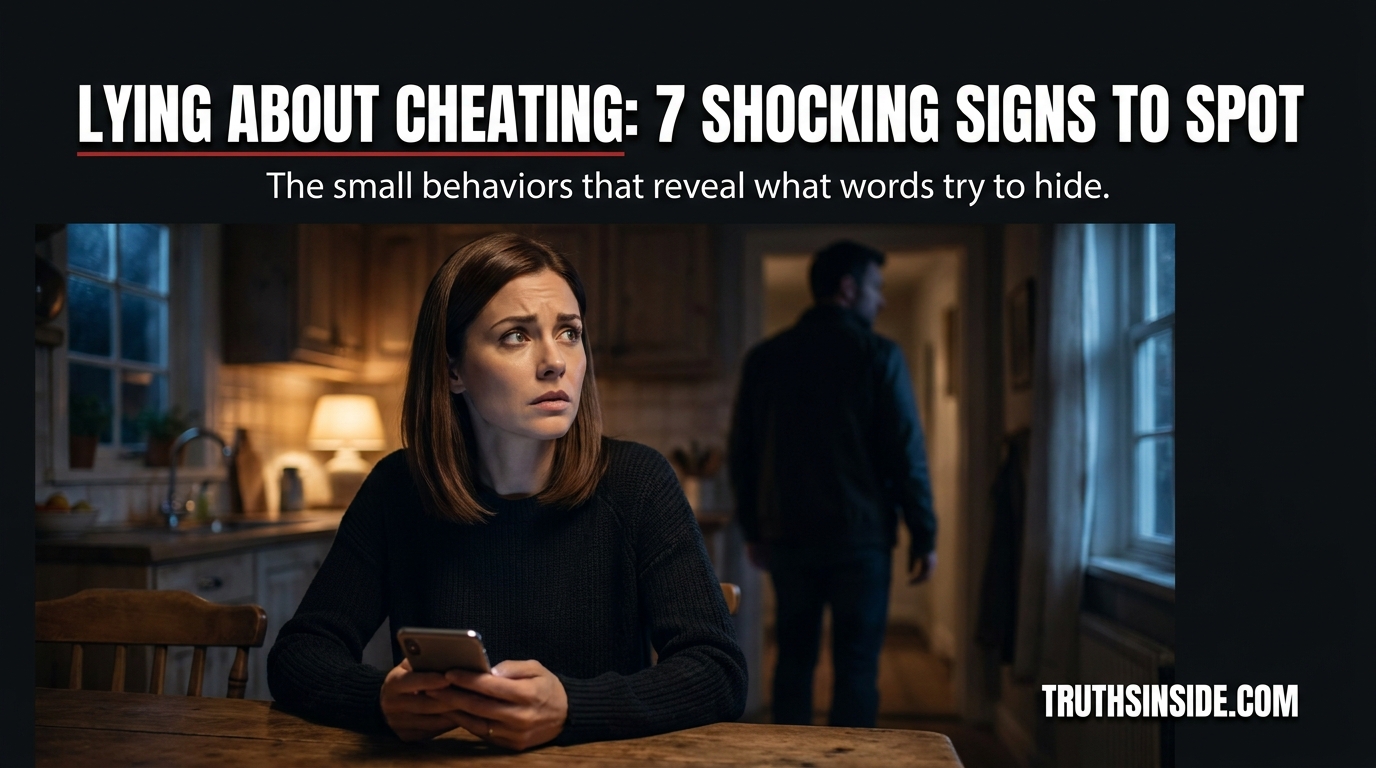
Signs Your Partner Is Lying About Cheating
Lying about cheating can make you feel like you are losing your mind. Something feels off, the timeline does not add up, and every time you ask, you get a calm answer that somehow leaves you more confused than before. If you are sitting with that knot in your stomach right now, know this: wanting the truth is not paranoia. It is a very human response to a relationship that no longer feels safe.
Here is the uncomfortable science. In a well-known meta-analysis of deception research, Charles Bond and Bella DePaulo found that people spot lies only about 54 percent of the time, barely better than a coin flip. That is why gut feelings alone can mislead you, and why patterns matter far more than a single strange moment. A missed call or a late night does not prove anything. A cluster of changes that keeps repeating deserves attention.
This guide walks you through seven behavioral signs that often appear when someone is lying about cheating, along with the innocent explanations to rule out first. You will also learn how to bring it up calmly, what mistakes to avoid, and how to protect your peace whatever the truth turns out to be. None of these signs is proof. Together, they can help you decide what to do next.

Why Lying About Cheating Is So Hard to Spot
Most people expect a liar to look nervous, avoid eye contact, or fidget. Research does not support that idea. Skilled or practiced liars can appear calm and confident, while honest people under stress often look guilty. When you are emotionally invested, your own fear and hope also color how you read every word, which makes the picture even blurrier.
So instead of hunting for one dramatic tell, look for change over time. Compare your partner’s behavior now with their own normal baseline. Ask yourself what is different, since when, and whether the change has a believable explanation. Consistent shifts in honesty, availability, affection, and openness say much more than any single suspicious moment.
📃 Related article: 5 Love Languages: Best Proven Ways to Show Love
7 Signs Your Partner Is Lying About Cheating
Keep in mind that every sign below can have an innocent cause. What matters is how many appear together and how long they last.
1. Their Story Keeps Changing
Truth is easy to remember because it actually happened. Lies need upkeep. When your partner’s account of where they were, who they were with, or what time they got home shifts between tellings, the details may be invented on the spot. Look for small contradictions, such as a different restaurant, a different coworker, or a different end time.
Also notice when a story becomes suspiciously vague, or suddenly gains extra detail after you question it. Stress and poor memory can cause slips too, so give some grace during genuinely busy weeks. But repeated inconsistencies about the same event are a classic pattern when someone is lying about cheating.
2. They Get Defensive and Flip the Blame
A simple question like “Who were you with?” should get a simple answer. If it triggers instant anger, or a counterattack such as “Why don’t you trust me?” or “You are the controlling one,” pay attention. Psychologist Jennifer Freyd calls one version of this pattern DARVO, which stands for deny, attack, and reverse victim and offender.
Some people are truly hurt by being questioned, so context matters. The key difference is whether your concern gets addressed or dodged. An honest partner may feel wounded but will usually still answer. A partner lying about cheating often uses anger to end the conversation before it starts.
3. Sudden Phone and Tech Secrecy
Your partner now keeps the phone face down, takes it to the bathroom, changes passwords, or quickly closes screens when you walk in. Notifications are silenced, and new privacy settings appear on apps that were never locked before. The shift matters more than the behavior itself, because plenty of people value privacy.
Ask what changed. Was there a new job, a surprise they might be planning, or a private conversation with a family member? If the secrecy appears suddenly, grows over time, and comes with irritation whenever the phone is mentioned, it may point to something being hidden.
4. Unexplained Gaps and Schedule Changes
Late meetings appear out of nowhere. Weekend errands take hours. A gym routine starts, yet nothing about their fitness changes. Unexplained gaps in time, especially when paired with vague explanations, can signal a hidden life. Watch for last-minute cancellations, unusual travel, or new limits on your shared calendar.
Keep it fair, though. Jobs change, friendships shift, and people take up new hobbies. The concern grows when explanations feel thin, when they stop sharing details they used to share freely, or when you are gently discouraged from joining anything.

5. Emotional Distance and Changed Intimacy
Cheating often shows up as a shift in connection. Your partner may seem distracted during conversations, stop sharing their day, or lose interest in future plans. Some partners pull away from affection, while others suddenly become more intense, perhaps out of guilt. Either direction can be a change worth noticing.
Emotional distance has many causes, including stress, depression, burnout, and grief. That is why this sign works best as a conversation starter rather than an accusation. Try saying, “I miss us, and I have noticed we feel far apart lately. Can we talk?” The way they respond can tell you a lot.
6. Over-Explaining and Rehearsed Answers
Honest people usually answer simply. Someone lying about cheating may give far more detail than anyone asked for, or repeat the same polished explanation word for word. Stories that sound scripted, or that arrive before you finish asking, can suggest advance preparation.
You might also hear unprompted lines such as “I swear on my life” or “I would never.” Nervous people over-explain too, especially if they have been accused unfairly before. Look at the pattern, and check whether the details hold up when you gently ask a few follow-up questions.
7. They Make You Doubt Your Own Instincts
This is one of the most painful signs. You bring up a concern, and somehow you leave the conversation apologizing. Your partner says you are imagining things, remembering wrong, or being too sensitive. Over time, you may stop trusting your own memory and feelings.
Occasional disagreements about facts are normal. Consistently dismissing your reality is not. Being repeatedly told that what you clearly saw or heard never happened is a form of gaslighting, and it is a serious relationship red flag whether or not cheating is involved.
A single sign is a question. A pattern is an answer worth taking seriously.
What Lying About Cheating Does to the Person Who Senses It
Living with suspicion is exhausting. Many people describe trouble sleeping, racing thoughts, and a constant urge to check, replay conversations, or search for clues. This is not weakness. When trust feels unstable, your nervous system stays on high alert, scanning for danger even during ordinary moments. Over time, that stress can affect your mood, your focus, and even your health.
Being on the receiving end of lying about cheating also chips away at self-trust. You start wondering whether you are too sensitive, too demanding, or too suspicious. That self-doubt is often more damaging than the suspicion itself, because it makes clear decisions harder. Naming what you feel, writing down concrete observations, and talking with someone you trust can bring back a sense of solid ground.
If anxiety starts taking over your days, consider speaking with a therapist. Support is not an admission that something is wrong with you. It is a way to think clearly while you sort out what is true and what you want.
📃 Related article: Family Disapproval: 7 Proven Ways to Cope With It
Green Flags: What an Honest Partner Looks Like
It helps to know what healthy honesty looks like, so you can compare. An honest partner tends to answer questions openly, even uncomfortable ones. Their stories stay consistent over time. They do not punish you for asking, and they are willing to share their schedule, plans, and feelings without being forced.
They also respond to your worry with reassurance, not ridicule. They might say, “I can see why that looked strange, let me explain,” instead of, “You are crazy.” Transparency does not mean giving up all privacy. It means that when trust is shaken, they are willing to help repair it. A partner who is not lying about cheating usually wants you to feel secure.
If these green flags feel rare in your relationship, note it calmly. Compare them with the red flags above, and decide how much uncertainty you are willing to carry.
Innocent Explanations vs. Real Deception: How to Tell
Before you draw conclusions, run a quick fairness check. Ask whether the behavior started at a specific point, whether a stressful life event could explain it, and whether your partner has ever been secretive in harmless ways before, such as planning a surprise. Consider your own history too. Past betrayals can make even ordinary behavior look threatening.
Then look at how many signs appear together. One or two mild signs are common in busy, stressful relationships. Four or more that persist for weeks, combined with defensiveness when you ask about them, deserve a serious conversation. The goal is not to catch someone. The goal is to understand what is happening so you can respond with clarity instead of panic.
It can also help to write down what you have actually observed, with dates and specifics, instead of relying on feelings alone. Notes such as “changed the story about Friday night” or “became angry when I asked about the trip” turn a vague fog into something concrete. This keeps you fair, protects you from spiraling, and gives you clear words for the conversation. If the notes show very little, that is useful information too. Sometimes the healthiest outcome is discovering that the worry came from anxiety, not from your partner lying about cheating.
How to Confront a Partner You Suspect of Lying About Cheating
Choose a calm, private moment, not the middle of an argument and not in public. Avoid ambushes and threats. Start with your feelings and observations, not accusations. For example: “I have noticed some changes lately, and I feel anxious and disconnected. I need us to be honest with each other. Is there something you want to tell me?”
Then listen, and watch whether their words match their actions. An honest partner will usually engage, offer transparency, and try to reassure you without punishing you for asking. A partner lying about cheating may deflect, minimize, or attack. Do not expect a perfect confession in one conversation. Sometimes the most useful information is how they behave over the following days.
If the conversation turns hostile or abusive, step away. You can say, “I want to keep talking, but not like this. Let’s pause and come back to it later.” Your safety and dignity come first. If you ever feel unsafe, contact a trusted person or a local support service right away.
What Not to Do When You Suspect Cheating
Do not snoop obsessively. Secretly going through accounts or devices can damage your credibility, escalate conflict, and in some places may even be illegal. It also rarely brings peace, because doubt tends to demand more checking.
Do not confront through third parties or social media. Public accusations and group chats turn a private wound into a spectacle, and they make honest conversation much harder.
Do not act on rumors alone. Secondhand information can be wrong, exaggerated, or malicious. Use it as a reason to observe and talk, not as a verdict.
Do not ignore your own wellbeing. Constant suspicion affects sleep, focus, and self-esteem. Lean on a trusted friend, keep your routines, and consider speaking with a counselor.
What to Do Next: Protect Your Peace
Once you have listened and observed, decide what you need. Some people need full transparency and a plan to rebuild trust. Others realize the relationship no longer feels safe or honest enough to continue. Both are valid. Individual therapy or couples counseling can give you a structured space to sort through your feelings without rushing into an ultimatum.
Whatever you choose, you deserve a relationship where honesty is normal, not exhausting. If your partner is willing to be transparent, trust can be rebuilt slowly through consistent actions, not just apologies. If they refuse to engage at all, that response is important information too. If infidelity is confirmed, a routine health check-up is also a reasonable step for your peace of mind.
Boundaries can help while you wait for clarity. You might ask for open communication about schedules, agree on a timeframe for honest answers, or pause major decisions such as moving in together until trust is restored. State each boundary calmly and follow through. A boundary is not a threat. It is a clear description of what you need to feel safe, and of how you will respond if that need is repeatedly ignored. If someone keeps lying about cheating after you have set clear limits, you have your answer about what to do next.

Frequently Asked Questions About Lying About Cheating
What are the most common signs of lying about cheating?
Common signs include changing stories, sudden defensiveness, new phone secrecy, unexplained gaps in time, emotional distance, over-explaining, and being made to doubt your own memory. No single sign proves anything. Look for several signs appearing together and lasting over time.
Can body language reveal lying about cheating?
Not reliably. Research shows that classic cues like avoiding eye contact or fidgeting are weak indicators, and many honest people display them under stress. Behavioral patterns over time, such as consistency, openness, and how your partner responds to questions, are far more informative.
Should I check my partner’s phone?
It is usually not a good idea. Secret snooping can breach trust, escalate conflict, and may be illegal in some situations. A direct, calm conversation, or counseling if honesty feels impossible, is a healthier route than surveillance.
What if my partner denies it but I still feel unsure?
Doubt after a denial is common, especially if the underlying signs remain. You can ask for greater transparency, set clear expectations, or seek couples counseling. If your worries continue and your partner dismisses them completely, consider what that says about the level of safety you feel.
Can trust be rebuilt after someone lies about cheating?
For some couples, yes. It typically requires honest accountability, full transparency, consistent behavior over a long period, and often professional support. Rebuilding is possible only when both people are committed. Only you can decide whether that path feels right.
Final Thoughts
Discovering that lying about cheating may be part of your relationship is exhausting and heartbreaking. Remember that signs are clues, not verdicts, and that your feelings deserve to be taken seriously. Notice patterns, choose calm conversations over dramatic accusations, and protect your well-being at every step. Whatever the truth is, you are allowed to ask for honesty, and you are allowed to expect it.
💾 Save this guide so you can return to it when doubt feels overwhelming.
📤 Share it with someone who may be quietly wondering the same thing.
➕ Follow Truthsinside.com for more honest relationship and psychology insights every week.
🎵 Music
Maren Lull is a singer-songwriter who writes from the places most people don’t talk about out loud.
Not the dramatic grief. Not the obvious heartbreak. The quiet kind — the ordinary Tuesday emptiness, the habit of reaching for someone who isn’t there anymore, the particular exhaustion of being strong for so long that the strength itself wears thin.
Her music lives at the intersection of emotional honesty and soft beauty — breathy vocals over gentle piano, slow tempos, lyrics that feel less like songs and more like something you wrote in a private notebook at two in the morning and never showed anyone.
Maren Lull writes for the people who feel everything deeply and say very little about it. For the ones who listen to sad music not because they want to feel worse — but because being understood, even by a song, makes the feeling easier to carry.
📱 Follow Maren Lull:
→ Spotify
→ Apple Music
→ Youtube
→ Audiomack