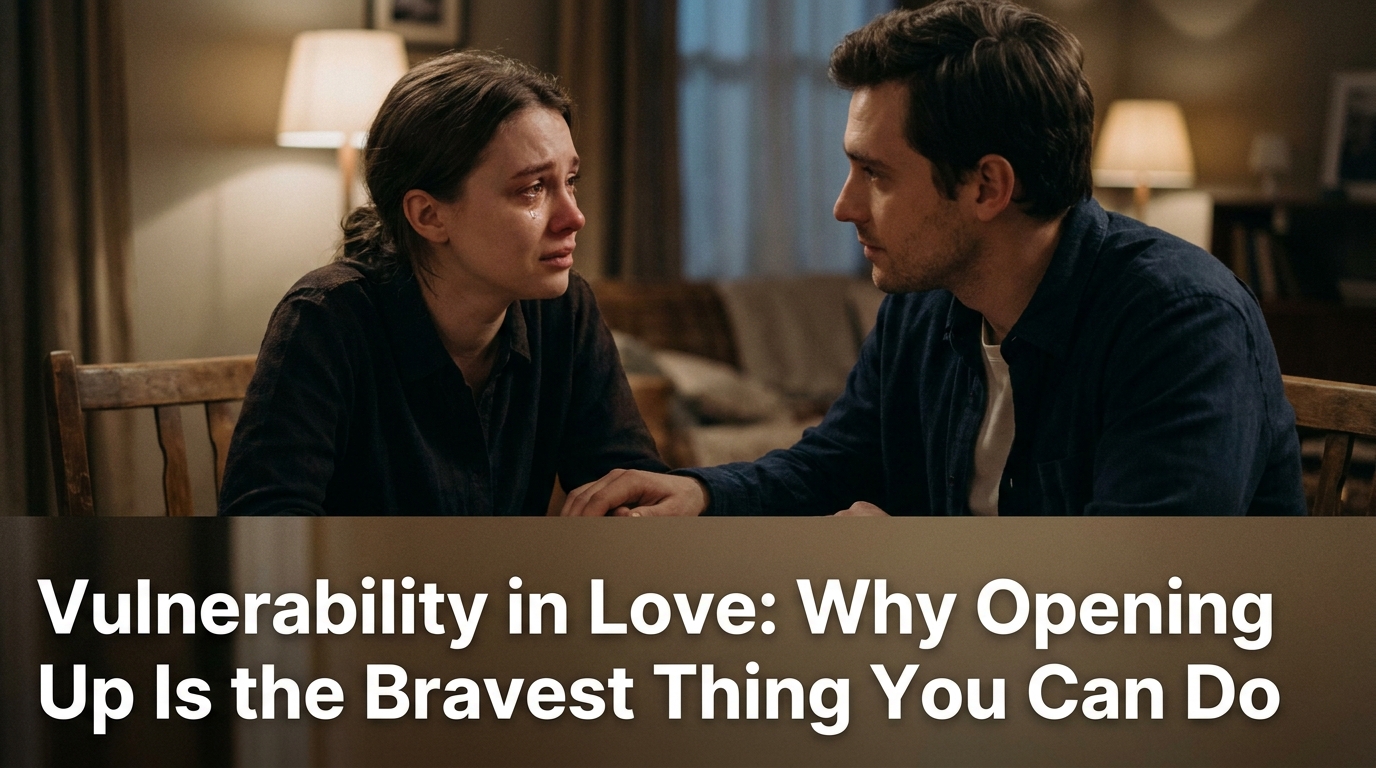
You want to tell them the truth about who you are. The parts that are still healing. The fears that haven’t gone away. The version of you that exists before the performance of being okay. But something stops you — every time, just before the words arrive. Because what if they see what you’re really made of and decide it’s too much? What if the truth is the thing that ends it?
That fear — the specific, quiet terror of being fully seen — is not weakness. It is the most human thing in the world. And according to research psychologist Dr. Brené Brown, whose decades of study on vulnerability have produced some of the most widely cited findings in social science, it is also the single greatest barrier to the genuine connection that human beings need most.
In her landmark research, Brown found that vulnerability in love — the willingness to be seen honestly, without guarantee of how that honesty will be received — is not the opposite of strength. It is its most precise expression. And the people who experience the deepest, most sustaining love in their lives are almost universally the ones who have learned to be vulnerable — not recklessly, not without discernment, but honestly and with genuine courage.
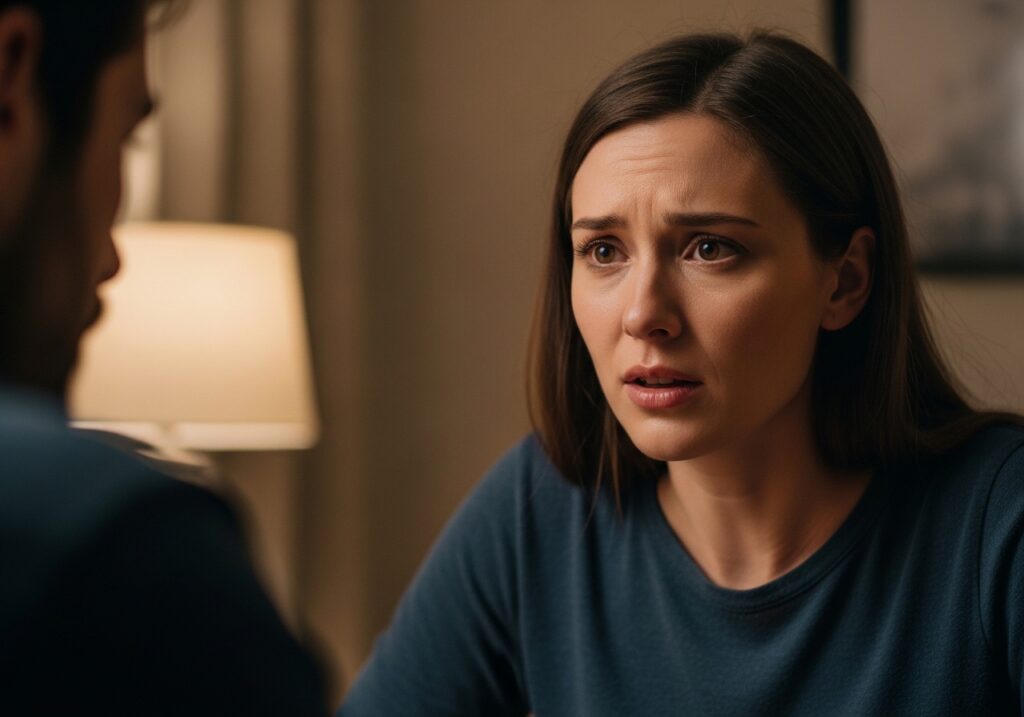
What Vulnerability Actually Is — And What It Isn’t
Before anything else, the most common misunderstanding about vulnerability needs to be addressed — because it is the misunderstanding that keeps most people from ever experiencing the thing they most want.
Vulnerability is not oversharing. It is not the compulsive disclosure of every wound and fear to anyone who shows warmth. It is not the absence of boundaries or the abandonment of self-protection. It is not weakness, instability, or neediness — all of which it is commonly mistaken for, particularly in cultural contexts that prize emotional self-sufficiency as a virtue.
Vulnerability, in its truest sense, is the willingness to be honestly known — to allow another person genuine access to your interior life, your real feelings, your actual fears and hopes and uncertainties — in the context of a relationship where that honesty is offered with discernment and received with care.
Dr. Brown’s definition is precise: vulnerability is uncertainty, risk, and emotional exposure. It is entering a space where the outcome is not guaranteed, where what you offer could be received or rejected, where being seen fully means accepting that the full seeing might produce any response. It is, in this sense, inherently courageous — because it requires action in the presence of genuine risk, which is the definition of courage itself.
What makes vulnerability the foundation of genuine love — rather than simply a nice quality — is that love, in its truest form, cannot exist without it. You cannot be loved for who you truly are if who you truly are has never been shown. The love that is built on performed versions of yourself is love directed at a construction, not a person. It may feel safer. It will not feel real.
Why We Avoid Vulnerability — And What That Costs
The avoidance of vulnerability is not irrational. It is a learned response to genuine experiences of exposure that ended badly.
You showed someone who you were — really were — and they used it against you. You were honest about a feeling and it was dismissed or mocked. You allowed yourself to need someone and they weren’t there. You loved openly and were left. These experiences don’t just hurt — they teach. They teach the nervous system that openness equals danger, that being fully seen is not safe, that the most efficient way to avoid the specific pain of exposure is to never be exposed.
The wall gets built not from cowardice but from wisdom — the hard-won wisdom of a nervous system that learned, correctly, that a specific kind of openness in a specific context was not safe. The problem is that the wall built for one relationship becomes the wall applied to all of them. The protection that was once appropriate becomes a permanent feature of the relational landscape — keeping out not just the people who proved unworthy of openness but everyone, including the ones who would receive it with complete care.
This is what emotional unavailability, avoidant attachment, and the fear of vulnerability have in common: they are all, at their root, protection strategies that have outlived their original context. The person behind the wall is not damaged. They are defended. And the difference matters — because defended is something that can change, when the conditions of genuine safety and genuine motivation align.

What Vulnerability Makes Possible
Genuine Intimacy
Intimacy — real intimacy, the kind that produces the specific experience of being fully known and fully accepted — is structurally impossible without vulnerability. You cannot be genuinely known by someone who has never seen the genuine you. You cannot feel fully accepted by someone who has only accepted the curated version you’ve presented. The depth of connection available in any relationship is directly proportional to the depth of honest self-disclosure both people are willing to offer.
This is not theory. It is the consistent finding of relationship research across decades. The couples who report the deepest satisfaction and the strongest sense of mutual knowing are, overwhelmingly, the couples where both people have found the courage to be genuinely known — not just the pleasant, easy parts, but the full, complex, imperfect reality of who each person actually is.
Genuine Love
Closely related but distinct: vulnerability is what allows you to receive love rather than simply accepting admiration. When you are loved for a performed version of yourself, some part of you always knows — consciously or not — that the love is directed at the performance. The specific fear that produces: if they really knew me, they wouldn’t love me. The only way to know, with genuine certainty, that you are loved rather than merely approved of, is to have been honestly known and chosen anyway. That knowing — the specific experience of being seen fully and loved without reservation — is only available through vulnerability.
Genuine Repair
Every relationship faces difficulty — conflict, misunderstanding, seasons of distance, moments where harm is caused and must be addressed. The capacity to repair those moments — to acknowledge what happened, express what it produced, and rebuild the connection — requires vulnerability from both people. Repair without vulnerability is superficial — it manages the surface of a conflict without touching its roots, leaving the relationship slightly more distant for having not gone to the honest place where the repair could actually happen.

Genuine Growth
Vulnerability does not only serve the relationship. It serves the person practicing it. The willingness to be honestly known — to name fears out loud, to acknowledge needs directly, to admit uncertainty without performing certainty — is itself a form of self-knowledge. Each act of genuine vulnerability clarifies something about who you are, what you carry, and what you need. It builds the relationship with your own interior life that makes you a fuller, more self-aware, more genuinely present person — in every relationship, not just this one.
The Specific Fears That Prevent Vulnerability — And the Truth About Each
“What if they use it against me?”
This fear is legitimate — because it has a basis in real experience. Some people do use vulnerability against the person who offered it. This is one of the clearest indicators that a particular person or relationship is not safe for vulnerability. But it is not an indicator that vulnerability itself is dangerous. It is an indicator about the specific person it was offered to. Discernment — the capacity to assess whether a relationship has the safety, consistency, and mutual care that vulnerability requires before offering it — is the appropriate response to this fear, not permanent closure.
“What if it’s too much for them?”
The fear of being too much — too complex, too wounded, too needy, too real — is one of the most common forms the fear of vulnerability takes. And it is almost always, at its root, a story about worth: the belief that the full reality of who you are is more than a person who loves you could reasonably accept. This story is worth examining directly — because it is rarely accurate, and because the people who cannot accept your full reality are not the people who were going to love you well regardless.
“What if they leave?”
This is the fear beneath the fear — the specific terror that honesty will be the thing that ends the relationship. It is worth sitting with honestly: if someone leaves because you were honest about who you are, what you feel, or what you need — were they ever genuinely present in the first place? The relationship that only survives your performance is not a relationship that is serving you. The leaving, however painful, would be information that freed you rather than loss that diminished you.
“What if I lose control of how they see me?”
Vulnerability requires surrendering the management of your own image — allowing another person to form an impression of you based on something more honest than the version you’ve been presenting. This loss of control is, paradoxically, precisely what makes genuine intimacy possible. You cannot be genuinely known by someone whose view of you you are continuously managing. The surrender of the managed image is the precondition for the genuine connection.

How to Practice Vulnerability — Gradually and With Discernment
Vulnerability is not all-or-nothing. It is a practice — something developed gradually, in layers, beginning with what feels manageable and deepening as the experience of safety and genuine reception grows.
Start with smaller truths. Vulnerability does not begin with your deepest wounds or your most hidden fears. It begins with the small, honest disclosures that are slightly more real than what you would typically offer: “I’ve been worried about something lately.” “This actually matters to me more than I usually admit.” “I’m not sure I handled that well.” These smaller truths, offered and received with care, build the specific experience of safety that makes deeper vulnerability possible.
Notice the response before going deeper. Vulnerability offered to someone who dismisses it, weaponizes it, or responds with discomfort or judgment is information about that person’s capacity to hold what you’re offering. You do not owe deeper vulnerability to a relationship that has not demonstrated the safety to receive it. Pay attention to how smaller disclosures are received before offering the ones that cost you more.
Name what you’re doing. Sometimes the most vulnerable thing is acknowledging that you are being vulnerable: “This is hard for me to say.” “I don’t usually talk about this.” “I’m telling you this because I trust you.” This framing doesn’t diminish the disclosure — it actually deepens it, by making the act of offering visible as well as the content of what’s offered.
Receive vulnerability in return. Genuine vulnerability is not a performance or a test — it is an invitation for mutual honesty. When your partner is vulnerable with you, the quality of your reception — your presence, your warmth, your absence of judgment — creates the safety that makes their continued vulnerability possible. Vulnerability builds through genuine reciprocity. One person’s honest offering, received with care, creates the conditions for the other’s.
Give it time. The deepest vulnerability in any relationship does not arrive in the first months. It develops as the experience of consistent safety accumulates — as you discover, through repeated experience, that this specific person receives your honesty with the care it deserves. Trust that pace. The vulnerability that builds on real experience of safety is far more durable than the vulnerability offered in the chemical intensity of early infatuation.
What Genuine Vulnerability Feels Like
This is worth naming — because most people have never experienced it and don’t know what they’re working toward.
Genuine vulnerability, received with care, feels like relief. The specific relief of putting down something heavy you didn’t realize you’d been carrying. It feels like being seen — not the surface version that social interaction provides, but the genuine, interior seeing that makes you feel less alone in the experience of being yourself. It feels like the particular warmth of being chosen not despite what you’ve revealed but, in some important sense, because of it — because the honesty deepened the connection rather than threatening it.
It also feels frightening — before and sometimes during, but rarely after. The fear is the price of admission. What’s on the other side of it is the only genuine love available.

The Bottom Line
Vulnerability in love is not the risk that costs you the relationship. It is the practice that makes the relationship real. The love built on honest self-disclosure — on the courage to be seen as you actually are, and to see another person as they actually are — is the only love that can sustain both people across the full complexity of a shared life.
The walls you’ve built are understandable. They came from somewhere real. But they are also keeping you from the specific experience that makes love worth having — the experience of being genuinely known, genuinely seen, and genuinely chosen by someone who had access to the full truth of you and stayed.
That experience is available to you. It asks only one thing in return: the willingness to be honest about who you are, in a relationship that has demonstrated it is safe to do so.
That is not a small ask. It is the bravest thing you will ever do.
The love that knows all of you and chooses you anyway — that love is not found. It is built. And it is built, one honest disclosure at a time, by two people willing to be seen in the full, imperfect, extraordinary reality of who they actually are. That is vulnerability. That is love. They are not different things.
📌 Save, Share & Follow
💾 SAVE this article — return to it when the fear of being seen is louder than the desire to be known. 📤 SHARE this with someone who keeps the best of themselves hidden because they’re afraid it won’t be enough. 👉 FOLLOW TruthsInside.com for more honest, psychology-backed content on love, emotions, and the courage it takes to connect genuinely.
❓ Frequently Asked Questions
Q1: How do I know if a relationship is safe enough for vulnerability? Safety for vulnerability develops through observation over time rather than through a single assessment. Signs a relationship is safe include: your disclosures are received with care rather than judgment, what you share is not used against you in conflict, your partner demonstrates their own vulnerability reciprocally, and you feel consistently more at ease rather than more guarded as the relationship deepens. No relationship is perfectly safe — but a consistent pattern of care and reciprocity is a reliable indicator that deeper vulnerability is worth risking.
Q2: What if I was vulnerable and it went badly — how do I try again? A vulnerability that went badly — that was dismissed, weaponized, or received with judgment — is information about that specific relationship rather than about vulnerability itself. The most important work after a painful experience of exposure is distinguishing between what the experience revealed about that person and what it needs to permanently teach you about all people. Therapy can be genuinely valuable here — in processing the specific experience and rebuilding the trust in your own discernment that makes future vulnerability feel possible again.
Q3: Is there such a thing as too much vulnerability? Yes — though it is less common than too little. Vulnerability that arrives without discernment — shared indiscriminately, in excess of what the relationship’s depth supports, or used as a way of creating false intimacy quickly — is more accurately described as oversharing or emotional flooding. The difference is in the quality of the relationship context and the motivation behind the disclosure. Genuine vulnerability is calibrated to the safety and depth of the relationship. It deepens gradually as the relationship’s demonstrated trustworthiness grows.
Q4: Can vulnerability be one-sided in a relationship? Yes — and sustained one-sided vulnerability is both exhausting and unsustainable. If one person consistently offers genuine honesty while the other remains closed and guarded, the relationship’s intimacy will plateau at the level the less vulnerable person can sustain. This asymmetry is worth naming directly — not as accusation but as honest observation: “I notice I share a lot with you but I don’t often hear the same from you — is there something making that difficult?” The response to that question tells you a great deal about what deeper vulnerability in this relationship is likely to produce.
Q5: Does vulnerability get easier over time? Yes — in relationships where it has been consistently received with care, vulnerability becomes progressively less frightening because the nervous system accumulates evidence that exposure in this specific context is safe. The fear does not disappear entirely — genuine vulnerability always carries some risk — but it becomes a manageable presence rather than a prohibitive one. The most courageous act is the first disclosure in a relationship that hasn’t yet demonstrated its safety. Everything after that is built on the evidence that the first risk produced.
🎵 Music
Maren Lull is a singer-songwriter who writes from the places most people don’t talk about out loud.
Not the dramatic grief. Not the obvious heartbreak. The quiet kind — the ordinary Tuesday emptiness, the habit of reaching for someone who isn’t there anymore, the particular exhaustion of being strong for so long that the strength itself wears thin.
Her music lives at the intersection of emotional honesty and soft beauty — breathy vocals over gentle piano, slow tempos, lyrics that feel less like songs and more like something you wrote in a private notebook at two in the morning and never showed anyone.
Maren Lull writes for the people who feel everything deeply and say very little about it. For the ones who listen to sad music not because they want to feel worse — but because being understood, even by a song, makes the feeling easier to carry.
📱 Follow Maren Lull:
→ Spotify
→ Apple Music
→ Youtube
→ Audiomack