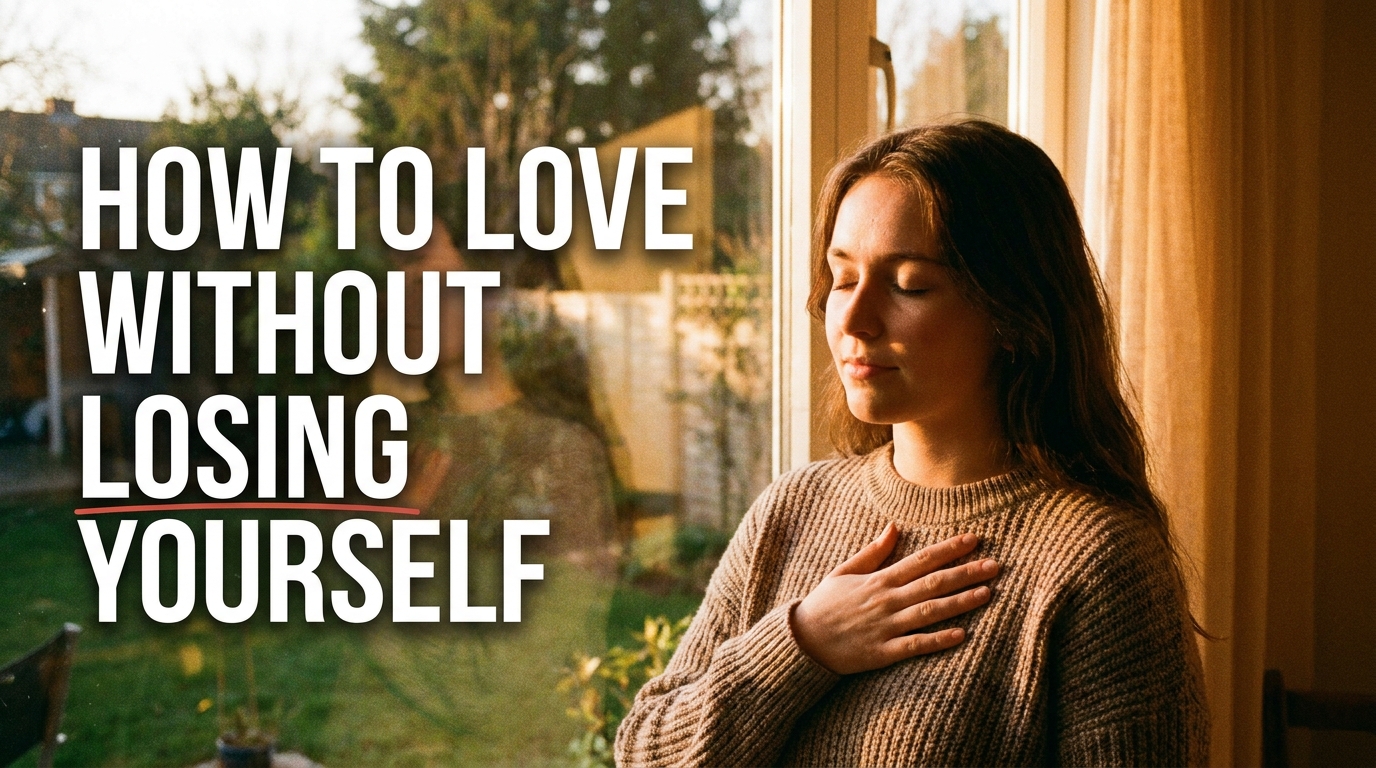
You wake up one day and realize the person looking back at you in the mirror feels like a stranger. Your hobbies are gone. Your friendships have faded. Your opinions, your routines, your dreams — all quietly swallowed by a relationship that was supposed to add to your life, not erase it. If that sounds familiar, you are not alone.
Studies in relationship psychology consistently show that one of the most common — and least talked about — patterns in romantic relationships is the gradual loss of self. Learning how to love without losing yourself is not just relationship advice. It is an act of survival, self-respect, and genuine love — because the truth is, you cannot truly love someone else when you have disappeared.
This is not about being selfish. It is not about loving someone less. It is about understanding that a healthy relationship requires two whole people — not one person who gives everything and another who takes it.
Let’s talk about why we lose ourselves, what it looks like, and most importantly — how to stop.
Why We Lose Ourselves in Love — The Psychology Behind It
Losing yourself in a relationship rarely happens all at once. It is a slow erosion. A gradual series of small surrenders that each feel reasonable in the moment but add up to something devastating over time.
Psychologists point to attachment theory as one of the core explanations. People with anxious attachment styles — those who grew up in environments where love felt inconsistent or conditional — tend to become hypervigilant about keeping their partner happy. They unconsciously learn that the way to keep love is to make themselves smaller, more agreeable, more accommodating. They shape themselves around the other person’s needs, preferences, and moods because somewhere deep in their nervous system, they believe that being too much of themselves is a risk.
There is also the neurochemistry of early romantic love to consider. When you fall in love, your brain floods with dopamine, oxytocin, and norepinephrine. These chemicals create a state of euphoric focus — you want to be around this person constantly, you think about them obsessively, and their happiness feels directly tied to your own emotional state. In that altered state, it feels natural — even beautiful — to reorganize your life around them.
The problem begins when that neurochemical high stabilizes and the reorganization remains. What was once romantic merging becomes unhealthy enmeshment. And many people do not notice the shift until they are already deep inside it.
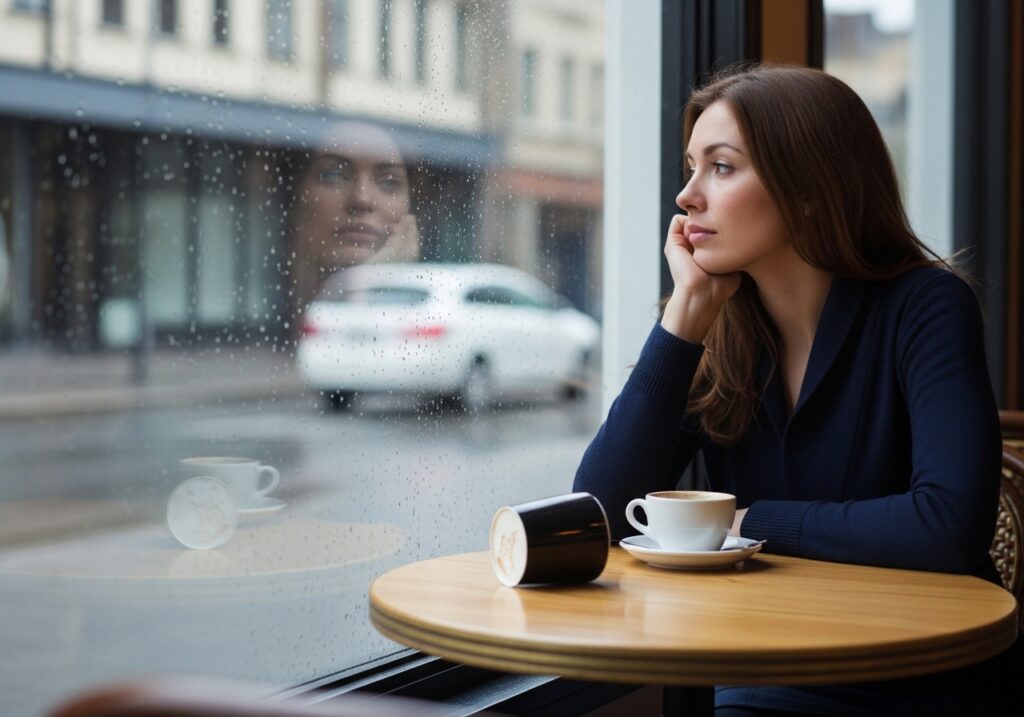
What It Actually Looks Like to Lose Yourself in a Relationship
Before you can learn how to love without losing yourself, you have to be honest about whether you already have. The signs are not always dramatic. Most of the time, they are subtle — almost invisible — until the pattern is so established that it feels normal.
You stop making decisions based on what you want and start filtering everything through what your partner will think or feel. You cancel plans with friends because your partner seems uncomfortable with how much time you spend with others. You change the way you dress, talk, or express opinions to avoid conflict or to fit more neatly into the version of you that your partner seems to prefer.
You start using “we” so often that you have almost forgotten what “I” feels like. Your playlists change. Your food choices change. Your ambitions quietly rearrange themselves to fit around theirs. You tell yourself this is compromise. You tell yourself this is love. And sometimes, you are not entirely wrong — compromise is part of every relationship. But there is a profound difference between compromise and self-abandonment.
Self-abandonment is when compromise becomes one-directional. When you are the only one bending. When you have given so much of yourself away that you are not sure what is left — or whether the person you have become is someone you would even like if you met them at a party.
“You cannot pour from an empty vessel — and you cannot love deeply from a self that no longer exists.”
Other signs include: feeling resentful but unable to name why, feeling anxious when you try to express a need, feeling like you need your partner’s approval before making even small personal decisions, and feeling a quiet grief for things you used to love that you have slowly stopped doing.
The Dangerous Myth That Losing Yourself Means Loving More
There is a deeply romanticized narrative in our culture — in music, in movies, in love songs — that the ultimate expression of love is total self-surrender. “You are my everything.” “I would give up anything for you.” “Without you, I am nothing.” We hear this language so often that it starts to feel like what love is supposed to sound like.
But relationship psychology tells a very different story. Research by Dr. Lisa Firestone at the Glendon Association found that people who lose their sense of individual identity in relationships are more likely to experience chronic dissatisfaction, resentment, and emotional burnout — not deeper love. The sacrifice does not strengthen the relationship. It weakens the foundation that the relationship is built on.
Think about it this way: your partner fell in love with a person — a specific, distinct, full human being with opinions, passions, quirks, and a life. When you slowly erase that person in an attempt to keep them, you are not offering more love. You are offering less of the very thing they were attracted to.
Healthy love is not about merging into one. It is about two complete people choosing each other — every day — while remaining themselves.

How to Love Without Losing Yourself — 8 Practices That Actually Work
1. Know Who You Are Before You Give Yourself Away
The most powerful protection against losing yourself in love is a strong, clearly defined sense of self before the relationship begins — or rebuilt intentionally within it. This means knowing your values. Knowing what you will and will not accept. Knowing what makes you feel alive, what drains you, what you believe in, and what you are building toward.
Your identity is not a fixed thing. It grows and evolves. But there should always be a core — a self that exists independently of whoever you are in a relationship with. Journaling, therapy, time alone, and honest self-reflection are not self-indulgent acts. They are acts of relationship preparation.
2. Maintain Your Friendships and Outside Life
One of the first casualties of losing yourself in love is your social world. Friendships require time and emotional energy, and when a relationship becomes all-consuming, friendships often fade — sometimes because your partner takes up all your bandwidth, and sometimes because they subtly discourage outside connections.
Your friendships are not competition for your relationship. They are part of who you are. They keep you grounded in a version of yourself that exists outside the couple. Protect them. Show up for them. Never let a romantic relationship become the only relationship you invest in.
3. Keep Your Own Goals, Ambitions, and Interests
The things you were passionate about before this relationship — your career goals, your creative projects, your physical health, the places you wanted to visit, the skills you wanted to build — those do not become less important because you are in love. If anything, they become more important, because they are the architecture of a life that is entirely your own.
A partner who is right for you will celebrate your ambitions, not compete with them. They will encourage your growth, not feel threatened by it. And you should be doing the same for them. Two people growing individually, alongside each other, is what a genuinely thriving relationship looks like.
4. Learn to Communicate Your Needs Without Guilt
One of the most common patterns in people who lose themselves in love is the inability — or the terror — of expressing a need. Somewhere along the way, they learned that needing things was dangerous. That needing things would push the other person away, create conflict, or make them “too much.”
But needs are not demands. They are information. They are how two people learn how to love each other properly. Suppressing your needs does not make them disappear — it makes them build up until they explode as resentment, passive aggression, or emotional shutdown.
Practice saying what you need — plainly, directly, without apology. “I need more time to myself.” “I need us to talk about something that has been bothering me.” “I need you to take this seriously.” These sentences are not attacks. They are invitations to be truly known.

5. Establish Boundaries — And Hold Them With Love
Boundaries are not walls. They are not punishments. They are not signs that you do not love someone enough. Boundaries are the clear, honest articulation of what you need to remain healthy, safe, and whole inside a relationship.
A boundary might sound like: “I need at least one evening per week that is just for me.” Or: “I am not comfortable with how that conversation was handled, and I need us to approach it differently.” Or simply: “I am not going to change this about myself.”
The difference between a healthy relationship and one where you lose yourself often comes down to whether boundaries are respected. A partner who consistently pushes past your stated limits — who makes you feel guilty for having needs, who treats your self-care as rejection — is not a partner who loves you well, regardless of how much they say they love you.
Hold your boundaries. Kindly. Firmly. Consistently. Because every time you abandon a boundary to keep the peace, you teach yourself — and your partner — that your needs do not matter.
6. Notice When the Relationship Becomes Your Entire Identity
There is a point in many relationships where the “couple identity” starts to eclipse the individual. Every plan revolves around the relationship. Every conversation circles back to it. Every emotional state is dictated by how things are going with your partner that day. You stop being a person who is in a relationship and become someone who exists only in relation to another person.
This is the moment to pause and ask: who am I outside of this relationship? What do I think, want, feel, and believe on my own — not filtered through this partnership? If the answers come slowly and with difficulty, that is important information.
“The goal is not to find someone to complete you. The goal is to find someone who complements the complete person you already are.”
Rebuilding an individual identity while inside a relationship is uncomfortable work. It can feel disloyal at first, especially if you have been operating as a merged unit for a long time. But it is the work that saves relationships — because it gives both people something real to come home to.
7. Watch How You Feel After Spending Time Together
Your emotional state after time with your partner is one of the most honest diagnostic tools available to you. Healthy relationships — even complicated, imperfect ones — should generally leave you feeling nourished, energized, or at peace. Not every time. Life is not a fairytale, and relationships have difficult seasons.
But as a consistent pattern: do you feel more like yourself after you have been with your partner, or less? Do you feel expanded and encouraged, or small and managed? Do you feel seen, or do you feel like you are constantly performing a version of yourself that is acceptable to them?
Pay attention to that feeling. It will not lie to you.
8. Consider Therapy — For Yourself, Not Just the Relationship
If you recognize yourself in this article — if you have already lost significant parts of yourself in this or a previous relationship — individual therapy can be transformative. Not couples therapy (though that has its place too). Individual therapy: time that is entirely yours, to understand the patterns that led you here, to grieve the parts of yourself that got lost, and to rebuild the sense of self you deserve to carry into every relationship going forward.
Losing yourself in love is not a character flaw. For most people, it is a learned pattern — one that can be unlearned with the right support.

What a Healthy Love Actually Looks Like
When you have learned how to love without losing yourself, love feels different. It does not feel like you are holding your breath, waiting for approval. It does not feel like you are managing someone else’s emotions at the expense of your own. It does not feel like a performance.
It feels like home — without the condition that you have to be someone else to deserve to stay.
Healthy love looks like two people who challenge each other to grow without demanding they change. It looks like disagreements that do not threaten the relationship’s foundation. It looks like space — physical space, emotional space, the space to have a bad day without the relationship collapsing around it.
It looks like being fully, unapologetically yourself — and being loved more because of it, not in spite of it.
You are not too much. You have never been too much. You have simply been in spaces — or relationships — that were too small for who you are. The goal is not to shrink yourself into love. The goal is to find — and build — a love large enough to hold all of you.

The Bottom Line
Learning how to love without losing yourself is one of the most important relationship skills no one ever teaches you. It requires knowing yourself, communicating honestly, setting boundaries without guilt, and choosing — every single day — to treat yourself as someone who matters inside the relationship, not just the other person.
Love should not feel like erasure. It should feel like expansion. Like becoming more yourself, not less. Like being deeply known by someone who chooses you — the real you — again and again.
If you have lost yourself somewhere along the way, it is not too late. Identity is not permanent wreckage. It is something you can return to — piece by piece, day by day, one honest choice at a time.
You are still in there. Go find yourself again.
FAQ
Q: How do you know if you have lost yourself in a relationship? A: Common signs include making all decisions based on your partner’s preferences, abandoning your own hobbies and friendships, feeling unable to express your needs, and experiencing a quiet resentment you cannot fully explain. If you struggle to describe who you are outside the relationship, that is a significant indicator.
Q: Is it possible to love someone deeply without losing yourself? A: Absolutely. In fact, the deepest and most sustainable love comes from two people who remain fully themselves while choosing each other. Losing yourself does not make love more real — it makes it less healthy.
Q: What causes someone to lose themselves in a relationship? A: Usually a combination of attachment style (particularly anxious attachment), low self-worth, people-pleasing tendencies, and sometimes a partner who — consciously or unconsciously — discourages individuality. It is often a learned pattern from childhood, not a personal failure.
Q: Can a relationship recover after one partner has lost themselves? A: Yes — but it requires both partners to be honest about the dynamic and willing to change it. The person who lost themselves must do the work of rebuilding their identity, and the relationship structure must shift to support that. This process often benefits from couples therapy.
Q: How do I set boundaries without pushing my partner away? A: Frame boundaries as expressions of your needs, not criticisms of your partner. Speak from “I” rather than “you.” Be consistent and calm. A partner who is right for you will respect your limits — and may even feel relieved that you are communicating more clearly. A partner who punishes you for having needs is the actual problem.
Did This Article Speak to You?
If something in here hit close to home — save this article now before you lose it in your feed. The moment you need it most is usually the moment you can’t find it.
💾 Save it. Come back to it when you need a reminder of who you are.
📤 Share it with a friend who gives too much of themselves in their relationships. One share could be exactly what they needed today.
💬 Drop a comment — which part of this article hit hardest for you? You might be surprised how many people feel exactly the same way.
➕ Follow Truthsinside.com for more honest, psychology-backed content on love, relationships, and the patterns that quietly shape our lives.
📖 Read next: Red Flags in a Long-Distance Relationship — another pattern worth understanding before it costs you more than distance.
You came here looking for answers. That already says something about you. Keep going.
🎵 Music
Maren Lull is a singer-songwriter who writes from the places most people don’t talk about out loud.
Not the dramatic grief. Not the obvious heartbreak. The quiet kind — the ordinary Tuesday emptiness, the habit of reaching for someone who isn’t there anymore, the particular exhaustion of being strong for so long that the strength itself wears thin.
Her music lives at the intersection of emotional honesty and soft beauty — breathy vocals over gentle piano, slow tempos, lyrics that feel less like songs and more like something you wrote in a private notebook at two in the morning and never showed anyone.
Maren Lull writes for the people who feel everything deeply and say very little about it. For the ones who listen to sad music not because they want to feel worse — but because being understood, even by a song, makes the feeling easier to carry.
📱 Follow Maren Lull:
→ Spotify
→ Apple Music
→ Youtube
→ Audiomack