
The Last Thing He Said to Her Before She Left. She Thinks About It Every Day.
There’s a particular kind of memory that doesn’t fade the way others do. Psychologists who study memory formation have found that moments tied to intense emotion are encoded differently in the brain, stored with a vividness ordinary memories never achieve — which is part of why some last words can replay, word for word, years after everything else about a relationship has blurred. For Elena, those last words came from a man named Theo, standing in a doorway with his coat half on, three years ago. She left that night. She has thought about his last words nearly every day since.
I’m telling her story because I think almost everyone carries some version of it — a sentence someone said right before an ending, a set of last words that somehow outlived the relationship itself. Elena’s aren’t dramatic. That’s part of what makes them so hard to put down.
She and Theo had been together four years when it ended, not in one explosive fight but in a slow accumulation of exhaustion neither of them had the energy to name out loud anymore. The night she left, there was no big final argument. There was just a quiet, terrible clarity that had been building for months.
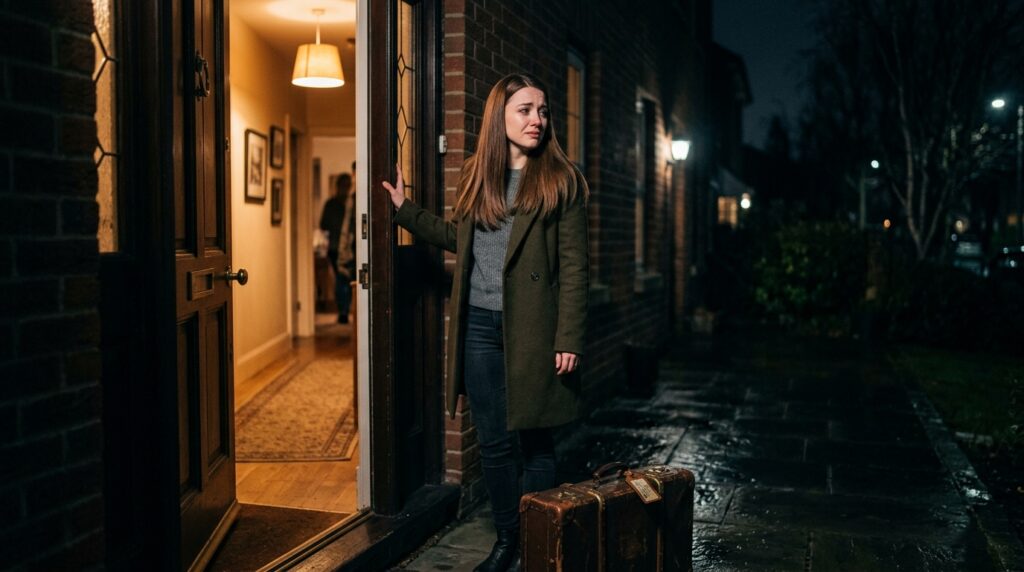
She’d packed two bags over the course of an afternoon while he was at work, moving through their apartment with the strange calm of someone who has already made a decision and is just waiting to enact it. When he came home and saw the bags by the door, he didn’t yell. He didn’t ask her to stay, not exactly. He just stood there for a long moment, and then he said the last words that would follow her for years: “I always thought we’d figure it out eventually.” Not “don’t go.” Not “I love you.” Just a quiet, almost resigned observation about a future he’d apparently been picturing without ever fully building toward it.
Those five words became her last words from him — the ones she’d carry out the door and, it turned out, carry for a very long time afterward. She has told me that if he’d yelled, or begged, or even just said “I love you,” she thinks the ending might have felt cleaner. Instead his last words left her with a version of him that was still hoping, quietly, passively, for a future he’d never once fought for out loud. That combination — hope without effort — became the thing she couldn’t stop turning over.
“His last words weren’t cruel. That’s what made them impossible to fully let go of. Cruelty I could have processed. Quiet hope, offered too late, just sat there unfinished.”
Grief researchers describe this phenomenon as “ambiguous loss” — a kind of grief that resists resolution because the ending itself feels unfinished or unclear. Dr. Pauline Boss, who developed much of the foundational research on ambiguous loss, has written about how the human mind struggles most with endings that don’t offer closure, searching instead for meaning in whatever last words or last moments were available. Theo’s last words gave Elena almost nothing to resolve. They weren’t an apology. They weren’t a plea. They were simply true, and strange, and impossible to fully close the door on.
Why Certain Last Words Stay With Us Longer Than Others
Not every ending produces last words that linger this way. Elena has had other breakups, she told me, with clearer endings — mutual, final, sometimes even relieved. Those partings didn’t leave residue the way Theo’s did. The difference, she believes, was that his last words revealed something he’d never said while they were still together: that he’d been hoping, quietly, the whole time, without ever showing her that hope through action. Hearing it only as he watched her leave meant the information arrived too late to change anything, but too significant to ignore.
Psychologists who study regret describe a specific and particularly persistent form called “inaction regret” — the ache that comes not from things someone did, but from things they didn’t do in time. Theo’s last words functioned almost like a confession of inaction: he’d wanted to try, apparently, and simply hadn’t. For Elena, his last words became a permanent record of a chance that had existed and gone unused, which is a very different kind of grief than mourning something that was tried and still failed.
📃 Related article: Text I Almost Didn’t Send: How 9 Words Changed Everything
The Year She Spent Replaying His Last Words
For the first year after she left, Elena told me his last words showed up constantly — during quiet drives, in the pause before falling asleep, once embarrassingly in the middle of a work meeting when someone mentioned “figuring things out.” She wasn’t necessarily wishing she’d stayed. She was trying to solve something unsolvable: what his last words had actually meant, and whether there had been a version of that night where she’d said something different and he’d said something different back.
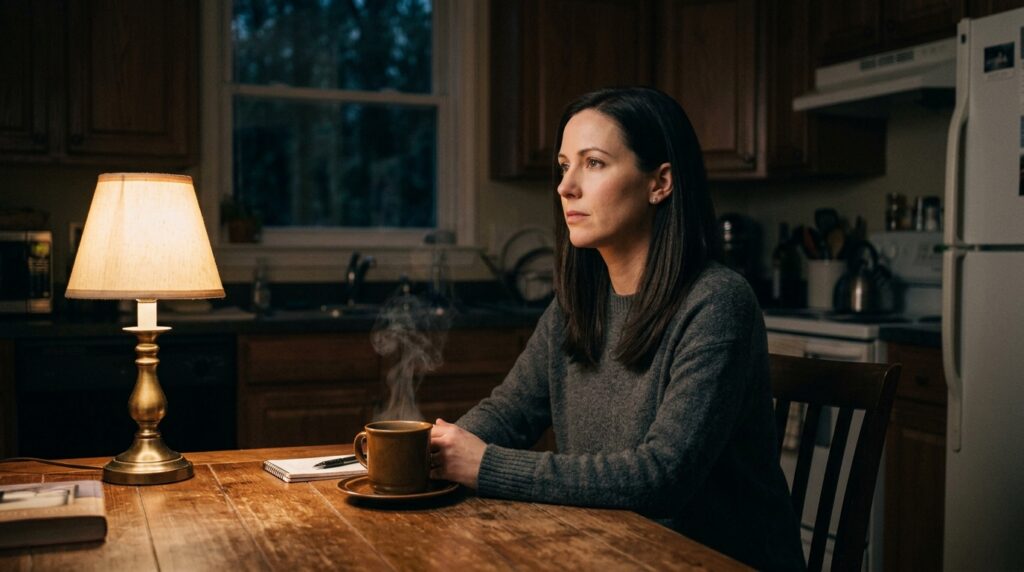
She eventually brought his last words to a therapist, half-expecting to be told there was a trick to letting them go. Instead, her therapist offered something more useful: the idea that some last words aren’t meant to be resolved, only accepted as incomplete. Theo’s last words captured something true about him — a man capable of hoping quietly but not of acting loudly — and no amount of replaying the moment would turn that truth into a different one. The last words weren’t a puzzle with a hidden solution. They were simply an honest, if painfully late, piece of information about who he’d been.
That reframe didn’t erase the last words from Elena’s memory. It changed her relationship to them. Instead of searching his last words for a version of the night that could have ended differently, she started allowing them to just be what they were: the accurate, unpolished last thing a person says when they’ve run out of time to say anything more useful. There’s a strange mercy in that acceptance, she told me — not forgiveness of the relationship’s failures, but a kind of peace with the fact that his last words were simply the truest thing he had left to offer.
“I stopped trying to fix his last words in my head. Once I let them just be what they were — true, and too late — they finally stopped feeling like a task I hadn’t finished.”
What Elena Wishes She’d Understood About Last Words Sooner
If there’s a lesson Elena has taken from carrying Theo’s last words for three years, it’s that the weight of last words often has less to do with what was said and more to do with what wasn’t said while there was still time. His last words haunted her not because they were profound, but because they revealed feelings he’d never voiced when voicing them might have mattered. She’s tried, since then, to say things earlier in her relationships — to not let hope sit quietly, unspoken, until it only shows up as last words on the way out the door.
She’s in a new relationship now, one where, she says, nobody’s feelings are waiting until the end to be spoken. It’s not that this relationship is free of difficulty. It’s that the difficulty gets said out loud while there’s still time to do something about it, rather than being saved for a set of last words neither person can take back.

Elena still thinks about Theo’s last words most days, though the thought no longer arrives with the same sharp ache it once did. Now it’s closer to something she’s simply carrying — proof that a relationship existed, that it mattered enough to produce last words this vivid, and that some endings leave behind sentences we don’t get to fully close the book on. She’s made peace with that. Not every ending, she’s learned, needs resolution to be survivable. Sometimes it just needs acceptance that the last words were the truest thing available at the time, even if they arrived far too late to change anything.
Frequently Asked Questions
Why do some last words from a breakup stay with us for years?
Emotionally intense moments are stored more vividly in memory than ordinary ones, which is part of why certain last words can replay clearly long after other details fade. Last words that arrive during an ending also often carry unresolved meaning, which keeps the mind returning to them in search of closure.
Is it normal to keep thinking about what someone said right before a breakup?
Yes, this is a very common experience. Last words spoken at the end of a relationship often become symbolic of the entire relationship’s unresolved feelings, which is why they can resurface repeatedly during ordinary moments long afterward.
How can I stop replaying someone’s last words in my head?
Rather than trying to force the memory away, many therapists suggest accepting that the last words may never fully resolve into a satisfying explanation. Shifting from analyzing the last words to simply acknowledging them as an honest, incomplete piece of the past can reduce their emotional grip over time.
Do last words always reveal the truth about how someone really felt?
Not necessarily, but they’re often significant because they’re spoken without the usual filtering that happens earlier in a relationship. Last words can reveal genuine feelings that went unspoken for a long time, which is part of what makes them so emotionally weighty afterward.
Can understanding someone’s last words help with moving on?
Often, yes. Making sense of last words — even without full closure — can help separate the relationship’s ending from unfinished business, allowing the grief to settle into something more manageable rather than remaining an open question.
If this story moved you, save it for the day those last words come back to you again. Share it with someone still carrying a sentence they can’t put down. And follow Truthsinside.com for more real stories about the words that stay with us longest.
🎵 Music
Maren Lull is a singer-songwriter who writes from the places most people don’t talk about out loud.
Not the dramatic grief. Not the obvious heartbreak. The quiet kind — the ordinary Tuesday emptiness, the habit of reaching for someone who isn’t there anymore, the particular exhaustion of being strong for so long that the strength itself wears thin.
Her music lives at the intersection of emotional honesty and soft beauty — breathy vocals over gentle piano, slow tempos, lyrics that feel less like songs and more like something you wrote in a private notebook at two in the morning and never showed anyone.
Maren Lull writes for the people who feel everything deeply and say very little about it. For the ones who listen to sad music not because they want to feel worse — but because being understood, even by a song, makes the feeling easier to carry.
📱 Follow Maren Lull:
→ Spotify
→ Apple Music
→ Youtube
→ Audiomack