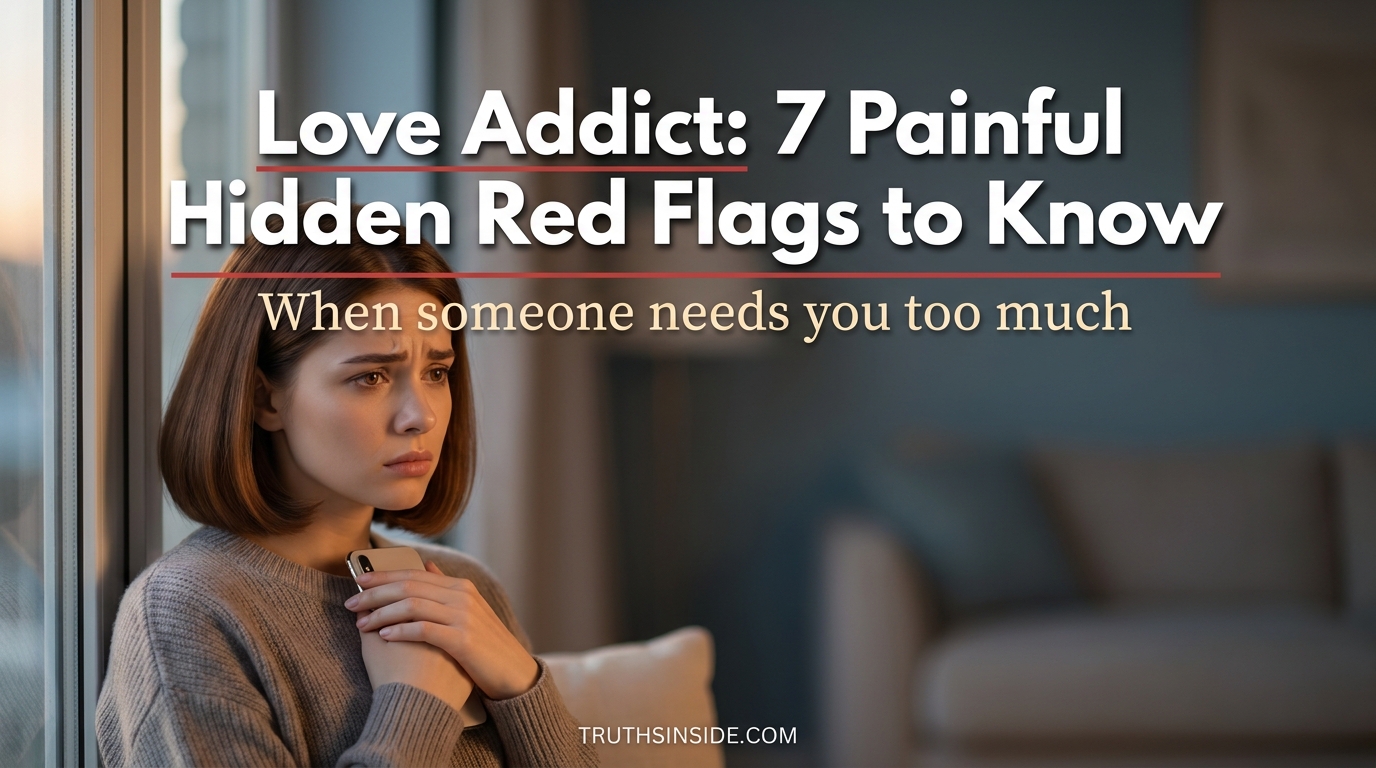
Love Addict: 7 Painful Hidden Red Flags to Know
Being loved hard feels wonderful, until it starts to feel like being held too tightly. If you have ever dated a love addict, you may remember the rush at the start: the constant texts, the “I have never felt this way before,” the plans for a future after three weeks. Then, slowly, the same devotion began to feel like a weight. You may have felt guilty for needing space and confused about why you were the one apologizing.
A love addict is not a villain, and it is not a clinical diagnosis. The phrase comes from popular psychology and self-help writing, where it describes a pattern of craving intense romantic attention and feeling unable to cope without it. Researchers who study attachment, such as the work that grew out of John Bowlby’s theories, have long noted that people with an anxious style often fear abandonment more than they fear conflict. Someone with this pattern often lives at the extreme end of that fear.
This article walks through seven red flags of someone with this pattern, explains what is usually happening underneath, and shows how to respond with compassion and firm boundaries. It is not about labeling people. It is about recognizing a pattern early, so you can protect your own peace and, if you are the one who recognizes yourself here, find the right support.
“A love addict does not love too much. They fear too much, and call the fear love.”
What Is a Love Addict, Really?
A love addict is someone who uses romantic relationships to regulate their emotions. The relationship is not just a source of joy. It is the main way they feel safe, worthy and calm. When the partner is close and attentive, the love addict feels fine. When the partner is distant, busy or simply human, the love addict can feel panic, emptiness or rage.
Writers such as Stanton Peele and Archie Brodsky, in their book Love and Addiction, and later Pia Mellody, popularized the idea that some people relate to love the way others relate to a substance: chasing the high, fearing the withdrawal. These ideas are debated, and love addiction is not an official diagnosis in the DSM. Still, the pattern they describe is real enough that many therapists recognize it in practice.
It helps to separate someone with this pattern from a person who is simply romantic. A romantic person enjoys closeness and can also enjoy time alone. Someone with this pattern struggles to tolerate that time alone, and the struggle shows up as pressure on the partner.
📃 Related article: Stop Settling: 7 Powerful Steps to Build Self-Worth
Red Flag 1: A Love Addict Moves Impossibly Fast
The first red flag of a love addict is speed. Within days, you hear “soulmate,” “destiny” and “I can’t imagine life without you.” They want exclusivity immediately, introductions to family quickly, and a shared future almost at once. It feels flattering, and that is exactly why it is easy to miss.
Healthy intimacy builds as trust builds. Someone with this pattern often skips the trust part, because the feeling of fusion is what they are chasing. The relationship is intense because intensity is the goal, not because the two of you have earned deep knowledge of each other yet.
Notice whether the pace slows down when you ask it to. If you say, “I would like to take this more slowly,” a secure partner will usually adjust. Someone with this pattern may sulk, accuse you of not caring, or test whether you will leave. Your request for time is heard as rejection, because for them closeness is the only proof of love.
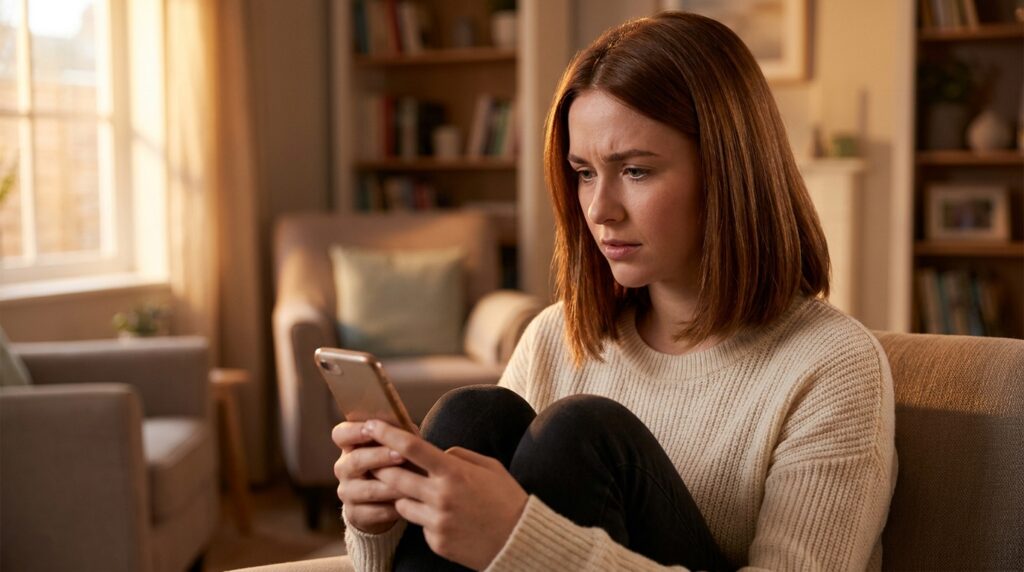
Red Flag 2: Your Absence Feels Like an Emergency to a Love Addict
Everyone misses their partner. A love addict experiences separation as a crisis. You go to a friend’s birthday and receive fifteen messages. You turn your phone off for a movie and return to missed calls, a tearful voicemail and a message that says, “I just needed to know you were okay.”
Research on separation anxiety in adult attachment suggests that some people experience a partner’s distance as a genuine threat to their safety. That helps explain why the reaction can seem so out of proportion. It is not a plan to control you. It is panic. But panic still lands on you, and over time it can shrink your life.
Pay attention to how your free time changes. If you begin skipping plans to avoid the aftermath, or you find yourself reporting your whereabouts hour by hour, the love addict pattern is already shaping your daily choices. Compassion for their fear does not require you to give up your friendships.
Red Flag 3: A Love Addict Needs You to Fix Their Feelings
Someone with this pattern often hands you responsibility for their emotional state. A bad day at work becomes your job to repair. A low mood becomes a sign that you are not doing enough. “You make me happy” sounds sweet, but its shadow side is “you are responsible when I am not.”
This is different from ordinary support. In a healthy couple, you comfort each other and each person also has their own tools: friends, hobbies, therapy, rest. A love addict may have only one tool, and it is you. That can make you feel like an on-call caregiver, never off duty.
Over time, you may notice that you hide your own bad moods because you cannot afford to add to theirs. That quiet self-silencing is one of the strongest signals that the relationship is out of balance. Your feelings matter equally, and a partner who needs you too much will rarely have room for them.
Red Flag 4: Jealousy of Everything That Isn’t Them
Many someone with this pattern feels jealous of anything that takes your attention: your friends, your job, your family, even your hobbies. The jealousy is not always loud. It can arrive as sighing, silence, a hurt expression or a comment like “I guess I am not as important as your friends.”
Studies of romantic jealousy have linked it to insecurity and fear of loss, and someone with this pattern often has a great deal of both. Because the partner is the entire emotional support system, any other priority feels like a threat to survival.
The danger is not the jealousy itself, since most people feel it sometimes. The danger is when the response is to restrict you: questioning your plans, going through your phone, asking you to cut people off. If you notice your world getting smaller, take it seriously. Isolation is a pattern that appears in controlling relationships, and it deserves a clear boundary, whatever the intention behind it.
Red Flag 5: Hot and Cold Swings Between Worship and Withdrawal
One of the more confusing red flags of a love addict is the swing. When they feel secure, you are put on a pedestal. When they feel threatened, they may become cold, critical or silent, as if punishing you for a failure you cannot name. Then they return with apologies and intense affection, and the cycle restarts.
This push and pull can feel like chemistry, and it can keep you hooked. Psychologists describe intermittent reinforcement, where unpredictable rewards create stronger attachment than steady ones. If you never know which version of your partner is coming home, you may start to work harder to earn the good one.
Ask yourself whether you are managing their moods more than enjoying the relationship. A steady partner can be disappointed or upset without turning away entirely. If love is withdrawn whenever the love addict feels insecure, you are not in a calm connection. You are in a cycle, and cycles are easier to see once you write them down.

Red Flag 6: A Love Addict Loses Themselves in the Relationship
Notice how someone with this pattern talks about their own life. Friends fade out, hobbies are dropped and plans are all “we.” At first it looks like devotion. Later you may realize that you have become their whole world, and the world is not stable when it rests on one person.
There is also the flip side: they may copy your tastes, your opinions and your goals so closely that you cannot tell who they are. This is not deception. It is often a fear that being different will lead to being left.
If you are the other half of this pattern, you may feel strangely lonely, even though you are never alone. You are being loved, but not truly known, because the person doing the loving has not yet built a stable sense of self. Healthy love is made of two whole people, not two halves seeking one shared identity.
Red Flag 7: Fear of Being Alone Drives Every Decision
The seventh red flag of someone with this pattern is the way they handle endings and gaps. They may jump from one relationship to the next with no pause. They may stay in a clearly unhappy relationship because being single feels unbearable. They may say things like “I can’t be alone” or “I’d do anything not to lose you.”
Some research on singlehood suggests that people with high fear of being single settle for less satisfying partners and stay longer in unhappy relationships. For someone with this pattern, the fear is amplified, and the relationship is less a choice than a shelter from a feeling they cannot sit with.
If you try to leave, expect intensity: bargaining, promises, tears, sometimes anger. Be careful here. Pleas are often sincere, and they can also keep you in place. Whatever the intent, your decision about your own life is yours, and a person who respects you will eventually accept it.
“Needing you and choosing you are different things. One asks you to stay. The other lets you go.”
Love Addict or Anxious Attachment: What’s the Difference?
Not everyone who is clingy is a love addict. Many people with an anxious attachment style simply need more reassurance, and with a responsive partner they relax. The difference is intensity and function. Someone with this pattern uses the relationship as the primary way to avoid painful feelings, and the pattern usually repeats across partners.
Another useful comparison is with codependency, a term from addiction-recovery circles. A codependent person often focuses on caring for another person’s needs. Someone with this pattern often focuses on obtaining intense attention. In real life, the two overlap, and many people have a bit of both.
None of these labels should be used as an insult. If you find yourself thinking “my partner is a love addict” during an argument, pause. Labels are tools for understanding, not weapons. Describe the behavior, such as “I feel pressured when we talk several times an hour,” and you will usually get a better response than if you diagnose.
Why Does Someone Become a Love Addict?
There is rarely one cause. Many people point to early experiences: inconsistent caregiving, emotional neglect, or learning that love had to be earned by being useful. Attachment research suggests that when affection is unpredictable in childhood, adults may become hypervigilant to any sign of distance.
Culture plays a role too. Films and songs teach us that real love means “you complete me” and that wanting space means you do not care. Someone with this pattern may be living out a script that society rewards, which makes the pattern harder to question.
Understanding the roots is not an excuse for harm, but it is a reason for empathy. Most people who fit this pattern are not trying to hurt anyone. They are trying not to hurt themselves. That distinction matters, because it opens the door to change. Many people can learn to tolerate solitude and build a secure sense of self, especially with a skilled therapist.
📃 Related article: Partner Competing With You? 6 Toxic Red Flags Revealed
How to Respond If You’re Dating a Love Addict
Start with clarity, not criticism. Choose a calm moment and describe your needs: “I love spending time with you, and I also need evenings to myself. That does not mean I care less.” Say it kindly and say it more than once. Someone with this pattern may need repeated reassurance that boundaries are not rejection.
Next, protect your routines. Keep seeing friends, keep your hobbies and keep your own sleep schedule. Do not let guilt rewrite your life. If a boundary is crossed, such as constant check-ins after you have asked for space, calmly restate it and follow through.
Third, encourage other supports without trying to be the therapist. You can say, “I think talking to a counselor could help you feel steadier. I would support that.” You cannot fix a love addict, and trying to do so tends to deepen the dependency. Finally, notice your own limits. If you feel drained, afraid or controlled, it is acceptable to step back or leave, even if the other person is hurting.

If You Recognize Yourself as a Love Addict
If this article felt uncomfortably familiar, take a breath. Recognizing a pattern is the hardest step, and it is a sign of strength, not failure. You are not too much, and you are not broken. You are a person who learned to find safety in another person’s attention, and you can learn to find some of it within yourself.
Small practices help. Try letting a text sit for an hour before replying. Keep a list of three things that calm you without anyone else. Rebuild friendships and interests that you set aside. When the urge to seek reassurance rises, name the feeling out loud: “This is fear, and it will pass.”
Consider working with a therapist, especially one familiar with attachment or codependency. Group programs exist for people who identify with these patterns, and many find that being around others with similar experiences reduces shame. You deserve love that feels safe, including the love you give yourself.
When It Becomes Unsafe
Most love addict patterns are painful but not dangerous. However, if there are threats, stalking, monitoring, intimidation, self-harm threats used to keep you from leaving, or any physical harm, this is no longer just someone with this pattern pattern. It is a safety issue.
If you are in the United States and feel unsafe, the National Domestic Violence Hotline is available at 1-800-799-7233, or you can text START to 88788. If you or someone you know is in emotional crisis or thinking about suicide, you can call or text 988, the Suicide & Crisis Lifeline. In an emergency, call 911.
Leaving a person who becomes intense when you try to go can be risky. Consider telling a trusted friend, planning where you will stay, and speaking with a domestic violence advocate before you make the move. Your safety comes before anyone’s feelings, including your own guilt.
Frequently Asked Questions
Is “love addict” an official diagnosis?
No. Love addiction is not listed as a diagnosis in the DSM-5. The term comes from popular psychology and recovery communities. Some clinicians use it to describe patterns of compulsive romantic seeking, and others prefer terms such as anxious attachment or codependency. If you are concerned, a licensed therapist can help you understand what is going on without relying on labels.
Can a love addict change?
Many people can. Patterns formed by early experiences can shift with insight, practice and support. Therapy, support groups and consistent self-care help a love addict build a steadier sense of self. Change usually takes time, and it depends on the person wanting to change, not on a partner demanding it.
Is a love addict the same as a narcissist?
No. Someone with this pattern typically fears abandonment and seeks closeness, while narcissistic patterns involve a need for admiration and difficulty with empathy. They can look similar in an argument, but the underlying motives differ. Avoid diagnosing your partner. Focus on how the behavior affects you.
Should I stay with a love addict?
Only you can decide. Some relationships improve when the love addict seeks help and both people hold clear boundaries. Others become draining or unsafe. If you feel afraid, controlled or consistently unhappy, it is reasonable to leave. A good question to ask is whether your needs are allowed to exist.
How do I know if I’m the love addict?
Ask yourself whether you panic when your partner is unavailable, whether you move into relationships very fast, and whether being single feels unbearable. If several answers are yes, consider talking to a therapist. Noticing the pattern is the first step toward changing it.
Save, Share, Follow
If this article helped you see your relationship more clearly, save it for the next time a hard moment comes, share it with someone who might need it, and follow Truthsinside.com for more honest relationship psychology.
🎵 Music
Maren Lull is a singer-songwriter who writes from the places most people don’t talk about out loud.
Not the dramatic grief. Not the obvious heartbreak. The quiet kind — the ordinary Tuesday emptiness, the habit of reaching for someone who isn’t there anymore, the particular exhaustion of being strong for so long that the strength itself wears thin.
Her music lives at the intersection of emotional honesty and soft beauty — breathy vocals over gentle piano, slow tempos, lyrics that feel less like songs and more like something you wrote in a private notebook at two in the morning and never showed anyone.
Maren Lull writes for the people who feel everything deeply and say very little about it. For the ones who listen to sad music not because they want to feel worse — but because being understood, even by a song, makes the feeling easier to carry.
📱 Follow Maren Lull:
→ Spotify
→ Apple Music
→ Youtube
→ Audiomack