Red Flags Your Partner Is Competing With You Instead of Supporting You
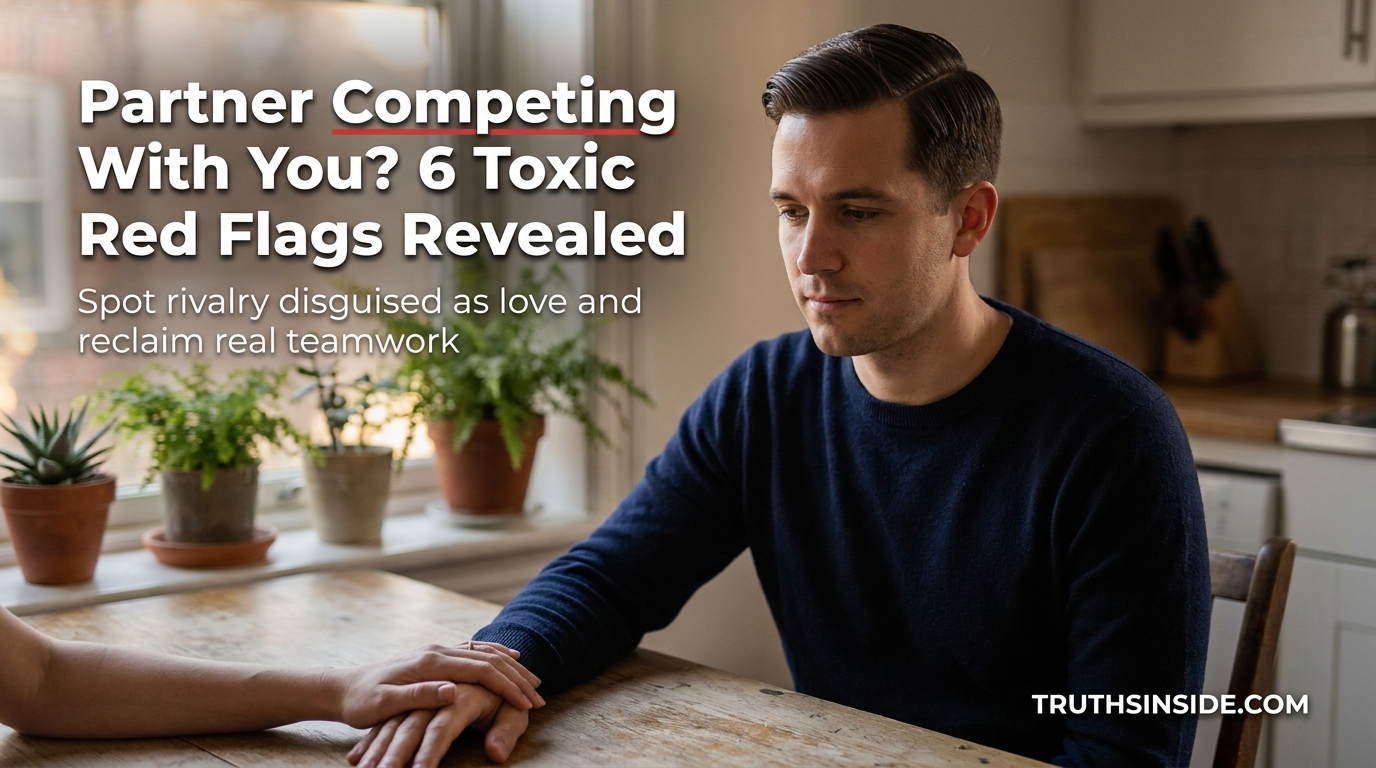
A partner competing with you can turn ordinary good news into a silent contest, and many people only notice after they have started shrinking their achievements just to keep the peace. If you have ever shared a promotion, a finished project, or a new idea and walked away feeling strangely smaller, you are not imagining the shift. Something in the exchange changed, even if no one said a harsh word.
Research on close relationships helps explain why this matters. In John Gottman’s long-running studies of couples, partners who remained together turned toward each other’s emotional bids for connection far more often than couples who later divorced. The stable couples responded positively about 86 percent of the time, compared with roughly 33 percent for the others. When a partner competing with you keeps turning away from your wins, the pattern is more than a bad mood. It signals that support is not reliably available when you need it most.
Social comparison also plays a role. Psychologist Leon Festinger introduced social comparison theory in 1954, describing how people naturally measure themselves against the people around them. Usually this habit is harmless. When a partner competing with you turns comparison into a daily habit, however, it begins shaping how both of you treat each other. This article walks through six red flags, explores why some partners fall into rivalry, and offers practical ways to restore real teamwork.
Support Versus Rivalry: Recognizing a Partner Competing With You
The Difference Between Celebrating You and Measuring Up
Support feels like a second voice cheering from your corner. When you share good news, a supportive partner asks questions, expresses pride, and wants to hear more. Rivalry feels different. Conversations drift toward who did more, who knows more, or who deserves the spotlight. A partner competing with you may not intend harm, but the effect is the same: your win becomes a vote on who is ahead.
Healthy partners can feel envy or insecurity too, because that is part of being human. What separates them is what happens next. They notice the feeling, name it privately or gently, and still choose to celebrate you. A partner who lets that feeling steer every exchange sends a very different message.
Pay attention to how you feel after talking with your partner. Supported people usually leave conversations more energized and more capable. People caught in rivalry often feel tired, second-guessed, or like they must justify their own success. Your body frequently registers the pattern before your mind can label it.
Red Flag One: A Partner Competing With You Downplays Your Wins
Turning Your Good News Into Their Story
Many people in a relationship with a partner competing with you notice a predictable pattern. You share a promotion, and within minutes your partner mentions a similar accomplishment of their own. You describe a new client, and the reply is about a deal they closed years ago. The conversation technically continues, but the spotlight has quietly moved to their side of the room.
This redirection is subtle, which is why it is so hard to name. Often nobody is lying and nobody is cruel. Still, if your good news consistently leads to a comparison that makes you feel smaller, the redirection is doing a job. It keeps your partner at the center of every story, including the ones that belong to you.
📃 Related article: Low Self-Esteem Sabotage: 7 Shocking Ways
The “Yeah, But” Response
Another warning sign is the reflexive qualifier: “That’s great, but…” followed by reasons your achievement is not that impressive. A partner who genuinely supports you may offer honest feedback later, yet they begin with warmth. A partner competing with you tends to start with the caveat, so your celebration arrives already discounted.
Try noticing how often praise comes with a “but” attached. One occasional qualifier is normal, and even thoughtful partners sometimes slip. A steady stream of them, however, suggests your achievements are being evaluated rather than shared.
Support sounds like “I’m proud of you.” Rivalry sounds like “I did that too, and mine was bigger.”
Red Flag Two: A Partner Competing With You Needs to Be the Expert
One-Upping Every Story
Some partners cannot stop being the authority. You mention a health concern, a book you finished, or a problem at work, and they immediately explain how they would have handled it better. The information may even be accurate, but delivered as a correction, it teaches you that your perspective is merely a rough draft they must improve.
A partner competing with you treats conversation like a trophy case. Every topic becomes another chance to display knowledge or competence, and your role shrinks to listening. Healthy partners ask what you think first. They may share their own experience, but they leave room for your version to stand on its own.
Advice You Never Requested
Unsolicited advice is not always a red flag, especially in a crisis when someone asks what to do. The concern grows when advice arrives every time you share something personal, whether or not you asked for it. Over time, you may stop sharing altogether. That withdrawal often hides the real cost of rivalry: fewer conversations in which either of you feels truly heard.
Red Flag Three: Your Success Feels Like a Threat to a Partner Competing With You
Withheld Encouragement
Encouragement is one of the simplest ways partners build each other up, which makes its absence easy to notice. Watch for partners who never celebrate your milestones, forget to ask how an important meeting went, or rush past your accomplishments in conversation. A partner competing with you often withholds encouragement without ever saying so outright.
This does not always mean they want you to fail. Some partners feel uneasy when the balance of achievement shifts, and they may not know how to express that discomfort in healthy ways. Still, withholding encouragement works like a scoreboard that stays tilted in one direction, and you are the one who keeps losing points.
Quiet Sabotage
More serious is subtle sabotage: sarcastic remarks about your new goals, pressure to skip a class or event that matters to you, or repeated reminders of why your plan will never work. These moves can disguise themselves as concern. In reality, they limit your growth while preserving the existing balance of power. Quiet sabotage from a partner competing with you is especially hard to challenge, because each comment can be dismissed as harmless on its own.
If you notice this pattern, take it seriously. Keep a private record of the comments, the context, and how you felt afterward. Patterns become much easier to discuss when you can point to specific moments rather than a general feeling.
Red Flag Four: Scorekeeping Replaces Teamwork
Who Did More This Week
Keeping track of chores, bills, and emotional labor is not inherently competitive. Many couples use simple tools to share responsibilities fairly, and that transparency can reduce resentment. The red flag appears when every task becomes a ledger you must win. A partner competing with you may bring up past favors during disagreements, measure each effort against yours, or insist on an exact tally that never closes.
Teamwork produces a different feeling. Partners who work together can ask, “What do you need this week?” without needing to prove their contribution. When everything becomes a debate about fairness, the relationship starts to resemble a contest with no finish line, and neither person feels like part of the same side.
Using the Past as Ammunition
Scorekeeping often surfaces during arguments. An old mistake returns as evidence, and a current conflict becomes a referendum on who has behaved better. Healthy repair focuses on the present issue and what each person can change going forward. Scorekeeping often shows up when a partner competing with you wants to win the argument more than resolve it, and winning the historical record rarely resolves anything at all.
Red Flag Five: Public Jokes From a Partner Competing With You
Humor That Stings
Playful teasing can strengthen connection when both people genuinely enjoy it. Jokes that regularly undercut you in front of friends or family send a different message: you are the target, not the teammate. A partner competing with you may use humor to take a small shot, then insist they were only kidding the moment you object. The laughter in the room can make it feel as though you are the only one who failed to take a joke.
Pay attention to how you feel when the laughter ends. If you feel embarrassed, defensive, or unsure whether you are allowed to be upset, the joke likely crossed a line. You are allowed to say so calmly. A supportive partner will hear you out without rolling their eyes or doubling down.
Red Flag Six: Your Goals Become a Contest
Competing for the Same Spotlight
Couples sometimes pursue similar paths, such as careers, fitness goals, or creative projects. Healthy couples can cheer each other across parallel finish lines, sharing tips and celebrating each milestone. A partner competing with you treats those goals as a race, measuring progress constantly and feeling threatened when you move ahead of them.
You may notice them rushing to start their own version of your project, minimizing your timeline, or steering conversations back to their own progress. None of this proves bad intent. It does show that your success is being filtered through comparison rather than shared pride, and that filter is the core of the problem.
📃 Related article: Deep Emotional Connection: 9 Beautiful Signs to Know
Why a Partner Competing With You May Behave This Way
Insecurity and Fragile Self-Worth
Competition often grows from insecurity. A partner who believes their value depends on being the most accomplished, knowledgeable, or admired may feel threatened by your growth. Another person’s success can feel like a personal loss when self-worth rests on comparison. This is one reason a partner competing with you often needs more reassurance than they are willing to admit.
Family Scripts and Learned Rivalry
Some people learned early that love came with conditions, or that siblings and parents constantly compared achievements. They may repeat that dynamic without realizing it, treating a partner’s success as proof that they are falling behind. Recognizing where a pattern began can make it feel less personal, though it does not excuse hurtful behavior.
Attachment Patterns
Attachment research suggests that people with anxious or avoidant styles handle closeness differently. Someone who fears being left behind may compete to stay relevant, while someone who fears closeness may keep emotional distance by making the relationship feel like a contest. A partner competing with you is not automatically insecure in a clinical sense, but attachment offers useful context for understanding the urge to compete.

How to Respond When You Notice a Partner Competing With You
Name the Pattern Calmly
Choose a calm moment rather than the middle of a disagreement. Try a sentence like, “I’ve noticed I often leave our conversations feeling like I have to defend my wins. I want us to be each other’s biggest supporters.” This describes your experience rather than accusing your partner of anything, which makes an honest conversation far more likely.
Ask for Specific Support
Vague requests often produce vague results. Be concrete: “When I share a work milestone, I’d love for you to ask one question about it before you share your own news.” Specific requests make it easier for a partner competing with you to change behavior without losing face, because they know exactly what support looks like.
Protect Your Own Wins
Celebrate your achievements with friends, mentors, or people who respond with genuine enthusiasm. Your sense of accomplishment should not depend entirely on one person’s reaction. A stable foundation outside the relationship makes it easier to stay steady when your partner responds poorly, and it reminds you that your success is real regardless of the scoreboard at home.

Watch for Real Change
Real change shows up in consistent actions. Notice whether your partner asks follow-up questions, celebrates without qualifiers, and stops turning every conversation into a comparison. One good week is encouraging, but a steady pattern is what signals that a partner competing with you is genuinely shifting toward teamwork.
Know When to Seek Professional Help
If rivalry keeps escalating, if one partner feels afraid to speak, or if conversations regularly end in hurt, couples therapy can help. A licensed counselor can guide both people through communication patterns and the beliefs underneath them. Seeking support does not mean the relationship is doomed. It means you are taking the pattern seriously enough to address it together.
A healthy relationship should feel like a team you belong to, not a scoreboard you must keep winning.

Frequently Asked Questions About a Partner Competing With You
Is it normal for a partner competing with you to feel envious sometimes?
Yes. Envy is a common human emotion, and most people feel it occasionally, especially when someone close reaches a goal they have wanted for themselves. What matters is what happens next. A healthy partner names the feeling, manages it, and still celebrates your win. A pattern of turning envy into criticism, comparison, or sabotage is the real concern.
Can a partner competing with you change if they want to?
Often, yes. Change usually begins when a partner recognizes the pattern, takes responsibility for it, and practices new responses over time. Clear requests, consistent follow-through, and sometimes individual or couples counseling can help. Lasting change depends on whether both people are willing to do the work, not on one conversation alone.
What if my partner says I am being too sensitive?
Your perception of how a conversation landed still matters. You can acknowledge that your partner may not have intended harm while also explaining how their words affected you. If they repeatedly dismiss your feelings, that dismissal deserves attention, especially if it happens every time you share a success.
When should I consider leaving a relationship over this pattern?
Consider leaving if rivalry is constant, your self-esteem keeps declining, your partner refuses to acknowledge the pattern, or you feel unsafe expressing your needs. A counselor can help you weigh the options and clarify what you truly want. Deciding to leave is a legitimate choice when a partner competing with you consistently undermines your well-being.
Choose Teamwork Over Competition
Recognizing a partner competing with you is not about declaring a winner. It is about noticing when support has been replaced by comparison and deciding what you need in response. Start with one honest conversation this week, practice one specific request, and keep track of how you feel afterward. Those small observations often reveal far more than any single argument.
Every relationship has moments of envy and misunderstanding. Even when a partner competing with you slips into old habits, the relationship can still return to curiosity, encouragement, and shared pride when both people choose it. You deserve a partner who celebrates your progress as freely as they celebrate their own.
Before you go, save this article for the next time your good news turns into a contest, share it with a friend who needs clearer language for what they are experiencing, and follow Truthsinside.com for more research-based guidance on love, psychology, and healthy relationships.
🎵 Music
Maren Lull is a singer-songwriter who writes from the places most people don’t talk about out loud.
Not the dramatic grief. Not the obvious heartbreak. The quiet kind — the ordinary Tuesday emptiness, the habit of reaching for someone who isn’t there anymore, the particular exhaustion of being strong for so long that the strength itself wears thin.
Her music lives at the intersection of emotional honesty and soft beauty — breathy vocals over gentle piano, slow tempos, lyrics that feel less like songs and more like something you wrote in a private notebook at two in the morning and never showed anyone.
Maren Lull writes for the people who feel everything deeply and say very little about it. For the ones who listen to sad music not because they want to feel worse — but because being understood, even by a song, makes the feeling easier to carry.
📱 Follow Maren Lull:
→ Spotify
→ Apple Music
→ Youtube
→ Audiomack