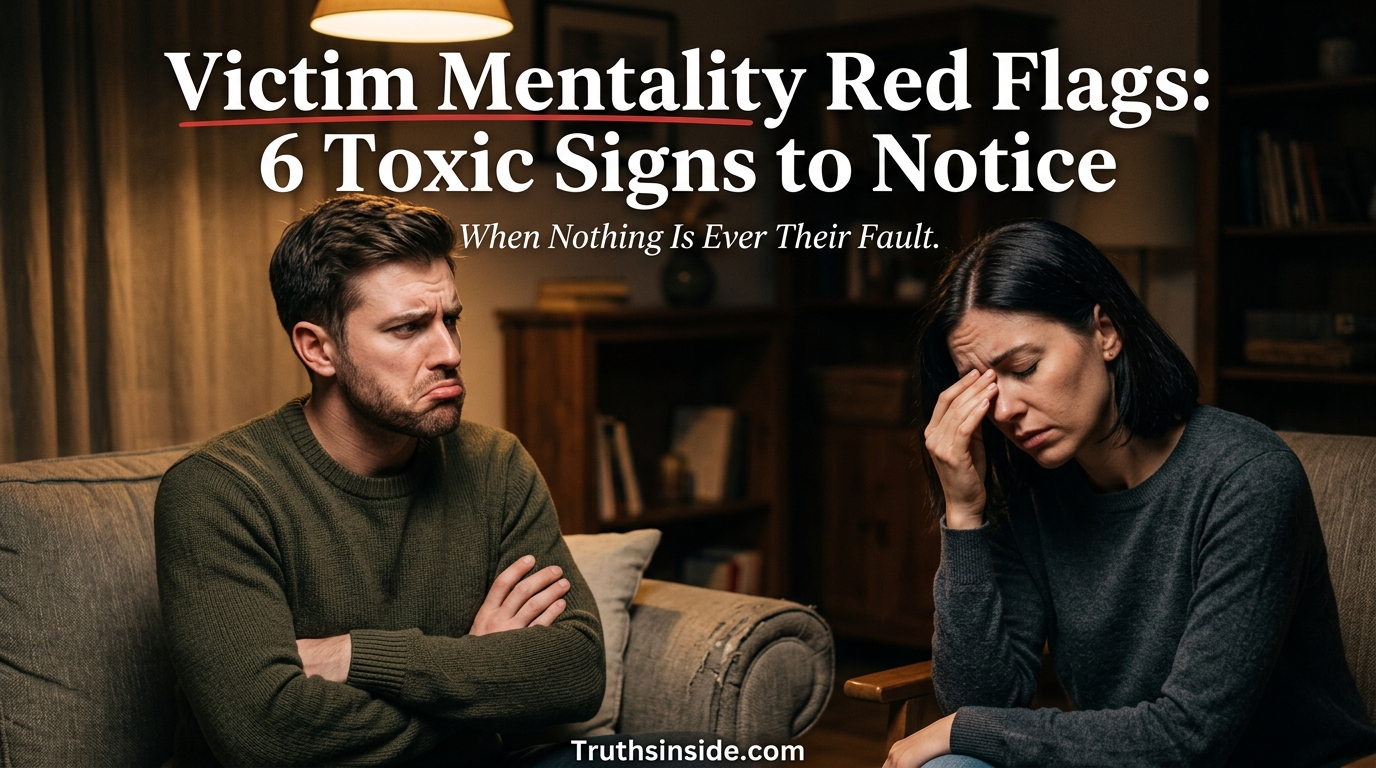
Victim Mentality Red Flags: When Nothing Is Ever Their Fault
Have you ever apologized for something that wasn’t even your fault, just to end an argument faster? If so, you may have encountered one of the most exhausting patterns in relationships: victim mentality. Psychologists estimate that chronic externalization of blame is one of the strongest predictors of relationship dissatisfaction, because it prevents genuine accountability from ever taking place. Victim mentality red flags often hide behind sympathy and emotional intensity, which is exactly what makes them so difficult to spot at first.
Everyone goes through genuinely hard seasons where they need support, and that is completely normal and healthy. Victim mentality is different. It’s a consistent pattern where a person positions themselves as perpetually wronged, misunderstood, or mistreated — regardless of the actual circumstances — while refusing to acknowledge their own role in conflict. Over time, this pattern can quietly drain a partner’s emotional energy, distort reality, and make healthy conflict resolution nearly impossible.
This article breaks down exactly what victim mentality looks like in relationships, the psychology behind why it develops, the specific red flags to watch for, and how to protect your own emotional wellbeing if you’re dealing with someone who exhibits this pattern.
What Is Victim Mentality?
Victim mentality refers to a persistent psychological pattern in which someone consistently frames themselves as the injured party in nearly every situation, even when evidence clearly points elsewhere. This isn’t about someone who occasionally struggles to see their own mistakes — it’s about a deeply ingrained worldview where accountability almost never lands on them, no matter what happens.
People with victim mentality often describe their lives as a series of things that happen to them rather than choices they actively make. Bad breakups, job losses, friendship fallouts, and family conflicts are consistently framed as unfair treatment from others, rather than situations they may have contributed to. Recognizing victim mentality red flags early can save you significant emotional energy, because this pattern rarely improves without the person actively choosing to change it.
📃 Related article: Maintain Your Identity: 7 Powerful Tips for Love
The Psychology Behind Victim Mentality
Psychologists point to several roots behind chronic victim mentality, including childhood environments where a person’s needs were consistently dismissed, leading them to develop hypervigilance around being wronged. In some cases, it develops as a defense mechanism to avoid the discomfort of guilt or shame, since blaming others feels far safer than confronting one’s own flaws. Research on external locus of control has found that people who consistently attribute outcomes to external forces rather than their own choices report significantly higher levels of chronic dissatisfaction and helplessness.
It’s important to understand that victim mentality isn’t always a conscious manipulation tactic, though it can function that way in some relationships. For many people, it’s a deeply learned coping mechanism developed long before their current relationship even began. That said, understanding the origin doesn’t mean you’re obligated to absorb the ongoing emotional cost. Recognizing victim mentality red flags is about protecting your own wellbeing, regardless of where the pattern originally came from.
“Victim mentality isn’t about what happened to someone. It’s about what they refuse to do with it.”
Understanding this psychological root makes it easier to recognize the pattern without falling into the trap of endless justification.
6 Victim Mentality Red Flags to Watch For
These are some of the clearest victim mentality red flags that tend to show up early in relationships, friendships, and even family dynamics, often long before serious conflict begins.
1. Nothing Is Ever Their Fault
The clearest of all victim mentality red flags is a consistent inability to take responsibility, even for small mistakes. Conversations about conflict somehow always circle back to how they were mistreated, misunderstood, or provoked, no matter how the situation actually unfolded.
2. Chronic Complaining Without Action
People with victim mentality often complain extensively about their circumstances but resist practical solutions or change. When suggestions are offered, they’re frequently met with “you don’t understand” or “it’s not that simple,” keeping the person safely positioned as powerless.
3. Everyone Else Is the Problem
A recurring theme across friendships, jobs, and past relationships is that everyone else was unfair, dishonest, or difficult. If someone’s history is filled exclusively with villains and no personal accountability, that pattern is worth paying close attention to.
4. Guilt-Tripping During Disagreements
One of the more manipulative victim mentality red flags is turning ordinary disagreements into evidence of being persecuted. A partner expressing a normal concern may suddenly be accused of “always attacking” or “never supporting” them, shutting down the original issue entirely.
5. Exaggerating Minor Setbacks
Small inconveniences are frequently described in catastrophic terms, positioning the person as constantly under siege by circumstances beyond their control, which reinforces their identity as someone life consistently treats unfairly.
6. Resentment Toward Others’ Success
Because their worldview is built around unfair treatment, other people’s happiness or success can feel like a personal insult, often triggering subtle jealousy, dismissiveness, or backhanded comments about how “easy” others have it.

Why Victim Mentality Is So Damaging in Relationships
The core danger of victim mentality is that it makes genuine repair nearly impossible. Healthy relationships depend on both people being able to acknowledge mistakes, apologize sincerely, and adjust their behavior. When one partner consistently deflects blame, conflicts never actually resolve — they simply repeat in slightly different forms, leaving the other partner exhausted and confused about why nothing ever seems to improve.
Over time, partners of someone with victim mentality often begin over-apologizing just to keep the peace, even when they’ve done nothing wrong. This creates a deeply unbalanced emotional dynamic where one person’s feelings are consistently prioritized while the other’s are minimized or dismissed. Left unaddressed, this pattern can lead to chronic resentment, emotional burnout, and in some cases, a slow erosion of the healthy partner’s own sense of reality and self-trust.
“You can’t repair a relationship with someone who refuses to admit there’s anything to repair.”
Recognizing these victim mentality red flags isn’t about assigning blame unfairly — it’s about protecting your own emotional clarity in the relationship.
How to Handle Someone With Victim Mentality
If you recognize these victim mentality red flags in someone close to you, there are healthy ways to protect yourself without abandoning compassion entirely. Start by setting clear, calm boundaries around what you will and won’t accept during disagreements, and avoid getting pulled into circular arguments designed to shift blame back onto you. Practice naming specific behaviors instead of vague accusations, since concrete language is harder to twist into an attack.
It’s also important to resist the urge to constantly rescue or over-explain yourself, since this often reinforces the pattern rather than interrupting it. If the relationship matters to you, gently encourage professional support, while accepting that you cannot force someone to take accountability if they aren’t ready to. In more serious cases, especially where victim mentality is paired with manipulation or emotional abuse, prioritizing your own safety and wellbeing may mean stepping back from the relationship entirely.

Recognizing victim mentality red flags early gives you the clarity to protect your own emotional wellbeing, whether that means setting firmer boundaries or reevaluating the relationship entirely.
Frequently Asked Questions
1. Is victim mentality the same as being a genuine victim of mistreatment?
No. Genuine victims of mistreatment deserve support and validation. Victim mentality refers to a chronic pattern of avoiding accountability, regardless of actual circumstances.
2. Can someone with victim mentality change?
Yes, but only if they’re willing to acknowledge the pattern and actively work on accountability, often with the help of therapy.
3. How do I bring this up without sounding accusatory?
Focus on specific behaviors and how they affect you, rather than labeling the person, which tends to lower defensiveness during the conversation.
4. Is victim mentality a form of manipulation?
It can be, especially when used to avoid consequences or control a partner’s behavior, though it isn’t always conscious or intentional.
5. Should I stay in a relationship with someone who shows these red flags?
That depends on their willingness to grow. If the pattern is acknowledged and addressed, the relationship can improve; if it’s consistently denied, it may cause ongoing harm.
If this helped you recognize a pattern in your own relationship, Save this article to revisit later, Share it with someone who needs to see it, and Follow Truthsinside.com for more honest, research-backed relationship content.
🎵 Music
Maren Lull is a singer-songwriter who writes from the places most people don’t talk about out loud.
Not the dramatic grief. Not the obvious heartbreak. The quiet kind — the ordinary Tuesday emptiness, the habit of reaching for someone who isn’t there anymore, the particular exhaustion of being strong for so long that the strength itself wears thin.
Her music lives at the intersection of emotional honesty and soft beauty — breathy vocals over gentle piano, slow tempos, lyrics that feel less like songs and more like something you wrote in a private notebook at two in the morning and never showed anyone.
Maren Lull writes for the people who feel everything deeply and say very little about it. For the ones who listen to sad music not because they want to feel worse — but because being understood, even by a song, makes the feeling easier to carry.
📱 Follow Maren Lull:
→ Spotify
→ Apple Music
→ Youtube
→ Audiomack