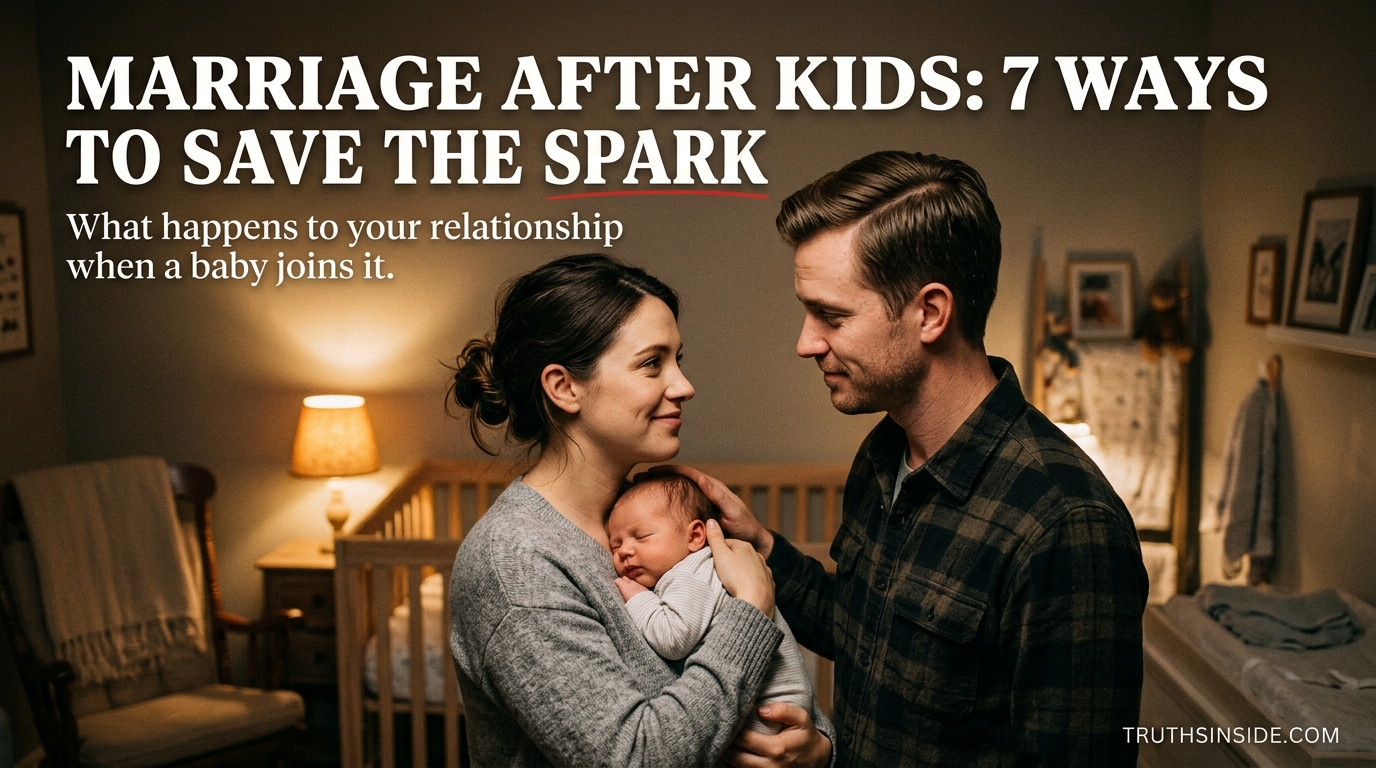
The last time Sarah and Mike had a full conversation that wasn’t about diapers, daycare pickup, or whose turn it was to do the 2 a.m. feeding, they couldn’t remember when. They loved their daughter fiercely. But somewhere between the sleepless nights and the shrinking free time, they realized their marriage after kids had quietly become something neither of them fully recognized anymore.
Research from the Gottman Institute has found that a significant majority of couples experience a measurable decline in relationship satisfaction within the first three years after having a child — not because love disappears, but because the structure of daily life shifts faster than most couples are prepared for. Marriage after kids isn’t automatically weaker. But without intentional effort, the demands of parenting can quietly crowd out the habits that once kept a relationship close.
This article explains why marriage after kids changes so dramatically, the warning signs that connection is slipping, and research-backed ways couples can protect their relationship without sacrificing their role as parents.
WHAT HAPPENS TO MARRIAGE AFTER KIDS?
Marriage after kids typically shifts from a partnership built around each other to one built around a shared project — the child. This shift isn’t inherently bad, but it does require couples to consciously protect the parts of their relationship that existed before parenthood, or those parts tend to fade by default rather than by choice.
Time becomes the first casualty. Where couples once had unstructured hours for conversation, intimacy, or simply doing nothing together, new parents often find every hour accounted for by feeding schedules, work, and exhaustion. Without deliberate effort, “we” time can disappear almost entirely, replaced by parallel parenting — two people managing a household side by side rather than truly connecting.
The emotional landscape shifts too. Many couples report feeling more like teammates managing logistics than romantic partners. This isn’t a failure of love; it’s a predictable consequence of a major life transition that most couples aren’t explicitly prepared for. Recognizing this shift as normal — rather than a sign something is broken — is often the first step toward protecting the relationship intentionally.
📃 Related article: Partner Is Thinking About Marriage? 7 Shocking Signs
THE PSYCHOLOGY BEHIND MARRIAGE AFTER KIDS
Why Satisfaction Often Drops After a Baby Arrives
Psychologists studying the transition to parenthood point to a combination of sleep deprivation, identity shift, and unequal division of labor as the primary drivers behind declining satisfaction in marriage after kids. Sleep deprivation alone significantly impairs emotional regulation, making both partners more reactive and less patient during a period when patience matters most.
Identity shift compounds the issue. Both partners are adjusting to a new sense of self as a parent, which can temporarily overshadow their identity as a romantic partner. Research on new parenthood suggests that couples who explicitly acknowledge and talk through this identity shift together tend to adapt with less relational strain than couples who avoid discussing it directly.
The Resentment Cycle
One of the most common patterns in marriage after kids is what researchers call the resentment cycle — one partner feels their contributions go unnoticed, while the other feels their own exhaustion is invisible. Left unaddressed, this cycle breeds quiet resentment that surfaces in small arguments about chores, schedules, or “keeping score,” even though the real issue is usually feeling unseen.
“The couples who struggle most after having kids aren’t the ones who stopped loving each other. They’re the ones who stopped checking in.”
SIGNS YOUR MARRIAGE AFTER KIDS NEEDS ATTENTION
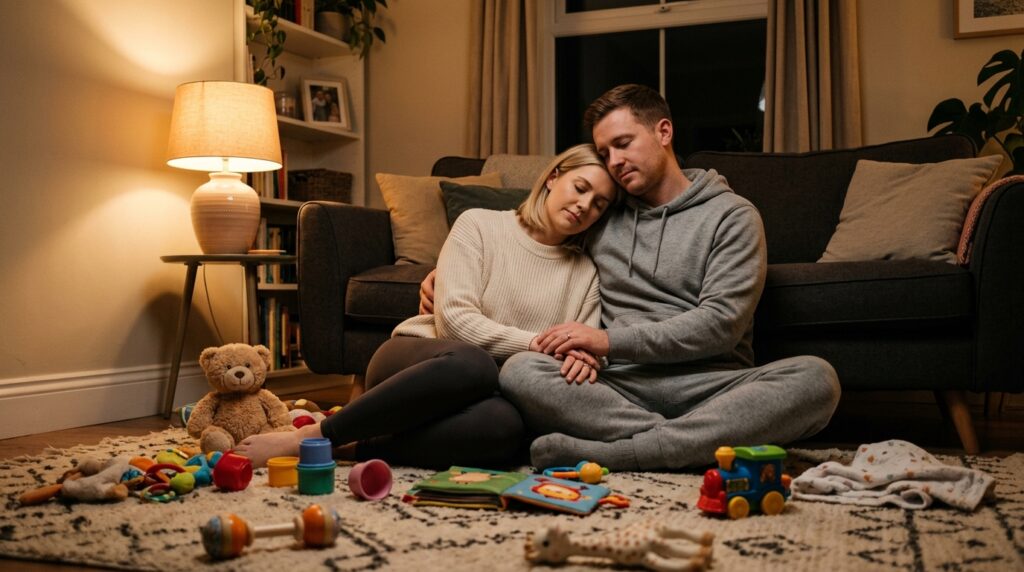
Not every couple notices the shift right away. Below are common signs that marriage after kids has started drifting without either partner intending it.
1. Conversations Rarely Go Beyond Logistics
If most conversations center on schedules, childcare, and errands with little emotional check-in, connection has likely taken a back seat to logistics.
2. Physical Affection Has Quietly Disappeared
A steady decline in casual touch — hugs, hand-holding, small physical gestures — often signals that intimacy has been deprioritized amid the demands of parenting.
3. Resentment Over Division of Labor
Frequent, unresolved tension about who does more — even in small moments — is one of the clearest signs that marriage after kids needs a direct conversation about balance.
4. Feeling Like Co-Parents Instead of Partners
If the relationship feels functional but emotionally flat, this “co-parent” dynamic often means the romantic partnership has been placed on hold longer than intended.
5. No Time Carved Out for Just the Two of You
If it’s been months since the couple spent uninterrupted time together without the baby present, reconnection has likely slipped down the priority list.
HOW MARRIAGE AFTER KIDS AFFECTS LONG-TERM CONNECTION
Left unaddressed, the strain on marriage after kids doesn’t usually resolve on its own — it tends to compound. Couples who don’t intentionally rebuild connection during the early parenting years often find that the patterns formed then — parallel parenting, unspoken resentment, minimal physical affection — become the relationship’s default long after the child-rearing demands ease.
This matters beyond the couple’s own satisfaction. Research on family systems shows that children are highly attuned to the emotional climate between their parents, even when conflict isn’t overt. A relationship that quietly drifts apart during marriage after kids can shape a child’s own understanding of what partnership looks like, for better or worse.
The encouraging finding across this research is that the transition to parenthood, while difficult, is also a well-studied and highly navigable challenge. Couples who proactively address the shift — rather than assuming things will naturally realign once the child is older — consistently report stronger long-term relationship satisfaction than those who wait for things to fix themselves.
HOW TO STRENGTHEN YOUR MARRIAGE AFTER KIDS
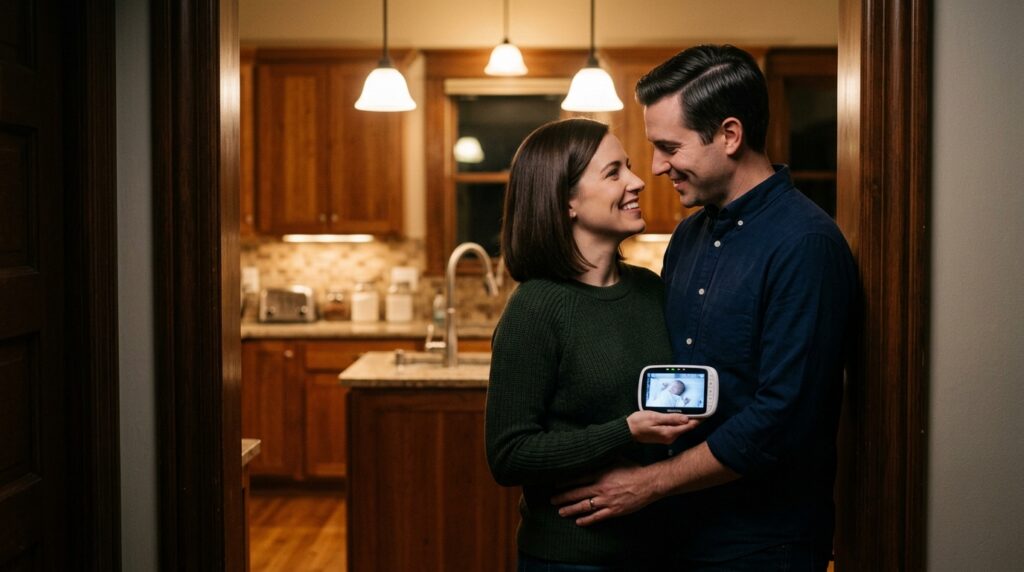
Protecting a relationship through the demands of parenting takes intention, not perfection. Below are research-supported strategies for strengthening connection.
Schedule short, consistent check-ins. Even 10–15 minutes a day without distractions — phones down, child asleep or occupied — helps couples stay emotionally connected amid busy schedules.
Divide labor by conversation, not assumption. Explicitly discussing who handles what, and revisiting it as needs change, prevents the quiet resentment that builds when division of labor is left unspoken.
Protect small moments of physical affection. A hug, a hand on the shoulder, or a few seconds of eye contact throughout the day helps sustain intimacy even when time is scarce.
Prioritize date time, even in small doses. Couples don’t need elaborate date nights — a 30-minute walk or shared coffee without the baby can meaningfully rebuild connection.
Normalize the hard season. Reminding each other that exhaustion and disconnection are common, temporary, and not a reflection of the relationship’s health reduces blame and increases teamwork.
“You don’t need date nights every week to protect your marriage after kids. You need small, consistent moments that remind each other you’re still a team.”

FREQUENTLY ASKED QUESTIONS
Is it normal for marriage after kids to feel harder than before?
Yes. Research consistently shows a decline in relationship satisfaction is common in the first few years after having a child, largely due to sleep deprivation, identity shift, and increased logistical demands.
How long does the strain on marriage after kids typically last?
For many couples, the most intense strain eases as children grow more independent and sleep improves, though intentional effort to reconnect often accelerates recovery significantly.
Can couples therapy help during this transition?
Yes. Many couples benefit from therapy approaches designed specifically for the transition to parenthood, which help partners rebuild communication and address resentment before it becomes entrenched.
What’s the biggest mistake couples make after having kids?
Assuming the relationship will naturally realign once parenting demands ease, rather than actively investing in connection during the harder early years.
How can new parents find time for each other with no childcare help?
Even small, consistent moments — a daily check-in, brief physical affection, or a shared task done together — can meaningfully sustain connection when larger blocks of time aren’t available.
If this helped you see your own relationship more clearly, save this article to revisit it later, share it with a fellow parent who needs the reminder, and follow Truthsinside.com for more research-backed relationship and psychology content.
🎵 Music
Maren Lull is a singer-songwriter who writes from the places most people don’t talk about out loud.
Not the dramatic grief. Not the obvious heartbreak. The quiet kind — the ordinary Tuesday emptiness, the habit of reaching for someone who isn’t there anymore, the particular exhaustion of being strong for so long that the strength itself wears thin.
Her music lives at the intersection of emotional honesty and soft beauty — breathy vocals over gentle piano, slow tempos, lyrics that feel less like songs and more like something you wrote in a private notebook at two in the morning and never showed anyone.
Maren Lull writes for the people who feel everything deeply and say very little about it. For the ones who listen to sad music not because they want to feel worse — but because being understood, even by a song, makes the feeling easier to carry.
📱 Follow Maren Lull:
→ Spotify
→ Apple Music
→ Youtube
→ Audiomack