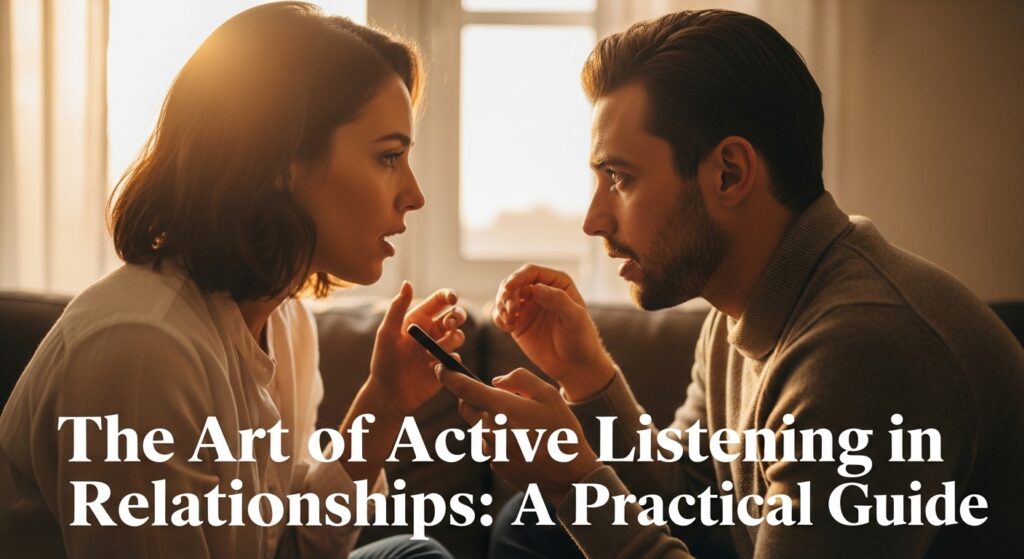
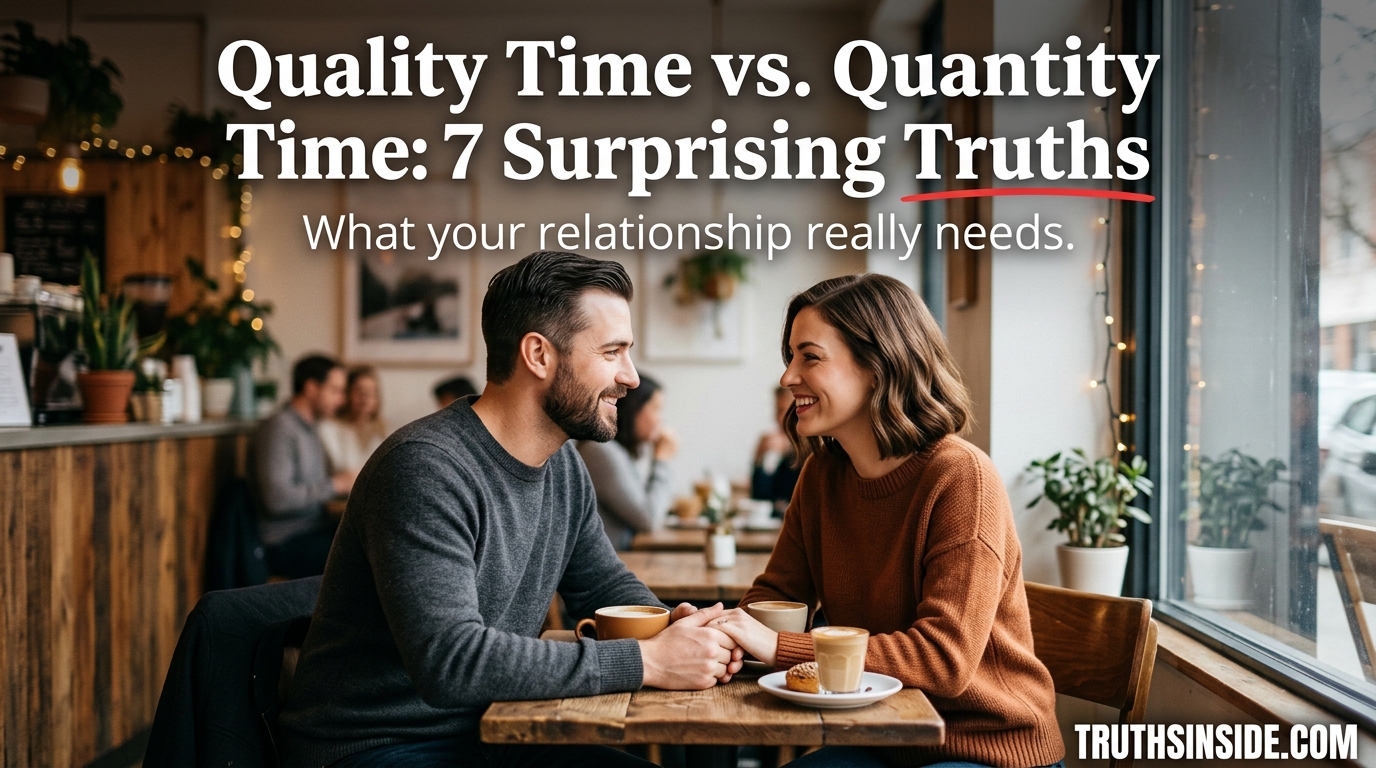
If you’ve ever sat across from your partner, phone in hand, both of you technically “together” but a thousand miles apart in your heads, you already understand the real debate behind Quality vs. Quantity Time. It’s not really about the clock. It’s about whether the hours you spend together actually make you feel closer, or just make you feel like two people sharing a couch.
Researchers at the Gottman Institute have found that couples who thrive don’t necessarily spend more hours together than couples who struggle — they spend those hours differently. In fact, studies on relationship satisfaction suggest that emotional attunement during shared moments predicts long-term happiness far more strongly than raw hours logged side by side. That single finding reshapes the entire Quality vs. Quantity Time conversation.
This article breaks down what the science actually says, the red flags that show you’re stuck in quantity mode without realizing it, and practical ways to shift toward the kind of togetherness that actually nourishes a relationship. Whether you’re newly dating or twenty years into a marriage, understanding Quality vs. Quantity Time could change how you show up for the person you love.
What Is Quality Time vs. Quantity Time, Really?
At its core, the Quality vs. Quantity Time debate comes down to presence versus proximity. Quantity time is simply being in the same physical space — cooking dinner while scrolling Instagram, watching TV in silence, or riding in the same car without a real conversation. It counts as “together,” but it rarely leaves either partner feeling seen. Quality time, on the other hand, is defined by engagement: eye contact, active listening, shared vulnerability, and moments where both people are emotionally, not just physically, present.
Many couples assume that logging more hours automatically deepens a bond, but psychologists who study attachment and connection argue the opposite can happen. When partners spend hours together without emotional engagement, they can actually grow more distant, mistaking habit for intimacy. This is where the Quality vs. Quantity Time distinction becomes critical — because a relationship can look busy and full on the outside while feeling hollow on the inside. Recognizing the difference is the first step toward building something more sustainable.
📃 Related article: Psychological Safety: 5 Powerful Keys to Vulnerability
The Psychology Behind Quality Time vs. Quantity Time
Human connection is built on what psychologists call “bids for attention” — small moments where one partner reaches out, verbally or nonverbally, hoping to be noticed. Dr. John Gottman’s research found that couples who stayed together long-term turned toward these bids roughly 86 percent of the time, while couples who eventually separated turned toward them only 33 percent of the time. This is the hidden mechanism behind Qualityvs. Quantity Time: it’s not the number of bids, it’s how consistently they’re answered.
Attachment theory adds another layer. Securely attached partners tend to seek quality-driven connection because it reinforces safety and trust, while anxiously attached partners may crave quantity time as reassurance, even when it doesn’t resolve their underlying insecurity. Meanwhile avoidant partners may retreat from both, associating closeness with pressure. Understanding where you and your partner land on this spectrum can completely reframe how you approach Quality vs. Quantity Time in your own relationship, because what feels like “enough” time is deeply personal.
Neuroscience also plays a role. Oxytocin, often called the bonding hormone, is released most reliably during moments of genuine emotional exchange — deep conversation, physical affection, shared laughter — not simply during shared proximity. This is one reason why couples can spend an entire weekend together and still feel disconnected afterward. The Quality vs. Quantity Time gap isn’t a character flaw; it’s often biology working exactly as designed, rewarding depth over duration.
“Presence is not measured in minutes. It’s measured in moments where both people feel truly met.”
Signs You’re Choosing Quantity Time Over Quality Time
One of the clearest red flags in the Quality vs. Quantity Time struggle is parallel living — you’re both home, both awake, both “available,” yet each person is absorbed in a separate screen or task. If your evenings consistently look like this, you may be logging quantity without quality, and over time that pattern can quietly erode intimacy without either partner noticing until resentment surfaces.
Another sign is conversational shallowness. If most of your exchanges revolve around logistics — groceries, schedules, bills — rather than feelings, dreams, or daily highs and lows, you’re likely stuck on the quantity side of Quality vs. Quantity Time. Logistics matter, but they don’t build emotional closeness on their own. Couples who never move past the “administrative” layer of conversation often report feeling more like roommates than romantic partners.
A third warning sign is distraction during supposed together-time — checking your phone mid-conversation, multitasking during a date night, or mentally rehearsing tomorrow’s to-do list while your partner talks. These micro-moments of disengagement send a powerful, if unintentional, message: you have my body, but not my attention. Left unaddressed, this pattern can leave both partners feeling lonely even while sharing a bed every night.

How to Prioritize Quality Time vs. Quantity Time in a Busy Relationship
The good news is that shifting the balance in Quality vs. Quantity Time doesn’t require more free hours — it requires more intention within the hours you already have. Start by protecting a small, consistent window of undistracted time, even fifteen to twenty minutes daily, where phones are away and the only agenda is genuine conversation. Therapists often call this a “connection ritual,” and its power lies in consistency rather than length.
Active listening is another core tool. This means reflecting back what your partner says, asking follow-up questions, and resisting the urge to problem-solve before they’ve finished expressing themselves. Couples who practice this report feeling more understood, which directly strengthens the emotional side of Quality vs. Quantity Time, regardless of how packed their schedules are. Even five focused minutes of listening can outweigh an hour of distracted coexistence.
Shared novelty also matters. Psychologists have found that trying new activities together — a new recipe, a new trail, a new hobby — triggers dopamine responses similar to early-relationship excitement, which reinforces bonding. Rotating in small moments of novelty keeps the “quality” side of Quality vs. Quantity Time alive, preventing routines from calcifying into disconnected habit. It doesn’t need to be elaborate; the goal is presence, not production value.
“You don’t need more hours together. You need the hours you have to actually count.”

Quality Time vs. Quantity Time: Finding the Right Balance
It’s worth saying clearly: this isn’t an argument for abandoning quantity time altogether. Long stretches together — road trips, lazy Sundays, quiet coexistence while reading — still matter, especially for couples who feel safest through steady physical presence. The goal of understanding Quality vs. Quantity Time isn’t to choose one and discard the other, but to recognize that quantity without quality can quietly hollow out a relationship over time.
The healthiest couples tend to blend both intentionally. They allow themselves plenty of low-key shared time, while also carving out pockets of focused, distraction-free connection where they check in emotionally. This blended approach honors the reality that Quality vs. Quantity Time isn’t a competition — it’s a balance that shifts depending on life stage, stress levels, and each partner’s needs. A newborn-parent household will look different from a decade-long empty-nest marriage, and that’s expected.

Frequently Asked Questions
1. What’s the real difference in Quality Time vs. Quantity Time?
Quantity time refers to simply being physically present together, while quality time refers to being emotionally engaged and attentive during that time. The Quality vs. Quantity Time distinction matters because presence without engagement rarely builds lasting closeness.
2. Can too much quantity time hurt a relationship?
Yes. Spending long hours together without genuine engagement can create a false sense of closeness, masking underlying disconnection. Many couples caught in the Qualityvs. Quantity Time trap don’t realize they’re drifting apart until resentment builds.
3. How much quality time does a relationship actually need?
There’s no universal number, but therapists often suggest at least fifteen to twenty minutes of undistracted, meaningful connection daily. Consistency tends to matter more than duration in the Qualityvs. Quantity Time equation.
4. Is quantity time ever more important than quality time?
For some attachment styles, especially anxious attachment, physical presence provides essential reassurance. Still, most relationship research suggests that emotional engagement — the “quality” side of Quality vs. Quantity Time — has a stronger long-term impact on satisfaction.
5. How do I bring up this issue with my partner without starting a fight?
Frame it around connection rather than blame — for example, saying you’d love more focused time together rather than accusing them of being distracted. Approaching Quality vs. Quantity Time as a shared goal, not a criticism, makes the conversation far more productive.
If this helped you see your relationship a little differently, save this article to revisit later, share it with someone who needs the reminder, and follow Truthsinside.com for more honest, research-backed relationship insights.
🎵 Music
Maren Lull is a singer-songwriter who writes from the places most people don’t talk about out loud.
Not the dramatic grief. Not the obvious heartbreak. The quiet kind — the ordinary Tuesday emptiness, the habit of reaching for someone who isn’t there anymore, the particular exhaustion of being strong for so long that the strength itself wears thin.
Her music lives at the intersection of emotional honesty and soft beauty — breathy vocals over gentle piano, slow tempos, lyrics that feel less like songs and more like something you wrote in a private notebook at two in the morning and never showed anyone.
Maren Lull writes for the people who feel everything deeply and say very little about it. For the ones who listen to sad music not because they want to feel worse — but because being understood, even by a song, makes the feeling easier to carry.
📱 Follow Maren Lull:
→ Spotify
→ Apple Music
→ Youtube
→ Audiomack