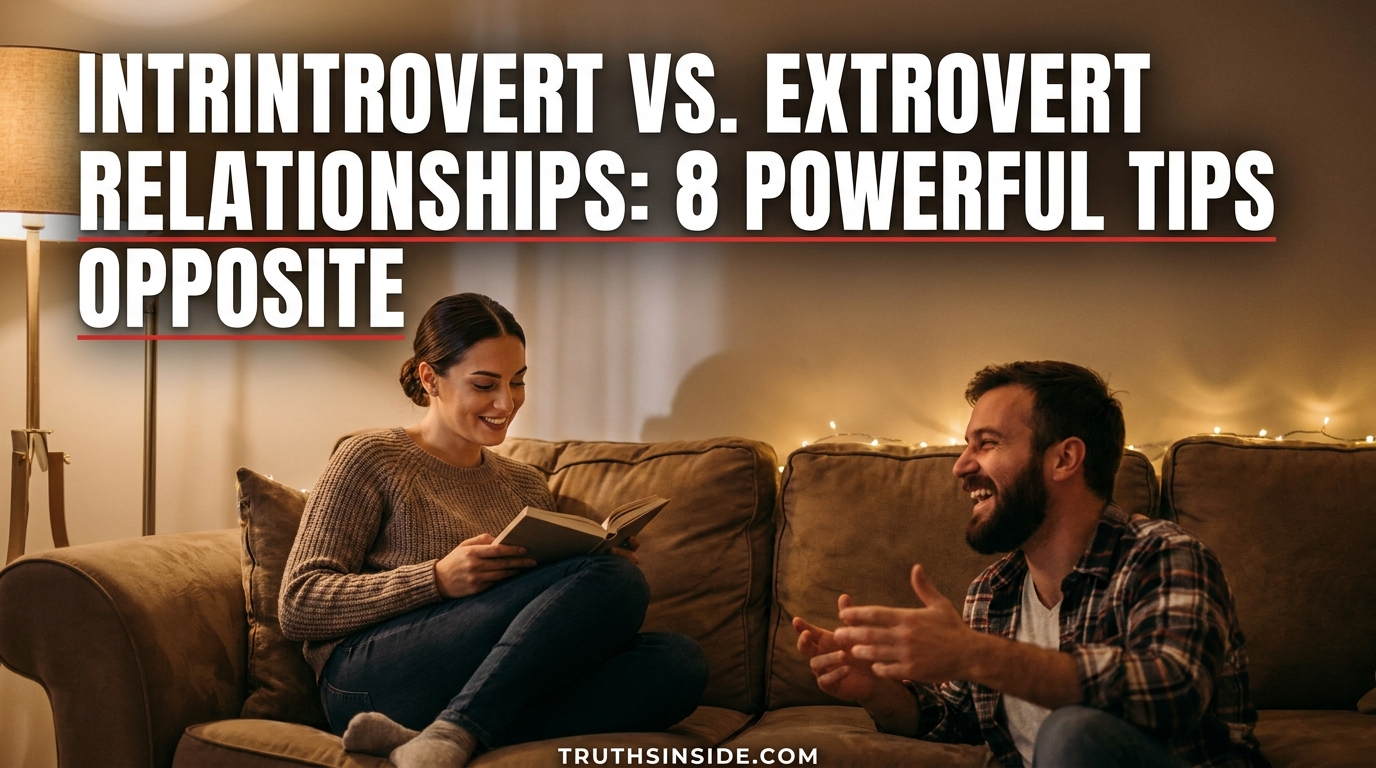
There is a particular kind of love that feels like coming home and going on an adventure at the same time — and it often exists between an introvert and an extrovert. If you’ve ever been in a relationship where one of you craves quiet evenings and the other lights up in a room full of people, you already know how beautiful and how challenging that dynamic can be. Research from the American Psychological Association confirms that introversion and extroversion are among the most stable personality traits a person can have — meaning they don’t disappear because you fall in love.
Studies suggest that roughly 30 to 50 percent of the population identifies as introverted, yet many of them end up in relationships with extroverts. This isn’t coincidence — it’s psychology. Opposite personality types are often drawn to each other precisely because the other person possesses qualities they quietly admire in themselves. The extrovert finds the introvert’s depth and calm magnetic. The introvert finds the extrovert’s energy and confidence irresistible.
But admiration at the beginning of a relationship and compatibility in the middle of one are two very different things. Without understanding, communication, and intentional effort, introvert vs. extrovert relationships can quietly collapse under the weight of mismatched needs. This article breaks down exactly how these two energy types work, why they attract each other, and — most importantly — the powerful strategies that make them last.
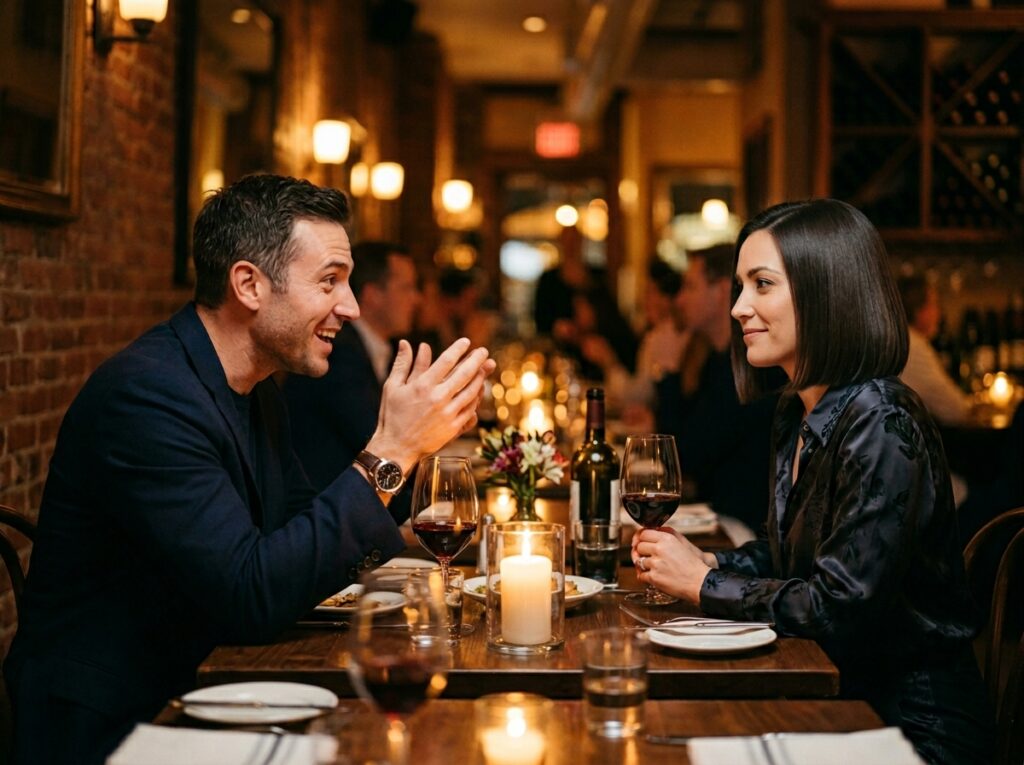
What Science Actually Says About Introvert vs. Extrovert Relationships
Before we talk about how to make these relationships work, it’s worth understanding what introversion and extroversion actually mean — because most people get it wrong.
Introversion is not shyness. Extroversion is not arrogance. These are not social disorders or character flaws. They are neurological differences in how people process stimulation and recharge their energy. Psychologist Hans Eysenck, one of the early researchers of personality theory, proposed that introverts have a naturally higher baseline level of cortical arousal — meaning their brains are more easily stimulated by external input. This is why a crowded party that energizes an extrovert can genuinely exhaust an introvert. It’s not a preference. It’s biology.
Extroverts, on the other hand, have a lower baseline arousal level, which means they actively seek external stimulation — social interaction, conversation, activity, noise — to feel engaged and alive. Neither type is better. They are simply different operating systems running in the same world, often falling in love with each other.
Carl Jung, who first coined these terms in mainstream psychology, believed that most people are not purely one or the other but exist somewhere on a spectrum — with ambiversion in the middle. Understanding where both you and your partner fall on that spectrum is the first and most important step in making an introvert-extrovert relationship genuinely thrive.
Why Introverts and Extroverts Are So Powerfully Attracted to Each Other
The initial magnetism between an introvert and an extrovert is almost universally reported as intense and surprising. There’s a reason for that. Psychologists refer to this pull as “complementary attraction” — the phenomenon where we are drawn to people who have traits that we either lack or have suppressed in ourselves.
The introvert sees in the extrovert a freedom they quietly long for. A boldness in social situations, an ease with people, an ability to walk into a room and immediately belong to it. It’s thrilling to witness up close. The extrovert sees in the introvert something they rarely encounter — depth, thoughtfulness, a stillness that feels like an anchor in an overstimulating world. Both are genuinely captivated. Both are also, in the beginning, unaware of how differently they experience the world.
This is why the early stages of an introvert-extrovert relationship often feel electric. The differences feel exciting rather than exhausting. It’s only when the relationship deepens — when real life replaces the honeymoon period — that the friction begins to surface. And that friction, if left unaddressed, becomes the source of the most common arguments these couples face.
“The introvert and the extrovert don’t need to become each other. They need to understand each other — and that understanding, once built, is one of the strongest foundations love can have.”
The Most Common Conflicts in Introvert vs. Extrovert Relationships
Understanding the patterns of conflict in these relationships is half the battle. Here are the arguments that introvert-extrovert couples have most frequently — and what’s really happening beneath the surface.
The Social Plans Disagreement
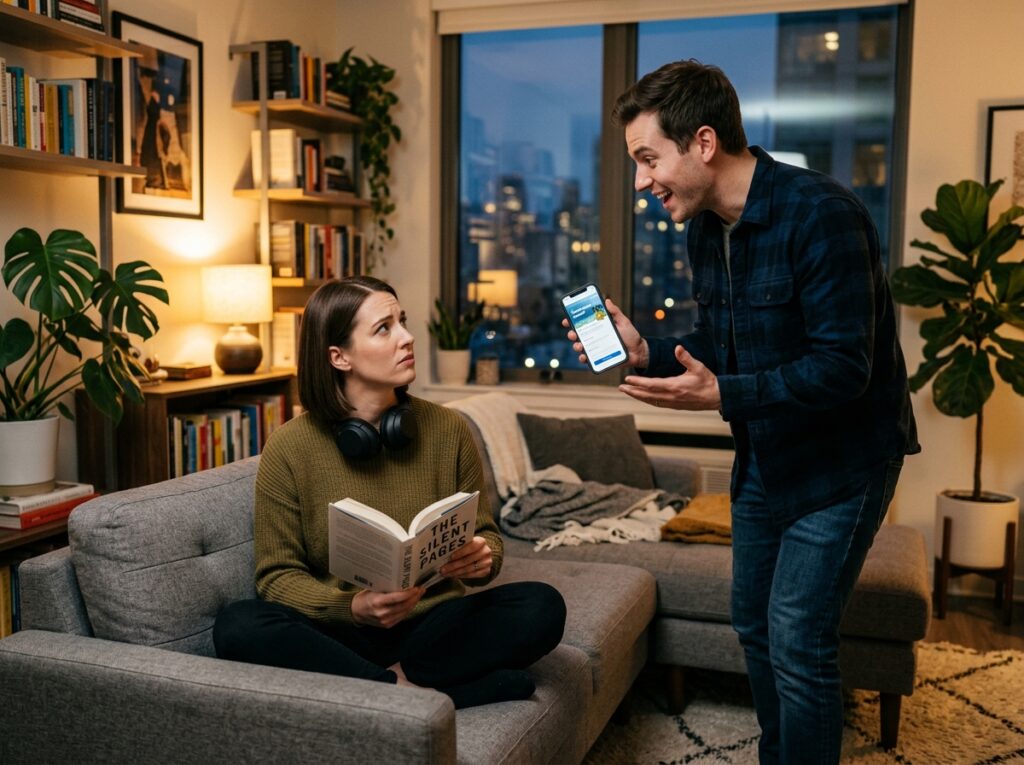
This is the most universal conflict. The extrovert wants to go out — to a party, a gathering, a social event with friends. The introvert would genuinely rather stay home. Neither person is being difficult. Neither person is trying to control the other. But without communication, the extrovert hears “I don’t care about your needs” and the introvert hears “You don’t respect my limits.”
The real issue is never the party. It’s the feeling of being misunderstood about something as fundamental as how you experience the world.
The Silence Misinterpretation
Introverts often go quiet when they’re processing something deeply — stress, a difficult day, an emotional experience. This silence is not withdrawal. It is not punishment. It is how they think. But extroverts, who process externally through conversation, can interpret that silence as rejection, cold behavior, or emotional unavailability.
This single misunderstanding — silence as distance — is responsible for an enormous number of unnecessary arguments in introvert-extrovert relationships.
The Overstimulation Threshold
After a long day of social interaction, an introvert may come home feeling genuinely depleted and need time alone to recover. The extrovert, energized by the same day, wants to connect, talk, and engage. Both people have legitimate needs. But they are happening at the exact same moment — and when neither person understands why the other is responding the way they are, resentment begins to build quietly.
8 Powerful Strategies That Make Introvert-Extrovert Relationships Work
1. Learn Each Other’s Energy Language First
Before any strategy works, both partners need to genuinely understand what introversion and extroversion mean in practice — for their specific partner. Not the stereotype. Not the assumption. Ask real questions. How do you feel after a big social event? What does alone time mean to you? When you go quiet, what’s actually happening inside you?
This level of curiosity is the foundation everything else is built on. You cannot build a bridge you don’t understand the width of.
2. Create the “Recharge Agreement”
One of the most practical tools for introvert-extrovert couples is what relationship therapists call the Recharge Agreement — a mutual understanding about when and how each partner needs to recover their energy. For the introvert, this might mean 30 minutes of quiet time after work before engaging in conversation. For the extrovert, it might mean one social outing per week that the introvert commits to attending without negotiation.
When these needs are named and agreed upon rather than silently expected, they stop being sources of conflict and become acts of care.
3. Stop Trying to Change Each Other
This cannot be said firmly enough. An introvert who feels constantly pressured to be more social will eventually feel unseen and suffocated. An extrovert who feels constantly blamed for wanting connection will eventually feel rejected and lonely. Neither person should have to become someone else to make the relationship work.
The goal is not to meet in the middle by each person abandoning who they are. The goal is to build a relationship wide enough to hold both of you — fully.
4. Communicate During Neutral Moments
The worst time to discuss energy needs is during a conflict. If the introvert is already overwhelmed and the extrovert is already frustrated, that conversation will almost never go well. Instead, make it a practice to talk about these things during calm, connected moments — when neither person is defensive and both people are genuinely curious.
Something as simple as: “I want to understand you better — can you help me know what you need when you’re feeling overstimulated?” changes the entire tone of the relationship.
5. Find the Overlapping Spaces
Every introvert-extrovert couple has activities they both enjoy — experiences that don’t demand one person sacrifice their comfort entirely. Maybe it’s hiking (social but not loud), cooking dinner together (connected but calm), or watching a documentary that sparks a deep conversation (stimulating for the extrovert, meaningful for the introvert).
Finding and protecting these overlapping spaces is crucial. They are the neutral ground where both people feel equally seen and valued.
6. Give Each Other Guilt-Free Solo Time
One of the healthiest practices an introvert-extrovert couple can adopt is normalizing solo time without guilt, judgment, or insecurity. The introvert should be able to spend a Saturday morning alone without feeling like they’re abandoning their partner. The extrovert should be able to go out with friends without feeling like they’re leaving their partner behind.
Independence within a relationship is not a threat to intimacy. It is the oxygen that keeps intimacy from becoming suffocation.
7. Appreciate What the Other Brings
The extrovert teaches the introvert that the world outside their comfort zone has genuine rewards — new people, new experiences, unexpected joy. The introvert teaches the extrovert that stillness is not emptiness, that depth is not boring, and that the richest conversations happen between two people who are actually paying attention.
When both partners stop viewing their differences as problems to solve and start viewing them as gifts to receive, the entire dynamic of the relationship shifts.
8. Seek Professional Support When You’re Stuck
There is no shame in seeing a couples therapist when the same conflicts keep cycling through your relationship without resolution. A therapist who understands personality psychology can help both partners see each other more clearly, communicate more effectively, and build systems that work for their specific dynamic.
Therapy is not a sign that a relationship is failing. It is a sign that both people care enough to fight for it intelligently.

The Hidden Strengths of Introvert-Extrovert Couples
It would be easy to read this far and conclude that introvert-extrovert relationships are simply harder than same-personality pairings. But that would be missing the most important part of the story.
These relationships, when they work, are extraordinary. They are balanced in ways that same-personality couples often struggle to achieve. The extrovert keeps the relationship connected to the outside world — to social experiences, to adventure, to the kind of spontaneity that keeps love from becoming stagnant. The introvert keeps the relationship grounded in depth — in meaningful conversation, emotional attunement, and the kind of quiet intimacy that makes a partnership feel like a safe harbor.
Research published in the Journal of Research in Personality found that couples with complementary personality traits reported higher levels of long-term relationship satisfaction than many same-personality pairings — specifically because the complementary dynamic creates a natural balance that prevents stagnation.
In other words, the very thing that makes these relationships challenging in the short term is what makes them resilient in the long term. The friction is not evidence that you’re wrong for each other. It is evidence that you’re genuinely different from each other — and that difference, navigated with love and understanding, becomes your greatest strength.
“Two people don’t have to be the same to be right for each other. They just have to be willing to understand each other — completely, patiently, and without condition.”
Real Talk: What Introvert-Extrovert Couples Get Wrong Most Often
The single biggest mistake these couples make is assuming that their partner’s energy needs are a personal choice directed at them. The introvert who says “I need some quiet time tonight” is not rejecting their partner. The extrovert who says “Can we please go out this weekend?” is not being selfish or inconsiderate.
Both are simply being honest about what their nervous system requires to function — and both deserve to have that need honored without guilt, without punishment, and without a fight.
The second biggest mistake is keeping score. “You got your quiet night last weekend, so this weekend is mine.” Love doesn’t work on a ledger. When you start tracking whose needs have been met and whose haven’t, you’ve stopped being partners and started being opponents. Needs are not debts. They are simply needs.
The third mistake is silence — not the introvert’s comfortable silence, but the dangerous silence of two people who have stopped talking honestly about what they need because they’re afraid of the argument that comes after. That silence is where resentment is born. And resentment, left unaddressed, is the slow erosion of even the most genuinely loving relationships.
The Bottom Line: Opposite Energy Can Be Your Greatest Love Story
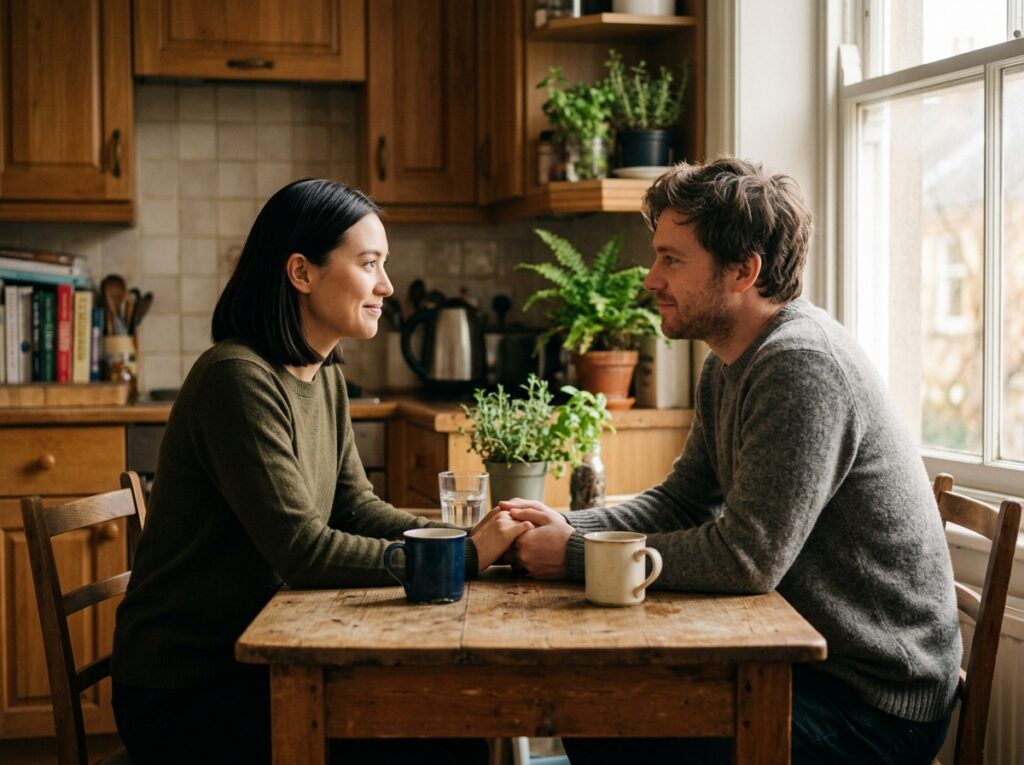
Introvert vs. extrovert relationships are not doomed. They are not inherently harder than any other kind of relationship. They are simply different — and different, in love, is not a disadvantage. It is an invitation to understand someone more completely than you understand yourself.
The introvert and the extrovert who figure each other out — who stop trying to change each other and start trying to understand each other — build something that most people spend their entire lives searching for. A relationship that is both stimulating and safe. Both adventurous and grounded. Both alive with energy and deep with meaning.
That is not a compromise. That is a masterpiece.
And it starts with one simple decision: to see your partner’s differences not as problems to be fixed, but as truths to be loved.
CTA
💾 Save this article so you can come back to it the next time you and your partner hit a wall with your different energy types.
📤 Share it with someone in an introvert-extrovert relationship who needs to read this today — it might be the conversation starter that changes everything.
👣 Follow Truthsinside.com for more honest, psychology-backed insights into relationships, personality, and the human mind.
📃 Related article: Signs He Likes You But Is Scared: 18 Behaviors Men Show When Afraid to Commit
FAQ
Q1: Can an introvert and extrovert truly be compatible long-term?
Absolutely. Compatibility is not about being identical — it’s about being willing to understand and honor each other’s differences. Many introvert-extrovert couples report deeply fulfilling long-term relationships precisely because their differences create a natural balance that same-personality couples sometimes lack.
Q2: Is it normal for an introvert to feel exhausted by their extrovert partner?
Yes, and it’s important not to interpret that exhaustion as a sign of incompatibility. Introverts are neurologically more sensitive to stimulation, which means extended social interaction — even with someone they love — can genuinely drain them. This is biological, not personal.
Q3: How can an extrovert show love to an introvert in a way that actually lands?
Extroverts can show love to introverts by respecting their alone time without making them feel guilty for needing it, engaging in one-on-one deep conversations rather than always seeking group activities, and creating calm, low-pressure environments where the introvert feels safe to open up fully.
Q4: What if my introvert partner never wants to socialize — is that a red flag?
A complete and consistent refusal to engage in any social activity — even occasionally and in small doses — could indicate social anxiety or avoidant tendencies that go beyond typical introversion. In that case, gentle encouragement and professional support may be more helpful than a relationship strategy alone.
Q5: Can an introvert become more extroverted for the sake of a relationship?
Research consistently shows that core personality traits like introversion and extroversion are largely stable throughout life. While introverts can develop social skills and learn to tolerate more stimulation, asking them to fundamentally change who they are is neither realistic nor fair. The goal should always be mutual adaptation — not one-sided transformation.
🎵 Music
Maren Lull is a singer-songwriter who writes from the places most people don’t talk about out loud.
Not the dramatic grief. Not the obvious heartbreak. The quiet kind — the ordinary Tuesday emptiness, the habit of reaching for someone who isn’t there anymore, the particular exhaustion of being strong for so long that the strength itself wears thin.
Her music lives at the intersection of emotional honesty and soft beauty — breathy vocals over gentle piano, slow tempos, lyrics that feel less like songs and more like something you wrote in a private notebook at two in the morning and never showed anyone.
Maren Lull writes for the people who feel everything deeply and say very little about it. For the ones who listen to sad music not because they want to feel worse — but because being understood, even by a song, makes the feeling easier to carry.
📱 Follow Maren Lull:
→ Spotify
→ Apple Music
→ Youtube
→ Audiomack