Signs of genuine love are not always as obvious as they seem — especially when you are standing in the middle of feelings that are overwhelming, consuming, and feel more real than anything you have ever experienced before. Here is the truth that nobody tells you in the early stages of a relationship: infatuation feels exactly like love. It feels urgent, beautiful, all-consuming, and absolutely certain.
According to Helen Fisher, a biological anthropologist at Rutgers University who has spent decades studying romantic love using brain imaging, infatuation activates the brain’s dopamine reward system in ways that are neurologically indistinguishable from addiction. Your brain on infatuation is, quite literally, a brain in the grip of a powerful chemical high — and like all highs, it will eventually come down.
That does not mean infatuation is not real, or that it cannot grow into something deeper. It absolutely can. But it also means that the feelings alone — no matter how intense — are not reliable evidence that what you are experiencing is genuine, lasting love. Mistaking infatuation for love has led countless people into relationships they were not truly compatible with, into commitments made too soon, and into devastating heartbreak when the high finally faded and the reality of who they were with became clear.
What follows is not about diminishing the beauty of early romantic feeling. It is about giving you the tools to see clearly — so that whether what you have is infatuation, genuine love, or something beautifully evolving from one into the other, you can make choices grounded in truth rather than chemistry alone.
Understanding the Science: What Is Actually Happening in Your Brain
Before exploring the signs, it is worth understanding what science tells us about the fundamental difference between infatuation and genuine love at the neurological level — because understanding the mechanism helps you interpret the experience with far greater clarity.
Infatuation is primarily driven by dopamine — the brain’s reward chemical — along with norepinephrine, which creates the racing heart, heightened alertness, and euphoric energy of early romantic attraction. It is also characterized by suppressed activity in the prefrontal cortex, the brain region responsible for rational thinking and critical judgment. This is not a poetic metaphor. Brain scans of people in the early stages of romantic attraction literally show reduced activity in the areas of the brain we use to evaluate risk, assess character, and think critically. Love, in its early stages, actually impairs judgment — which is precisely why infatuation can feel so certain while simultaneously being so unreliable as a guide.
Genuine love, by contrast, activates different neural systems over time. Research by Dr. Fisher and her colleagues found that long-term couples who reported being deeply in love showed significant activity not just in dopamine pathways but in areas associated with calm attachment, emotional security, and deep bonding — including the oxytocin and vasopressin systems, sometimes called the bonding hormones. In other words, genuine love over time is neurologically calmer, more stable, and more deeply rooted than the electric frenzy of infatuation.
This does not mean love becomes less beautiful as it deepens. It means it becomes something different — something arguably more profound. The question this article helps you answer is: which one are you in right now, and how can you tell?

9 Powerful Signs of Genuine Love vs. Infatuation
Sign 1 — Genuine Love Sees Clearly. Infatuation Sees a Fantasy.
One of the most telling signs of genuine love versus infatuation is what you are actually in love with — the real person, or the version of them you have constructed in your mind.
Infatuation is almost always directed at an idealized image. In the early stages of intense attraction, the brain actively filters out negative information and amplifies positive qualities. You do not see your partner’s flaws — or when you do glimpse them, you explain them away, minimize them, or find them endearing in ways that will not survive the longer view. You are in love with a projection — a beautifully lit highlight reel — and the relationship feels perfect partly because you have unconsciously edited out everything that does not fit the image.
Genuine love, by contrast, sees the whole person. It has sat with the imperfections long enough to actually know them — the anxiety that makes your partner difficult to reach during stress, the stubbornness that shows up in arguments, the past wounds that sometimes make them reactive or withdrawn. And it chooses them anyway. Not despite knowing these things — but with full awareness of them.
The clearest question you can ask yourself is this: Do I love who they actually are, or who I believe they could be — or who they seem to be when everything is going well? The answer to that question tells you more than almost anything else.
Sign 2 — Genuine Love Is Stable. Infatuation Is a Rollercoaster.
Pay close attention to how the relationship feels across time and across different kinds of moments — not just the beautiful ones.
Infatuation tends to be emotionally volatile. The highs are extraordinary — electric, euphoric, all-consuming. But the lows are correspondingly intense. A single unanswered message can send you into spiraling anxiety. A small disagreement can feel catastrophic. The emotional landscape is dramatic by nature, because infatuation is driven by a neurochemical system that thrives on uncertainty and unpredictability. The anxiety of not knowing, the relief of reconnection, the craving of more — this cycle is the engine of infatuation, and it can feel so alive and so urgent that it is easy to mistake intensity for depth.
Genuine love has a fundamentally different emotional texture. It is not without passion — but its baseline is steadiness. There is a quality of emotional safety that is hard to describe unless you have felt it: the sense that you do not have to earn your place, that your partner’s feelings for you are not contingent on whether you said exactly the right thing, that the relationship does not feel like it is always one wrong move from falling apart.
If your relationship feels like a constant emotional rollercoaster — one you cannot imagine living without because the highs are so good — ask yourself honestly whether you are addicted to the chemistry or genuinely safe in the love.
Sign 3 — Genuine Love Grows Through Conflict. Infatuation Crumbles.
Every relationship will encounter conflict. What happens to your connection when it does is one of the most revealing signs of whether what you have is genuine love or infatuation.
Infatuation is deeply conflict-averse — not because the people involved are mature and peaceful, but because conflict is a threat to the idealized image. When your idealized partner says something hurtful, or reveals a value you cannot agree with, or handles a disagreement in a way that is less than beautiful — the disillusionment can be swift and total. The pedestal cracks. The fantasy becomes harder to maintain. And in infatuation, the loss of the fantasy often feels like the loss of the love itself.
Genuine love is built precisely in the moments of conflict — in how two people navigate disagreement, repair after hurt, and find their way back to each other after being temporarily lost. A couple who has genuinely loved each other through hard conversations, through misunderstandings, through seasons where they did not particularly like each other — that couple knows something about each other that no amount of perfect dates can teach.
If you have never seen your partner when things are hard — never navigated a real disagreement, never experienced the relationship under genuine pressure — be honest with yourself about how much of what you know is real and how much is still a projection of the best-case version of them.
“Infatuation falls in love with the highlight reel. Genuine love falls in love with the whole story — including the chapters that were hard to read.”
Sign 4 — Genuine Love Wants Their Happiness. Infatuation Wants to Feel Good.
This distinction is subtle but profound, and it gets to the heart of the motivational difference between infatuation and love.
Infatuation is, at its core, self-focused — not in a selfish or malicious way, but in an honest neurochemical way. What infatuation craves is the feeling of being with that person — the high, the electricity, the validation, the excitement. It is about what they make you feel. When the relationship is going well and those feelings are being delivered consistently, everything feels wonderful. But infatuation is much less interested in what the other person actually needs — particularly if those needs are inconvenient, unglamorous, or in conflict with your own.
Genuine love is genuinely other-focused. It wants the actual wellbeing of the person you love — even when that is uncomfortable, even when it requires sacrifice, even when their happiness temporarily does not align with your own preferences. You want them to thrive in their career even if it means less time with you. You support their healing even when that healing is messy and difficult to witness. You celebrate their growth even when it changes the dynamic between you.
Ask yourself honestly: when I imagine this person’s life going beautifully, am I in every part of it? Or am I genuinely happy for them even in the versions of their happiness that do not include me? The answer matters.
Sign 5 — Genuine Love Feels Safe. Infatuation Feels Urgent.
The emotional quality of how the relationship feels when you are in it is one of the most reliable signals of which kind of feeling you are dealing with.
Infatuation carries a persistent quality of urgency — a need to be near the person, to hear from them, to know where you stand, to secure the connection. The word that most accurately describes the inner experience of infatuation is craving. You think about them constantly. You check your phone compulsively. When they are there you feel complete, and when they are gone you feel their absence acutely. This urgency is one of the reasons infatuation feels so alive — but it is also a signal that the connection has not yet become a secure one.
Genuine love has a fundamentally different inner quality. It is not the absence of longing — you still miss your partner, still look forward to being with them, still feel real joy in their presence. But the emotional quality underneath those feelings is security rather than anxiety. You are not waiting for the other shoe to drop. You are not constantly wondering whether they really love you. There is a settledness — a sense that this person is genuinely yours and you are genuinely theirs, not because you have earned it moment to moment but because it is simply and solidly true.

Sign 6 — Genuine Love Includes Friendship. Infatuation Is Purely Romantic.
One of the questions that most reliably separates genuine love from infatuation is deceptively simple: do you actually like this person?
Not love, not desire, not admire — like. Do you genuinely enjoy who they are as a human being independent of the romantic and physical dimensions of the connection? Do you find them interesting to talk to about ordinary things? Do you laugh together in a natural, unperformed way? Would you want to spend time with them if there were no romance involved — if they were simply a person you knew?
Infatuation is almost entirely organized around the romantic and physical dimensions of the connection. It is intoxicated by the person but frequently not deeply interested in them as a full human being beyond those dimensions. The conversations of infatuation tend to be either intensely romantic or surface-level — because what fuels the connection is the feeling, not the knowing.
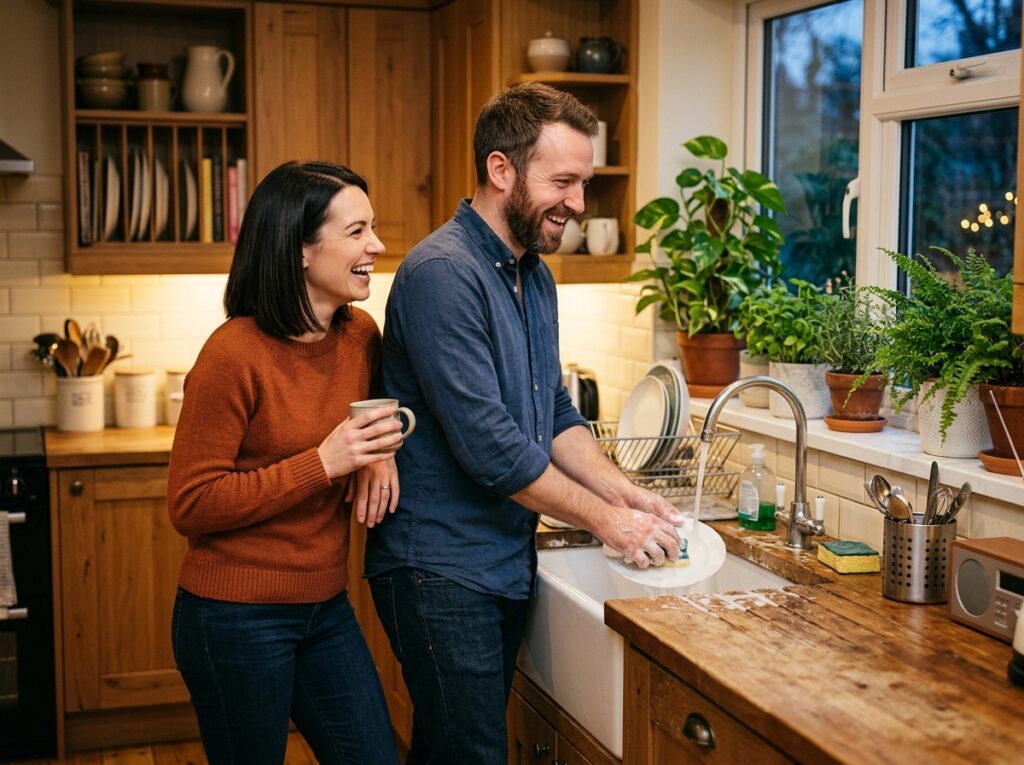
Genuine love is always also a friendship. The two people genuinely know each other — their humor, their quirks, their intellectual interests, the small preferences and habits that make up an actual person rather than a romantic ideal. They choose to spend time together not just because the chemistry demands it but because they genuinely enjoy each other’s company in the ordinary texture of everyday life.
Sign 7 — Genuine Love Is Consistent Over Time. Infatuation Fades or Transforms.
Time is perhaps the single most honest test of whether what you have is infatuation or genuine love — because time does what nothing else can: it removes the neurochemical novelty that fuels infatuation and reveals what is actually underneath.
Research consistently shows that the neurochemical high of infatuation typically lasts between six months and two years before beginning to naturally fade. This is not a failure of love — it is biology. The brain cannot sustain the intense dopamine output of early attraction indefinitely. What happens after that initial period is the real story of the relationship.
For infatuation that was only ever infatuation, the fading of the high often brings disillusionment, restlessness, or the quiet wondering whether the relationship was a mistake. The person who once seemed perfect now seems ordinary, and the feelings that once felt so certain have quietly dissolved.
For genuine love — or for infatuation that was growing into something deeper — the fading of the initial high makes room for something richer and more sustainable. The relationship becomes warmer, more comfortable, more genuinely intimate. The passion does not disappear — it transforms from frenzy into something that feels more like coming home.
If you have been in a relationship long enough for the initial high to have softened — what is underneath it? What remains when the chemistry is not doing all the work? That is your answer.
Sign 8 — Genuine Love Survives Distance and Difficulty. Infatuation Needs Constant Fuel.
Infatuation requires regular doses of proximity, attention, and positive reinforcement to maintain its intensity. It is fueled by the exciting inputs of early romance — the texts, the dates, the first experiences, the ongoing novelty. Remove those inputs — through distance, through a period of stress, through a season where life becomes less romantic and more real — and infatuation tends to thin out or disappear.
Genuine love does not require constant fuel to survive. It can weather distance without dissolving into anxiety. It can survive periods of less-than-perfect connection without immediately questioning whether the relationship is over. It can exist through the unglamorous seasons of life — illness, financial stress, grief, the months where nothing feels particularly romantic — and emerge on the other side still fundamentally intact.
This does not mean genuine love requires no maintenance. All relationships require intentional investment and care. But genuine love has an underlying resilience that does not depend on everything being exciting and perfect to continue existing.
Sign 9 — Genuine Love Chooses Every Day. Infatuation Just Feels.
Perhaps the most important and most mature distinction between genuine love and infatuation is this: genuine love is a choice as much as it is a feeling — and it is a choice that is made consistently, not just in the moments when it is easy.
Infatuation is entirely feeling-driven. It does not require a choice because the chemistry makes it effortless. You cannot imagine being anywhere else. You cannot imagine choosing anyone else. Not because you have decided — but because the feeling has decided for you.
Genuine love includes those feelings — but it also includes days when the feeling is quieter, when life is hard and connection is effortful, when your partner is not at their best and neither are you. And on those days, genuine love shows up anyway. Not because the chemistry demands it, but because a conscious decision has been made — to this person, to this life together, to the ongoing work of loving someone for real.
This is the quality that makes genuine love last. Not the feeling — which will always fluctuate — but the choice. Made again and again, on the beautiful days and on the ordinary ones.
“Infatuation happens to you. Genuine love is something you build — consciously, consistently, and on the days when it would be easier not to.”
Can Infatuation Grow Into Genuine Love?
This is one of the most important questions to address honestly — and the answer is yes, absolutely, but not automatically and not inevitably.
Infatuation is frequently the entry point into what eventually becomes genuine love. The neurochemical intensity of early attraction draws two people together and creates the conditions for a deeper bond to form. But for infatuation to grow into genuine love, several things need to happen over time.
The two people need to actually know each other — beyond the highlights, beyond the best behavior of early romance, and into the more complex and sometimes less flattering reality of who they each are. They need to navigate conflict and repair it. They need to be present for each other through difficulty, not just through joy. They need to make the transition from projection to genuine sight — from loving the idea of each other to genuinely knowing and choosing each other.
When those things happen, what began as infatuation can become something profoundly real. When they do not — when a relationship remains perpetually in the infatuation stage because both people are always performing their best selves and never truly allowing reality in — the high eventually fades and leaves two people who do not actually know each other very well standing in the ruins of a feeling.
The most beautiful love stories are the ones where infatuation was the spark, but genuine knowing became the fire.
How to Use These Signs With Honesty and Compassion
Reading a list of signs is only as valuable as the honesty you bring to applying them. Here are a few grounded thoughts on how to use this framework wisely.
Be honest with yourself without being harsh. Realizing that what you feel might be infatuation rather than love is not a verdict of failure. It is information — and information is always more useful than a comfortable illusion. Treat this self-examination with curiosity rather than judgment.
Give things time before drawing conclusions. If you are in the early stages of a relationship and many of these infatuation signs resonate, that does not mean the relationship has no future. It means it is early. The most reliable way to know what something is becoming is to let time do its work rather than forcing a conclusion before the evidence is in.
Do not use these signs as a weapon in a relationship. The purpose of this framework is self-awareness and clarity — not to build a case against your partner or to dismiss your feelings as “just infatuation.” Use these distinctions to understand your own experience more clearly and to make decisions that are genuinely good for you.
Remember that both can coexist and evolve. Real relationships are rarely a clean example of one or the other. Most genuine love carries threads of infatuation, and most infatuation carries the seeds of something deeper. The direction of travel matters as much as where you are standing right now.
A Final Word: Both Are Beautiful — But Only One Will Last
Infatuation is one of the most stunning experiences a human being can have. The electricity, the obsession, the sense that the world has rearranged itself around one person — there is nothing quite like it. It would be a mistake to dismiss or diminish it.
But genuine love — the kind that chooses, that sees, that stays, that grows through difficulty and deepens through ordinary time — is something far rarer and far more precious. It is not less than infatuation. It is more. More patient, more honest, more sustaining, and ultimately more capable of making you feel truly known and truly held by another human being.
Know the difference. Pursue the real thing. And if you are in the midst of infatuation right now — give it time, bring it into reality, and see what it becomes when the high begins to settle. What remains after the chemistry quiets is the truest answer of all.
CTA
💾 Save this article — the next time you find yourself wondering whether what you feel is real love or something else entirely, come back to this and read it slowly.
📤 Share it with someone who is in the early stages of something intense and needs a grounded, honest perspective on what they might be experiencing.
👣 Follow Truthsinside.com for more honest, research-backed insights into love, emotions, and the signals that tell you everything about your relationships.
📃 Related article: 15 Signs She Is Testing You: Why Women Test Men and What to Do
FAQ: Signs of Genuine Love vs. Infatuation
Q1: How long does infatuation typically last before it either fades or becomes love?
Research from relationship psychology and neuroscience suggests that the intense neurochemical phase of infatuation typically lasts anywhere from six months to two years. This varies significantly depending on the individuals involved, the frequency of contact, and whether the relationship is long-distance or involves other factors that maintain novelty and uncertainty — both of which tend to extend the infatuation phase. After that window, the relationship either deepens into genuine attachment and love or begins to feel hollow as the initial chemistry fades without a deeper foundation to sustain it.
Q2: Can you be infatuated with someone you have been with for years?
Yes — though it becomes less common over time and usually requires specific conditions. Long-distance relationships, on-and-off dynamics, or relationships where there is significant unresolved tension or uncertainty can maintain infatuation-like states well beyond the typical window. However, what tends to look like long-term infatuation is often more accurately described as anxious attachment — a persistent state of craving and uncertainty that mimics infatuation but is rooted in insecurity rather than genuine romantic chemistry.
Q3: Is it possible to love someone and be infatuated with someone else at the same time?
Yes, and this is one of the most painful and confusing situations in relational life. It is entirely possible to have a deep, genuine, chosen love for one person while experiencing a powerful infatuation for someone else — particularly if there is emotional distance or unmet needs in the primary relationship. Understanding the difference between the two feelings is critical in this situation: infatuation is neurochemically intense but not reliable as a guide to what you actually want for your life. Genuine love, by contrast, is built on real knowledge, real history, and real choice.
Q4: What if I realize what I felt was infatuation and not love — does that mean the relationship was not real?
Not at all. Infatuation is real — the feelings are genuine even if they are not the deepest form of love. A relationship that was primarily infatuation was still a real experience, with real joy, real connection, and real lessons. The fact that it did not grow into genuine love does not diminish what it was — it simply clarifies it. That clarity, while sometimes painful, is ultimately more valuable than a comfortable story that does not match reality.
Q5: How do I know if my current relationship has grown from infatuation into genuine love?
Look for the markers described in this article: emotional stability over drama, genuine knowledge of each other including flaws and difficulties, a friendship underneath the romance, the ability to navigate conflict and return to each other, and a sense of security rather than urgency as the dominant emotional quality. Most tellingly — ask yourself whether you would choose this person again today, with everything you now know about them, including the parts that are hard. If the answer is yes, and it is a yes that comes from your whole self rather than just from chemistry — that is genuine love.
🎵 Music
Maren Lull is a singer-songwriter who writes from the places most people don’t talk about out loud.
Not the dramatic grief. Not the obvious heartbreak. The quiet kind — the ordinary Tuesday emptiness, the habit of reaching for someone who isn’t there anymore, the particular exhaustion of being strong for so long that the strength itself wears thin.
Her music lives at the intersection of emotional honesty and soft beauty — breathy vocals over gentle piano, slow tempos, lyrics that feel less like songs and more like something you wrote in a private notebook at two in the morning and never showed anyone.
Maren Lull writes for the people who feel everything deeply and say very little about it. For the ones who listen to sad music not because they want to feel worse — but because being understood, even by a song, makes the feeling easier to carry.
📱 Follow Maren Lull:
→ Spotify
→ Apple Music
→ Youtube
→ Audiomack