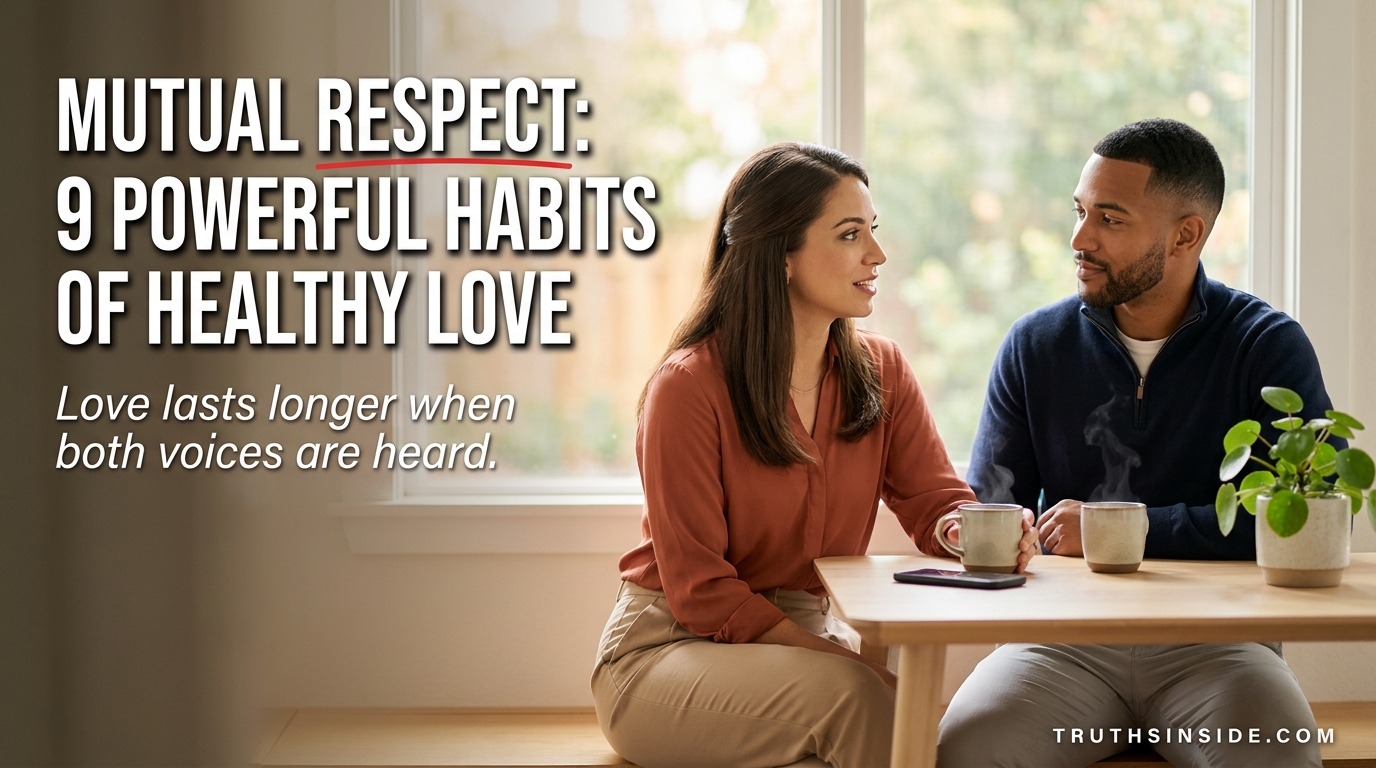
Mutual Respect: The Foundation Every Healthy Relationship Needs
Mutual respect is the quiet force behind almost every relationship that lasts, yet it is rarely the first thing couples talk about. We talk about love, chemistry, and communication. We forget that none of those can survive for long if one person feels dismissed, mocked, or unheard. If you have ever felt small in your own relationship, you already know how much respect matters.
Research backs this up. Over four decades of study, psychologist John Gottman identified contempt, a mix of disgust and superiority toward a partner, as the number one predictor of divorce. His long-term remedy is a culture of fondness and admiration, built through small daily gestures of appreciation and kindness. In other words, mutual respect is not a bonus feature of a good relationship. It is the structure that holds everything else up.
This guide explains what mutual respect really means, why it matters, nine powerful habits that build it, and what to do when it has started to fade. Whether your relationship is new or decades old, these ideas can help you feel safer, closer, and more valued.
What Is Mutual Respect in a Relationship?
Mutual respect means that both partners treat each other as equals who deserve kindness, dignity, and consideration. You value your partner’s feelings, opinions, and boundaries, and they value yours. It is not a one-time promise. It is a pattern of daily choices that tells your partner, “You matter to me, even when we disagree.”
It is also important to say what mutual respect is not. It does not mean always agreeing, never arguing, or hiding who you are to keep the peace. It is not fear, obedience, or politeness used as a mask. Real mutual respect makes room for honest disagreement, because both people trust that their worth is not up for debate.
The word “mutual” matters enormously. A relationship cannot stay healthy if one person gives respect while the other takes it. When only one partner works to protect the bond, resentment grows quietly. Mutual respect means both partners are responsible for kindness, listening, and repair. It is a shared project, and it works best when both people care for it.
Why Mutual Respect Matters So Much
Respect creates emotional safety. When you know your partner will not belittle you, threaten you, or dismiss your feelings, you can be honest about your fears, needs, and mistakes. That honesty is what builds intimacy. Without mutual respect, couples tend to hide, defend, or attack, and closeness slowly fades.
It also changes how couples handle conflict. Every couple argues, but respectful couples argue about the problem, not about each other’s character. They can say, “I’m upset about what happened,” instead of “You’re a selfish person.” Gottman’s research on contempt shows why this difference is so important: attacks on a partner’s character damage trust far more than disagreements about issues.
Finally, mutual respect supports each person’s individuality. Partners who respect one another encourage growth, friendships, and personal goals, rather than competing or controlling. This freedom makes love feel lighter and more stable. When two people feel respected, they are more likely to give generously, apologize sincerely, and stay committed through hard seasons.
📃 Related article: Moving Too Fast Red Flags: 7 Alarming Signs
9 Habits That Build Mutual Respect
Respect is built through ordinary behavior, not grand declarations. These nine habits are small, practical, and powerful. You do not need to master them all at once. Choose one or two, practice them for a few weeks, and invite your partner to do the same.
Habit 1: Listen Fully When Your Partner Speaks
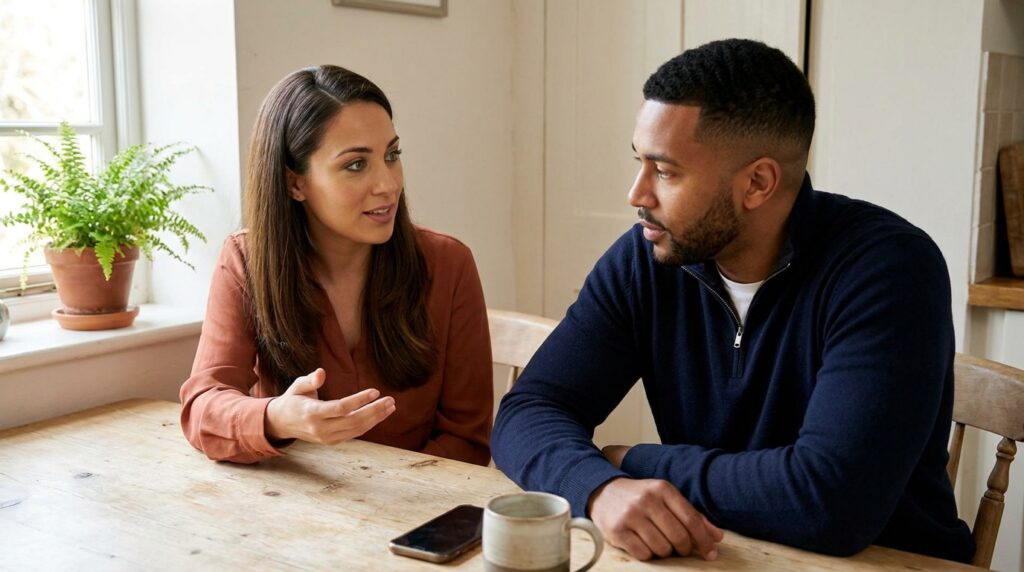
Mutual respect begins with attention. Listening fully means putting away your phone, making eye contact, and letting your partner finish without interruption. It also means trying to understand before you respond. A simple “Tell me more” can show your partner that their thoughts have real value.
When you are tempted to interrupt, remind yourself that listening is not agreement. You can hear your partner’s view and still hold your own. What matters is that they feel genuinely heard. Over time, this habit tells your partner that their voice is welcome, and it invites them to listen to you with the same care.
Habit 2: Honor Each Other’s Boundaries
Boundaries are the limits that help each person feel safe and whole. They might involve time alone, privacy, finances, family, or physical space. Mutual respect means asking what your partner needs and accepting their answer without guilt trips or pressure. A “no” is not a rejection of you. It is information about them.
Share your own boundaries clearly and kindly as well. “I need an hour to unwind after work before we talk” is a respectful request. When both partners honor boundaries, trust deepens, because each person learns that their limits will be taken seriously rather than tested.
Habit 3: Speak Kindly, Even in Conflict
How you speak when you are angry is where mutual respect is truly tested. Avoid sarcasm, name-calling, eye-rolling, and mocking tones. These behaviors are the hallmarks of contempt, and they wound deeply. Instead, describe how you feel and what you need: “I felt hurt when plans changed without telling me. Can we talk about it?”
If the conversation becomes too heated, take a break and agree on a time to return. Pausing is not avoidance. It is a way of protecting the relationship from words you cannot take back. Kind language does not weaken your message. It makes it easier for your partner to actually hear it.
“Mutual respect is not the absence of conflict. It is the presence of kindness while you disagree.”
Habit 4: Value Differences in Opinion and Style
No two people think alike, and mutual respect means letting that be okay. Your partner may handle money, time, or stress differently than you do. Instead of treating those differences as flaws, treat them as information about who they are. Curiosity is the opposite of contempt.
Try asking, “How do you see this?” before explaining your own view. Even when you disagree, you can acknowledge what makes sense in your partner’s perspective. Valuing differences does not mean giving up your values. It means believing that your partner’s view deserves a fair hearing, which is a powerful form of respect.
Habit 5: Keep Promises and Be Reliable
Respect shows up in follow-through. When you say you will call, arrive, or help, and then do it, you tell your partner that their time and trust matter. Repeated broken promises send the opposite message, even if every apology sounds sincere.
You do not have to be perfect. Be honest about what you can realistically commit to, and communicate quickly when plans change. A partner who says, “I can’t make it, but I’ll make it up to you,” builds more mutual respect than one who promises everything and delivers little. Reliability turns words into evidence.

Habit 6: Share Power and Decisions Fairly
In a respectful partnership, neither person quietly runs the show. Important decisions about money, home, children, careers, and time are made together, with both voices counted. This does not mean everything is split exactly fifty-fifty. It means both people have genuine influence and neither one feels overruled.
Notice patterns. If one partner always gets the final word, or one person’s schedule always comes first, resentment may be building. Ask, “Does this feel fair to you?” and listen to the answer. Mutual respect grows when each partner feels like a true teammate rather than a subordinate or a supervisor.
Habit 7: Support Each Other’s Goals and Independence
Respectful partners cheer for each other. They ask about dreams, celebrate progress, and make space for friendships and passions outside the relationship. They do not feel threatened by the other’s growth. Instead, they see it as something that enriches the partnership.
Support can be as simple as taking a task off your partner’s plate before a big deadline, or asking how their new project is going. It can also mean accepting that your partner needs time apart. When both people feel free to grow, mutual respect becomes the soil in which closeness thrives.
Habit 8: Apologize and Take Responsibility
Everyone makes mistakes, and a sincere apology is one of the clearest signs of mutual respect. A good apology names what you did, acknowledges how it affected your partner, and offers a way to make it right. “I’m sorry for dismissing your idea in front of our friends. That wasn’t fair to you” is far more powerful than “I’m sorry if you were upset.”
Avoid defending, minimizing, or turning the blame around. Accepting responsibility shows that you value your partner more than your pride. And when your partner apologizes, receive it graciously. Forgiveness does not erase the hurt overnight, but it signals that you are both committed to repair.
Habit 9: Show Appreciation Every Day
Respect is not only about avoiding harm. It is also about noticing what is good. Gottman describes the importance of fondness and admiration, and you can build both with small, regular acts. Say thank you for everyday things. Compliment your partner’s effort. Mention something you admire about them.
These tiny acts act like deposits in an emotional bank account. When conflict arrives, a relationship full of appreciation can handle it far better than one running on silence. Make it a habit to share one genuine thank-you each day. It costs nothing and quietly strengthens mutual respect every time.
Everyday Moments That Quietly Show Respect
Respect lives in details that rarely look important. It is the text that says “running late, sorry,” the pause before you answer a sensitive question, and the way you speak about your partner when they are not in the room. These moments are easy to overlook, yet your partner notices every one.
Think about how you greet each other, how you handle a bad mood, and whether you ask before assuming. Small courtesies, like saying please and thank you or asking, “Is now a good time to talk?”, show that your partner is not an afterthought. Over months and years, these tiny signals add up to a deep sense of being valued.
Signs of Mutual Respect and Signs It Is Missing
It can be hard to see your own relationship clearly, so here are some honest markers. No couple is perfect, so look for patterns rather than single moments.
Signs of mutual respect:
- You can disagree without insults, threats, or silent treatment.
- Your boundaries are accepted without punishment.
- Decisions are shared, and both voices matter.
- You feel safe being honest about your feelings.
- You apologize, forgive, and try again.
Signs mutual respect is missing:
- Sarcasm, mocking, or eye-rolling are common during conflict.
- One partner controls money, schedules, or friendships.
- Feelings are dismissed with “You’re overreacting.”
- Promises are broken and excuses pile up.
- You feel smaller, anxious, or afraid to speak up.
If the second list sounds familiar, you are not powerless. Awareness is the first step toward change, and many couples can rebuild respect with honest effort and, when needed, the help of a counselor.
“A relationship without respect is like a house without a foundation. It may look fine, until the first storm.”
How to Rebuild Mutual Respect When It Has Eroded
Start with a calm conversation, not an accusation. Choose a quiet moment and speak from your own experience: “I’ve been feeling unheard lately, and I’d like us to work on how we talk to each other.” This invites your partner into a shared goal rather than putting them on trial.
Next, agree on a few simple ground rules, such as no name-calling, no interrupting, and taking breaks when emotions run high. Practice the habits above one at a time, and check in weekly about what is working. Small, consistent changes are more convincing than dramatic promises.
Finally, rebuild appreciation. Share what you value about each other, and recall why you chose this partner. Professional help can be a great support here. A licensed couples therapist can teach communication tools, help you spot harmful patterns, and keep both people accountable. Rebuilding mutual respect takes time, but many couples find that honest effort leads to a stronger, kinder partnership.

When Mutual Respect Is Not Safe to Rebuild
Some situations go beyond a rough patch. If your partner threatens you, controls your movements, isolates you from friends, monitors your phone, or frightens you, that is not a communication problem. It is abuse, and mutual respect cannot be rebuilt by simply trying harder. Your safety comes first.
If this sounds familiar, please reach out to someone you trust and to professional support. In the United States, the National Domestic Violence Hotline is available at 1-800-799-7233, and you can also text or chat online. You deserve to feel safe, and you do not have to figure this out alone.
📃 Related article: Demand Respect in a Relationship: 7 Fearless Ways
Frequently Asked Questions About Mutual Respect
What does mutual respect mean in a relationship?
It means both partners treat each other with kindness, fairness, and dignity. They listen, honor boundaries, share decisions, and handle disagreements without contempt. Mutual respect does not require agreeing on everything. It requires valuing each other’s feelings and worth even when opinions differ.
Can a relationship survive without mutual respect?
It may continue, but it is unlikely to be healthy or happy. Without mutual respect, resentment, fear, and distance tend to grow. If both partners are willing to change, respect can often be rebuilt. If one partner refuses, the relationship may continue to cause harm.
How do I earn respect from my partner?
You cannot force respect, but you can model it. Listen, keep your word, speak kindly, and take responsibility for mistakes. Healthy mutual respect grows when both people show these behaviors consistently. If your partner continues to disrespect you despite clear communication, you may need to set firm boundaries.
How do I tell my partner they are disrespecting me?
Choose a calm moment and use “I” statements. Say, “I felt dismissed when you laughed at my idea, and I’d like us to talk about it.” Describe the behavior, your feelings, and what you need. Avoid attacking their character. Clear, kind honesty is itself an act of mutual respect.
Final Thoughts: Respect Is the Quiet Strength of Lasting Love
Love may open the door, but mutual respect is what keeps a relationship standing. It shows in how you listen, how you disagree, and how you treat each other when no one else is watching. Small acts of kindness, repeated daily, build a bond that can weather almost anything.
You do not have to be perfect to practice it. Start with one habit this week, whether that is listening without interrupting or sharing a sincere thank-you. Notice how your partner responds. When both people choose respect, even imperfectly, a relationship becomes a place where each person can grow, rest, and feel truly valued.
Save this article so you can return to it when you need a reminder. Share it with someone who deserves a healthier, kinder relationship. Follow Truthsinside.com for more honest guides to love, psychology, and the habits that make relationships last.
🎵 Music
Maren Lull is a singer-songwriter who writes from the places most people don’t talk about out loud.
Not the dramatic grief. Not the obvious heartbreak. The quiet kind — the ordinary Tuesday emptiness, the habit of reaching for someone who isn’t there anymore, the particular exhaustion of being strong for so long that the strength itself wears thin.
Her music lives at the intersection of emotional honesty and soft beauty — breathy vocals over gentle piano, slow tempos, lyrics that feel less like songs and more like something you wrote in a private notebook at two in the morning and never showed anyone.
Maren Lull writes for the people who feel everything deeply and say very little about it. For the ones who listen to sad music not because they want to feel worse — but because being understood, even by a song, makes the feeling easier to carry.
📱 Follow Maren Lull:
→ Spotify
→ Apple Music
→ Youtube
→ Audiomack