
They Separated. They Never Divorced. And They Still Have Dinner Together. Here Is the Full Story.
The Danny DeVito Rhea Perlman relationship is one of Hollywood’s most quietly remarkable stories — not because it followed the expected arc of a celebrity love story, but because it refused to. Separation without divorce. Daily phone calls between people who no longer share a home. Shared meals, shared grandchildren, and a bond that has outlasted the formal structure that once contained it. Research from the Journal of Marriage and Family consistently shows that couples with decades of shared history, shared children, and deep mutual investment are among the least likely to achieve clean emotional separation — and among the most likely to find their way back to some form of meaningful connection.
DeVito and Perlman appear to have done exactly that, building something after their marriage that is harder to name than marriage itself but no less real.
How Danny DeVito and Rhea Perlman Found Each Other
The Danny DeVito Rhea Perlman relationship began the way many lasting connections do — not through careful planning, but through the kind of casual, unplanned encounter that only reveals its significance in retrospect. The two met in 1971, introduced through a mutual friend following an off-Broadway show. They hit it off immediately, discovering shared enthusiasm for off-Broadway theatre and short films — creative passions that gave their early connection both common ground and a forward momentum that pure romantic chemistry alone rarely sustains.
That shared creative sensibility was not incidental to their relationship. It was structural. Two people who find each other through art, who recognize in each other a common way of engaging with the world, are building something with more layers than simple attraction. For DeVito and Perlman, the creative overlap became a foundation that their relationship could stand on through the inevitable complications that followed.
They married in 1982, more than a decade after that first meeting. The gap between meeting and marriage was not distance — it was depth. By the time they formalized their commitment, they had already been part of each other’s lives and creative worlds for years. The marriage was less a beginning than a formalization of something already thoroughly established.
Together they worked on screen projects, built a family, and accumulated the kind of shared history that makes separation genuinely complicated — not just logistically, but emotionally, practically, and in terms of identity. After more than four decades of shared life, the question of where one person ends and the other begins does not have a clean answer.

The Separations: What Happened and When
The timeline of the Danny DeVito Rhea Perlman relationship includes two significant separations, each of which generated public attention and required the kind of private emotional processing that rarely gets fully reported.
The first separation occurred in 2012, after thirty years of marriage. It was news, as these things are when the people involved are public figures of their stature, and it prompted the kind of speculation and commentary that celebrity separations always generate. Then, relatively quietly, they reconciled.
The second and apparently final separation came in 2017. This one, unlike the first, did not produce a reconciliation in the traditional sense. But it also did not produce a divorce. DeVito has been explicit on this point: there are no current plans to legally end their marriage. The formal structure of the union — whatever its current practical meaning — remains intact.
What followed 2017 was not a clean break but an evolution. Perlman has spoken honestly about the difficulty of that period, acknowledging that the second separation was hard and that it took genuine time and emotional effort to arrive at the understanding they now share. That honesty is itself significant — it resists the narrative of easy, frictionless amicability that some celebrity separations are packaged in. What DeVito and Perlman built after 2017 was built through difficulty, not around it.
📃 Related article: Sean Diddy Combs Conviction Sentence: Shocking Full Story
What Their Relationship Looks Like Today
The current state of the Danny DeVito Rhea Perlman relationship is, by most conventional definitions, unusual. It does not fit neatly into any standard category — not married, not divorced, not fully separated in the way that word typically implies. What it actually looks like, in practice, is something more like a very close and intentional friendship between two people who share a family and a history.
They speak every day. This detail alone distinguishes their post-separation arrangement from most. Daily contact between separated former partners is not a given — it requires mutual investment, mutual care, and a genuine desire to remain present in each other’s lives even when the formal obligation to do so no longer exists.
They often have meals together. The image of two separated people regularly sharing a table is quietly powerful. Meals are intimate in ways that are easy to take for granted. Choosing to share that space with someone is a choice that says something about how you actually feel about them, regardless of what legal documents do or do not reflect.
They see their grandchildren together. The family-facing dimension of their relationship is perhaps its most defining characteristic. They show up together for the people and moments that matter most, presenting a unified front for the family they built together without requiring a particular legal status to do so.
DeVito has framed their arrangement with characteristic directness. He describes it as a “good relationship” and speaks about the value of having reliable people in your life — people you can count on, who are consistently present, and who show up when it matters. By that measure, Perlman is among the most important people in his life, separated or not.
“Danny DeVito has said there are no plans to legally divorce Rhea Perlman — not because nothing changed, but because what they have now is still worth preserving. That is a different kind of commitment, and perhaps a more honest one.”
Why They Have Not Divorced: The Logic of Staying Legally Married
The decision not to pursue a legal divorce, despite a separation that has now extended for years, reflects something worth understanding on its own terms rather than simply as an administrative oversight or an unresolved situation.
For DeVito and Perlman, the absence of divorce proceedings appears to reflect a genuine philosophical position rather than avoidance. They are not separated people who have not gotten around to divorcing. They are separated people who have considered the question and concluded that legal dissolution is not a priority — and possibly not something either of them actually wants.
This is not without precedent in how long-term relationships sometimes evolve. The legal institution of marriage can become, over decades, a relatively thin layer over something much deeper and more complex. When the marriage itself has been built over fifty-plus years of shared experience, the formal legal status becomes less central to the actual relationship. What is real between DeVito and Perlman is not contained in a marriage certificate. Nor, apparently, would its dissolution be captured by divorce papers.
There are also practical and financial dimensions to maintaining legal marital status that are not discussed in their public statements but that are relevant context. For two people with significant assets, long professional histories, and family responsibilities, the legal architecture of marriage carries implications that exist independent of the emotional relationship. These factors need not be primary, but they are part of the full picture.
What matters most in understanding their choice is what DeVito himself has said: the relationship is good, the people in it are reliable, and that is worth preserving in whatever form it currently takes.
📃 Related article: Jamie Foxx Late Fatherhood: Inspiring New Chapter Revealed
How Rhea Perlman Talks About It
Perlman’s public statements about the relationship offer a perspective that complements DeVito’s without simply echoing it. Where DeVito tends to emphasize the current goodness of the arrangement, Perlman has been more willing to acknowledge the journey required to get there.
She has spoken about the initial difficulty following the second separation — the period when what they were to each other was genuinely unclear and the emotional weight of that uncertainty was real. She has not sanitized that experience into something comfortable or retroactively easy. It was hard, she has indicated, and it took time to move through.
The fact that she speaks about this difficulty openly rather than minimizing it actually adds credibility to her account of where they are now. People who describe post-separation amicability without acknowledging any difficulty invite skepticism. Perlman’s honesty about the hard part makes the good part — the daily calls, the shared meals, the grandchildren — more believable, not less.
Both describe the relationship as “very good.” Coming from two people who have been through what they have been through, that description carries significant weight. It is not a polite formality. It is a considered assessment from people who know each other well enough to know the difference.
Hollywood’s Other Amicable Exes: A Broader Pattern
The Danny DeVito Rhea Perlman story is unusual in its specifics but not entirely alone as a pattern. Across Hollywood’s long history of public relationships, a recurring theme has emerged: former partners who, after the formal relationship ends, find ways to maintain meaningful connection — particularly when children, grandchildren, or decades of shared history are involved.
Ben Affleck and Jennifer Garner represent one of the most publicly visible examples. Despite their divorce, both have consistently praised each other publicly and maintained an active, cooperative co-parenting arrangement. Their shared commitment to their children has produced a post-marriage dynamic that observers frequently cite as a model for how separated parents can prioritize family.
Bruce Willis and Demi Moore took that model a step further, famously spending holidays and significant family moments together even years after their split. Their blended family gatherings became something of a cultural touchstone for discussions about post-divorce relationships done differently.
Mindy Kaling and B.J. Novak occupy a category all their own — a relationship that was romantic, became something else, and then deepened into a bond so family-like that Novak became godfather to Kaling’s children. Their connection defies easy categorization and has become one of Hollywood’s most discussed examples of how love, in its various forms, can evolve into something that does not require a standard label.
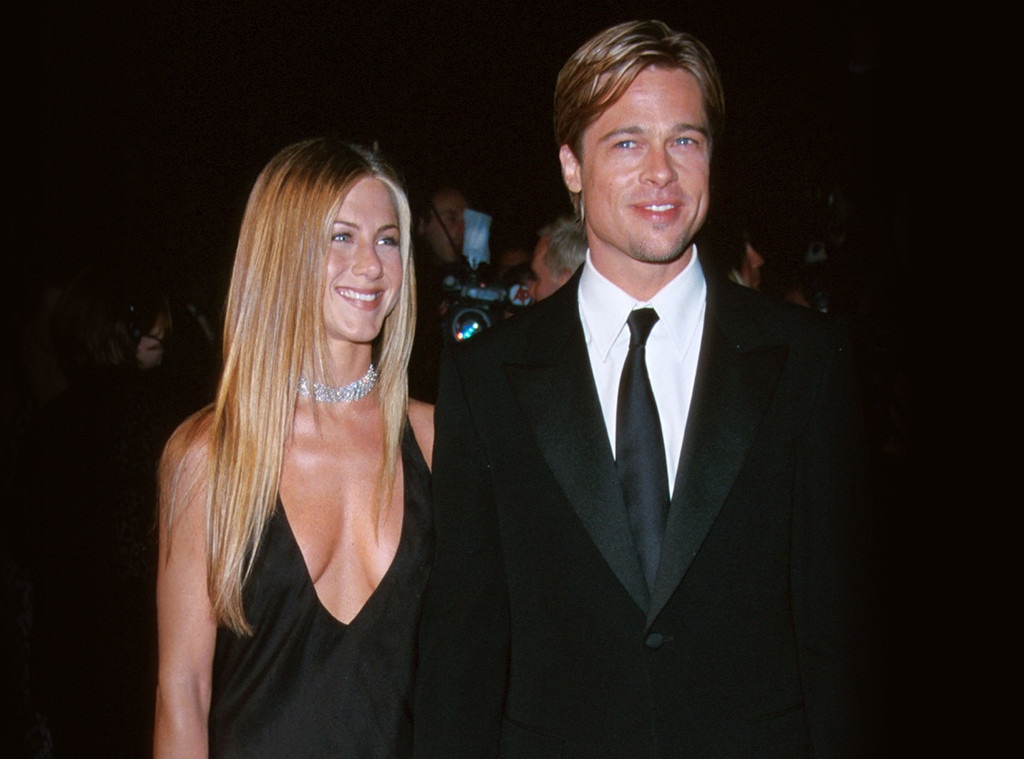
Jennifer Aniston and Brad Pitt have generated sustained public interest through their post-divorce interactions, with friendly public moments at industry events creating significant media attention years after their marriage ended. Courteney Cox and David Arquette maintained a close friendship and co-parenting arrangement after their divorce that both have spoken warmly about.
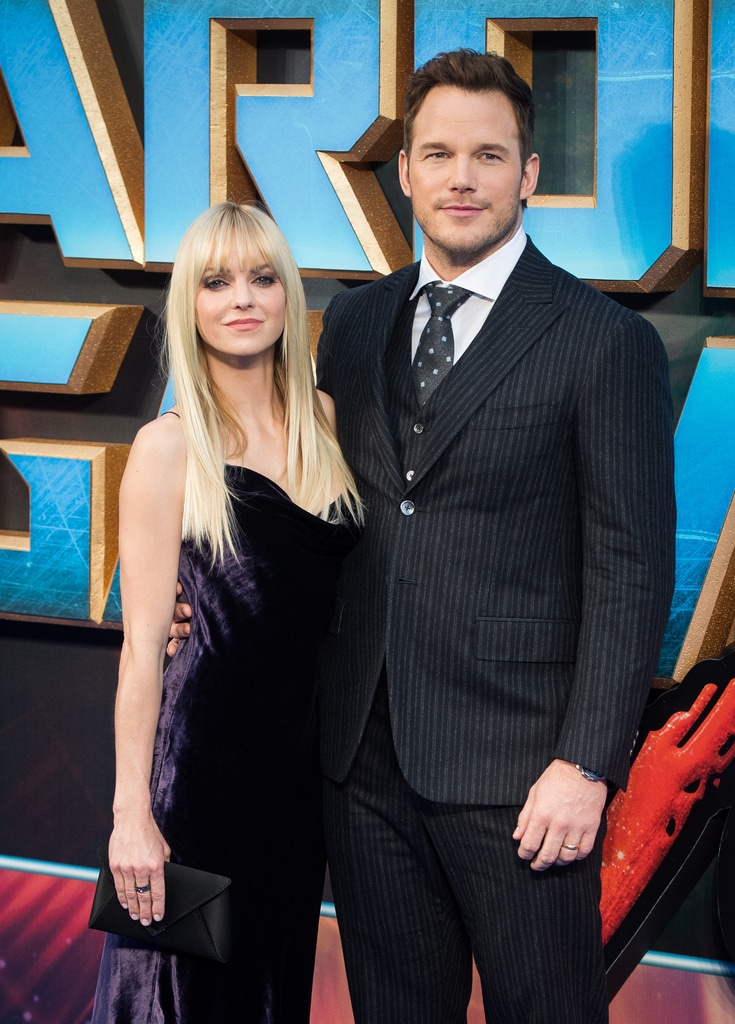
Chris Pratt and Anna Faris have navigated their separation with notable mutual generosity, with both parties making public gestures of goodwill and maintaining a cooperative approach to parenting their son. Tarek El Moussa and Christina Hall continued professional collaboration through their real estate television work even after their marriage ended — a level of ongoing partnership that most separated couples would find inconceivable.
Lisa Bonet and Lenny Kravitz retained a kin-like friendship that has been publicly acknowledged by both and that has continued through subsequent marriages and significant life events on both sides. Nina Dobrev and Ian Somerhalder became one of television’s most discussed post-breakup friendships, remaining visibly close in ways that confounded conventional expectations about how former romantic partners relate.
📃 Related article: Hilaria Baldwin Alpha Parent: Bold Family Secrets Revealed
“From Bruce Willis and Demi Moore spending holidays together to Mindy Kaling’s ex becoming godfather to her children — Hollywood keeps demonstrating that the end of a romantic relationship does not have to mean the end of the relationship itself.”
What These Stories Share: The Common Thread of Family-First Relationships
Across all of these examples — DeVito and Perlman, Willis and Moore, Affleck and Garner, Kaling and Novak — a common thread runs with remarkable consistency. In every case, the decision to maintain post-romantic connection is tied, explicitly or implicitly, to something larger than the two individuals involved.
Children are the most obvious anchor. When two people have built a family together, the practical reality of shared parenting creates ongoing contact that, if navigated with genuine goodwill, can become the foundation for a different kind of relationship. The couple may be over; the family is not.
Grandchildren, in cases like DeVito and Perlman’s, take that dynamic to another level. The arrival of the next generation creates new shared stakes, new reasons to show up together, and new contexts in which the history between two people becomes an asset rather than a complication.
Shared professional history, creative collaboration, and decades of mutual understanding also play roles that are harder to quantify but no less real. Two people who have worked together, built something together, and known each other at every stage of adulthood carry a kind of relationship capital that does not simply evaporate when the romantic dimension changes.
What DeVito and Perlman have done — quietly, without drama, and with apparent genuine affection — is demonstrate that relationship capital can be reinvested rather than lost. The form changes. The investment does not.
What Their Story Teaches the Rest of Us
There is something genuinely instructive in the Danny DeVito Rhea Perlman story, and it does not require celebrity context to be applicable. At its core, it is about what happens when two people who have built something real together decide that the building is worth preserving even when the original structure changes.
Most cultural narratives about separation are built around endings. The marriage is over. The relationship is done. People move on, move apart, and whatever was built gets dismantled in the process. DeVito and Perlman offer a different narrative — one in which separation is a transition rather than a terminus, and in which what was built does not have to be torn down just because the blueprint has changed.
The daily phone calls. The shared meals. The grandchildren encountered together. The absence of any urgency to formalize a legal ending. These are not the details of a relationship in denial about its own nature. They are the details of a relationship that has found an honest form for where it actually is — and decided that where it is is worth maintaining.
That is a harder thing to achieve than either staying together or splitting cleanly. It requires more emotional sophistication, more ongoing communication, and more genuine mutual regard than either simpler alternative demands. DeVito and Perlman appear to have done that work. The result, by their own description, is a relationship that is very good. Given everything it has been through to get there, that is no small thing.
FAQ: Danny DeVito, Rhea Perlman, and Staying Connected After Separation
Q1: Are Danny DeVito and Rhea Perlman divorced?
No. Despite separating twice — first in 2012 and again in 2017 — Danny DeVito and Rhea Perlman have not pursued a legal divorce. DeVito has explicitly stated there are no current plans to legally end their marriage. They remain legally married while living separately.
Q2: How do Danny DeVito and Rhea Perlman maintain their relationship today?
They speak every day, frequently share meals together, and see their grandchildren as a family unit. Both have described their current relationship as “very good” and have emphasized the importance of family and reliable people in their lives as central to how they navigate their post-separation arrangement.
Q3: When did Danny DeVito and Rhea Perlman meet and marry?
They met in 1971 following a mutual friend’s off-Broadway show and connected over shared interests in theatre and short films. They married in 1982, more than a decade after first meeting, and were together for over fifty years before their final separation in 2017.
Q4: Why have they chosen not to divorce?
Neither has provided an exhaustive explanation, but DeVito’s public statements suggest the decision reflects a genuine assessment that the legal formality of divorce is not a priority given the quality of the relationship they currently maintain. The relationship is described as good and family-centered, and legal dissolution does not appear to serve any purpose either party is seeking.
Q5: What other celebrity couples have maintained amicable relationships after separating?
Several high-profile examples include Ben Affleck and Jennifer Garner, Bruce Willis and Demi Moore, Mindy Kaling and B.J. Novak, Chris Pratt and Anna Faris, Lisa Bonet and Lenny Kravitz, Courteney Cox and David Arquette, and many others. In most cases, shared children or long-term friendship are the anchors that make post-romantic connection possible.
Save This. Share This. Follow Truthsinside.com.
If this story made you think differently about what relationships can look like after separation, save this article and come back to it. Share it with someone who appreciates a celebrity story that goes deeper than the gossip and into something genuinely human. And follow Truthsinside.com for entertainment coverage that finds the meaning inside every story worth telling.
🎵 Music
Maren Lull is a singer-songwriter who writes from the places most people don’t talk about out loud.
Not the dramatic grief. Not the obvious heartbreak. The quiet kind — the ordinary Tuesday emptiness, the habit of reaching for someone who isn’t there anymore, the particular exhaustion of being strong for so long that the strength itself wears thin.
Her music lives at the intersection of emotional honesty and soft beauty — breathy vocals over gentle piano, slow tempos, lyrics that feel less like songs and more like something you wrote in a private notebook at two in the morning and never showed anyone.
Maren Lull writes for the people who feel everything deeply and say very little about it. For the ones who listen to sad music not because they want to feel worse — but because being understood, even by a song, makes the feeling easier to carry.
📱 Follow Maren Lull:
→ Spotify
→ Apple Music
→ Youtube
→ Audiomack