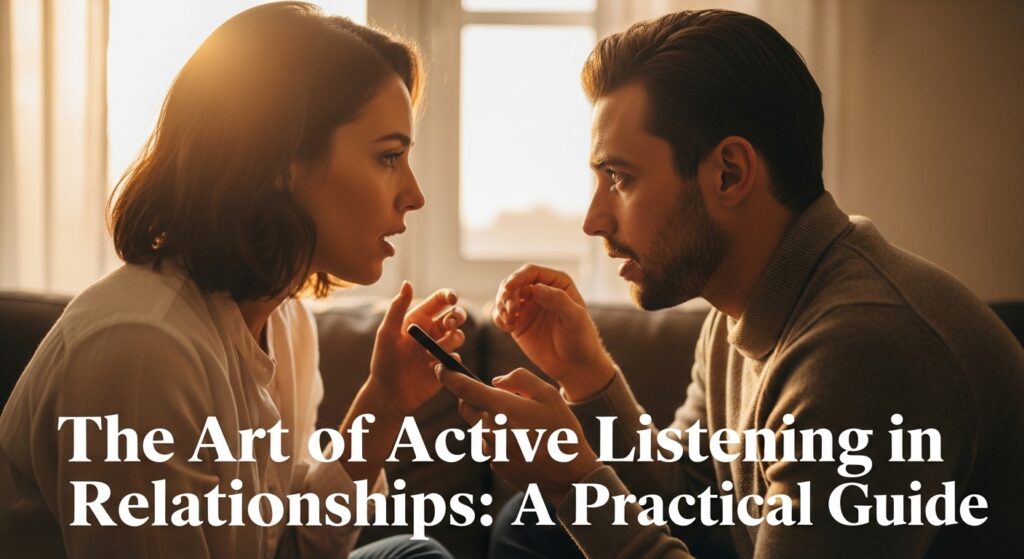

I Almost Lost Her Over Something So Small I’m Embarrassed to Admit It
Almost lost her over something small — and I didn’t even see it coming. That sentence used to be impossible for me to say out loud. I was the guy who thought love was enough. I thought as long as I wasn’t cheating, wasn’t lying, wasn’t doing anything dramatically wrong, I was doing okay. I was wrong. Research from the Gottman Institute shows that 69% of relationship problems are never fully resolved — they simply erode a couple’s foundation slowly, silently, through repeated small moments of disconnection. That statistic hit me like ice water when I finally read it.
I had a good woman. Patient, loving, intelligent, and deeply loyal. We had three years together — real years, not just the honeymoon phase. We had inside jokes and shared playlists and a Sunday morning routine that felt like home. And I almost threw all of it away not because of one catastrophic mistake, but because of something so embarrassingly small that even now, writing this, I feel my chest tighten with shame.
This is the story I wish someone had told me before it almost cost me everything.

The Day She Almost Walked Out
It started with a phone. Specifically, it started with me not putting mine down.
We had planned a dinner — just the two of us, no distractions. She had cooked. She had actually lit candles, which she rarely did, and she wore that green dress I always told her was my favorite. And I sat across from her scrolling through sports highlights while she talked about her day. I wasn’t fully tuning her out. I told myself I was multitasking. I told myself I was still present enough.
She stopped mid-sentence. I looked up. Her face wasn’t angry. It was something worse — it was tired. Not the kind of tired that sleep fixes. The kind of tired that builds up when a person has tried to reach you too many times and keeps meeting a wall of distraction. She didn’t yell. She didn’t cry. She just quietly said, “I feel like I’m talking to nobody.” Then she got up, cleared her plate, and went to bed early. I sat there thinking it wasn’t a big deal.
It was the beginning of the end — and I almost didn’t catch it in time.
Why Small Things Are Never Actually Small
Here’s what nobody tells you about relationships: it’s rarely the earthquake that destroys the house. It’s the slow, invisible cracks forming in the foundation every single day. Psychologists call this “cumulative negativity” — the buildup of small, repeated emotional disappointments that eventually collapse the entire structure of a relationship.
Dr. John Gottman’s decades of research with couples identified what he calls “bids for connection” — small, everyday moments where one partner reaches out emotionally, seeking acknowledgment, warmth, or simple attention. A story about her day. A touch on the shoulder. A “look at this funny thing I saw.” Every time I missed those bids — or half-heartedly responded while looking at a screen — I was making a withdrawal from our emotional bank account. And I was doing it constantly without realizing the balance was going to zero.
She wasn’t asking me to be perfect. She wasn’t asking for grand gestures or expensive dates. She was asking me to look at her when she talked. To laugh with her. To be genuinely, fully present for twenty minutes at dinner. That’s it. That’s what I almost couldn’t give her. And that realization is still one of the most humbling things I’ve ever had to sit with.
“She wasn’t asking for everything. She was asking for your attention — and that’s the one thing you kept giving to everything else.”
The Moment I Realized I Was Losing Her
About two weeks after the dinner incident, I noticed something shifting. She stopped telling me the details of her day. Not all at once — gradually. The long stories became short summaries. The laughter came less freely. She stopped sending me the random memes and voice notes she used to send throughout the day. I noticed, but I rationalized it. I told myself she was just busy. Stressed. Going through something.
Then one Friday night, she made plans with her friends without mentioning it to me until the afternoon. That had never happened before. We always checked in with each other about the weekend. I felt a strange, cold feeling in my stomach — not jealousy exactly, but something close to alarm. Like when you realize you’ve been driving in the wrong direction for twenty miles and the GPS has been rerouting without you listening.
I asked her if everything was okay. She paused — just long enough for me to feel the weight of it — and said, “I’m fine.” And I knew, the way you know things in your gut before your brain catches up, that “fine” was not fine. That “fine” was a door quietly closing.
📃 Related article: Red Flags You’re Being Used for Money: 9 Brutal Signs
What I Did That Almost Made It Worse
My first instinct when I felt her pulling away was to panic — and panicking made everything worse. I overcorrected. I went from being emotionally absent to suddenly trying too hard in all the wrong ways. I bought flowers. I made dinner reservations. I sent her a long text about how much she meant to me. And she received all of it with a kind of polite distance that scared me more than an argument would have.
She told me later — after we’d worked through it — that the grand gestures in that moment felt hollow. Because what she needed wasn’t a bouquet. What she needed was the version of me who actually listened at dinner two weeks ago. Flowers don’t undo the pattern. Effort that only shows up when you feel someone leaving isn’t the same as effort that shows up every ordinary Tuesday.
This is the part most men get wrong — including me. We think love can be fixed with intensity. A big romantic moment, a heartfelt speech, a grand gesture. But you can’t compensate for consistent emotional absence with one spectacular evening. Love is built and maintained in the ordinary. It lives in the daily details.

The Honest Conversation That Changed Everything
She almost left. She didn’t tell me that immediately — she told me weeks later, after we had rebuilt enough trust for her to be fully honest. She said she had spent one particular Wednesday evening sitting in her car outside our apartment for forty minutes because she didn’t know if she wanted to come inside. Forty minutes. In a parking lot. Deciding whether the relationship was worth her continued emotional investment.
That detail broke something open in me. I asked her what finally made her come inside that night. She said it was a voice note I had sent her that afternoon — completely out of nowhere — where I had just recorded myself telling her I was thinking about her. Not a big declaration. Just, “Hey, I’m on my lunch break and I was just thinking about how lucky I am that you exist. That’s it. Have a good rest of your day.” Twenty-three seconds long. She played it three times in that parking lot.
Twenty-three seconds nearly saved three years. That’s the math of relationships nobody prepares you for.
5 Hard Lessons I Learned Before It Was Too Late
Lesson 1: Almost lost her over something small — presence is a choice, not a given.
Being physically in the room is not the same as being emotionally present. You can be sitting next to someone and be miles away. Presence means your attention, your eyes, your energy — all aimed at the person in front of you. I had to retrain myself to put the phone face-down the moment she started talking. It felt uncomfortable at first — like I was missing something. What I was actually missing was her, sitting right there.
Lesson 2: Bids for connection must be answered.
Every time she reached out — with a story, a joke, a touch, a question — she was making an emotional bid. And every time I halfheartedly responded, I was teaching her that reaching out wasn’t worth it. Start noticing the small reaches. Answer them fully. Those micro-moments of connection are the actual architecture of a healthy relationship.
Lesson 3: “Fine” is not fine.
Learn to read the silence. When she stops sharing the details, when the voice notes stop coming, when the laughter becomes polite instead of genuine — something has shifted. Don’t wait for an argument to investigate. Gently, sincerely ask what’s happening. Not defensively. Not with an agenda. Just — “I’ve noticed you seem quieter lately. I want to understand.”
Lesson 4: Grand gestures can’t replace consistent effort.
Flowers after neglect are just flowers. They don’t erase the pattern. What actually rebuilds trust and emotional safety is the boring, quiet, daily decision to show up — to be interested, to listen, to be reliable in the ten-thousand small moments that most people never think count. They all count. Every single one.
Lesson 5: Vulnerability is not weakness — it’s the only bridge back.
The twenty-three-second voice note that almost saved my relationship wasn’t grand. It was just honest. It was me, unguarded, expressing something true. Men are often conditioned to believe that emotional expression is risky or unnecessary. In reality, it is the only language that rebuilds connection at its root. She didn’t need a hero that Wednesday. She needed a human being who wasn’t afraid to say “I’m thinking about you and I’m grateful you’re mine.”
“The relationship you’re afraid of losing deserves the same energy you’re currently giving to everything else. Give it now — before she stops waiting.”
Where We Are Now
We’re still together. Better than we’ve ever been, actually — not because everything is perfect, but because we both understand now that love is not self-sustaining. It needs tending. It needs the daily investment of two people who actively choose each other, not just on the big days, but on the ordinary Tuesdays and the tired Thursdays and the quiet Sunday mornings when nothing special is happening.
She still sends me voice notes. I never let one go unanswered for more than an hour. I put my phone down at dinner — every dinner. Not because I’m performing. Because I finally understand what it costs when I don’t. She told me recently that she feels more loved now than she did in the first year of our relationship. That sentence meant more to me than any compliment I’ve ever received.
I share this story not because I want credit for almost screwing it up and then fixing it. I share it because I know I’m not the only one. There are men and women right now sitting across from someone they love, half-present, unknowingly making the same withdrawals I was making. And there are partners right now sitting in emotional parking lots, deciding.

A Note to You — Right Now
If you’re reading this and something in it is making your chest tight, that feeling is important. Don’t dismiss it. Think about the last time you were fully present with your partner — no phone, no distraction, just genuinely there. Think about the last time they reached out with a small thing — a funny story, a small worry, a random thought — and you gave it your whole, undivided attention.
If you can’t remember, that’s your answer.
You don’t have to wait for a crisis. You don’t have to wait until she’s sitting in a parking lot deciding. You can choose differently tonight. At dinner. In the next conversation. In the next twenty-three seconds when you could send a voice note saying nothing more than — “Hey, I was thinking about you.”
Love doesn’t always announce when it’s leaving. Sometimes it just quietly packs itself up while you’re looking at your phone. The question is whether you’ll notice before it’s gone — or only after.
📃 Related article: Dismissive Partner: 8 Alarming Red Flags Never to Ignore
FAQ
Q1: How do I know if my partner is emotionally pulling away?
Look for pattern changes — reduced communication, shorter responses, less spontaneous affection, fewer shared plans. When the small connective moments disappear, it often signals emotional withdrawal. Address it early with genuine curiosity, not accusation.
Q2: Can a relationship recover from long-term emotional neglect?
Yes — but it requires consistent, sustained effort from both partners, not just a single dramatic gesture. Rebuilding emotional safety takes time, vulnerability, and the willingness to change daily habits, not just apologize once.
Q3: What are “bids for connection” and why do they matter?
A bid for connection is any small moment where your partner reaches out emotionally — a look, a story, a touch, a question. Research by Dr. Gottman shows that couples who consistently respond to these bids build stronger, more resilient relationships.
Q4: Is it too late if she’s already started to pull away?
Not necessarily. Emotional withdrawal is usually a signal — a last attempt to protect herself before she fully disconnects. Honest, vulnerable communication paired with consistent behavioral change can still rebuild the bridge, but it must be genuine and sustained.
Q5: How can I rebuild emotional intimacy after taking my partner for granted?
Start small and stay consistent. Put the phone down. Ask real questions and actually listen. Send spontaneous messages that express genuine appreciation. Show up fully in the ordinary moments. Intimacy rebuilds through repeated, reliable acts of attention — not through grand gestures alone.
Final Thoughts
Almost losing her over something small was the most important thing that ever happened to me — because it forced me to examine what I was actually giving to the most important relationship in my life. Love is not passive. It is not maintained by simply staying. It is actively built, day by day, in the smallest of moments that most people never realize are the ones that matter most.
Don’t wait for your wake-up call to come too late.
💾 Save this. Share it with someone who needs to hear it. Follow Truthsinside.com for more real relationship stories and advice that actually matters.
🎵 Music
Maren Lull is a singer-songwriter who writes from the places most people don’t talk about out loud.
Not the dramatic grief. Not the obvious heartbreak. The quiet kind — the ordinary Tuesday emptiness, the habit of reaching for someone who isn’t there anymore, the particular exhaustion of being strong for so long that the strength itself wears thin.
Her music lives at the intersection of emotional honesty and soft beauty — breathy vocals over gentle piano, slow tempos, lyrics that feel less like songs and more like something you wrote in a private notebook at two in the morning and never showed anyone.
Maren Lull writes for the people who feel everything deeply and say very little about it. For the ones who listen to sad music not because they want to feel worse — but because being understood, even by a song, makes the feeling easier to carry.
📱 Follow Maren Lull:
→ Spotify
→ Apple Music
→ Youtube
→ Audiomack