
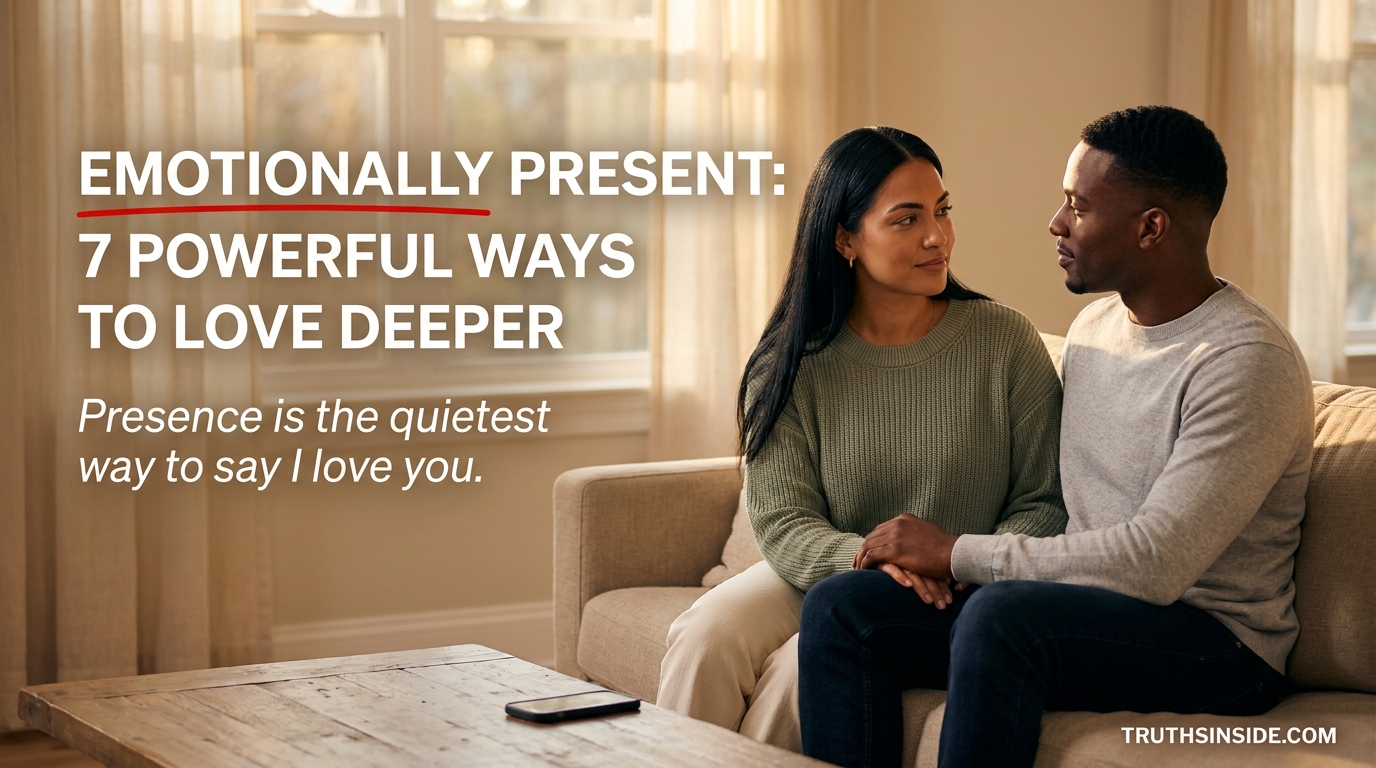
How to Be Emotionally Present for Your Partner
Learning how to be emotionally present for your partner can feel like trying to hold water in your hands. You love this person, you share a home and a calendar, yet some evenings you sit side by side and feel miles apart. Their words reach your ears, but your mind is somewhere else, and you both quietly notice.
Science suggests these small moments matter more than grand gestures. In the famous research of psychologists John and Julie Gottman, couples who stayed married turned toward each other’s everyday bids for connection 86 percent of the time, while couples who later divorced did so only 33 percent of the time. Being emotionally present is not a luxury of happy couples. It is how couples become happy.
This guide shows what it truly means to be emotionally present, why it gets harder as life gets busier, and seven practical habits you can start tonight. You will also learn how to repair the moments when you miss, because every loving partner misses sometimes.

What Does It Mean to Be Emotionally Present?
To be emotionally present means giving your partner your full attention, your honest feelings, and your open heart in the moment you are sharing. It is not about being perfect, available every second, or agreeing with everything they say. It is about showing up with curiosity and care, so your partner feels seen, heard, and safe with you. When you are emotionally present, the person in front of you knows they matter more than the screen, the to-do list, or the worry running through your mind.
Think of it as the difference between being in the room and being with someone. Two people can share a couch, a meal, and a bed while remaining emotionally absent from each other. Being emotionally present closes that gap. It turns ordinary minutes, like a walk to the car or a late-night chat in the kitchen, into moments of real contact. Over time, those moments become the foundation of trust, intimacy, and a love that feels steady rather than fragile.
It also works in two directions. To be emotionally present for your partner, you need to listen to their inner world, and you need to let them into yours. A partner who listens beautifully but never shares leaves the other feeling alone, and a partner who shares everything but never listens does the same. Healthy emotional presence is a balanced exchange of attention, honesty, and care.
Why It Is Hard to Stay Emotionally Present
Almost nobody sets out to be distant. Most of us drift. Work pressure, family responsibilities, money worries, and constant notifications quietly pull our attention away from the person we love. Researchers who study “phubbing,” which means snubbing a partner in favor of a phone, have linked it to lower relationship satisfaction. The phone is rarely the root problem, but it makes the drift easy, and staying present takes effort in a world built to steal attention.
Our own history matters too. If you grew up in a home where feelings were ignored, ridiculed, or treated as a burden, you may have learned to shut down when emotions rise. Sitting with a partner’s sadness or anger can feel unsafe, even when your partner is gentle. That reflex is protective, not shameful. But it can stop you from showing up at the very moments your partner needs you most.
Stress, exhaustion, and unspoken resentment also play a part. When you are depleted, listening feels like one more job on a long list. When you are hurt and have not said so, your heart stays quietly guarded. Understanding these obstacles is not about blame. It helps you choose the right tool, because the habits below work best when you know what is getting in the way.
📃 Related article: Romantic Disillusionment: 7 Powerful Ways to Heal
7 Ways to Be Emotionally Present for Your Partner
These seven habits are small on purpose. You do not need a retreat, a therapist’s couch, or a free weekend to begin. You only need a few minutes of honest attention and a willingness to try again when you slip. Pick one habit this week, practice it daily, and add another when it feels natural.
Way 1: Put Down the Distractions and Be Emotionally Present
Attention is the most basic form of love, and it is the first thing to go. When your partner starts talking, put your phone face down, turn away from the screen, and look at them. This simple gesture sends a loud message: you matter more than whatever is buzzing in my pocket. Try it for the first ten minutes after you both get home. Being emotionally present starts with these small acts of focus.
If you truly cannot talk, say so kindly rather than half listening. Something like, “I want to give you my full attention, and I need ten minutes to finish this. Can we sit down together after?” is far more respectful than nodding at a screen. Partners can forgive a delay. What hurts is feeling like background noise.
Way 2: Listen to Understand, Not to Reply
Most of us listen while quietly preparing our answer. To be emotionally present, listen as if your only job is to understand. Let your partner finish. Keep your face open and your body turned toward them. Then reflect back what you heard: “It sounds like you felt overlooked at that meeting, and it really stung.” Reflection tells your partner you were truly there, and it often softens big emotions on its own.
Ask gentle questions that invite more rather than close the door. “What was that like for you?” and “What do you need from me right now?” open space for honesty. Resist the urge to correct details or defend yourself in the first few minutes. You can share your view later. First, let your partner feel completely understood, because understanding is what makes people feel emotionally safe.
“Being emotionally present is not about saying the perfect thing. It is about staying when the moment gets tender.”
Way 3: Notice and Answer the Small Bids for Connection
The Gottmans use the word “bid” for any small attempt to connect: a comment about a bird outside, a sigh, a hand on your arm, a question about your day. A partner who is emotionally present notices these bids and turns toward them with a look, a word, or a smile. Remember the research: couples who stayed together turned toward bids far more often than couples who split.
You do not need to drop everything for every bid. A simple “Oh wow, tell me more” is enough. What hurts a relationship is turning away again and again, because each ignored bid teaches your partner that reaching for you is risky. Start by simply noticing how many small bids you receive in one evening. Most people are surprised. Then practice answering a few more of them with warmth.

Way 4: Share Your Own Feelings Out Loud
Emotional presence is not only about receiving. Your partner also needs to know what is happening inside you. Practice naming your feelings in plain words: “I’m anxious about money, and I’ve been quiet because of it,” or “I felt proud of you today and I wanted you to know.” Honest sharing invites closeness, and it stops your partner from guessing what your silence means.
Use “I” statements and keep them simple. Say what you feel, what it connects to, and what would help. Vulnerability can feel risky, so start small. You can share a mild disappointment before you share a deep fear. Each time your partner responds with care, trust grows, and it becomes easier to be emotionally present for each other during harder conversations.
Way 5: Validate Before You Try to Fix
When someone we love is hurting, we rush to solve it. We offer advice, silver linings, or a plan. But fixing too early can feel like dismissal. Validation means telling your partner their feeling makes sense, even if you see things differently. “Of course you’re exhausted. You’ve carried so much this month” can calm a stressed heart faster than any solution. Being emotionally present means making room for the feeling first.
Ask before offering help: “Do you want me to just listen, or would advice be useful right now?” This tiny question respects your partner’s needs and prevents a lot of frustration. Often the answer is simply, “Stay with me.” Staying is a skill, and it is one of the most powerful ways to be emotionally present when words run out.
Way 6: Build Daily Rituals of Connection
Presence grows from repetition. Small rituals create reliable moments when you are emotionally present together, no matter how chaotic life gets. A six-second kiss goodbye, a ten-minute check-in with tea, a walk after dinner, or a nightly question like “What was the best and hardest part of your day?” are simple examples. The ritual matters less than the consistency and the full attention you bring to it.
“Love is built in the small moments you choose to turn toward each other.”
Way 7: Stay Emotionally Present During Conflict
Conflict is where emotional presence is tested hardest. When voices rise, the body floods with stress, and the instinct is to attack, defend, or shut down. Try to slow down. Breathe, soften your tone, and focus on the feeling underneath the argument. “I feel scared that we’re drifting” opens doors that “You never listen” slams shut. Staying emotionally present means staying curious about your partner’s pain, even when you disagree.
If either of you becomes overwhelmed, call a pause. Gottman researchers suggest taking a break of at least twenty minutes to calm your body, then returning to the conversation. The key is to say when you will come back, so the pause does not feel like abandonment. A break that ends with a return is an act of care. It shows you are committed to being emotionally present, not escaping.
Signs You Are Emotionally Present (and Signs You Are Not)
It can be hard to judge your own presence, so here are honest markers to check. Read both lists with kindness. Nobody is present every moment, and the goal is a pattern, not perfection.
You are probably emotionally present when:
- Your partner shares their day without bracing for your reaction.
- You remember details of what they told you last week.
- You can sit with their sadness without rushing to fix it.
- You apologize quickly and repair after tension.
- Your body is relaxed and turned toward them when they speak.
You may be emotionally distant when:
- You often say “uh-huh” without hearing the words.
- You change the subject when feelings come up.
- You reach for your phone during quiet moments.
- Your partner says they feel lonely even when you are home.
- You go silent or leave the room when conflict starts.
If the second list sounds familiar, there is no need for shame. It means you have clear places to grow. Choose one habit from this guide and practice it for two weeks. Notice how your partner responds, and notice how you feel. Presence is a skill, and skills improve with practice and patience.
How to Repair When You Were Not Emotionally Present
Every couple misses each other. What separates strong relationships is repair. If you realize you were distracted, defensive, or cold, name it quickly and without excuses. “I was on my phone while you were talking, and I’m sorry. I do want to hear it. Can you tell me again?” That small repair can turn an ordinary miss into a moment of deeper trust.
A good repair has three parts: acknowledge what happened, express care for how it affected your partner, and offer a specific change. Avoid “I’m sorry you feel that way,” which shifts the blame. Instead, say, “I can see I hurt you, and I want to do better.” When your partner sees you trying again and again, they learn that you are committed to being emotionally present, even when you stumble.

How to Stay Emotionally Present When You Are Tired or Stressed
You cannot give what you do not have. If you are running on empty, your capacity to be emotionally present shrinks, and that is human. Take care of the basics: sleep, movement, food, and moments alone to breathe. A short walk or five minutes of quiet after work can help you arrive home as a person rather than a pile of stress.
Try a small transition ritual between work and home. Sit in the car for two minutes, take slow breaths, and name what you are carrying. Then tell your partner honestly: “I’m drained, but I want to be with you. Can we sit together for ten minutes?” Honest limits are better than forced cheerfulness. Your partner would rather have a tired and honest you than a distant, pretending one. That is still real presence.
If closeness feels very difficult, or old wounds keep getting in the way, consider speaking with a licensed couples therapist. Seeking help is not a failure. It is a way of investing in the relationship, and many couples find that a few guided sessions teach them skills much faster than they could learn alone.
📃 Related article: Relationship Built to Last: 9 Proven Healthy Signs
Frequently Asked Questions About Being Emotionally Present
What does it mean to be emotionally present in a relationship?
It means giving your partner your focused attention and honest feelings during the moments you share. You listen without distraction, respond with care, and let your partner see what is happening inside you. Being emotionally present does not require perfection. It requires showing up, noticing, and trying again when you drift.
Can I learn to be emotionally present if I did not grow up with it?
Yes. Emotional skills are learned, and they can be learned at any age. If your childhood home did not model open feelings, start with small steps like listening without interrupting and naming one feeling a day. Becoming emotionally present may feel awkward at first, but practice, patience, and sometimes therapy make it steadily easier.
How do I ask my partner to be more emotionally present?
Choose a calm moment and speak from your own experience. Say, “I miss feeling close to you. Could we try ten phone-free minutes each evening?” Avoid accusations such as “You never listen.” Invite your partner into a shared goal, and show appreciation when they try. Gentle requests are far more likely to help them become emotionally present.
Final Thoughts: Presence Is the Quietest Way to Say I Love You
Being emotionally present is not a talent some people are born with. It is a loving habit built from small choices: the phone placed face down, the question asked one more time, the hand squeezed during a hard conversation. None of these moments look dramatic, yet together they tell your partner that they are not alone.
You will miss sometimes, and so will they. What matters is that you keep turning toward each other. Begin with one habit today, be patient with yourself, and let your partner feel the difference. A relationship that is emotionally present grows safer, warmer, and more resilient with every ordinary day you choose to be there.
Save this article so you can return to it when life gets busy. Share it with someone who deserves a little more presence in their love story. Follow Truthsinside.com for more honest guides on love, emotions, and the psychology of connection.
🎵 Music
Maren Lull is a singer-songwriter who writes from the places most people don’t talk about out loud.
Not the dramatic grief. Not the obvious heartbreak. The quiet kind — the ordinary Tuesday emptiness, the habit of reaching for someone who isn’t there anymore, the particular exhaustion of being strong for so long that the strength itself wears thin.
Her music lives at the intersection of emotional honesty and soft beauty — breathy vocals over gentle piano, slow tempos, lyrics that feel less like songs and more like something you wrote in a private notebook at two in the morning and never showed anyone.
Maren Lull writes for the people who feel everything deeply and say very little about it. For the ones who listen to sad music not because they want to feel worse — but because being understood, even by a song, makes the feeling easier to carry.
📱 Follow Maren Lull:
→ Spotify
→ Apple Music
→ Youtube
→ Audiomack