How to Use Cognitive Behavioral Therapy (CBT) to Improve Your Relationships
CBT for relationships starts with a simple truth: the fight you keep having is rarely about the dishes, the late text or the tone of voice. It is about the story your mind tells you in that split second. If you have ever replayed an argument at 2 a.m., wondering why you reacted that way, you are not broken. You are human.
Cognitive behavioral therapy was created by psychiatrist Aaron Beck in the 1960s, and a well-known 2012 review of 106 meta-analyses found it effective for a wide range of problems. Today, CBT for relationships brings those same tools to romance, marriage, friendship and family life.
This guide explains how thoughts, feelings and behaviors shape your connections, which mental traps do the most damage, and seven practical steps you can start using tonight.
What Is CBT for Relationships?
Cognitive behavioral therapy, or CBT, is a structured, goal-focused form of psychotherapy built on one powerful idea: the way you interpret an event shapes how you feel and what you do next. Beck noticed that his patients carried a stream of “automatic thoughts” that colored everything. Change those thoughts, he found, and mood and behavior often follow.
CBT for relationships applies that idea to the space between two people. Instead of asking “who is to blame?”, it asks “what am I telling myself about this moment, and what am I doing because of it?” That shift moves you from accusation to curiosity, and curiosity is the doorway to change.
There is also a formal version called cognitive behavioral couple therapy, developed by researchers such as Donald Baucom and Norman Epstein, in which a therapist works with both partners. What you will learn here is the self-help side. These tools work alone or together, but they are not a replacement for a licensed professional when problems run deep.

How Your Thoughts Shape Love: The Core of CBT for Relationships
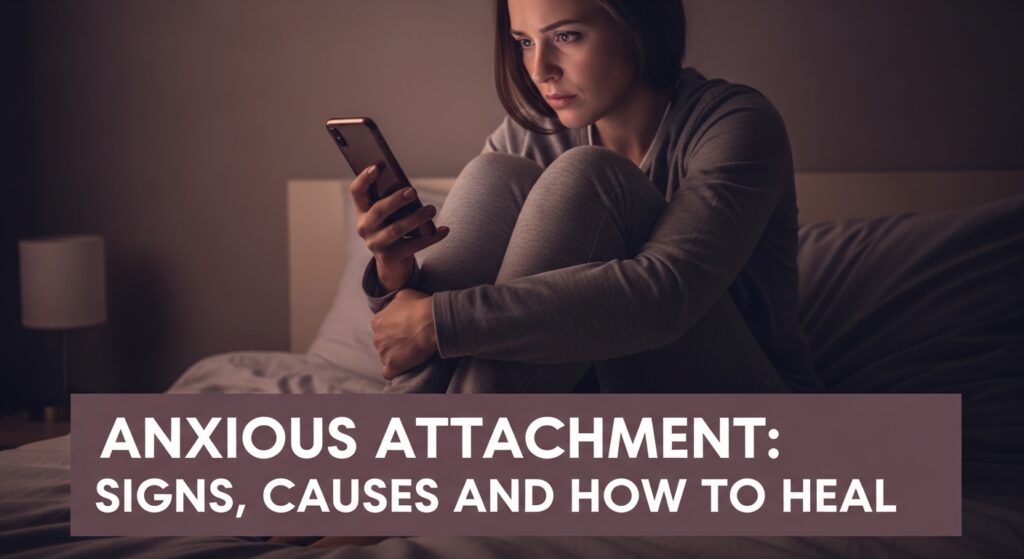
Picture this. Your partner reads your message and does not reply for three hours. A thought flashes: “They are losing interest.” Your chest tightens, and that is the feeling. You send three more texts, and that is the behavior. Your partner, now feeling pressured, answers in a short, flat way. You say, “See? I knew it.”
Nothing about the original silence meant what you feared. Perhaps your partner was in a meeting. The loop of thought, feeling and behavior created the very distance you dreaded. This self-fulfilling cycle sits at the heart of CBT for relationships, and seeing it clearly is the first act of change.
You cannot always control what your partner does, but you can change the story you tell about it and the way you respond.
Two partners in the same conflict are rarely reacting to the same event. Each is reacting to their own interpretation. One hears “you never help” and feels attacked, while the other hears “I am overwhelmed” and feels compassion. When both people learn to catch these interpretations, arguments shrink, because you stop fighting an imagined version of each other.
Why CBT for Relationships Works
Several things make this approach unusually practical. First, it focuses on the present. You do not need to excavate your entire childhood before you can improve tonight’s conversation, although old patterns often surface and can be understood along the way.
Second, it is skill-based. Instead of vague advice like “communicate better,” CBT for relationships gives you concrete steps you can practice, track and refine. Third, it puts power in your hands. You cannot rewrite your partner’s habits, but you can change your half of the dance, and when one step changes, the whole dance shifts.
The evidence is encouraging, too. CBT is among the most heavily studied therapies in the world, and research on cognitive behavioral couple therapy has found it helpful for couples in distress. Results vary, and effort from both people matters, but the method rests on a solid foundation rather than on trends.
📃 Related article: Learned Helplessness: 7 Hidden Signs You Feel Trapped
Cognitive Distortions: The Hidden Saboteurs in CBT for Relationships
Beck and later therapists catalogued common thinking errors called cognitive distortions. Everyone uses them, especially under stress. In love, they act like a smudged lens, making ordinary moments look threatening. Here are six that cause the most damage.
Mind Reading
“She is quiet, so she must be angry with me.” Mind reading assumes you know what your partner thinks without asking. It is among the most common distortions addressed in CBT for relationships. A balanced reframe sounds like this: “I notice she is quiet. I do not know why, and I can ask.”
Catastrophizing
“He forgot our dinner, so this is the beginning of the end.” One missed plan becomes a prophecy of doom. Reframe it: “This hurts, and it is one event. What is the most likely explanation?”
All-or-Nothing Thinking
“You always ignore me” or “We never connect.” Words like always and never flatten a complicated reality into a verdict. Reframe it: “Lately I have felt ignored, especially in the evenings.”
Personalization
“They are in a bad mood, so I must have done something.” You take responsibility for feelings that may have nothing to do with you. Reframe it: “Their mood might come from work. I can offer support without taking the blame.”
Emotional Reasoning
“I feel unloved, so I must be unloved.” Feelings are real data, but they are not proof. Reframe it: “I feel unloved right now. Which facts support that, and which do not?”
Labeling and “Should” Statements
“He is selfish.” “She should know what I need.” Labels turn a behavior into a character flaw, and “shoulds” turn preferences into rules nobody agreed to. Reframe it: “He forgot to ask about my day, and I would like him to. I can tell him.”

7 Proven Steps to Use CBT for Relationships Today
Now for the practical part. These seven steps follow the classic CBT sequence, adapted for love. Try them on a small irritation first, because skills grow best on easy problems before you need them in a crisis.
Step 1: Catch the Automatic Thought
Pause when your emotions spike and ask: “What just went through my mind?” Write down the exact sentence, such as “He does not respect my time.” Catching the thought turns an invisible trigger into something you can examine. Many people keep a note on their phone for this, and the habit alone often lowers the intensity, because you move from reacting to observing.
Step 2: Name the Feeling and Rate It
Label the emotion (hurt, anxious, embarrassed, lonely) and rate it from 0 to 10. Precise words calm the mind better than vague ones like “bad” or “upset.” Rating also shows you that feelings rise and fall instead of filling the whole sky. A 9 at seven in the evening may be a 4 after a walk and a glass of water.
Step 3: Check the Evidence
Make two short lists: facts that support your thought and facts that challenge it. Be honest, like a fair judge instead of a prosecutor. If your thought is “she does not care,” note the times she showed care this week. This step is the engine of CBT for relationships, because it separates what happened from what you assumed.
Step 4: Build a Balanced Thought
Replace the distorted thought with one that fits all the evidence. This is not forced positivity. “He never listens” might become “He listens well most days, and he was distracted tonight, which hurt.” A balanced thought is believable, and believable thoughts are the ones that actually change behavior.
Step 5: Run a Behavioral Experiment
Test your prediction instead of trusting it. If you fear that sharing a worry will make your partner pull away, share a small one and watch what happens. Therapists use behavioral experiments because lived results persuade more than arguments. Often the feared reaction never arrives, and your mind quietly updates its forecast.
Step 6: Take a Calm Pause
When emotions climb above a 7, discussing the problem rarely helps. Agree on a pause signal beforehand. Say, “I need twenty minutes, and I will come back,” then breathe slowly, walk or stretch. Return as promised. A pause with a return time is emotional regulation, while a pause with no return is just the silent treatment.
Step 7: Ask for a Specific Behavior
End with a clear request. Instead of “You never help,” try “Could you take care of dinner on Tuesdays and Thursdays?” Specific, positive and doable requests are the heart of behavior change in CBT for relationships. Add appreciation when your partner follows through, because rewarded behavior tends to repeat.
A Real-Life Example of CBT for Relationships in Action
Maya notices that her husband Daniel has been working late. Her automatic thought: “He would rather be anywhere than home.” She feels sadness and anger at an 8 out of 10. The old Maya would have given him the cold shoulder.
Instead, she uses the steps. Evidence for her thought: he has worked late four nights. Evidence against: he hugged her this morning, he mentioned a big deadline, and he booked their anniversary dinner last week. Her balanced thought becomes “He is under pressure, and I miss him.” Her feeling drops to a 4.
That night she says, “I miss you this week. Could we have twenty phone-free minutes after dinner?” Daniel, relieved, agrees. A potential fight became a moment of closeness in under a minute of honest words. The situation did not change. Maya’s interpretation and response did, and that changed everything.
A calmer relationship often begins with one honest question: is this thought a fact, or is it a fear?
Your Thought Record Template for CBT for Relationships
A thought record is the classic CBT worksheet, and it fits on a single index card. Use the five columns below whenever a conversation leaves you shaken, ideally within a day while the memory is fresh. Writing slows your mind enough to show you what it was doing.
| Situation | Automatic thought | Feeling (0-10) | Evidence for and against | Balanced thought |
|---|---|---|---|---|
| Partner checked their phone during dinner | “I do not matter to them.” | Hurt, 7 | For: phone out twice. Against: waiting for a work call, apologized, held my hand later | “They were distracted by work, and I would still like their full attention.” |
Notice that the balanced thought does not erase your need. It keeps the need and removes the exaggeration. After a few weeks of using a record like this, CBT for relationships begins to feel less like homework and more like a second language you speak without effort. Many people find their entries become shorter and faster, because the mind learns the pattern.
Making CBT for Relationships a Daily Habit
Skills only help if you use them, so keep the practice small. Spend ten minutes each evening noting one moment when a strong emotion appeared, the thought behind it and a more balanced version. Over a few weeks, you will start spotting your favorite distortions in real time, which is exactly when they lose their power.
Invite your partner into the process instead of using it as a weapon. Never announce “that is a cognitive distortion” in the middle of an argument. Instead, hold a short weekly check-in with three parts: one appreciation, one issue and one specific request. This keeps CBT for relationships collaborative, which is the opposite of winning a debate.
Expect setbacks. You will slip into old habits during stressful weeks, and that is normal. Treat each slip as information, not failure. Ask what thought was running, rate the feeling and try again. Progress in CBT for relationships looks less like a straight line and more like a spiral that slowly climbs.

Common Mistakes to Avoid With CBT for Relationships
Even well-meaning people misuse CBT for relationships at first. Watch for these four traps.
Using It as a Weapon
CBT for relationships is for examining your own thoughts first. Telling your partner “you are catastrophizing” in the middle of a disagreement sounds like an insult, not insight. Use the skills on yourself, and invite your partner to share their view when things are calm.
Skipping the Feelings
Reframing is not about talking yourself out of every emotion. Hurt and disappointment are valid signals. The aim is to feel them accurately, without the extra panic that distorted thoughts add on top.
Expecting Instant Change
Thinking habits are often decades old. Progress in CBT for relationships comes through repetition, so judge your results over weeks and months rather than one tense evening.
Forgetting the Behavior Half
Changing thoughts without changing actions leaves the loop half open. A full round of CBT for relationships pairs every balanced thought with a small action, such as asking a question, making a request or planning a pleasant evening together.
When CBT for Relationships Is Not Enough
Self-help tools have limits. If your relationship involves abuse, threats, controlling behavior or fear, CBT for relationships is not the answer, and no amount of reframing makes mistreatment acceptable. Your safety comes first. In the United States, the National Domestic Violence Hotline is available at 1-800-799-7233.
Also consider professional help when depression, anxiety, trauma or substance use is shaping your reactions. A licensed therapist trained in CBT can tailor the work to your history and keep you accountable. The Association for Behavioral and Cognitive Therapies offers a directory for finding trained clinicians.
Finally, remember that you can only change your half. If your partner refuses to take part, CBT for relationships will still help you respond more calmly and set clearer boundaries, but it cannot force the other person to grow. Sometimes the healthiest outcome is a clearer view of what you need.
📃 Related article: Love and Familiarity: 7 Honest Ways to Tell
FAQ: CBT for Relationships
What is CBT for relationships?
CBT for relationships uses cognitive behavioral therapy skills, such as spotting unhelpful thoughts and testing them against evidence, to improve communication, reduce conflict and build trust between partners, friends or family members.
Can CBT save a struggling relationship?
It can help when both people are willing to engage, because it replaces blame with practical skills. It cannot guarantee a particular outcome, but CBT for relationships often reduces conflict and brings clarity about what needs to change.
Do I need a therapist, or can I practice alone?
You can begin alone with thought records and the seven steps above. A trained therapist adds structure, feedback and support, especially for deep patterns. Many people combine self-practice with professional guidance.
How long does it take to see results?
Many people notice calmer reactions within a few weeks of daily practice, while structured CBT programs often run for roughly twelve to twenty sessions. Progress varies, and patience matters in CBT for relationships.
Is CBT safe if my relationship is abusive?
No. Reframing thoughts will not fix an abusive dynamic and may even keep you in danger. If you feel afraid of your partner, contact a domestic violence hotline or a licensed professional before anything else.
Final Thoughts
Love is not only a feeling. It is also a set of habits, and thinking habits are among the most powerful of all. CBT for relationships gives you a clear method for noticing your thoughts, testing them and responding with intention instead of reflex.
You do not need a perfect partner or a perfect past. You need a pause, a question and the willingness to practice. Start with one thought today, and let the small shifts grow into a calmer, kinder connection.
Found this helpful? Please do three things:
- Save this article so you can return to the seven steps whenever conflict appears.
- Share it with someone who would love a calmer way to communicate.
- Follow Truthsinside.com for more psychology-backed relationship insights.
🎵 Music
Maren Lull is a singer-songwriter who writes from the places most people don’t talk about out loud.
Not the dramatic grief. Not the obvious heartbreak. The quiet kind — the ordinary Tuesday emptiness, the habit of reaching for someone who isn’t there anymore, the particular exhaustion of being strong for so long that the strength itself wears thin.
Her music lives at the intersection of emotional honesty and soft beauty — breathy vocals over gentle piano, slow tempos, lyrics that feel less like songs and more like something you wrote in a private notebook at two in the morning and never showed anyone.
Maren Lull writes for the people who feel everything deeply and say very little about it. For the ones who listen to sad music not because they want to feel worse — but because being understood, even by a song, makes the feeling easier to carry.
📱 Follow Maren Lull:
→ Spotify
→ Apple Music
→ Youtube
→ Audiomack