Why I Used to Pick Fights Right When Things Got Good
There’s a particular kind of confusion that comes from wrecking the one thing you actually wanted. For years, I would pick fights when things got good — not when my relationship was struggling, not during the hard stretches, but precisely when everything was calm, connected, and safe. Psychologists have a name for this: self-sabotage rooted in a fear of intimacy, and research from the Journal of Personality and Social Psychology suggests that people with insecure attachment histories are significantly more likely to create conflict during periods of closeness rather than during genuine distress.
I didn’t understand this about myself for a long time. I thought I was simply “passionate” or “particular,” someone who needed things a certain way. It took years of therapy, several wrecked relationships, and one brutally honest friend to help me see the pattern clearly: I would pick fights when things got good because peace, for me, didn’t feel safe. It felt like the calm before something worse.
This is the story of how I learned to notice the moment I was about to pick fights when things got good, understand where that instinct came from, and — slowly, imperfectly — stop doing it. If you’ve ever sabotaged something wonderful right when it started to feel real, I promise this will make more sense than you think.
Where I Learned to Pick Fights When Things Got Good
I grew up in a house where good moments never lasted. A calm dinner could turn into a shouting match over something as small as a dropped fork. As a kid, I learned to read a room the way other kids learned to read books — scanning for the shift in tone that meant safety was about to disappear. By the time I was an adult, my nervous system had one job: stay alert, because good never sticks around.
That early wiring is exactly why, as an adult, I would pick fights when things got good. Dr. Bessel van der Kolk, in his research on trauma and the body, explains that children raised in unpredictable environments often develop a hypervigilant nervous system that continues scanning for danger long after the danger is gone. My body didn’t know the difference between “this relationship is thriving” and “something bad is about to happen.” Calm and threat felt identical, so I responded to both the same way — I picked a fight before the good thing could be taken from me first.
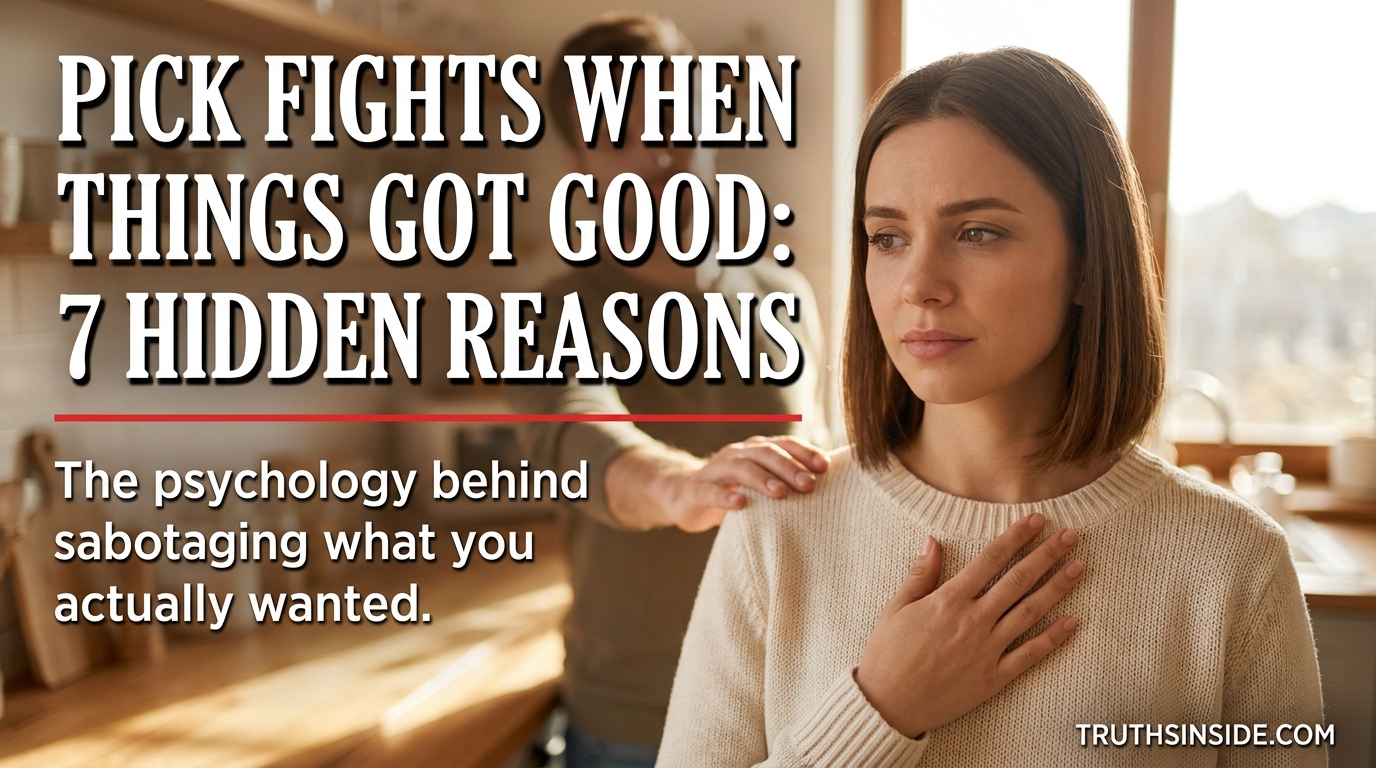
I remember one specific relationship, maybe four years ago, where we’d just come back from the best weekend we’d had together. We were laughing in the kitchen, easy and light, and I felt a wave of panic rise in my chest that I couldn’t explain. Within twenty minutes, I had started an argument over something meaningless — dishes left in the sink — and by that night, we were both in tears. That was the moment I first recognized, with real clarity, that I would pick fights when things got good on a schedule I didn’t even consciously control.
📃 Related article: Couldn’t Accept Love: 7 Deep Reasons She Tested It First
The Psychology Behind Why I’d Pick Fights When Things Got Good
Attachment researcher Amir Levine describes this pattern in his work on adult attachment styles, noting that people with anxious-avoidant tendencies often experience closeness itself as a threat. It sounds backwards — shouldn’t closeness feel good? — but for someone whose early relationships taught them that intimacy precedes loss, closeness activates the same alarm system as danger. That’s precisely why I would pick fights when things got good: my brain was trying to protect me from an abandonment it assumed was coming anyway.
There’s also a concept in psychology called “foreclosure” — unconsciously ending something good on your own terms so you’re never blindsided by someone else ending it first. Every time I would pick fights when things got good, I was essentially rehearsing the breakup so it would hurt less if it happened. Except it never made anything hurt less. It just made the ending arrive faster, and it made it my fault instead of fate’s.
“I wasn’t trying to destroy what we had. I was trying to control how it would end — because somewhere inside me, I never believed it would just get to stay good.”
Self-sabotage researcher Dr. Judy Ho notes that this pattern often shows up specifically at milestones — moving in together, meeting family, saying “I love you” for the first time. These are exactly the moments when I would pick fights when things got good the hardest, because they were the moments where the stakes of losing it felt highest.

What It Cost Me to Pick Fights When Things Got Good
The pattern didn’t just cost me relationships. It cost me trust in my own perception of happiness. Every time something started to feel good, a part of me would brace instead of enjoy — because I knew, on some level, that I was capable of pick fights when things got good without warning, and I couldn’t fully relax into anything.
I lost a five-year friendship this way too, not just romantic partners. My friend told me, gently but honestly, that she felt like she was always waiting for the other shoe to drop with me — that good weeks made her nervous instead of happy, because she’d learned that I would pick fights when things got good almost like clockwork. Hearing that from her hurt more than any breakup had, because it meant the pattern wasn’t confined to romance. It was how I related to closeness itself.
There’s a particular loneliness in sabotaging your own happiness. You’re not just hurting the other person — you’re actively destroying the thing you wanted most, in real time, and watching yourself do it without being able to stop. For years, I would pick fights when things got good and then spend the aftermath confused about my own behavior, unable to explain to partners — or myself — why I’d done it.
📃 Related article: Psychology of Ghosting: 7 Shocking Truths About Ghosters
How I Stopped Picking Fights When Things Got Good
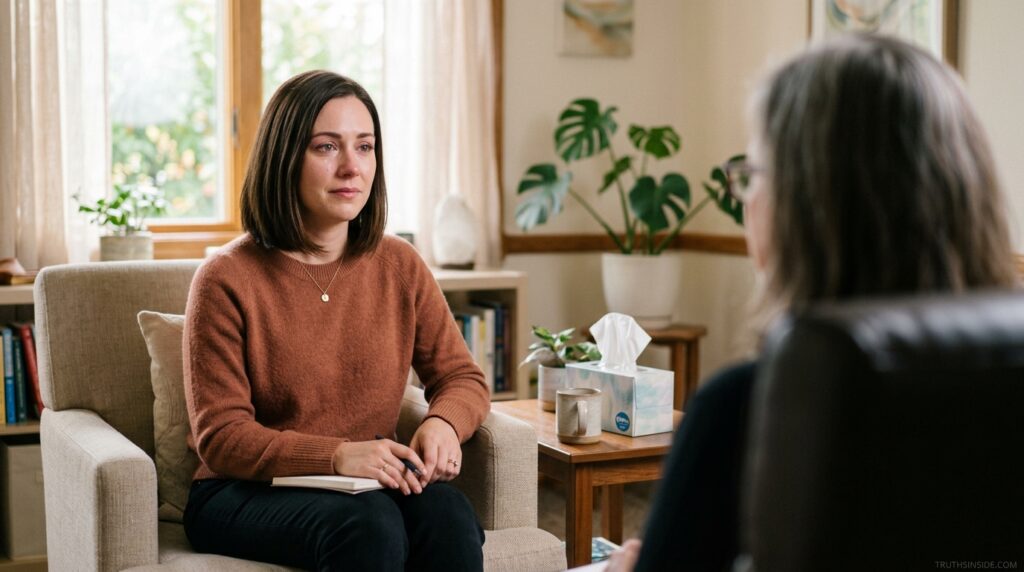
The turning point came in therapy, when my therapist asked me a simple question: “What do you feel in your body right before you start the fight?” I sat with that for a long time. The answer was dread. Not anger — dread. That was the first time I understood that I would pick fights when things got good as a response to fear, not frustration.
From there, the work became about building what therapists call “distress tolerance” for good feelings specifically. This sounds strange, but I had to practice sitting in calm, connected moments without needing to escape them. I learned to name the sensation out loud — “I’m noticing I feel anxious right now, and I don’t think it’s about you” — instead of translating that anxiety into conflict. Slowly, the urge to pick fights when things got good started losing its grip, because I was finally addressing the actual feeling underneath it instead of acting it out.
I also had to grieve the childhood that taught me good things don’t last. That grief work mattered more than any communication technique. You can’t logic your way out of a nervous system response — you have to go back and tend to the part of you that first learned good moments were dangerous. Once I did that, the instinct to pick fights when things got good became something I could notice and interrupt, rather than something that controlled me.
Life Now: I No Longer Pick Fights When Things Got Good
Today, I catch myself before the pattern takes over. Not perfectly — old wiring doesn’t disappear completely — but reliably enough that I no longer pick fights when things got good the way I used to. When I feel that familiar flicker of dread during a peaceful moment, I recognize it now as an old alarm system misfiring, not a signal that something is actually wrong.
My current relationship has had genuinely good stretches — months at a time — that I haven’t sabotaged. That might sound like a small thing, but for someone who used to pick fights when things got good on a near-predictable schedule, it feels like a completely different life. I’ve learned that peace isn’t the calm before a storm. Sometimes peace is just peace, and I’m allowed to stay in it.
If you recognize yourself in this story — if you’ve ever wondered why you’d pick fights when things got good instead of just enjoying it — please know this isn’t a character flaw. It’s a nervous system doing exactly what it was trained to do. The good news is that it can be retrained, slowly, with patience and the right support.

Frequently Asked Questions
Why do I pick fights when things got good in my relationship?
This is usually a fear-of-intimacy response rooted in past experiences where closeness was followed by loss or instability, causing your nervous system to treat good moments as a threat.
Is self-sabotage in relationships a form of anxiety?
Often, yes. Many people who pick fights when things got good are experiencing anticipatory anxiety about loss, not genuine anger at their partner.
Can you stop the pattern of picking fights when things are going well?
Yes, with awareness and often therapy. Learning to notice the physical sensation of dread before it becomes conflict is usually the first step.
Does this pattern only happen in romantic relationships?
No. People who pick fights when things got good often show the same pattern in friendships and family relationships, since it’s rooted in a general fear of closeness.
How do I know if this is what’s happening to me?
If you notice tension, irritability, or the urge to argue specifically during calm, connected, or happy moments — rather than during actual conflict — that’s a strong sign of this pattern.
If this story resonated with you, save it for the next time you catch yourself pulling away from something good, share it with someone who needs to hear it, and follow Truthsinside.com for more honest psychology stories.
🎵 Music
Maren Lull is a singer-songwriter who writes from the places most people don’t talk about out loud.
Not the dramatic grief. Not the obvious heartbreak. The quiet kind — the ordinary Tuesday emptiness, the habit of reaching for someone who isn’t there anymore, the particular exhaustion of being strong for so long that the strength itself wears thin.
Her music lives at the intersection of emotional honesty and soft beauty — breathy vocals over gentle piano, slow tempos, lyrics that feel less like songs and more like something you wrote in a private notebook at two in the morning and never showed anyone.
Maren Lull writes for the people who feel everything deeply and say very little about it. For the ones who listen to sad music not because they want to feel worse — but because being understood, even by a song, makes the feeling easier to carry.
📱 Follow Maren Lull:
→ Spotify
→ Apple Music
→ Youtube
→ Audiomack