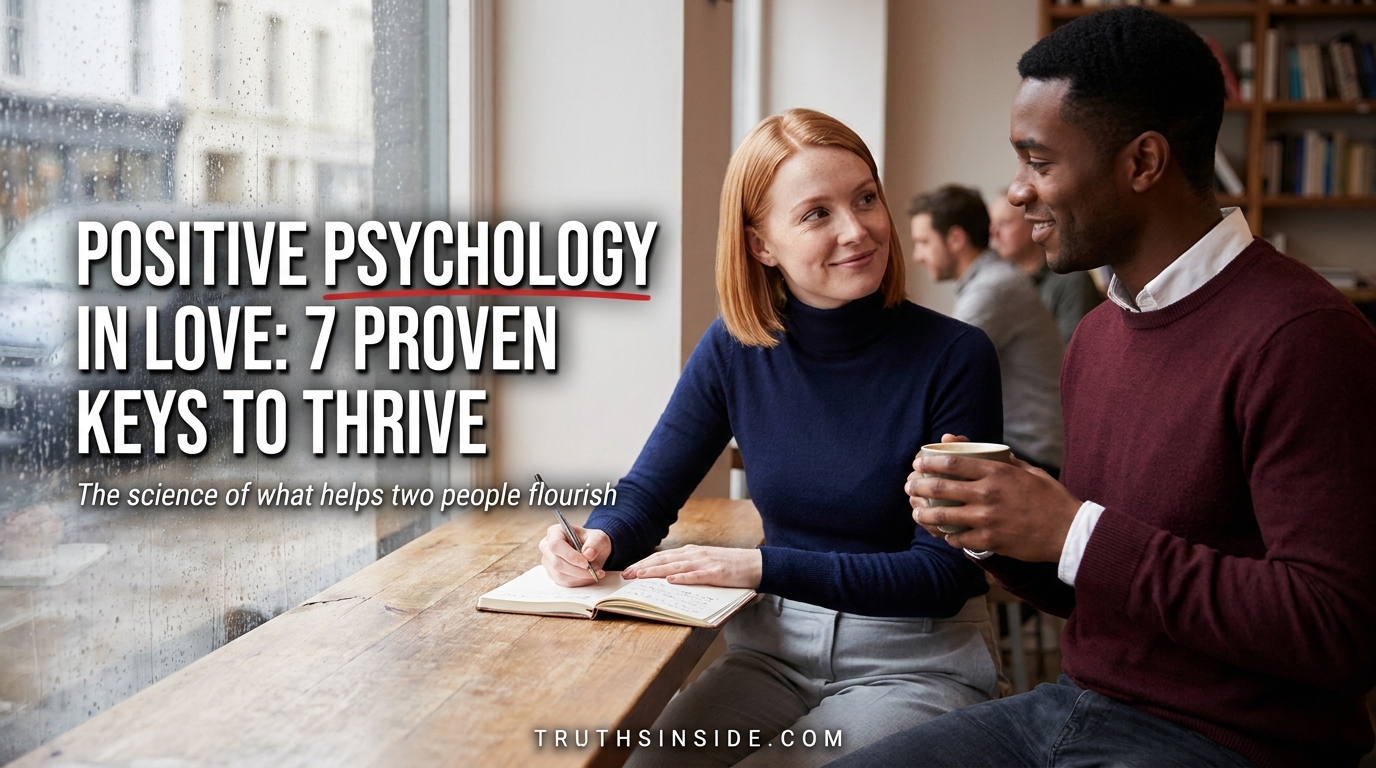
Positive Psychology in Love: What Makes Relationships Flourish
Positive psychology in love begins with a question most of us rarely ask: not “why are we fighting?” but “what makes us feel alive together?” If your relationship feels fine but flat, with no crisis and no spark, you are in good company. Many couples work hard to avoid problems and forget to build joy.
The science suggests joy deserves effort. The Harvard Study of Adult Development, one of the longest studies of adult life, has followed participants for more than eight decades. Its directors report that the quality of our close relationships is among the strongest predictors of long-term health and happiness.
This guide explains what positive psychology in love means, the research behind it and seven proven keys you can use this week. You will also see how a simple framework called PERMA maps onto romance, and how to avoid the trap of fake positivity.
What Is Positive Psychology in Love?
Positive psychology is the scientific study of what helps people and relationships thrive. Psychologist Martin Seligman helped launch the field in the late 1990s, arguing that psychology had spent decades studying illness and too little time studying strength. Positive psychology in love applies that same curiosity to couples. Instead of asking only how relationships fail, it asks how they flourish.
Traditional relationship advice often focuses on repair: fix the fights, solve the problem, close the gap. That work matters. But removing negatives does not automatically create positives. A couple with no conflict can still feel distant, bored or lonely. Positive psychology in love adds the missing half by building appreciation, play, meaning and growth on purpose.
It is also practical. The tools are small, specific and evidence-based: a certain way of responding to good news, a gratitude habit, a weekly ritual. None requires perfection or a perfect partner. They simply direct your attention toward what is going right, which is exactly where relationship energy tends to grow.

Why Positive Psychology in Love Matters More Than Avoiding Problems
Imagine two couples who face the same stresses: busy jobs, tight money, tired evenings. One couple only reacts to problems. The other also protects time for laughter, thanks and shared goals. Over the years, the second couple tends to feel closer, not because they have fewer problems but because they have more reserves to draw on when problems arrive.
Psychologist Barbara Fredrickson’s broaden-and-build theory helps explain why. Positive emotions such as joy, gratitude and interest seem to broaden attention and build lasting resources, including stronger social bonds. In a relationship, that means kindness today makes it easier to be generous tomorrow. Positive psychology in love treats good feelings not as a luxury but as a kind of fuel.
There is a protective effect, too. When a relationship has a deep store of goodwill, a partner’s mistake is more likely to be read as a bad moment instead of a bad character. That small shift in interpretation can prevent hundreds of unnecessary arguments over a lifetime.
Strong love is not only the absence of fights. It is the presence of things worth protecting.
7 Proven Keys of Positive Psychology in Love
Each key below comes from research on how couples thrive. You do not need all seven at once. Pick one, practice it for a week and notice what changes.
Key 1: Build a Healthy Ratio of Positive to Negative
Relationship researcher John Gottman found that stable couples tend to have about five positive interactions for every negative one during conflict. Positive moments include a smile, a touch, a thank-you, a bit of humor or a sincere question. The ratio is a guide, not a rule, but the idea is powerful: every relationship has negatives, so the positives must be plentiful and frequent. Positive psychology in love starts by making the small good moments deliberate.
Key 2: Respond Actively and Constructively to Good News
Psychologist Shelly Gable and colleagues studied how partners respond when one shares good news. They found that “active-constructive” responses, which show genuine enthusiasm and curiosity, were linked with higher relationship satisfaction. If your partner says, “I got the promotion!”, a passive reply such as “That’s nice” falls flat. Try “That’s amazing, tell me everything. How did it feel?” How you celebrate may matter as much as how you comfort.
Key 3: Practice Find, Remind and Bind Gratitude
Psychologist Sara Algoe proposed the find-remind-bind theory: gratitude helps you find new partners, remind you of the value of current ones and bind you closer to them. In daily life, say the specific thing you appreciate and why it mattered: “Thank you for making the call I was dreading. I felt so relieved.” Specific gratitude is one of the most reliable tools of positive psychology in love, because it shows that you noticed.
Key 4: Use Each Other’s Character Strengths
Positive psychologists Christopher Peterson and Martin Seligman identified twenty-four character strengths, such as kindness, curiosity, humor, bravery and fairness. Couples can name each other’s top strengths and look for ways to use them. If your partner is curious, plan an adventure. If they are kind, thank them for it. Being seen for your best qualities builds a sense of being valued, not just tolerated.
Key 5: Keep Growing Together
Psychologist Arthur Aron’s self-expansion model suggests that people feel closer when a relationship helps them grow, learn and gain new experiences. In one set of studies, couples who did mildly challenging, novel activities together reported higher relationship quality than those who did pleasant but familiar ones. Try a new class, a new trail or a new cuisine. Novelty wakes up attention that routine has put to sleep.
Key 6: Savor the Good Moments
Savoring means deliberately paying attention to a pleasant experience and letting it linger. Instead of rushing past a lovely evening, pause and say, “I am really enjoying this.” You can also savor in memory by recalling a favorite trip or in anticipation by looking forward to a coming date. Shared savoring multiplies the pleasure, and it is a gentle, free form of positive psychology in love.
Key 7: Create Shared Meaning and Rituals
Couples who flourish tend to feel they are part of something bigger than themselves: shared values, traditions, goals and stories. Rituals, such as Sunday pancakes, an annual trip or a goodnight question, give daily life a sense of meaning. Gottman calls this “creating shared meaning,” and it often separates relationships that feel like partnerships from those that feel like arrangements.

PERMA in Love: A Simple Framework for Positive Psychology in Love
Seligman’s PERMA model describes five building blocks of well-being: Positive emotion, Engagement, Relationships, Meaning and Accomplishment. It was created for individuals, but it maps neatly onto couples. Use it as a checklist to see which part of your relationship needs a little attention.
Positive Emotion
How often do you laugh together, show affection or share small joys? Positive psychology in love invites you to protect these moments on purpose, because they do not appear automatically after the early years.
Engagement
Engagement means being absorbed in something together, a state sometimes called flow. Cooking a meal, hiking, building a puzzle or dancing can all create it. Shared absorption pulls you out of your phones and into each other.
Relationships
Within a relationship, this means your wider circle too. Couples who nurture friendships, family ties and community feel less pressure to be everything for each other. Strong connections outside the couple often strengthen the connection inside it.
Meaning
Ask what your relationship is for. Maybe it is raising kind children, building a home, serving others or exploring the world. Naming a shared purpose gives your daily choices direction and makes hard seasons easier to endure.
Accomplishment
Celebrating goals, big and small, builds a team identity. Cheer for each other’s projects, and set at least one goal together each year. Achievements feel richer when someone is cheering you on.
📃 Related article: Taking the Relationship for Granted: 7 Shocking Signs
Positive Psychology in Love Is Not Toxic Positivity
A common misunderstanding is that positive psychology in love means pretending everything is fine. It does not. Toxic positivity insists on good vibes and dismisses real pain, which usually leaves partners feeling unheard. Healthy positivity makes room for sadness, anger and fear, and then adds appreciation, hope and connection alongside them.
Gottman’s research on conflict shows that even happy couples argue. What separates them is how they argue: with gentleness, repair attempts and respect, instead of contempt and defensiveness. A flourishing relationship is not one without difficult conversations. It is one where those conversations are held on a foundation of goodwill.
In short, do not use positivity to silence a partner. If your partner says, “I am worried about money,” do not answer, “Let’s stay positive.” Say, “That sounds stressful. Let’s look at it together.” Positive psychology in love begins with truth and adds strength to it. It is a complement to honest communication, never a replacement.
Real positivity does not deny the storm. It reminds you who is in the boat with you.
Forgiveness: The Hidden Strength Behind Positive Psychology in Love
No couple avoids hurting each other. Researchers who study forgiveness describe it not as excusing harm but as gradually releasing the urge for revenge and replacing it with understanding. Couples who can forgive small and medium hurts often report greater closeness, because they learn that mistakes do not end the bond.
Forgiveness works best when it follows honest accountability. The partner who caused pain names what happened, apologizes specifically and changes the behavior. The hurt partner is given time, and is never rushed to “get over it.” Positive psychology in love respects both sides of this process, because forgiveness without truth becomes denial, and truth without forgiveness becomes a permanent courtroom.
Practical steps help. Name the hurt, share what you need to feel safe again and notice small repairs over time. Some couples also set a gentle rule: when an old issue returns, they ask, “Is this new, or are we replaying the past?” That question alone can stop an argument from growing.
Positive Psychology in Love Across the Years
The tools stay the same, but their shape changes with each stage. In new relationships, savoring and curiosity come easily, so the task is to build good habits early. In busy parenting years, tiny rituals matter most: a ten-minute talk after bedtime, a shared joke, a quick message in the afternoon.
In long relationships, the challenge is familiarity. It is easy to assume you know everything about each other and to stop asking. Fresh questions, new experiences and deliberate gratitude can reopen the sense of discovery. After major changes such as retirement or children leaving home, couples can use positive psychology in love to redefine shared goals and rediscover what they enjoy together.
Whatever your stage, remember that flourishing is not a finish line. It is a practice, renewed each season, and every season offers a new reason to choose each other again.
A Real-Life Example of Positive Psychology in Love
Lena and Omar had been together eight years. They were kind and rarely fought, but evenings had become a quiet loop of dinner, screens and sleep. Neither felt unhappy, and neither felt excited.
After reading about gratitude and savoring, they tried a small experiment. Each night, they shared one thing they appreciated about the other and one good moment from the day. At first, the answers were short and awkward. By week two, they began to laugh and remember small details. Omar mentioned that Lena had patiently helped his sister with a resume. Lena shared how much she loved hearing Omar hum while cooking.
They also added a monthly “first” night: a new restaurant, a new walk or a new hobby class. Within two months, they described feeling like a team again. Nothing about their circumstances had changed. What changed was where they pointed their attention, and attention is the quiet engine of positive psychology in love.
Your 21-Day Plan for Positive Psychology in Love
Habits form through repetition, so here is a simple three-week plan. Each week adds one practice, and you keep the earlier ones going. Aim for about ten minutes a day.
Week 1: Notice and Appreciate
Every day, tell your partner one specific thing you appreciate and why it mattered. Keep it concrete: “Thank you for refilling my coffee, it made the morning easier.” Resist generic praise. The goal is to train your brain to scan for what is going right.
Week 2: Celebrate and Savor
When your partner shares good news, respond with real curiosity and enthusiasm. Ask two follow-up questions. At the end of each day, name one moment you want to savor. This week turns positive psychology in love into an active conversation instead of a private thought.
Week 3: Grow and Create Meaning
Plan one new activity together and one ritual you will keep. Talk about a shared goal for the next year. Finish by writing a short sentence about what your relationship stands for. These steps link everyday life to something larger and give the habits staying power.
Common Mistakes With Positive Psychology in Love
Even good tools can go wrong. Watch for these four pitfalls.
First, using positivity as a weapon: “You should just be grateful” is not support. Second, expecting instant change. Feelings follow behavior, but slowly, so give new habits weeks, not days. Third, keeping score about who is doing more. Gratitude works best as a gift, not a ledger.
Finally, ignoring real problems. If your relationship includes betrayal, contempt, repeated disrespect or fear, positive habits cannot replace honest repair or professional help. Positive psychology in love grows best in soil that is safe.
When Positive Psychology in Love Needs Extra Support
Some challenges need more than daily habits. If depression, anxiety, trauma, addiction or a major betrayal is straining the relationship, a licensed therapist can help. Couples therapy approaches such as the Gottman Method and Emotionally Focused Therapy are structured, evidence-informed ways to rebuild connection.
If your relationship includes threats, intimidation, controlling behavior or violence, please treat it as a safety issue. In the United States, the National Domestic Violence Hotline is available at 1-800-799-7233. If you or someone you love is thinking about suicide, you can call or text 988 at any time.
Asking for help does not mean the relationship is failing. It means you value it enough to protect it. Many couples find that a few sessions with a professional give them skills and language that years of guessing never provided.
📃 Related article: Processing Emotions Together: 7 Powerful Ways to Heal
FAQ: Positive Psychology in Love
What is positive psychology in love?
Positive psychology in love is the application of positive psychology research to romantic relationships. It focuses on building strengths such as gratitude, kindness, shared meaning and joyful connection, instead of only fixing problems.
Does positive psychology in love work for couples in conflict?
It can help, because goodwill and appreciation make hard conversations safer. But it works best alongside honest communication and, when needed, therapy. Positivity should never be used to dismiss real concerns.
How long does it take to see results?
Many couples notice warmer interactions within a couple of weeks of consistent practice, such as daily appreciation or savoring. Deeper changes in trust and closeness usually build over months.
Can I practice positive psychology in love if my partner is not interested?
Yes. You can change your own half by offering specific gratitude, responding enthusiastically to good news and planning small rituals. Many partners respond gradually, though lasting change works best when both people participate.
Is positive psychology in love the same as toxic positivity?
No. Toxic positivity denies difficult emotions. Positive psychology in love acknowledges pain honestly and then adds appreciation, hope and growth. The two are quite different in effect.
Final Thoughts
A flourishing relationship is not luck. It is built from small, repeated choices: a specific thank-you, an enthusiastic reply, a new adventure, a ritual that belongs only to you. Positive psychology in love gives those choices a name and a scientific foundation.
Start tonight with one sentence of appreciation. Let it be the first brick in a relationship that does more than survive, one that grows, laughs and stays curious for many years to come.
Found this helpful? Please do three things:
- Save this article so you can return to the seven keys and the 21-day plan.
- Share it with someone you want to flourish with.
- Follow Truthsinside.com for more psychology-backed insights on love and relationships.
🎵 Music
Maren Lull is a singer-songwriter who writes from the places most people don’t talk about out loud.
Not the dramatic grief. Not the obvious heartbreak. The quiet kind — the ordinary Tuesday emptiness, the habit of reaching for someone who isn’t there anymore, the particular exhaustion of being strong for so long that the strength itself wears thin.
Her music lives at the intersection of emotional honesty and soft beauty — breathy vocals over gentle piano, slow tempos, lyrics that feel less like songs and more like something you wrote in a private notebook at two in the morning and never showed anyone.
Maren Lull writes for the people who feel everything deeply and say very little about it. For the ones who listen to sad music not because they want to feel worse — but because being understood, even by a song, makes the feeling easier to carry.
📱 Follow Maren Lull:
→ Spotify
→ Apple Music
→ Youtube
→ Audiomack