The Subtle Red Flags of a Sociopath in a Relationship
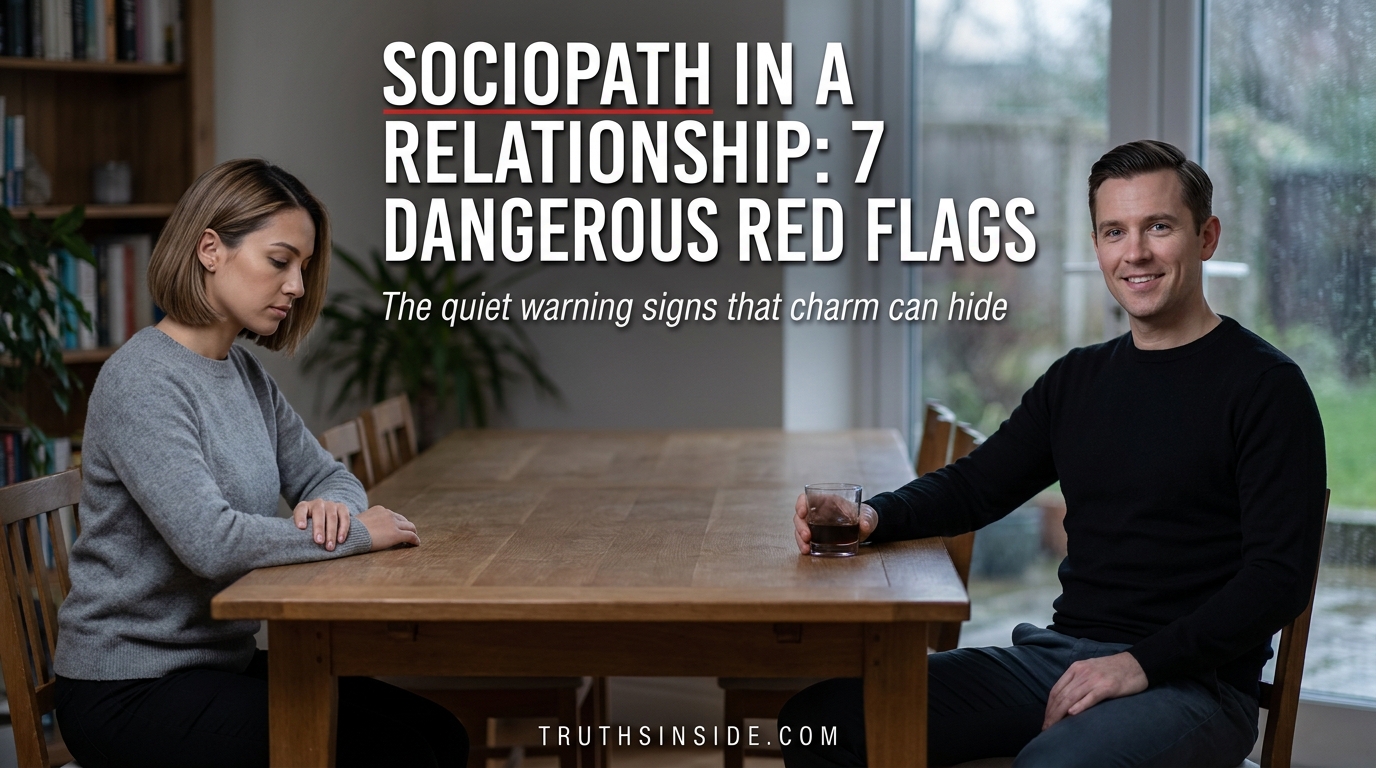
Living with a sociopath in a relationship rarely feels like danger at first. It feels like being chosen. The attention is intense, the charm is effortless and the person across the table seems to understand you better than anyone ever has. Then, slowly, something starts to feel off, and you cannot quite explain why.
Researchers estimate that antisocial personality disorder, the clinical diagnosis closest to what people call “sociopathy,” affects somewhere between 1 and 4 percent of adults, depending on the study. Most people with these traits are not violent criminals. Many are charming, successful and very good at being liked, which is exactly why the red flags can be so subtle.
This guide explains what a sociopath in a relationship actually looks like, seven subtle red flags to watch for, what the pattern does to you and how to protect yourself. It is about behavior, not labels, and about trusting what you have noticed.
What Does “Sociopath in a Relationship” Really Mean?
“Sociopath” is a popular word, not an official diagnosis. In clinical practice, the relevant diagnosis is antisocial personality disorder (ASPD), which is marked by a long-term pattern of disregarding and violating the rights of others. Related ideas include psychopathy, described by researcher Robert Hare, and traits such as shallow emotions, lack of remorse and manipulation.
Hare’s well-known Psychopathy Checklist describes traits like superficial charm, grandiosity, pathological lying, manipulativeness, callousness and failure to accept responsibility. You do not need to memorize the list. What matters is the pattern: repeated deception, little genuine guilt and treating people as tools to be used instead of partners to be loved.
An important caution: only a qualified professional can diagnose anyone, and you cannot reliably diagnose a partner from the outside. You also do not need a diagnosis to protect yourself. Whether the cause is ASPD, another personality pattern or simply deeply selfish behavior, a sociopath in a relationship leaves a recognizable trail of confusion, self-doubt and harm. Your safety depends on the behavior, not the label.

Why a Sociopath in a Relationship Is So Hard to Spot
The first reason is charm. People with strong manipulative traits are often skilled at reading what others want and mirroring it back. They may match your interests, praise your dreams and seem to share your values within days. This is not magic. It is a performance, and early on it is nearly impossible to tell from the real thing.
The second reason is a mask that slips only in private. A sociopath in a relationship may be warm and generous around friends, family and coworkers, so when you describe what happens at home, people respond with disbelief. “But he is so nice” is one of the most isolating sentences a person can hear.
The third reason is a cycle of reward and withdrawal. Intense affection, followed by coldness, followed by relief, can create a powerful emotional bond, sometimes called trauma bonding. Your brain learns to chase the good moments and excuse the bad ones. This is why intelligent, perceptive people are caught in these dynamics. It has nothing to do with weakness.
The most dangerous charm is the kind that makes you doubt your own memory.
7 Subtle Red Flags of a Sociopath in a Relationship
No single sign of a sociopath in a relationship proves anything. Everyone lies sometimes and everyone is selfish sometimes. What matters is a pattern: several of these signs appearing together, repeatedly and over time, with little genuine change.
Red Flag 1: Overwhelming Charm and Love Bombing
Everything moves fast. Within days or weeks, you hear “I have never met anyone like you,” “You are my soulmate” and “I cannot live without you.” The gifts, texts and attention feel dazzling. Experts call this love bombing, and it often precedes control. A sociopath in a relationship may use early intensity to build rapid dependence before you have had time to see who the person truly is.
Red Flag 2: Lying That Feels Effortless
Small lies, big lies, lies with no obvious purpose. Stories change slightly. Details do not match. When confronted, the explanation arrives instantly and confidently, often with a twist that makes you the unreasonable one. Pathological lying is a core trait in Hare’s checklist, and it is especially unsettling because the person rarely seems anxious about being caught.
Red Flag 3: No Real Remorse
Apologies, when they come, sound rehearsed: “I am sorry you feel that way” or “I said I was sorry, what more do you want?” There is little sign of genuine guilt, and the same behavior returns soon after. A healthy partner who hurts you feels the weight of it. A sociopath in a relationship may treat an apology as a tool to end the conversation, not a repair of the bond.
Red Flag 4: Shallow or Performed Emotions
Their feelings look slightly theatrical. Sadness switches on and off, affection arrives on cue and your own pain seems to bore or irritate them. You may notice that empathy seems to appear when it is useful, and vanish when it is not. With a sociopath in a relationship, many survivors describe a sense that the emotions were “copied” rather than felt.
Red Flag 5: Blame Shifting and Gaslighting
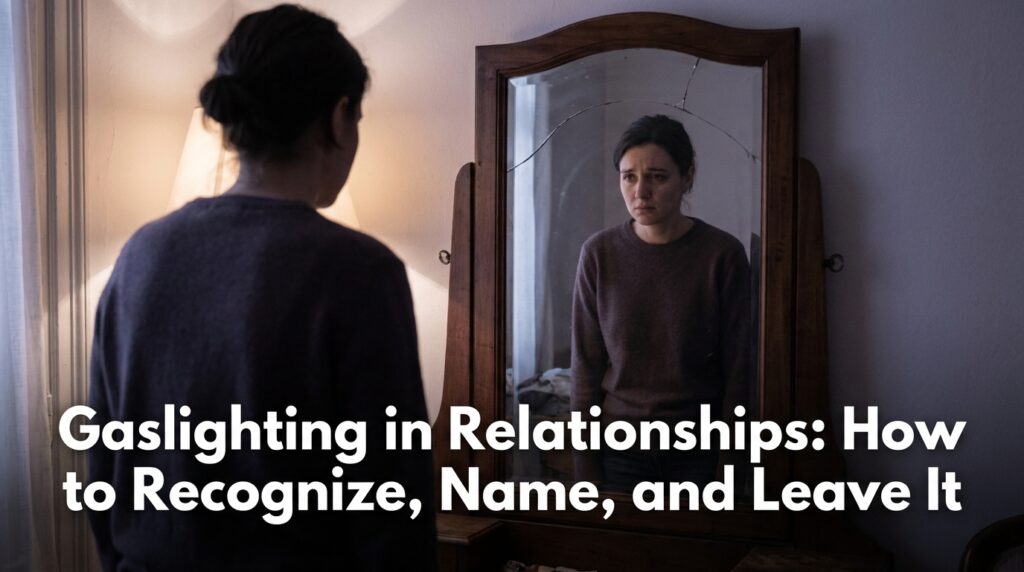
With a sociopath in a relationship, every problem is someone else’s fault, especially yours. You raise a concern about a broken promise, and the conversation turns into a list of your flaws. They deny things they clearly said, rewrite events and say “you are imagining it.” Over time, you may stop trusting your own memory, which is exactly the effect gaslighting is designed to produce.
Red Flag 6: Isolation and Control Disguised as Care
At first it sounds loving: “I just want you all to myself.” Then your friends become “a bad influence,” your family “does not understand us” and your plans somehow keep falling through. A sociopath in a relationship may expand control over money, time, devices or social life gradually. Because each step seems small, you rarely see the cage until you are inside it.
Red Flag 7: Cruelty Hidden Inside “Jokes” and Tests
A sociopath in a relationship may poke at your insecurities and then laugh. They test your boundaries with small violations to see what you will tolerate. They enjoy being the person who knows your vulnerabilities and sometimes uses them. When you protest, you are “too sensitive.” Each boundary crossed without consequence teaches them how far they can go.

The Idealize, Devalue, Discard Pattern
Many people who have been through this describe a three-stage cycle. With a sociopath in a relationship, first comes idealization, when you are placed on a pedestal and showered with attention. This stage creates attachment and trust, and it is the part you will remember most fondly.
Next comes devaluation. The compliments dry up, criticism creeps in and the person who once adored you now seems bored, cold or contemptuous. You find yourself working harder to win back the early warmth, which is exactly the dynamic that keeps you invested. A sociopath in a relationship often moves between warmth and cruelty just frequently enough to keep you hoping.
Finally, some relationships end in discard, when the partner abruptly leaves, often with little visible remorse, sometimes already attached to someone new. The suddenness can feel baffling and devastating. Understanding the cycle will not erase the pain, but it can help you see that the problem was not your worth. The pattern existed long before you arrived.
📃 Related article: Emotional Cheating: 7 Shocking Red Flags to Spot
How a Sociopath in a Relationship Affects You
The effects of a sociopath in a relationship are rarely visible from the outside. Many people describe constant anxiety, walking on eggshells and a sense of never knowing which version of their partner will appear. Sleep suffers. Concentration wanes. You may feel foggy, ashamed or strangely guilty without being able to name why.
Self-doubt is a common result. After enough gaslighting, you may rehearse conversations in your head, question your memories and apologize for things that were not your fault. Friends may notice you seem quieter, more anxious or less like yourself. These changes are not signs of weakness. They are normal responses to prolonged confusion and emotional pressure.
If you recognize these effects, remember that the goal is not to prove anything to anyone. It is to restore your sense of reality and safety. A sociopath in a relationship may leave you doubting your perceptions, but your feelings are information, and you are allowed to take them seriously.
Trust Your Gut: Questions to Ask Yourself
When doubts arise, it helps to step back and look at the pattern. Consider these questions privately, and write down honest answers.
- Do I feel more anxious, smaller or less like myself since this relationship began?
- Do the stories I am told change, and does questioning them make things worse?
- When I get hurt, do I receive genuine care, or do I end up comforting them?
- Have my friendships, plans or independence quietly shrunk?
- Do I rehearse what I say to avoid a reaction?
- Is the person kind to others only when it is useful or being watched?
- Do I feel afraid of what might happen if I say no?
Answering yes to several does not prove a diagnosis. It does suggest that the relationship is costing you something important. Whatever label fits, living with a sociopath in a relationship, or anyone who acts like one, should not leave you feeling less safe and more confused.
Sociopath, Narcissist or Just a Bad Partner?
Online, labels fly quickly: sociopath, psychopath, narcissist, toxic. They overlap, and they are easy to misuse. Narcissistic traits typically involve a fragile need for admiration, while antisocial traits involve disregard for rules and others’ rights. In real life, harmful partners often show a mix of selfishness, entitlement and poor empathy that does not fit neatly into any one box.
It is also possible to misread a partner who is simply immature, stressed, traumatized or struggling with a different condition. Not every liar is a sociopath, and not every cold partner is dangerous. This is why behavior over time matters more than any single trait or quiz result.
The practical question is the same whatever the label: is this person honest, accountable and capable of caring about how their actions affect you? If the answer is consistently no, and your well-being is shrinking, a sociopath in a relationship, or something very close to it, is a fair description of your reality, even without a diagnosis.
What to Do If You Suspect a Sociopath in a Relationship
First, slow down and protect your safety. Do not confront the person with a list of accusations, especially if you fear their reaction. People with manipulative patterns often respond to exposure with denial, charm or retaliation, so choose your steps carefully.
Quietly rebuild your support network. Reach out to a trusted friend, family member or counselor, and tell them what you have noticed. Isolation is the tool that keeps these dynamics going, and reconnecting weakens it. Keep a private record of dates, events and conversations in a place the other person cannot access. Writing things down can restore your trust in your own memory.
Set small boundaries and observe what happens. A respectful partner adjusts when you ask. A sociopath in a relationship often escalates, mocks or punishes the boundary. Their reaction tells you more than their words. Finally, consider speaking with a licensed therapist who understands manipulative relationships, because professional guidance helps you think clearly and plan.
How to Leave a Sociopath in a Relationship Safely
Leaving a sociopath in a relationship can be the most dangerous time in any controlling situation, so plan carefully. Do not announce your plan in advance. Gather important documents, such as identification, financial records and medical information. Arrange a safe place to stay with someone you trust, and think about how to protect your phone, email and location.
Consider contacting the National Domestic Violence Hotline in the United States at 1-800-799-7233, or text START to 88788. Advocates can help you create a safety plan even if you are not sure the relationship is “bad enough” to count. If you are in immediate danger, call 911.
After leaving, limit or end contact as much as your situation allows. Expect charm, guilt, promises or sudden crises designed to pull you back, a pattern sometimes called hoovering. Having a friend, therapist or advocate in your corner makes those moments easier to survive. You are not being cruel by protecting yourself. You are being wise.

Healing After a Sociopath in a Relationship
Recovery takes time, and it rarely follows a straight line. Many survivors describe grief for the person they thought they knew, anger at themselves and a long period of doubt. All of these reactions are normal. You were not foolish. You were skillfully deceived by someone who studied what you needed.
Therapy can help, especially approaches that address trauma, anxiety and self-trust. Support groups, whether in person or online, remind you that you are not alone. Rebuild routines that make you feel safe: sleep, movement, friendships and hobbies that belong only to you. Write a list of the red flags you noticed and the ways you acted on them. Over time, this list becomes proof that your instincts were working.
Healing also means relearning what healthy love feels like. It is often quieter than you expect: consistent, honest, calm. After a sociopath in a relationship, ordinary kindness may feel strange or even boring at first. Give yourself time to see that calm is not the absence of passion. It is the presence of safety.
Healthy love does not make you question your sanity. It lets you rest.
A Composite Example of a Sociopath in a Relationship
The following story is a composite, built from patterns that survivors commonly describe, not a real individual. Mia met Jordan at a friend’s party. Within a week, he told her she was the most extraordinary person he had met. He remembered her favorite song, planned surprise dinners and texted all day. She felt dazzled.
Three months in, small things appeared. Jordan told stories that did not match. He mocked her sister as “jealous.” When Mia mentioned feeling hurt, he laughed and said she was too sensitive, then sulked for two days until she apologized. Her friends noticed she was canceling plans more often.
Mia began keeping a private note on her phone of what was said and when. One evening, reading it back, she saw the pattern clearly for the first time. She contacted her sister, then a counselor, and began quietly building a plan. Leaving a sociopath in a relationship was hard, but the note reminded her what she had seen. It was proof that her perception had never been the problem.
📃 Related article: Charisma as a Red Flag: 7 Dangerous Signs to Spot
FAQ: Sociopath in a Relationship
What is a sociopath in a relationship?
The term describes a partner who shows a long-term pattern of manipulation, deceit, lack of empathy and little remorse. “Sociopath” is not an official diagnosis, and the closest clinical term is antisocial personality disorder, which only a professional can diagnose.
What are the first signs of a sociopath in a relationship?
Common early signs include intense charm, rapid declarations of love, effortless lying, blaming others and little genuine remorse. Look for patterns repeated over time instead of single incidents.
Can a sociopath love someone?
Experts disagree, and people with these traits vary. Many show attachment to partners in ways that feel real to them, but often lack the empathy and accountability that make a relationship safe. For your own well-being, focus on behavior, not on what they might feel.
Can a relationship with a sociopath be fixed?
Change is difficult, because it requires honest self-reflection and accountability, which are often absent. If you stay, therapy for yourself, firm boundaries and strong outside support are essential. If you feel unsafe, prioritize leaving safely.
Should I confront a partner I think is a sociopath?
Usually not directly or alone. Confrontation can lead to denial, gaslighting or escalation. Instead, build support, document what happens and speak with a professional or a domestic violence advocate about a safe plan.
Final Thoughts
A sociopath in a relationship does not announce themselves. They arrive as the most attentive person you have ever met, and the truth emerges slowly, through patterns that are easy to excuse one at a time. If you have been doubting your memory, your sanity or your worth, please hear this: noticing is not paranoia. It is wisdom.
You do not need a diagnosis to decide that you deserve honesty, safety and care. Trust your observations, reach out for support and move at a pace that keeps you safe. Your peace is worth more than any performance.
Found this helpful? Please do three things:
- Save this article so you can return to the seven red flags whenever you need clarity.
- Share it with someone who may be doubting their instincts.
- Follow Truthsinside.com for more honest red flag guides and relationship psychology.
🎵 Music
Maren Lull is a singer-songwriter who writes from the places most people don’t talk about out loud.
Not the dramatic grief. Not the obvious heartbreak. The quiet kind — the ordinary Tuesday emptiness, the habit of reaching for someone who isn’t there anymore, the particular exhaustion of being strong for so long that the strength itself wears thin.
Her music lives at the intersection of emotional honesty and soft beauty — breathy vocals over gentle piano, slow tempos, lyrics that feel less like songs and more like something you wrote in a private notebook at two in the morning and never showed anyone.
Maren Lull writes for the people who feel everything deeply and say very little about it. For the ones who listen to sad music not because they want to feel worse — but because being understood, even by a song, makes the feeling easier to carry.
📱 Follow Maren Lull:
→ Spotify
→ Apple Music
→ Youtube
→ Audiomack