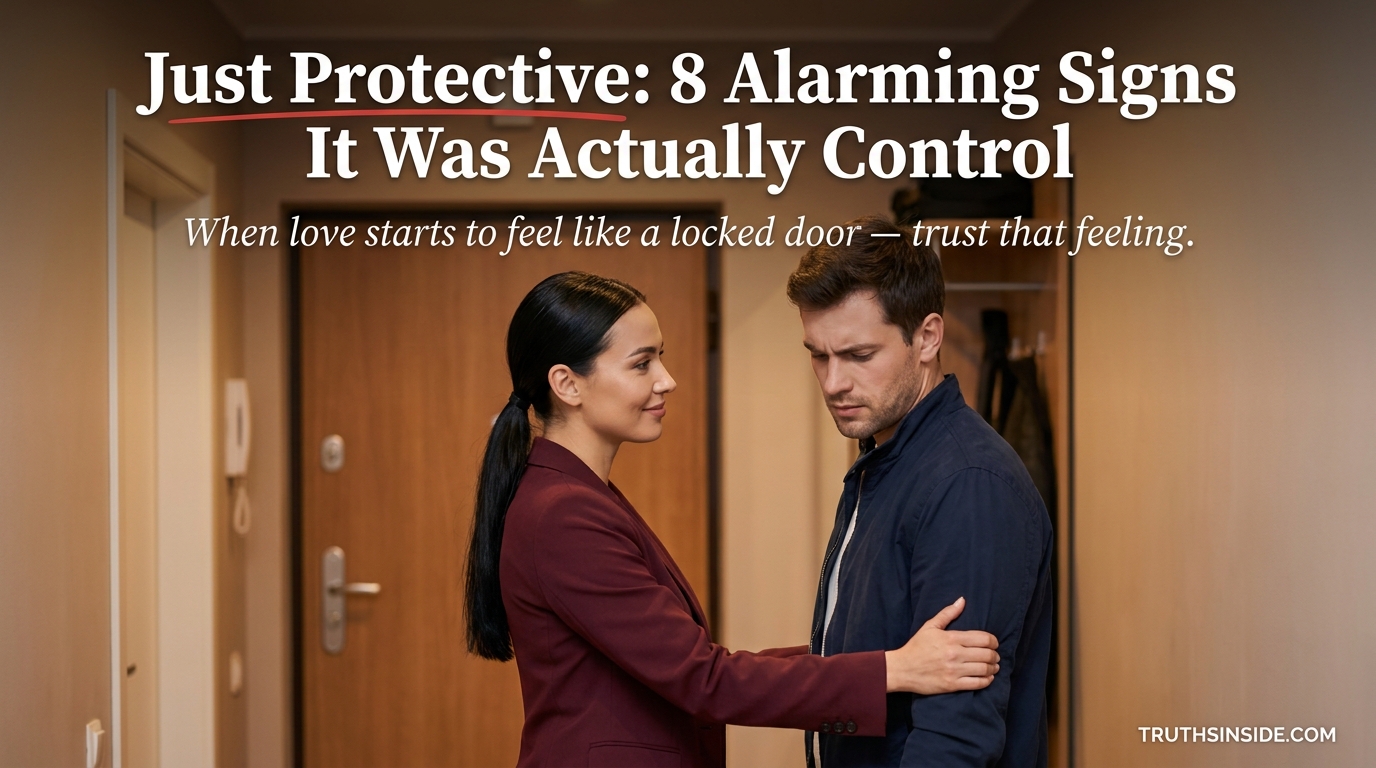
Just Protective: 8 Alarming Signs It Was Actually Control
When the Cage Is Built With Good Intentions
She said she was just protective — and for a long time, he believed her. That’s the thing about control that looks like love: it doesn’t announce itself. It arrives quietly, dressed in concern, wearing the language of devotion, and it builds its walls so gradually that by the time you feel the confinement, you’ve already forgotten what freedom felt like. According to the National Domestic Violence Hotline, controlling behavior is one of the most commonly underreported forms of relationship abuse — precisely because it so rarely looks like abuse from the outside. It looks like care. It looks like someone who loves you so much they can’t bear the thought of you being hurt.
His name was Caleb. He was thirty-four when he met Serena. She was magnetic — warm, attentive, and almost immediately devoted to him in a way that felt, at first, like the most incredible gift he had ever been given. She noticed everything. She remembered everything. She cared, deeply and visibly, about every detail of his life.
It took him two years to understand that being watched that closely was not the same as being loved. That being kept was not the same as being chosen. And that the phrase “I’m just protective of you” — used so often, so convincingly — had been covering something that had a very different name.
Understanding the Line Between Protection and Control
Before we name the eight red flags, it’s important to establish something clearly: genuine protectiveness exists, and it is a beautiful part of love. A partner who checks in when you’re driving late at night, who advocates for you when someone treats you poorly, who stands beside you when the world is difficult — that is real care. That is what protection actually looks like. It empowers. It makes you feel safer, not smaller.
Controlling behavior, by contrast, wears the costume of protection but produces the opposite outcome. Instead of making you feel more secure, it erodes your confidence. Instead of expanding your world, it systematically shrinks it. Instead of respecting your autonomy, it treats your independence as a threat to be managed.
The line between the two is not always immediately obvious — especially in the early stages of a relationship, when intensity can feel like passion and surveillance can feel like devotion. But the signs are there. They accumulate quietly, one small restriction at a time, until the person inside the relationship looks up one day and realizes they can’t remember the last time they made a decision that wasn’t somehow subject to someone else’s approval. Caleb had that moment. And once he had it, everything he’d been calling love looked fundamentally different.
📃 Related article: Red Flags in Jokes: 5 Painful Truths I Learned Too Late
Red Flag 1: She Made His Relationships Feel Like Threats
The first sign that “just protective” was actually control appeared in how Serena responded to the people in Caleb’s life. It started subtly. A comment here and there about his closest friend Marcus — “I just think he’s a bad influence on you. He doesn’t really respect your relationship with me.” A gentle concern raised about his college friend group — “I worry they bring out an old version of you that isn’t good for you anymore.” A quiet disappointment expressed whenever plans with his sister ran long.
None of it was aggressive. None of it arrived as a direct demand. It was always framed as worry. As caring. As her wanting the best for him. But the cumulative effect was that Caleb began spending less and less time with the people who had known him longest, loved him most independently, and who — importantly — were outside of Serena’s sphere of influence.
Psychologists identify this pattern as “isolation” — one of the most reliable early warning signs of a controlling relationship dynamic. It rarely begins with “you can’t see your friends.” It begins with planting seeds of doubt about those friends’ intentions until the controlled partner begins voluntarily withdrawing from them. The controller never had to issue a demand. The target dismantled their own support network and believed it was their own choice.
Red Flag 2: His Explanations Were Never Enough
The second red flag emerged in how Serena responded whenever Caleb did something without her prior knowledge or approval. Even small things — staying late at work, grabbing dinner with a colleague, taking a different route home — triggered a need for explanation that went far beyond normal curiosity between partners.
She never screamed. She never accused directly. But she asked questions in layers. Long, circling conversations that began with “I’m not upset, I just want to understand” and ended, somehow, with Caleb feeling guilty for something he couldn’t quite name. He found himself pre-explaining things before they happened. Texting updates nobody had asked for. Rerouting plans to avoid the conversation that would follow if he didn’t.
This pattern — sometimes called “emotional accounting” by relationship therapists — is a form of control that keeps the partner in a constant state of justifying their own ordinary autonomy. When someone consistently requires detailed explanations for normal, healthy independent behavior, they are not expressing concern. They are training their partner to seek permission. The distinction matters enormously. Caleb didn’t recognize it as training at the time. He recognized it as love — specifically, as love that required him to be very, very careful.
“Control that calls itself love doesn’t feel like a cage at first. It feels like someone who finally cares enough to pay attention.”
Red Flag 3: Her Worry Was Always His Responsibility to Fix
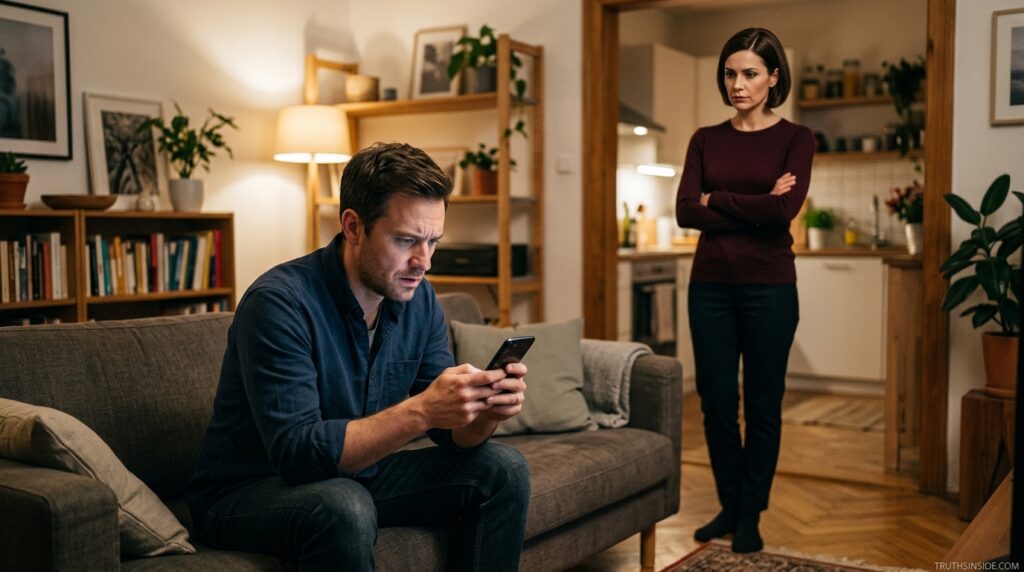
Serena worried. Constantly, expressively, and in ways that — every single time — required Caleb to modify his behavior to relieve her anxiety. If he went out, she worried until he came home. If he was unavailable by phone for an hour, she spiraled. If he mentioned a female colleague positively, she went quiet in a way that filled the room with tension he was expected to resolve.
This is a critically important red flag: when one partner’s anxiety consistently becomes the other partner’s behavioral responsibility, that is not a relationship dynamic. That is a hostage situation dressed in the language of emotional need. Real anxiety deserves compassion, support, and professional help. But anxiety weaponized — consciously or not — as a mechanism to control another person’s movements, decisions, and relationships is something different entirely.
Caleb became, over time, an expert manager of Serena’s emotional temperature. He calibrated everything — what he said, what he shared, what he planned, what he wore, who he mentioned — against the question of how she would receive it. He stopped thinking about what he wanted. He thought about what would keep the peace. That shift — from living his life to managing her reactions — is one of the most telling signs that “just protective” has crossed into control.
Red Flag 4: She Reframed His Boundaries as Betrayal
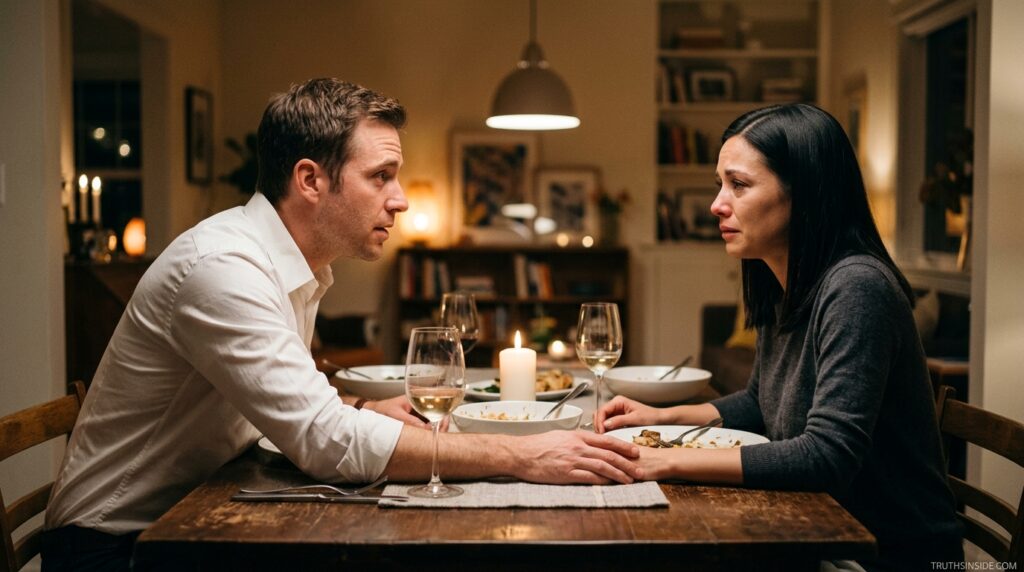
Every time Caleb tried to establish a boundary — to ask for an evening alone, to request that she not go through his phone, to suggest that constant check-ins felt suffocating — the conversation would somehow end with him comforting her. His need would become her wound. His boundary would become evidence of his selfishness, his lack of commitment, his failure to understand how much she loved him.
This reframing technique is one of the most psychologically sophisticated tools in a controller’s arsenal, and it is devastatingly effective. It works because it’s delivered in the language of vulnerability — tears, hurt, the appearance of genuine pain. It becomes nearly impossible for a caring person to maintain their boundary when the act of maintaining it appears to be causing suffering in someone they love.
Caleb was a caring person. So he would soften. He would apologize. He would abandon the boundary he had tried to set and spend the rest of the evening reassuring her that he did love her, that he wasn’t going anywhere, that he hadn’t meant to make her feel that way. He walked away from every one of those conversations feeling vaguely ashamed of his own needs. That shame was not accidental. It was the mechanism that kept the system running.
Red Flag 5: She Decided What Was Good for Him
Serena had opinions about everything in Caleb’s life. His diet. His sleep schedule. His friendships. His career choices. His hobbies. Which podcasts were “negative” for his mindset and which were acceptable. Which family members were supportive and which were toxic — a designation that, notably, never seemed to include her own behavior.
Each individual opinion was delivered carefully, reasonably, always framed as being in his best interest. But the totality of those opinions amounted to a comprehensive audit of his personhood. Nothing in his life existed outside the scope of her assessment. And her assessments, over time, became his operating instructions.
This is one of the clearest definitions of control: when one person in a relationship consistently positions themselves as the authority on what is good, healthy, appropriate, or acceptable for the other person — and does so without invitation — that is not protection. That is the removal of the other person’s right to self-determine. It is particularly insidious when done gently, because it can look like guidance, like wisdom, like someone who simply cares more and knows better. Caleb stopped trusting his own judgment so gradually he never noticed the exact moment it happened. He just noticed, eventually, that he couldn’t make a single decision without hearing her voice in his head first.
Red Flag 6: Love Was Used as a Measurement of Compliance
“If you loved me, you wouldn’t need to go.” That sentence — or some variation of it — appeared in Caleb’s relationship more times than he could count. Love, in Serena’s framing, was quantified by sacrifice. Specifically, by his sacrifice. By his willingness to stay home, to cancel plans, to check in more frequently, to need fewer things outside of their relationship.
When he met her needs, she was warm, generous, and deeply affectionate. When he asserted any form of independence, the warmth cooled. Not dramatically. Not in ways he could easily point to. Just enough for him to feel the difference. Just enough for him to learn, at the cellular level, that independence had a cost and compliance had a reward.
Behavioral psychologists call this “intermittent reinforcement” — a conditioning pattern where rewards and withdrawals alternate unpredictably, creating an almost compulsive attachment in the person being conditioned. It is the same mechanism that makes certain gambling games so addictive: the unpredictability of the reward keeps the player engaged far longer than consistent reward ever would. Caleb was not a gambler. But he had become conditioned just the same. And the currency he was gambling with was his own sense of self.
Red Flag 7: She Was Never Wrong — Only Misunderstood
In two years, Caleb could not recall a single instance of Serena genuinely taking accountability for her behavior. When conflict arose — and it did, regularly — the pattern was remarkably consistent. She would explain. She would contextualize. She would describe the childhood experience or the past relationship wound that had caused her to react the way she did. And somehow, by the end of the conversation, the discussion had migrated from her behavior to his responsibility to understand and accommodate it.
This is not therapy. This is not growth. Using past wounds to justify present harmful behavior — without any accompanying commitment to change that behavior — is a form of manipulation, even when it’s delivered with what appears to be genuine emotional vulnerability.
Real accountability sounds like: “I was wrong. That wasn’t fair. I’m going to work on that.” What Caleb consistently received sounded like: “I only did that because of what happened to me, and if you really loved me you’d understand instead of making me feel attacked for having feelings.” The difference is not subtle once you know how to hear it. But inside the relationship, wrapped in love and history and genuine emotional intimacy, it was almost impossible to distinguish. He spent two years trying to be understanding enough to deserve her accountability. It never arrived.
Red Flag 8: He Felt More Relieved Alone Than With Her
The final and perhaps most telling red flag came not from something Serena did — but from something Caleb felt. He noticed, in the moments when she was traveling for work or spending a weekend with her own family, that he felt something he hadn’t felt in a very long time. He felt light. He slept better. He laughed more easily. He called Marcus and talked for two hours and didn’t check the time once.
He felt like himself. And then she came home, and the calibration returned — the constant monitoring of his words, his plans, his expressions, his needs against the question of her reaction. The lightness contracted back into vigilance. And he sat with the devastating realization that he felt more at ease in the absence of the person who claimed to love him most.
That feeling — relief in the absence of a partner — is one of the most honest signals a relationship can produce. Love, real love, should make you feel more like yourself, not less. It should expand your world, not quietly dismantle it. When the most peaceful version of your life is the one that doesn’t include your partner, your nervous system is communicating something your mind may not yet be ready to hear. Caleb heard it that weekend. He spent three more months making sure he wasn’t wrong. He wasn’t.
“The moment he felt lighter without her was the moment he understood that what he’d been calling love had actually been labor.”
What Happened When Caleb Finally Named It
Caleb ended the relationship on a Tuesday evening. There was no dramatic confrontation. No ultimatum. He sat across from Serena in their apartment and said, as calmly as he could manage, that he had spent two years trying to be enough for someone who had never truly let him be free — and that he needed to leave.
She cried. She explained. She reached for the vulnerability that had always worked before. And this time — for the first time — he held his ground. Not angrily. Not cruelly. But with the quiet, unshakeable steadiness of someone who had finally stopped second-guessing what they knew.
The months that followed were not easy. Leaving a controlling relationship, even one without physical violence, carries its own specific grief. He had to rebuild his friendships. He had to relearn how to make decisions without consulting a voice in his head. He had to practice trusting his own judgment again, slowly and deliberately, like someone learning to walk after a long convalescence.
But he also rediscovered things he hadn’t realized he’d lost. His ease. His humor. His capacity to simply exist in a room without managing anyone’s temperature but his own. He called Marcus. He had dinner with his sister. He took a solo weekend trip and didn’t tell anyone where he was going. And for the first time in two years, that felt like exactly enough.

If You Recognize These Signs — In Your Life or Someone Else’s
Control that calls itself protection is one of the most difficult relationship dynamics to identify from the inside, and one of the most important to name. If you read through these eight red flags and recognized a pattern — either in your own relationship or in the relationship of someone you care about — please know that recognition is not accusation. It is the beginning of clarity.
Not every controlling relationship looks the same. Some are louder. Some are even quieter than Caleb and Serena’s. Some involve gender dynamics, cultural expectations, or specific power imbalances that make the patterns harder to see or harder to leave. There is no single blueprint for what this looks like from the outside.
But there are questions worth sitting with. Do you feel free to make decisions without calculating someone else’s reaction? Do you feel more like yourself when your partner is present — or less? Do you have relationships, interests, and parts of your life that exist comfortably outside your relationship? Does your partner’s “protection” make you feel safer — or just more watched? Your honest answers to those questions matter more than any label. They are the compass your nervous system has been trying to hand you all along.
The Truth About What Real Protection Looks Like
Real protection never requires you to be smaller. It never asks you to surrender friendships, autonomy, or your own sense of self in exchange for safety. Real protection says: “I am here. I trust you. I believe in your ability to navigate the world. And I will be beside you when things get hard — not instead of you, but with you.”
It is possible to love someone deeply and protectively without controlling them. Those two things are not in competition. In fact, the truest protection you can offer another person is the freedom to be fully, authentically themselves — knowing that your love will not be withdrawn when they exercise that freedom.
Caleb knows this now. He learned it the hard way, through two years of slowly disappearing inside a relationship that called itself love. But he also knows something else: recognizing the difference changed his life. And understanding that “just protective” was never the whole truth was the first, most essential step toward finding what the whole truth actually looked like.
He’s still looking. He’s doing it with his eyes wide open now. And that — more than anything else — is what freedom feels like.
📃 Related article: Dismissive Partner: 8 Alarming Red Flags Never to Ignore
💾 Save this article — the signs you recognize today could protect you tomorrow.
📤 Share it with someone who needs to hear that what they’re feeling is real.
➕ Follow Truthsinside.com for red flags, real stories, and the kind of truth that actually matters.
FAQ — Frequently Asked Questions
Q1: How do you tell the difference between genuine protectiveness and controlling behavior?
The clearest distinction is in the outcome. Genuine protection makes you feel safer, more supported, and more capable of navigating your own life. Controlling behavior — even when well-intentioned — consistently makes you feel monitored, restricted, and less confident in your own judgment. Ask yourself: does this person’s care make me feel empowered or managed? That answer is almost always diagnostic.
Q2: Can someone be controlling without realizing it?
Absolutely — and this is critically important to understand. Many people who exhibit controlling behavior genuinely believe they are being protective. Their behavior is often rooted in their own anxiety, attachment wounds, or learned patterns from previous relationships or family dynamics. This does not make the behavior acceptable or less harmful, but it does mean that labeling every controlling person as malicious misses the psychological complexity of how these patterns actually develop.
Q3: Is it possible for a controlling relationship to change if the controlling partner gets help?
Change is possible, but it requires the controlling partner to genuinely recognize the behavior, take full accountability without deflection, and commit to sustained therapeutic work — not as a strategy to keep the relationship, but as a genuine commitment to personal growth. This is relatively rare and cannot be rushed or forced by the partner being controlled. If change does not happen, it is not the responsibility of the person being controlled to wait indefinitely.
Q4: Why do people stay in controlling relationships even when they recognize the signs?
Leaving a controlling relationship is significantly more complicated than it appears from the outside. Factors include: genuine love for the partner, financial entanglement, social isolation engineered by the controlling behavior, trauma bonding from intermittent reinforcement cycles, fear of the partner’s reaction, and deep self-doubt cultivated by the relationship itself. Understanding these factors is essential to responding with compassion rather than judgment to people in these situations.
Q5: What are the first steps someone should take if they recognize these red flags in their relationship?
Start by rebuilding your external support network — reconnect with trusted friends or family members outside the relationship. Consider speaking with a therapist who specializes in relationship dynamics. Contact the National Domestic Violence Hotline (1-800-799-7233) for confidential support and guidance, regardless of whether physical abuse is involved. Document patterns you observe. And remember: you do not need to have a perfect case built before you are allowed to trust what you feel.
🎵 Music
Maren Lull is a singer-songwriter who writes from the places most people don’t talk about out loud.
Not the dramatic grief. Not the obvious heartbreak. The quiet kind — the ordinary Tuesday emptiness, the habit of reaching for someone who isn’t there anymore, the particular exhaustion of being strong for so long that the strength itself wears thin.
Her music lives at the intersection of emotional honesty and soft beauty — breathy vocals over gentle piano, slow tempos, lyrics that feel less like songs and more like something you wrote in a private notebook at two in the morning and never showed anyone.
Maren Lull writes for the people who feel everything deeply and say very little about it. For the ones who listen to sad music not because they want to feel worse — but because being understood, even by a song, makes the feeling easier to carry.
📱 Follow Maren Lull:
→ Spotify
→ Apple Music
→ Youtube
→ Audiomack