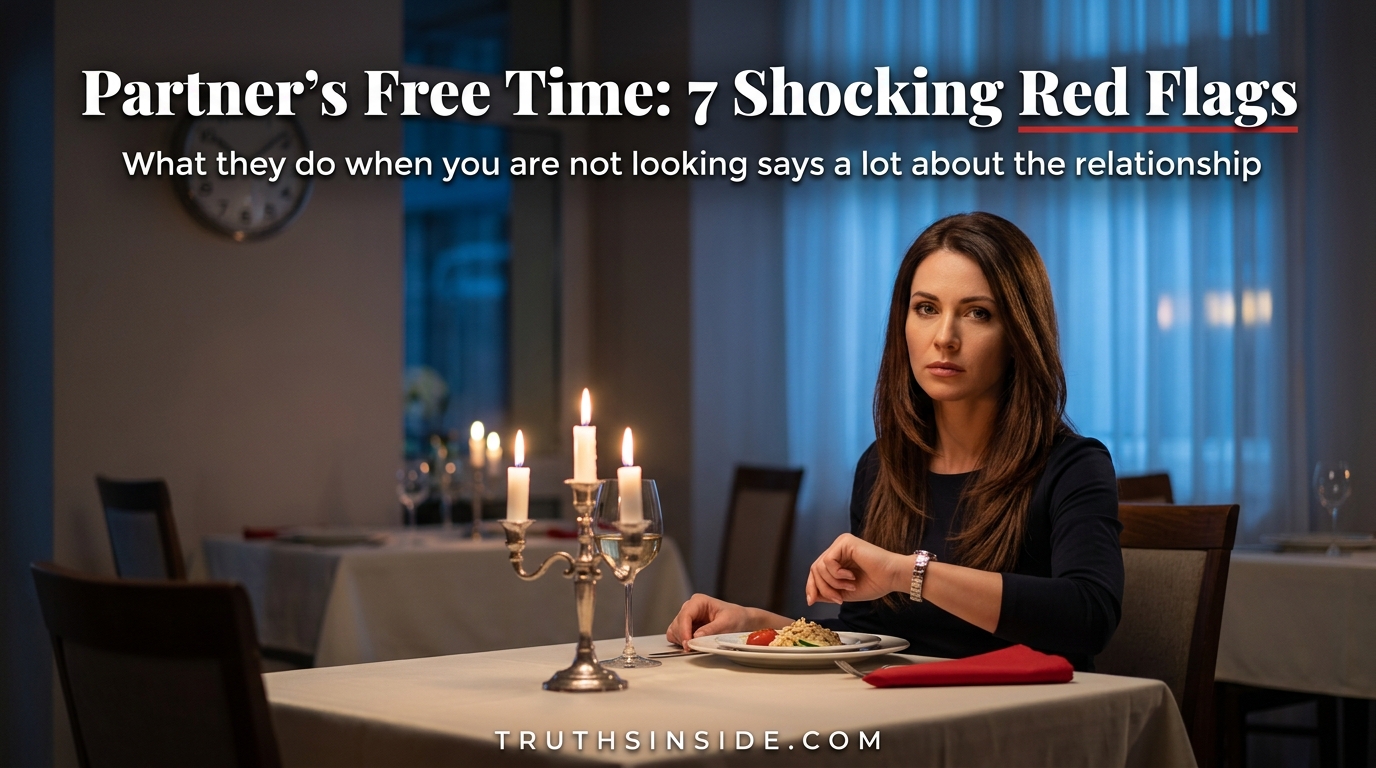
Red Flags in How a Partner Spends Their Free Time
Looking closely at your partner’s free time can feel uncomfortable, almost like spying. You may tell yourself that everyone deserves space, and that is true. But if a quiet voice keeps whispering that something about their evenings, weekends, or “just a few hours” does not add up, that voice deserves a hearing. Noticing a pattern is not paranoia. It is paying attention to your own relationship.
Researchers who study couples’ leisure, including Dennis Orthner and Ramon Zabriskie, have linked shared, high-quality leisure time with greater relationship satisfaction. Psychologist Arthur Aron’s self-expansion research suggests that doing new and engaging things together can strengthen closeness. How a person chooses to spend discretionary hours reveals priorities, habits, and honesty in ways that words often do not. That is why your partner’s free time can be one of the clearest windows into the health of a relationship.
In this guide, you will learn what healthy free time looks like, seven red flags in a partner’s free time, how to tell privacy from secrecy, and how to start a calm conversation about what you notice.

Why Your Partner’s Free Time Matters
A partner’s free time is the part of life that is chosen. At work, people follow schedules and rules. In their free time, they follow their own wants, which makes it a revealing mirror. How a person spends it shows what they value, who they want to be with, what they run toward, and what they run away from.
Healthy relationships contain both togetherness and independence. Self-determination theory, developed by psychologists Edward Deci and Richard Ryan, describes autonomy, the feeling of choosing your own actions, as a basic psychological need. People need hobbies, friends, and solitude. Wanting time to yourself is not a sign of weak love. It is a sign of a full life.
The question is not whether your partner has independent time. It is what the pattern of your partner’s free time says about the relationship. Does it feed the person and the relationship, or does it drain them? Is it open, or hidden? Is it balanced, or does one person get all of the rest while the other carries all of the load? Looking at your partner’s free time with these questions helps you separate healthy independence from warning signs.
Everyone needs space. The red flag is not the distance. It is what the distance is hiding.
What Healthy Looks Like in a Partner’s Free Time
Before listing red flags, it helps to know the baseline. A healthy partner’s free time tends to include several qualities. Hobbies and friendships are shared openly, even if you do not join them. Plans are communicated honestly, with a normal amount of flexibility. There is a general balance between time apart and time together. And when you need your partner, they make room.
A healthy partner’s free time also leaves energy for the relationship. A partner may spend Saturday on the golf course or at the climbing gym, then come home relaxed, curious about your day, and ready to connect. They do not hide the receipts, lie about where they were, or disappear without explanation.
Gottman’s research on “bids for connection” shows that couples who regularly turn toward each other’s small requests for attention, like a comment, a question, or a touch, build stronger bonds. Healthy leisure supports those moments instead of crowding them out. Keep this baseline in mind as you read the seven red flags in a partner’s free time below.
📃 Related article: Forgiveness vs Reconciliation: 7 Powerful Truths
7 Red Flags in Your Partner’s Free Time
One of these on its own may have an innocent explanation. What matters is repetition, secrecy, and the effect on you. Look for patterns, not single moments.
1. Secrecy and Unexplained Gaps
The first red flag in a partner’s free time is concealment. They are vague about where they were, change the subject when you ask, delete messages, guard their phone, or tell stories that shift from one telling to the next. Privacy is normal. Needing to hide ordinary activities from a partner’s free time is not.
Pay attention to the emotional tone as well. A partner who is simply private can say, “I would like some time to myself, and it is nothing to worry about.” A partner who is hiding something often becomes defensive, angry, or accusatory when asked a plain question. Their reaction can reveal as much as their answer.
2. A Partner’s Free Time That Always Excludes You
Some partners keep their leisure separate from the relationship entirely. You are never invited to meet their friends. Weekends fill up with plans you only hear about afterward. Your presence seems like an inconvenience rather than a pleasure.
Occasional solo plans are healthy. A consistent pattern of leaving you out, especially when combined with secrecy, can signal that the relationship is low on their list. Shared novel activities help couples stay close, so a partner who never makes room for any can leave a gap that grows wider over time.
3. A Partner’s Free Time Built Around Addictive Behavior
When most of a partner’s free time revolves around alcohol, drugs, gambling, or compulsive habits, the issue is no longer just leisure. Warning signs include repeated promises to cut back, hiding the behavior, missing responsibilities, financial trouble, mood swings, and irritability when they cannot engage in it.
Addiction is a health condition, not a moral failure, but it affects everyone close to the person. You are not responsible for fixing it. If you are concerned, the SAMHSA National Helpline offers free, confidential support at 1-800-662-4357, and the National Problem Gambling Helpline is available at 1-800-522-4700. Support groups for family members can help you too.
4. A Lopsided Leisure Gap
Sometimes the problem is fairness. One partner has hours of unstructured time every weekend, while the other handles the children, the household, and every errand. Researchers sometimes call this the “leisure gap,” and time-use studies have repeatedly found that the division of free time within couples is often unequal.
When you look at your partner’s free time fairly, ask yourself: Who gets to rest? Who gets to pursue hobbies and friendships? Who is always “on”? If your partner’s free time is protected while yours disappears, resentment tends to build. This red flag is not about blame. It is about whether both people’s needs count equally.
5. Using a Partner’s Free Time to Avoid You
Some people retreat into games, screens, work projects, or the gym specifically to escape intimacy or conflict. The activity itself may be harmless, but the purpose is avoidance. You might notice that your partner appears the moment a difficult conversation begins, stays up late so you are asleep when they come to bed, or fills every quiet evening with something that makes talking impossible.
Gottman calls withdrawing from interaction stonewalling and counts it among the patterns that predict relationship distress. The red flag in a partner’s free time here is not the hobby. It is the repeated use of it as a wall.
6. Secretly Spending Shared Money on Leisure
Money is closely tied to a partner’s free time, and hidden spending is a common red flag. This might look like unexplained withdrawals, new accounts you did not know about, expensive hobbies concealed from you, or gambling losses covered with lies. Researchers sometimes call this financial infidelity.
Having personal spending money is healthy. Spending in secret on leisure while shared goals suffer is not. If your partner’s free time is quietly draining the bank account, the betrayal is both financial and emotional, because it breaks trust about the things you are supposed to share.
7. Controlling Your Free Time Instead of Respecting It
The last red flag turns the mirror around. Some partners guard their own independence fiercely while limiting yours. They make you feel guilty for seeing friends, sulk when you take up a hobby, demand to know where you are, or punish you with silence when you enjoy yourself without them.
This pattern often shows up in controlling relationships. When someone cannot tolerate your free time, it is rarely about love. It is about control, and it can escalate. If you feel afraid, monitored, or isolated, contact the National Domestic Violence Hotline at 1-800-799-7233 or text START to 88788. In immediate danger, call 911.

Privacy vs. Secrecy: How to Tell the Difference
Because everyone deserves some privacy, it helps to tell privacy from secrecy. Privacy is about personal space and does not harm anyone. Secrecy is about hiding something that would matter to you if you knew.
Consider these contrasts:
- Privacy: “I am meeting my friends tonight and would like some time to unwind.” Secrecy: “I was out,” with no details, followed by anger if you ask.
- Privacy: A phone passcode that everyone uses. Secrecy: A phone that disappears or flips over whenever you walk in.
- Privacy: Spending a small personal allowance freely. Secrecy: Hiding purchases, accounts, or debts.
- Privacy: Needing alone time to recharge. Secrecy: Using alone time to avoid every attempt at closeness.
A useful test is this: if the roles were reversed, would your partner feel entitled to know about your free time? And if you told them the truth about your own free time, would it cost you something? Honest people can handle honest questions.
What to Do When You Notice Red Flags in Your Partner’s Free Time
First, gather your observations without turning into a detective. Constant monitoring will exhaust you and can damage the relationship. Instead, make a private note of what you have noticed, how often, and how it makes you feel. Patterns matter more than one-time events.
Second, check your own assumptions. Ask whether your reaction is about the facts or about old fears. If you grew up around betrayal, you may react more strongly to ambiguity. This does not mean your concerns are wrong, but it can help you approach them calmly.
Third, plan a calm, private conversation. Choose a time when neither of you is stressed, and use “I” statements instead of accusations. Here are a few phrases you can adapt:
- “I have noticed we spend most weekends apart, and I miss you. Can we talk about how to balance our time?”
- “I felt worried when I could not reach you last night. Can you help me understand what happened?”
- “I want us both to have time for ourselves, and I also want us to feel fair. Can we look at how we spend our free time?”
- “I am concerned about how much time and money is going to this. I am not trying to judge you, and I want to understand.”
Watch how your partner responds. A caring partner will listen, take responsibility, and try to change. A partner who denies, blames you, or punishes you for asking is showing you something important about how they handle accountability.
When Red Flags in a Partner’s Free Time Are Not Red Flags
Not every difference in a partner’s free time is a warning. Introverts need more solitude. People with demanding jobs may simply be tired. Different hobbies, different social energy, and different ideas of rest are common and manageable. Neurodivergent partners may also need quiet time that has nothing to do with the relationship.
The key is communication. If your partner’s free time looks different from yours but they are open about it, kind, and still make room for you, you may only need to negotiate a rhythm that works for both. Talk about what each of you needs, then experiment. Couples often thrive when they agree on a few shared rituals, such as a weekly date night or a Sunday walk, and leave the rest flexible.
📃 Related article: Controlling Partner: 7 Shocking Signs You May Miss
Building Healthier Free Time as a Couple
If you and your partner want to improve how you spend your time, small steps often help. Start with one shared ritual that feels easy and enjoyable. Aron’s research on self-expansion suggests that trying new things together can renew excitement, so consider an activity neither of you has done before.
Respect each other’s independence. Encourage hobbies and friendships, and ask about them with curiosity. Create a fair system for household work and rest, so one person is not always on duty while the other relaxes. And protect time for connection, even small pockets, like twenty phone-free minutes after dinner.
If conflict about time keeps repeating, consider couples counseling. A therapist trained in methods such as emotionally focused therapy or the Gottman Method can help you hear each other and build new habits. Seeking help early is a sign of commitment, not failure.
The question is not how much time you spend together. It is how much of your time together feels like a choice.
When It Is Time to Take Your Concerns Seriously
Some situations call for more than conversation. If your partner’s free time involves repeated lies, addiction they refuse to address, serious financial deception, or control over your own movements, your wellbeing is at stake. Boundaries, outside support, and sometimes separation may be the healthiest options.
Talk with a licensed therapist, a trusted friend, or a counselor who understands relationship patterns. You do not need proof of a catastrophe to take your concerns seriously. If your trust has been repeatedly broken, that is enough to ask for change or to reconsider the relationship.
If you ever feel hopeless or think about harming yourself, please reach out right away: in the United States, call or text 988, the Suicide & Crisis Lifeline, at any time.

FAQ: Partner’s Free Time
How much time apart is normal in a relationship?
There is no universal number. Most healthy couples spend a mix of shared time and independent time that both people feel good about. What matters is that the balance feels fair, honest, and satisfying to each of you. If one partner feels neglected or controlled, it is worth talking about.
Is it a red flag if my partner prefers hobbies without me?
Not by itself. Independent hobbies are healthy and often make people more interesting to each other. It becomes a concern when the hobby is hidden, replaces all time together, or is used to avoid intimacy. Look at the pattern and the openness, not just the activity.
Should I check my partner’s phone if I am suspicious?
It is usually better to talk than to snoop. Searching in secret can erode your own trust and deepen conflict. If you feel unable to trust their answers, that is itself worth addressing, ideally with a counselor. A partner’s free time should not require surveillance for you to feel secure.
What if my partner is controlling about my free time instead?
Controlling your time, friendships, or movements is a recognized warning sign of an unhealthy relationship. If you feel afraid or isolated, you can reach the National Domestic Violence Hotline at 1-800-799-7233 or text START to 88788. An advocate can help you plan safely.
Can a couple recover from these red flags?
Many can, when both people are honest and committed to change. Open conversations, clear agreements, shared rituals, and professional support all help. If the pattern continues despite your efforts, it is reasonable to reconsider what you need.
Final Thoughts
How someone spends their free time is not the whole story of a relationship, but it is a revealing chapter. A partner’s free time can show you whether you are being included, respected, and told the truth. If you notice red flags, take them seriously, speak calmly, and watch how your partner responds. You deserve a relationship in which independence and closeness can exist together, without secrets and without fear.
Save this article for the next time something feels off. Share it with someone who needs help trusting their instincts. Follow Truthsinside.com for more honest insight into relationships and psychology.
🎵 Music
Maren Lull is a singer-songwriter who writes from the places most people don’t talk about out loud.
Not the dramatic grief. Not the obvious heartbreak. The quiet kind — the ordinary Tuesday emptiness, the habit of reaching for someone who isn’t there anymore, the particular exhaustion of being strong for so long that the strength itself wears thin.
Her music lives at the intersection of emotional honesty and soft beauty — breathy vocals over gentle piano, slow tempos, lyrics that feel less like songs and more like something you wrote in a private notebook at two in the morning and never showed anyone.
Maren Lull writes for the people who feel everything deeply and say very little about it. For the ones who listen to sad music not because they want to feel worse — but because being understood, even by a song, makes the feeling easier to carry.
📱 Follow Maren Lull:
→ Spotify
→ Apple Music
→ Youtube
→ Audiomack