
The Red Flag I Mistook for Effort
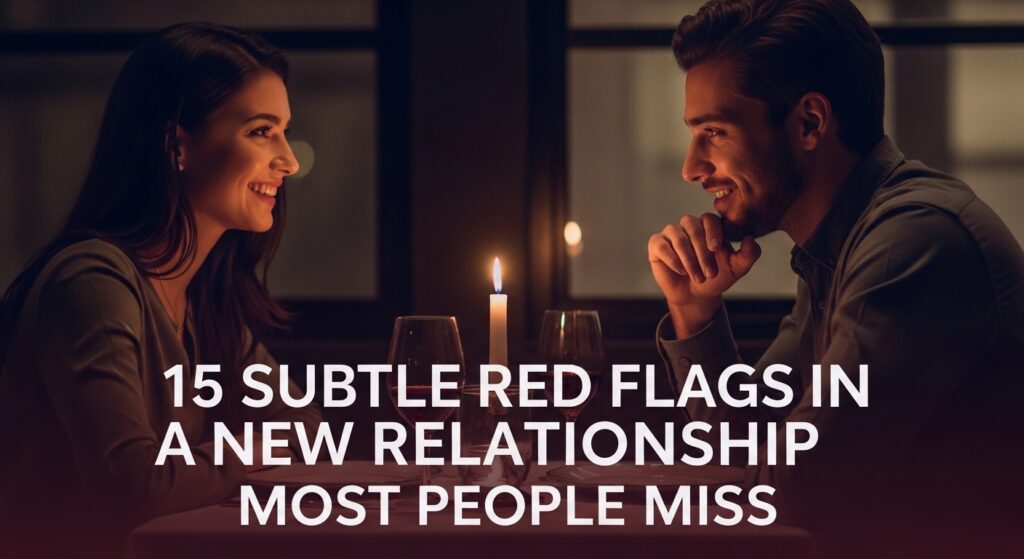
For the first six weeks, I thought I’d finally found someone who actually tried. Flowers on a random Tuesday. Good morning texts before I’d even opened my eyes. A three-page playlist made “just because.” I didn’t recognize it as a red flag — I recognized it as proof that effort like this actually existed. According to relationship researchers, nearly 80% of people who later identify as having experienced love bombing initially described the early behavior as “the most romantic thing that ever happened to them.”
I’m not writing this to say grand gestures are inherently dangerous. I’m writing this because I spent almost a year unable to see a red flag clearly, simply because it was wrapped in so much attention that it felt like the opposite of a warning sign. It felt like winning.
This is the story of the exact moment I finally understood that intensity and intimacy are not the same thing — and how one specific red flag, disguised as devotion, nearly cost me my ability to trust my own instincts.
The Red Flag That Looked Like Devotion
His name was Jordan, and from the very first date, he moved fast. Not in an obviously alarming way — nothing that would show up on a typical “warning signs” list. He simply gave more, faster, than anyone I’d dated before. By week two, he was talking about the future. By week four, he’d met two of my closest friends. By week six, he told me he loved me, and I remember feeling almost embarrassed that some small part of me hesitated.
Looking back, that hesitation was the first honest signal I ignored. It wasn’t fear of intimacy, like I told myself at the time. It was my own instincts quietly flagging something my conscious mind wasn’t ready to name: this pace isn’t connection, it’s a red flag moving at the speed of performance.
Psychologists describe this exact pattern as “love bombing” — an overwhelming display of affection, attention, and gift-giving early in a relationship, often used, consciously or not, to fast-track emotional dependency before trust has actually been earned. Dr. Ramani Durvasula, a clinical psychologist who studies narcissistic relationship patterns, has noted that the speed of early intensity is often a far more reliable red flag than the content of the gestures themselves.
📃 Related article: Just Protective: 8 Alarming Signs It Was Actually Control
Why I Mistook This Red Flag for Effort
I had dated people before who didn’t try at all — who forgot plans, canceled last minute, made me feel like an afterthought. So when Jordan showed up with reservations already made, playlists already built, plans already thought through, my nervous system read it as safety. I didn’t have a framework for “too much, too soon” as its own red flag, because everything I’d been taught about bad relationships was about too little.
This is one of the most common reasons a red flag gets missed entirely: it doesn’t match the shape we’ve been trained to look for. We’re warned about neglect, about coldness, about people who don’t show up. Almost nobody warns you that overwhelming, constant presence can be its own red flag — one that borrows the language of love to bypass the slower, more boring process of actually building trust.
By month three, I had stopped questioning the pace entirely. I told friends how lucky I was. I told myself that people who warned about “moving too fast” simply hadn’t met someone who was genuinely ready. I didn’t yet understand that readiness and urgency are not the same thing, and that a genuine red flag rarely announces itself as danger — it usually announces itself as exactly what you’ve been hoping for.
“Almost nobody warns you that overwhelming, constant presence can be its own red flag.”

When the Red Flag Started Showing Its Real Shape
The shift happened slowly, then all at once. Around month five, Jordan’s attention, once so consistent, became conditional. If I was five minutes late responding to a text, his morning messages disappeared. If I spent a Saturday with friends instead of him, the flowers stopped for a week. I told myself I was imagining a pattern, but the pattern was simply the same red flag revealing what it had actually been about all along — not devotion, but control disguised as generosity.
What made this particular red flag so disorienting was the contrast. I kept comparing his current coldness to his early warmth, using the warmth as evidence that the coldness must be temporary, a bad week, a fluke. I didn’t yet understand that the intensity itself had been the setup — that the emotional whiplash between overwhelming affection and sudden withdrawal is, according to therapists, one of the clearest signs of an unhealthy attachment dynamic, not two separate phases of the same healthy relationship.
By month seven, I was regularly walking on eggshells, adjusting my plans, my tone, even my opinions, to avoid triggering the withdrawal that now reliably followed anything he perceived as me pulling away. I had gone from feeling like the luckiest person in the room to feeling like I was constantly failing an invisible test — and I still hadn’t named the red flag for what it was.
The Conversation That Finally Named It
The turning point came, unexpectedly, from a friend who barely knew Jordan. I was recounting, almost proudly, how he’d once driven two hours after a bad day just to bring me soup, and she asked quietly, “Does he do that when things are going well too, or only when he’s worried you might be upset with him?” I didn’t have an answer. I sat with the question for days.
When I finally mapped it out, the pattern was undeniable. Every grand gesture I had once counted as proof of effort had come immediately after some version of distance — a delayed text, a canceled plan, a moment where I’d shown even mild independence. The gestures weren’t effort. They were course-correction. And once I could see that clearly, I could finally name the red flag I had spent almost a year mistaking for love: intensity used not to build connection, but to manage my behavior.
Naming it didn’t undo the months of confusion, but it gave me something I hadn’t had before — the ability to separate the size of a gesture from its intention. A red flag wrapped in flowers is still a red flag. It just takes longer to see, because you’re too busy being grateful.
“A red flag wrapped in flowers is still a red flag. It just takes longer to see, because you’re too busy being grateful.”

How to Recognize This Red Flag Before It Costs You a Year
Looking back, I’ve learned to ask a different set of questions early in a relationship, ones that would have helped me spot this red flag far sooner. Instead of asking “does this person show effort,” I now ask whether that effort is consistent regardless of my behavior, or whether it spikes specifically after moments of distance or disagreement.
I also pay attention to pace now in a way I never used to. A genuine connection can move quickly and still be healthy — but a red flag often hides in relationships where the emotional timeline outruns the actual trust that’s been built. If someone knows your whole future before they know your ordinary Tuesday, that gap is worth noticing.
Therapists who specialize in attachment patterns often recommend a simple gut-check: does this person’s attention make you feel more secure in yourself over time, or does it make you increasingly focused on managing their reactions? The second pattern, more often than not, is a red flag worth taking seriously, no matter how romantic the packaging looks on the surface.
📃 Related article: He Forgave Her: 7 Powerful Reasons Most Men Never Could
Where I Am Now
I’m not with Jordan anymore, and I’m genuinely grateful for the version of me that finally recognized the red flag for what it was, even though it took longer than I wish it had. What surprised me most wasn’t the ending of the relationship — it was how much lighter I felt once I stopped performing gratitude for gestures that had actually been a form of control.
These days, when something feels intensely romantic early on, I don’t automatically distrust it — but I do slow down and watch the pattern instead of the peaks. A single grand gesture tells me very little. Consistency, especially during ordinary, unremarkable weeks, tells me almost everything. That shift alone has changed how I evaluate every relationship since, and it’s the single clearest red flag lesson I carry with me now.
If there’s one thing I’d tell my past self, it’s this: effort that only shows up to smooth over distance isn’t effort at all. It’s a red flag doing an excellent impression of love, and the only way to tell the difference is time.

Frequently Asked Questions
How do you tell the difference between real effort and a red flag disguised as effort?
Real effort tends to be consistent regardless of circumstance. A red flag disguised as effort often appears specifically after conflict or distance, functioning more as damage control than genuine care.
Is moving fast in a relationship always a red flag?
Not always, but a fast pace paired with emotional inconsistency is a red flag worth paying close attention to. Speed alone isn’t the issue — speed combined with pressure or later withdrawal often is.
Why is this type of red flag so hard to recognize in the moment?
Because it’s wrapped in things that feel good — attention, gifts, affection — most people are trained to watch for a red flag that looks like neglect, not one that looks like overwhelming generosity.
What should I do if I notice this pattern in my own relationship?
Start tracking whether the intensity is consistent or reactive. Talking to a trusted friend or therapist can also help you see a red flag more clearly than you can from inside the relationship.
Can someone showing this red flag change?
It’s possible with genuine self-awareness and effort, but the person experiencing the red flag shouldn’t wait around hoping for change — protecting your own clarity and boundaries comes first.
If this story resonated with you, save it for later, share it with someone who needs to hear it, and follow Truthsinside.com for more real red flag stories.
🎵 Music
Maren Lull is a singer-songwriter who writes from the places most people don’t talk about out loud.
Not the dramatic grief. Not the obvious heartbreak. The quiet kind — the ordinary Tuesday emptiness, the habit of reaching for someone who isn’t there anymore, the particular exhaustion of being strong for so long that the strength itself wears thin.
Her music lives at the intersection of emotional honesty and soft beauty — breathy vocals over gentle piano, slow tempos, lyrics that feel less like songs and more like something you wrote in a private notebook at two in the morning and never showed anyone.
Maren Lull writes for the people who feel everything deeply and say very little about it. For the ones who listen to sad music not because they want to feel worse — but because being understood, even by a song, makes the feeling easier to carry.
📱 Follow Maren Lull:
→ Spotify
→ Apple Music
→ Youtube
→ Audiomack