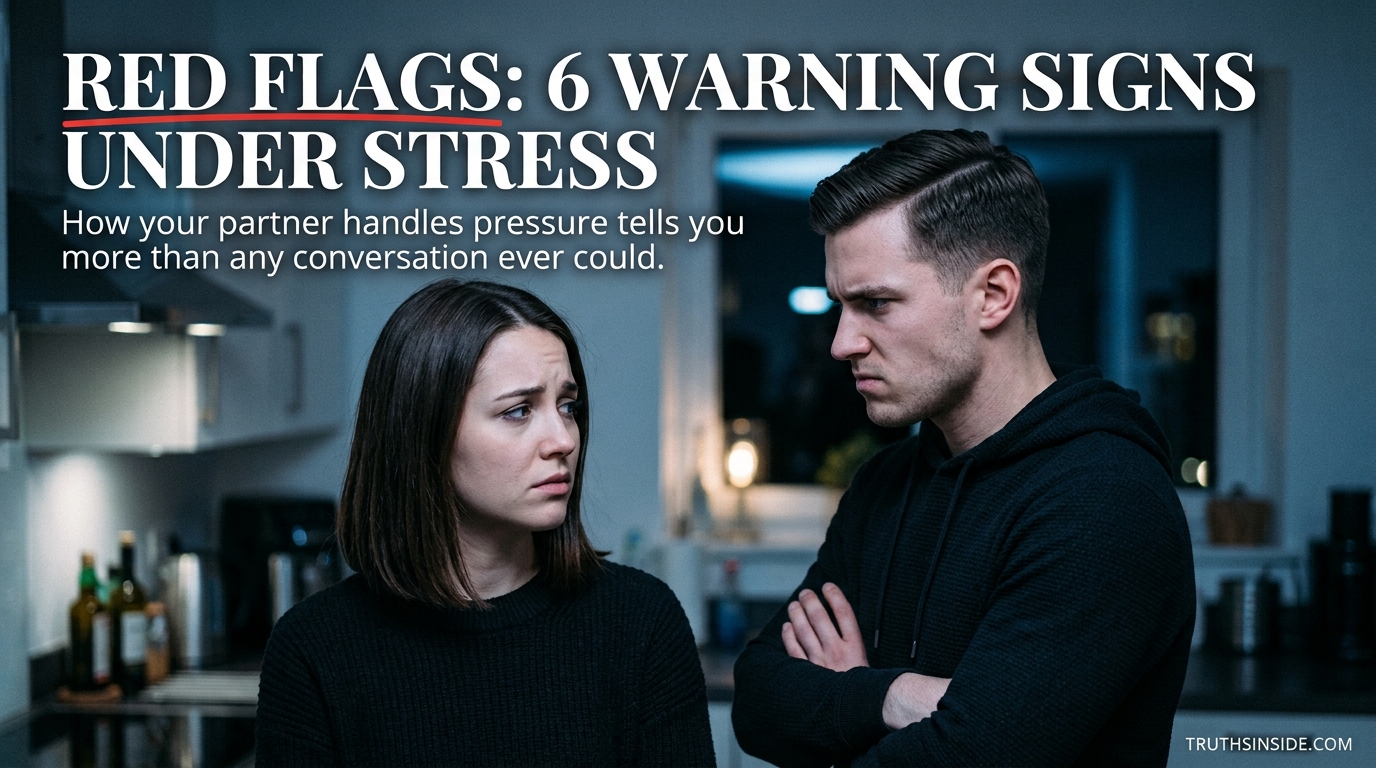
Red Flags in How a Partner Handles Stress
Stress reveals people. It strips away the version of someone they present on a good day and shows you who they become when things go wrong. Psychologists who study relationship compatibility often say that conflict under pressure predicts long-term relationship health more reliably than how a couple behaves during calm, happy moments. If you’ve ever felt a quiet unease watching how your partner reacts to a bad day, a delay, or a mistake, it’s worth paying attention. Red flags in how a partner handles stress rarely show up all at once. They surface slowly, one reaction at a time.
Most people don’t think to evaluate a partner based on stress response, focusing instead on how affectionate, funny, or attentive someone is during easy moments. But easy moments rarely reveal character. It’s the harder ones, a canceled flight, a lost job, a conflict with a friend, that show whether someone can regulate their emotions or whether they collapse into blame, silence, or explosive reactions. Recognizing red flags in these moments early can save years of confusion and self-doubt later.
This article breaks down the most common red flags to watch for in how a partner handles stress, why these patterns matter more than people realize, and how to tell the difference between a bad day and a genuine warning sign. None of this is about expecting perfection under pressure. It’s about noticing patterns that repeat, because those patterns tend to predict exactly how a relationship will feel five, ten, or twenty years from now.
Why Stress Response Reveals Real Character
Under normal circumstances, most people can manage their behavior fairly well. Stress removes that layer of control. Psychologists refer to this as reduced emotional regulation capacity, meaning the parts of the brain responsible for patience, empathy, and thoughtful communication become less accessible when someone is overwhelmed. What’s left is often someone’s default emotional wiring, shaped by their upbringing, past relationships, and unresolved trauma. This is exactly why red flags tend to surface during stressful moments rather than calm ones.
A partner who is kind, attentive, and communicative when life is easy but becomes cold, dismissive, or aggressive under pressure isn’t simply “having a bad day” if the pattern repeats. Isolated stressful reactions are human and expected. Recurring red flags, the same harmful pattern showing up every time stress hits, are something different entirely. They indicate how someone is actually wired to cope, and coping patterns rarely change without deliberate effort and, often, professional support.
📃 Related article: Happy Marriage: 7 Powerful Lessons After 20+ Years
Red Flag: Blaming You for Their Stress
One of the clearest red flags in how a partner handles stress is redirecting blame onto you, even when the stress has nothing to do with you. A rough day at work becomes your fault for asking a simple question. A stressful family situation turns into criticism about something unrelated you did days earlier. This pattern, sometimes called displacement, allows a partner to offload difficult emotions rather than sit with them or communicate them directly.
Occasional misdirected frustration happens to everyone. The red flag emerges when blame becomes the default response to stress, every time, regardless of the actual source. Over time, this pattern can quietly train you to feel responsible for your partner’s emotional state, walking on eggshells to avoid triggering another blame cycle. Recognizing this red flag early prevents years of unnecessarily absorbing responsibility for someone else’s unmanaged stress.
“Every hard day at his job somehow became about something I’d done wrong. I didn’t realize it was a pattern until I looked back at a whole year of it.”
Red Flag: Stonewalling and Emotional Shutdown
Another significant red flag is complete emotional withdrawal during stressful moments. This looks like silence, avoidance, or physically leaving a conversation the moment things become difficult. Relationship researcher Dr. John Gottman identified stonewalling as one of the strongest predictors of relationship breakdown, describing it as a partner essentially disappearing emotionally, even while still physically present in the room.
Stonewalling under stress differs from someone who genuinely needs a short break to calm down before continuing a conversation. The red flag is in the intention and duration, using silence as a weapon or a permanent exit rather than a brief pause. Partners who stonewall repeatedly during stress often leave the other person feeling unheard, dismissed, and increasingly isolated, even in situations that clearly require direct communication and resolution.

Red Flag: Explosive or Disproportionate Reactions
A particularly serious red flag is a reaction to stress that is wildly disproportionate to the actual trigger, slamming doors, yelling over minor inconveniences, or becoming visibly aggressive over something small. These outbursts often signal poor emotional regulation, and in more concerning cases, they can be an early indicator of controlling or abusive behavior patterns that tend to escalate over time rather than improve.
It’s worth noting that intensity alone doesn’t automatically confirm this red flag, context matters. A single explosive reaction during an extraordinarily difficult week is different from a pattern of disproportionate outbursts triggered by ordinary daily stress. The red flag to take seriously is frequency and predictability, if you find yourself anticipating an outburst before even minor stressful situations occur, that anticipation itself is meaningful data about the relationship’s emotional safety.
📃 Related article: Victim Mentality Red Flags: 6 Toxic Signs to Notice
Red Flag: Refusing Accountability After the Fact
How someone behaves in the moment of stress matters, but so does what happens afterward. A significant red flag is a consistent refusal to acknowledge or apologize for how stress-driven behavior affected you. This might look like minimizing (“You’re overreacting”), denying it happened at all, or quickly moving on without any real accountability. Partners without this red flag tend to circle back once calm, acknowledging the impact of their reaction even if the underlying stress was legitimate.
The absence of accountability after stressful episodes often does more long-term damage than the reaction itself. It signals that a partner sees their behavior as justified or beyond examination, which removes any real incentive to change the pattern going forward. Over time, a relationship without accountability after stress-driven conflict tends to accumulate resentment, since one partner is left managing the emotional aftermath entirely alone, repeatedly, without acknowledgment or repair.
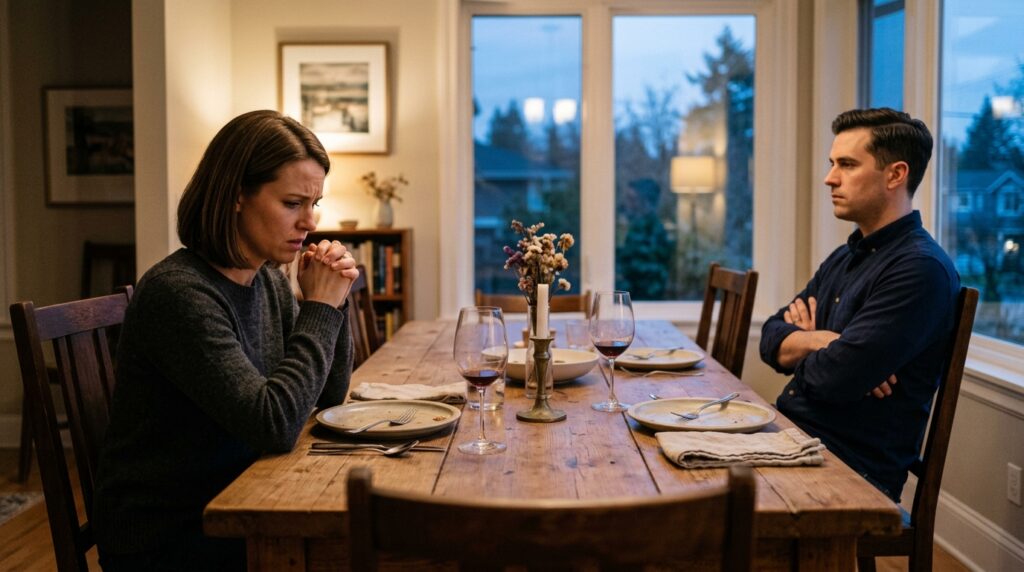
Red Flag: Using Stress as an Excuse for Repeated Harm
Some partners use stress as a permanent explanation for consistently harmful behavior, framing every hurtful comment or dismissive action as simply a byproduct of a hard week, a demanding job, or general life pressure. While stress genuinely does affect behavior, this red flag emerges when it becomes a blanket excuse used to avoid ever taking real responsibility or making meaningful changes to how conflict is handled.
The distinction matters because everyone experiences stress, yet not everyone treats their partner poorly because of it. When “I was just stressed” becomes the explanation for every harsh word or cold reaction, stress stops being a context and starts becoming a shield. This particular red flag is worth naming directly in conversation, since healthy partners are typically willing to separate their stress from their treatment of the people they love, even when that separation is difficult.
“He kept saying work was just stressful. But stress doesn’t explain why he only ever took it out on me.”
What Healthy Stress Response Actually Looks Like
Recognizing red flags matters, but it’s equally important to know what the alternative looks like. Emotionally healthy partners under stress may still feel overwhelmed, short-tempered, or withdrawn temporarily, but they take responsibility for it. They communicate rather than deflect, they return to repair the moment once regulated, and they don’t consistently make their stress your emotional burden to manage. The absence of red flags doesn’t mean the absence of stress. It means stress is handled with accountability rather than harm.
If you notice these healthier patterns in your relationship, occasional frustration followed by ownership and repair, that’s a strong sign the relationship can weather real-world pressure without deteriorating. If instead you find yourself consistently managing, excusing, or absorbing the fallout of someone else’s unmanaged stress, it’s worth taking those red flags seriously rather than hoping the pattern will resolve itself with time alone.

Frequently Asked Questions
Are red flags during stress always a dealbreaker?
Not necessarily. Isolated reactions during genuinely difficult times are human. The concern is a repeated pattern that shows up every time stress occurs, without accountability or change over time.
Can someone change how they handle stress?
Yes, but it typically requires genuine self-awareness, effort, and often therapy, particularly for deeply ingrained patterns like stonewalling or blame-shifting that developed over years.
How do I bring up red flags without starting a fight?
Choose a calm moment, not mid-conflict, and focus on specific patterns rather than character attacks, such as noting how a particular reaction affected you rather than labeling the person.
Is stonewalling always intentional?
Not always. Some people shut down as an automatic nervous system response rather than a deliberate choice. That said, the impact on the relationship remains significant regardless of intent.
What’s the biggest red flag to watch for in stress response?
Lack of accountability afterward. A partner who never circles back to acknowledge how their stress-driven behavior affected you is often the clearest sign the pattern won’t change on its own.
Final Thoughts
Red flags in how a partner handles stress are some of the most reliable indicators of long-term relationship health, far more telling than how someone behaves on an easy day. If this article helped you recognize a pattern in your own relationship, save it for later, share it with someone who needs to see it, and follow Truthsinside.com for more research-backed relationship insight.
🎵 Music
Maren Lull is a singer-songwriter who writes from the places most people don’t talk about out loud.
Not the dramatic grief. Not the obvious heartbreak. The quiet kind — the ordinary Tuesday emptiness, the habit of reaching for someone who isn’t there anymore, the particular exhaustion of being strong for so long that the strength itself wears thin.
Her music lives at the intersection of emotional honesty and soft beauty — breathy vocals over gentle piano, slow tempos, lyrics that feel less like songs and more like something you wrote in a private notebook at two in the morning and never showed anyone.
Maren Lull writes for the people who feel everything deeply and say very little about it. For the ones who listen to sad music not because they want to feel worse — but because being understood, even by a song, makes the feeling easier to carry.
📱 Follow Maren Lull:
→ Spotify
→ Apple Music
→ Youtube
→ Audiomack