A text takes three seconds to send.
It can take three days to recover from.
In the history of human relationships, we have never had a communication tool quite like the text message — immediate, permanent, stripped of tone and body language, and yet somehow expected to carry the full emotional weight of an intimate connection.
Research from the Pew Research Center found that 75% of couples say texting plays a significant role in their relationship communication. And a study published in the Journal of Couple and Relationship Therapy found that the way couples communicate via text is significantly associated with relationship satisfaction — for better and for worse.
The texts you send are not just messages. They are relationship data. They communicate presence, care, priorities, and emotional availability — whether you intend them to or not.
Here is what your messages are really saying.
Why Texting in Relationships Is More Complicated Than It Looks
On the surface, texting seems like the simplest form of communication. Short. Fast. Casual.
But in relationships, nothing about texting is simple.
Every message — or absence of message — is interpreted through the lens of attachment, emotional history, and the meaning each person has privately assigned to specific behaviors. A delayed reply is not just a delayed reply. It is evidence — of something. Disinterest, perhaps. Busyness, perhaps. Deliberate distance, perhaps. The recipient decides which — usually based on their attachment style and their existing emotional temperature with the relationship.
And because text strips away the tone, facial expression, and body language that carry 70 to 90 percent of in-person communication’s emotional content, the recipient is left to fill in the gaps with their own emotional state. Which means that the same message can be read as warm or cold, interested or dismissive, loving or indifferent — depending entirely on who is reading it and how they are feeling when it arrives.
This is not a reason to be paralyzed about texting. It is a reason to be conscious about it.
What Different Texting Behaviors Actually Communicate
Response Time — What It Says and What It Doesn’t
Response time is the single most emotionally loaded variable in relationship texting. And it is also one of the most frequently misread.
What a slow response actually means: Sometimes, nothing at all. People have jobs, commitments, difficult days, and moments of genuine unavailability that have nothing to do with the person they are texting. Assuming that a delayed reply is a deliberate signal is one of the fastest ways to manufacture anxiety where none is warranted.
What a consistently slow response might mean: Consistency is where pattern becomes information. If someone replies quickly to everyone else but consistently takes hours to respond to you — and this is a pattern rather than an exception — that pattern is worth paying attention to. Not as evidence of rejection, but as data about where the relationship sits in their priorities.
What an immediate consistent response communicates: Presence. Investment. You are on their mind and they want you to know it. For many people, consistent responsiveness is one of the most reliable signals of genuine interest and care — more reliable, in some ways, than grand gestures.
The trap is expecting the same response time from everyone. People have genuinely different texting styles — some people are chronically attached to their phones, others check them rarely. Understanding your partner’s natural texting rhythm — and separating it from what it means about their feelings for you — is one of the most practically important texting skills in a relationship.
Message Length — The Unspoken Conversation
The length of a text communicates something — but not always what either person thinks.
Long, detailed messages generally communicate investment, care, and the desire to be truly understood and to truly understand. They say: this conversation matters to me. You matter to me. I am giving you my attention and my effort.
Short, clipped replies to longer messages can communicate several things — genuine busyness, introversion, a naturally minimal texting style, emotional withdrawal, or discomfort with the topic being discussed. Context matters enormously here. A pattern of short replies during workdays from someone you know is genuinely occupied is different from short replies during a conflict from someone who is capable of longer messages when engaged.
One-word responses during emotionally significant conversations are almost never neutral. They communicate — whatever their intention — that the conversation is not receiving full engagement. And the person on the receiving end will feel that, even if they cannot articulate why.
The most consistently damaging texting asymmetry in relationships is the long-short dynamic — one person sending long, emotionally invested messages and receiving brief, seemingly indifferent replies. This asymmetry, maintained over time, creates a specific kind of relational hurt that is rarely talked about but deeply felt.
Punctuation, Capitalization, and Emoji — The New Tone of Voice
This is where texting gets genuinely fascinating — and genuinely complex.
In face-to-face communication, tone of voice carries enormous emotional information. In texting, that information has been displaced onto punctuation, capitalization, and emoji. The result is a new and surprisingly sophisticated nonverbal communication system.
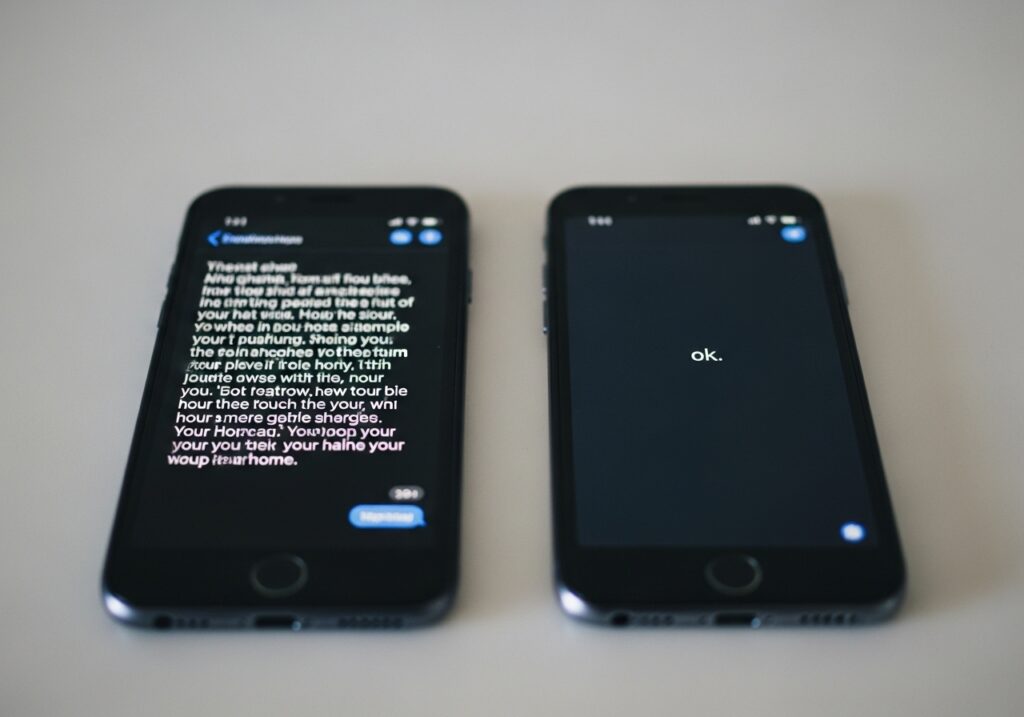
The period at the end of a text message. In formal writing, the period is neutral punctuation. In casual texting between people who know each other, a period at the end of a short message can read as cold, clipped, or subtly aggressive — particularly in contrast to the same person’s usual style. “I’m fine.” reads differently from “I’m fine” — and both parties know it.
Capitalization changes everything. “ok” communicates something meaningfully different from “OK” — and both are different from “Okay!” The level of formality, enthusiasm, and emotional availability is encoded in capitalization choices in ways that are now widely understood, at least intuitively.
Emoji as emotional punctuation. A well-placed emoji can soften a message that might otherwise read as terse, add warmth to a neutral statement, or communicate humor that would be obvious in person but easily misread in text. Their consistent absence from someone who used to use them frequently can register as a shift in emotional temperature — even if neither person consciously tracks it.
None of this is universal. Texting styles are deeply personal and culturally variable. What matters is consistency and change — noticing when someone’s established texting style shifts significantly, and being curious about what that shift might mean.
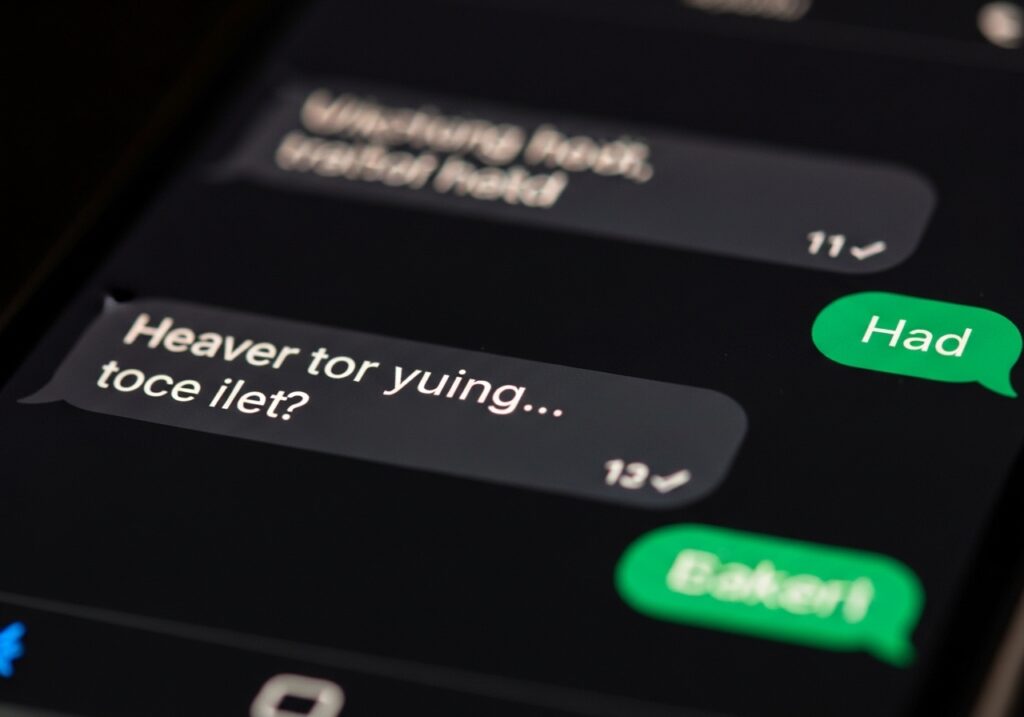
The 10 Texting Behaviors That Shape Your Relationship
1. Texting When You Say You Will
If you tell someone you will text them later and then don’t — that is not a small thing. It is a broken micro-commitment. And broken micro-commitments accumulate into a pattern that communicates: my words and my actions don’t reliably match.
Consistency between what you say and what you do — even in something as small as a text — builds the kind of trust that makes a relationship feel safe. Following through on small commitments is how you demonstrate, in daily life, that you can be relied upon for larger ones.
2. Not Using Text to Have Difficult Conversations
Text is genuinely unsuited for difficult conversations. It strips tone, invites misinterpretation, allows for delayed or edited responses that don’t reflect real-time emotional processing, and creates a permanent written record of words said in the heat of a moment.
If something important needs to be said — an apology, a concern, a conflict that needs resolution — text is rarely the right medium. It is worth waiting for the right moment in person, or at minimum a phone or video call where tone and emotional nuance can be heard.
Using text to have difficult conversations is one of the most consistent sources of escalation and misunderstanding in modern relationships. The convenience of the medium is not worth the cost.
3. Sending Good Morning and Goodnight Messages
This is one of the most underrated texting behaviors in relationships — and one of the most meaningful.
A good morning or goodnight message is not just a message. It is a daily signal that someone is your first thought and your last. It requires minimal effort and communicates maximum presence. Research on relationship maintenance behaviors consistently shows that small, frequent gestures of connection — the relational equivalent of touching base — are more powerfully associated with relationship satisfaction than occasional grand gestures.
For people whose love language is words of affirmation, these messages carry particular weight. But across love languages, the consistency of being remembered — every morning, every night — registers as genuine care.
4. Responding to the Emotional Content, Not Just the Information
When someone texts you something personal — something vulnerable, something difficult, something they’re excited about — the response that matters most is not the practical one. It is the emotional one.
If your partner texts “I had the worst day, everything went wrong at work,” the least connecting response is logistical: “Sorry to hear that. What’s for dinner?” The more connecting response acknowledges the emotional content first: “That sounds awful. I’m sorry. Tell me what happened — I want to hear it.”
Responding to emotional content before practical content is one of the simplest and most powerful ways to use texting as a tool for intimacy rather than just information exchange.

5. Not Using Texting to Keep Score
Tracking who texted last, who replies faster, who initiates more — and using that data as evidence in an ongoing case about who cares more — is one of the fastest ways to turn texting into a source of anxiety rather than connection.
This behavior is more common than most people would admit — and it is almost always driven by insecurity and attachment anxiety rather than genuine evidence of a problem. If you notice yourself monitoring the texting dynamic obsessively, that is useful information about your own emotional state — and worth exploring, either with your partner or a therapist.
6. Being Present When You Are Present
There is a specific kind of texting behavior that is increasingly common and consistently damaging — texting someone else while physically present with your partner. The message it sends, regardless of intent: whoever is in my phone is more important than whoever is in the room.
Being present when you are present — putting the phone away during meals, meaningful conversations, and intentional time together — is one of the most important relationship habits in the digital age. It says: right now, you are my priority. Nothing that could arrive in my phone is more important than what is happening here.
7. Sending Voice Notes for Nuance
Voice notes are one of the most underutilized tools in relationship texting — and one of the most effective for conveying emotional nuance that text simply cannot carry.
When something matters — when you want to express something warm, or nuanced, or emotionally significant — a voice note allows tone, warmth, and personality to come through in ways that words on a screen never can. For many couples, voice notes become one of the most intimate forms of digital communication — a way of being truly heard, even across distance.
8. Knowing When to Put the Phone Down and Call
Some conversations are too important, too emotionally complex, or too easily misread for text. Knowing when to shift mediums — to pick up the phone and call, or to save the conversation for in person — is one of the most important texting skills in a relationship.
The willingness to make a call rather than send a text communicates something important: I care enough about getting this right to give you more than words on a screen. For people who default to text for everything, including difficult emotional territory, this shift can be genuinely transformative.
9. Avoiding Passive-Aggressive Texting
Short, clipped responses during conflict. The “k.” The read receipt with no reply. The response sent hours after a message that usually gets an immediate reply.
Passive-aggressive texting is one of the most corrosive habits in relationship communication — because it punishes without naming what is wrong, creates anxiety without providing a path to resolution, and makes the other person responsible for decoding a message that was never clearly sent.
If something is wrong, say it — in words, at the right time, through the right medium. Passive-aggressive texting is the digital equivalent of the silent treatment. It feels like control. It is.
10. Texting With Intention, Not Just Habit
The most important texting practice in a relationship is also the simplest: before you send, ask yourself what you are trying to communicate — and whether this message is the most effective way to communicate it.
Not every thought needs to be texted. Not every concern should be raised via message. Not every piece of news is best delivered on a screen.
Intentional texting — pausing before sending, considering how the message might land, choosing the medium that best serves the moment — is the difference between texting as a tool of genuine connection and texting as a source of chronic miscommunication.
The Attachment Style Connection
How you text in relationships is not random. It is deeply shaped by your attachment style.
Anxiously attached people tend to text frequently, watch response times obsessively, and interpret delayed or short replies as evidence of waning interest. Their texting behavior often reflects the underlying anxiety driving it — seeking reassurance through digital contact in ways that can feel overwhelming to partners with different styles.
Avoidantly attached people tend to text less frequently, prefer brevity, and may feel genuinely uncomfortable with partners who text a great deal. Their minimal texting is often interpreted as disinterest — and sometimes is — but is frequently simply a reflection of their discomfort with the emotional closeness that frequent texting implies.
Securely attached people tend to have a relatively relaxed relationship with texting — responsive but not obsessive, communicative but not dependent. They do not assign excessive meaning to response times and can tolerate natural variation without anxiety.
Understanding your own attachment style — and your partner’s — goes a long way toward depersonalizing texting patterns that might otherwise feel like evidence of something more significant than they are.

What Healthy Texting in a Relationship Actually Looks Like
Healthy texting does not mean constant texting. It means consistent, intentional communication that reflects genuine care and mutual respect.
It looks like responding when you say you will. Like using the right medium for the right conversation. Like asking how someone’s day was and actually reading the answer. Like sending something small and thoughtful in the middle of an ordinary day — not because you have to, but because they crossed your mind and you wanted them to know.
It looks like putting the phone down when you are together. Like calling instead of texting when something matters. Like knowing the difference between a conversation that belongs on a screen and one that belongs in person.
And above all — it looks like texting in the way you want to be texted to. With attention. With intention. With the understanding that every message is a small act of either connection or distance.
In the age of constant digital noise, choosing to reach out to someone — thoughtfully, warmly, with real attention — is still one of the most human things you can do.
CALL TO ACTION
💾 Save this — and maybe rethink the last text you almost sent. 📤 Share it with your partner and talk about your texting styles together. 👣 Follow Truthsinside.com for honest, psychology-backed relationship advice for the modern world.
Frequently Asked Questions
Q1: How often should couples text each other? There is no universal answer — and any rule you read online should be taken with significant skepticism. What matters is that both partners feel adequately connected through their communication, whatever the frequency. For some couples, several texts a day feels right. For others, a few meaningful exchanges are plenty. The potential problem is not frequency per se, but mismatch — when one partner wants significantly more or less contact than the other and neither communicates about it openly. The solution is always conversation, not a prescribed number of messages per day.
Q2: Is it a red flag if my partner rarely texts me? It depends entirely on context. A partner who is naturally a minimal texter — who has always communicated this way, who shows up fully in person, and whose low texting frequency is consistent and not targeted specifically at you — is probably just showing you their communication style. A partner whose texting frequency has significantly decreased without explanation, who is demonstrably more responsive to others, or whose digital unavailability coincides with other concerning patterns — that is worth a direct, honest conversation. Pattern and change matter more than frequency alone.
Q3: Why do some people text differently when they are upset? Texting style changes are one of the most consistent emotional signals in digital communication. When someone who normally texts warmly and frequently becomes clipped, slow to reply, or goes quiet, they are usually communicating something they have not yet said — or do not know how to say — in words. Rather than responding in kind or assuming the worst, the most productive response is usually a gentle, direct inquiry: “I’ve noticed you seem a little distant today — is everything okay?” Creating an opening for the real conversation is almost always more useful than matching the shift in energy.
Q4: How do you handle texting anxiety in a relationship? Texting anxiety — the preoccupation with response times, the over-reading of message content, the checking and rechecking of a conversation — is almost always rooted in attachment anxiety rather than actual evidence of a problem. The most effective approach combines practical strategies — putting a time limit on how often you check your phone, identifying the trigger thought that starts the spiral — with deeper work on the attachment anxiety driving the behavior. A therapist can be particularly helpful here. In the short term: when the anxiety spikes, do something that brings you back to yourself rather than deeper into the phone.
Q5: Should couples have texting rules or expectations? Yes — but not in a rigid, prescribed way. Having an honest conversation about texting expectations is one of the most useful things couples can do — particularly early in a relationship, when habits are being established. Topics worth discussing include: how quickly do you generally expect replies? How do you prefer to communicate when something is wrong? Are there times of day when you are generally unavailable? What does it mean to you when someone doesn’t reply for a long time? These conversations prevent enormous amounts of unnecessary misunderstanding — and having them is itself a sign of a relationship mature enough to navigate them.
🎵 Music
Maren Lull is a singer-songwriter who writes from the places most people don’t talk about out loud.
Not the dramatic grief. Not the obvious heartbreak. The quiet kind — the ordinary Tuesday emptiness, the habit of reaching for someone who isn’t there anymore, the particular exhaustion of being strong for so long that the strength itself wears thin.
Her music lives at the intersection of emotional honesty and soft beauty — breathy vocals over gentle piano, slow tempos, lyrics that feel less like songs and more like something you wrote in a private notebook at two in the morning and never showed anyone.
Maren Lull writes for the people who feel everything deeply and say very little about it. For the ones who listen to sad music not because they want to feel worse — but because being understood, even by a song, makes the feeling easier to carry
📱 Follow Maren Lull:
→ Spotify
→ Apple Music
→ Youtube
→ Audiomack