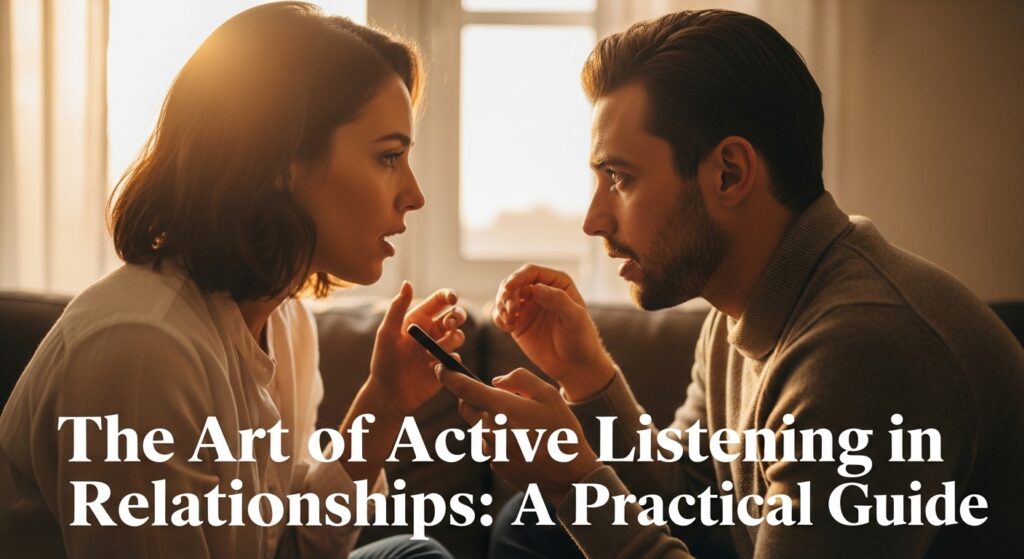
Emotional Intimacy in Marriage: How to Deepen Your Connection
A study published in the Journal of Marriage and Family found that couples who reported high emotional closeness were significantly more likely to describe their marriage as satisfying overall — even more than couples reporting frequent physical intimacy alone. Emotional intimacy in marriage, researchers found, functions as a stronger predictor of long-term satisfaction than almost any other single relationship factor.
Yet emotional intimacy is often the first thing to quietly erode under the weight of careers, children, and daily logistics. Couples can share a bed, a calendar, and a mortgage while feeling like strangers emotionally. Rebuilding emotional intimacy in marriage doesn’t usually require a dramatic reset — it requires recognizing exactly where the disconnect started and rebuilding it deliberately, piece by piece.
This article explores what emotional intimacy actually means in a marriage, why it tends to fade over time, and seven research-backed ways couples can rebuild it — even after years of drifting into routine.
What Is Emotional Intimacy in Marriage?
Emotional intimacy in marriage refers to the sense of being deeply known, understood, and accepted by your partner — beyond shared logistics or physical affection. It includes feeling safe enough to share fears, vulnerabilities, and inner thoughts without judgment, and trusting that your partner will respond with genuine care rather than dismissal.
Psychologist Dr. Sue Johnson, developer of Emotionally Focused Therapy, describes this kind of closeness as “attachment security” — a felt sense that your partner is accessible, responsive, and emotionally engaged. Without this foundation, even a stable, conflict-free marriage can feel quietly hollow.
Unlike physical intimacy, which can sometimes mask emotional distance temporarily, this kind of closeness tends to be harder to fake and easier to notice when it’s missing. Its absence often shows up as a vague sense of loneliness within the relationship, even when nothing appears outwardly wrong.
📃 Related article: Taking Your Spouse For Granted: 7 Signs to Stop Now
Why Emotional Intimacy in Marriage Fades Over Time
The early stages of a relationship are naturally rich in emotional disclosure — new partners ask questions, share stories, and stay curious about each other’s inner worlds. As routines set in, that curiosity often gets replaced by assumption. Partners begin to believe they already know everything important about each other, even as both people continue changing.
Research on relationship habituation shows that familiarity, left unchecked, can quietly reduce the effort couples invest in truly seeing each other. Add external stressors — work demands, parenting, financial pressure — and emotional connection often becomes the first thing sacrificed simply because it doesn’t demand immediate attention the way logistics do.
“Emotional distance in marriage rarely announces itself. It just quietly becomes the default.” — a common observation among marriage and family therapists
Barrier 1: Conversations Stay Purely Logistical
One of the clearest signs of fading closeness is when daily conversation narrows almost entirely to scheduling, chores, and parenting logistics. Rebuilding real depth requires deliberately reintroducing conversations that go beyond the practical — questions about hopes, fears, and how each partner is genuinely feeling, not just what needs to get done.
Gottman Institute research on “love maps” — an ongoing, updated understanding of a partner’s inner world — found that couples who regularly asked open-ended, non-logistical questions reported significantly stronger relationship satisfaction over time.

Barrier 2: Vulnerability Feels Risky Instead of Safe
Sharing genuine fears or insecurities requires trusting that a partner will respond with empathy rather than criticism or dismissal. When past attempts at vulnerability were met with impatience or judgment, partners often learn to stop sharing altogether, quietly protecting themselves at the cost of closeness.
Attachment research consistently shows that emotional safety — not the absence of conflict — is what predicts whether partners feel comfortable being vulnerable. Rebuilding this safety often starts with small, low-stakes moments of honesty met with a genuinely warm response, rather than waiting for a major crisis to test it.
How to Rebuild Emotional Intimacy in Marriage
Deepening connection after years of drift doesn’t require grand romantic gestures. Research on relationship repair consistently points to small, consistent behaviors as the most reliable path back to closeness. The following approaches are drawn from established couples therapy models and longitudinal relationship research.
Step 1: Ask Deeper Questions Daily
Replacing “How was your day?” with more specific, emotionally oriented questions — “What was the best part of your day?” or “What’s been on your mind lately?” — invites a different kind of response. These questions signal genuine curiosity rather than routine politeness, which research links directly to stronger felt connection between partners.
Consistency matters more than intensity here. A single deep conversation won’t undo years of surface-level exchange, but a daily habit of slightly deeper questions compounds meaningfully over weeks and months.
Step 2: Create Uninterrupted Time Together
Distraction-free time — without phones, television, or parenting tasks competing for attention — creates the conditions necessary for real conversation to happen. Even fifteen to twenty minutes of fully present time together, done consistently, has been shown in relationship research to meaningfully improve felt closeness between partners.

The specific activity matters less than the undivided attention behind it. A short walk, a shared cup of coffee, or sitting together without a screen can all serve as effective containers for reconnecting emotionally.
Step 3: Practice Responding with Empathy, Not Fixing
When a partner shares something vulnerable, the instinct to immediately offer solutions can unintentionally shut down emotional sharing. Research on supportive communication consistently finds that empathetic listening — reflecting feelings back rather than jumping to problem-solving — makes partners feel more understood and more likely to open up again in the future.
This doesn’t mean solutions are never welcome. It means leading with acknowledgment first: “That sounds really frustrating” before moving toward advice, if advice is even wanted at all.
Step 4: Share Appreciation Specifically and Often
General thanks tends to fade into background noise over time. Specific appreciation — naming exactly what a partner did and why it mattered — has a stronger effect on felt closeness, according to gratitude research in relationship psychology. This kind of specificity signals genuine noticing rather than habitual politeness.
“I appreciate you” is nice. “I noticed how patient you were with the kids tonight, and it meant a lot” is what actually rebuilds connection.
Step 5: Rebuild Physical Affection Without Pressure
Physical affection — hand-holding, hugging, a hand on the back — releases oxytocin and supports emotional bonding independent of sexual intimacy. Reintroducing low-pressure physical touch, without an expectation attached, often helps rebuild a sense of closeness that purely verbal efforts alone can’t fully achieve.

Step 6: Repair Ruptures Quickly
Unresolved small hurts accumulate quietly, creating emotional distance long before any major conflict occurs. Addressing minor disconnects promptly — rather than letting them pile up — prevents the kind of slow resentment that erodes closeness over months or years.
Gottman’s research on “repair attempts” found that couples who address small ruptures quickly, even imperfectly, maintain significantly stronger connection than couples who let tension accumulate unaddressed.
Step 7: Consider Structured Support When Needed
For couples who have drifted significantly, self-directed efforts sometimes aren’t enough to rebuild what’s been lost. Couples therapy — particularly approaches like Emotionally Focused Therapy or the Gottman Method — provides structured guidance for identifying exactly where connection broke down and how to rebuild it methodically.
Seeking support isn’t a sign of failure. Research consistently shows that couples who address disconnection early, before resentment fully sets in, have significantly better outcomes than those who wait until the relationship feels beyond repair.
📃 Related article: Marriage After Kids: 7 Ways to Save the Spark
Why This Effort Is Worth It
Marriages built on deep understanding tend to weather external stress far better than those relying primarily on shared logistics or habit. The couples who report the highest long-term satisfaction aren’t necessarily the ones who avoided hardship — they’re the ones who kept actively choosing to know each other throughout it.
Rebuilding what’s been lost takes patience, but the research is consistent: small, repeated efforts compound significantly over time, often producing a stronger and more resilient bond than existed even in the earliest stages of the relationship.
Frequently Asked Questions
Can emotional intimacy be rebuilt after years of disconnection?
Yes. Many couples successfully rebuild closeness after long periods of drift, particularly when both partners commit to consistent small efforts rather than expecting an instant transformation.
Is emotional intimacy more important than physical intimacy in marriage?
Research suggests both matter, but emotional closeness is often a stronger predictor of overall satisfaction, and frequently supports a healthier physical connection as well.
What if only one partner wants to work on rebuilding this?
Change often starts with one partner’s consistent effort, which can gradually shift relationship dynamics, though couples therapy is usually more effective when both partners actively participate.
How long does it take to notice improvement?
Many couples report small shifts within a few weeks of consistent effort, though deeper, more lasting change typically develops over several months of sustained practice.
When should a couple consider therapy instead of self-help strategies?
If self-directed efforts aren’t producing improvement after a few months, or if resentment feels deeply entrenched, working with a couples therapist often provides more effective, structured support.
If this gave you a clearer path toward reconnecting, don’t let it end here. Save this article for the moments you need a reminder. Share it with your partner or a couple you care about. And Follow Truthsinside.com for more research-backed insight into building relationships that last.
🎵 Music
Maren Lull is a singer-songwriter who writes from the places most people don’t talk about out loud.
Not the dramatic grief. Not the obvious heartbreak. The quiet kind — the ordinary Tuesday emptiness, the habit of reaching for someone who isn’t there anymore, the particular exhaustion of being strong for so long that the strength itself wears thin.
Her music lives at the intersection of emotional honesty and soft beauty — breathy vocals over gentle piano, slow tempos, lyrics that feel less like songs and more like something you wrote in a private notebook at two in the morning and never showed anyone.
Maren Lull writes for the people who feel everything deeply and say very little about it. For the ones who listen to sad music not because they want to feel worse — but because being understood, even by a song, makes the feeling easier to carry.
📱 Follow Maren Lull:
→ Spotify
→ Apple Music
→ Youtube
→ Audiomack