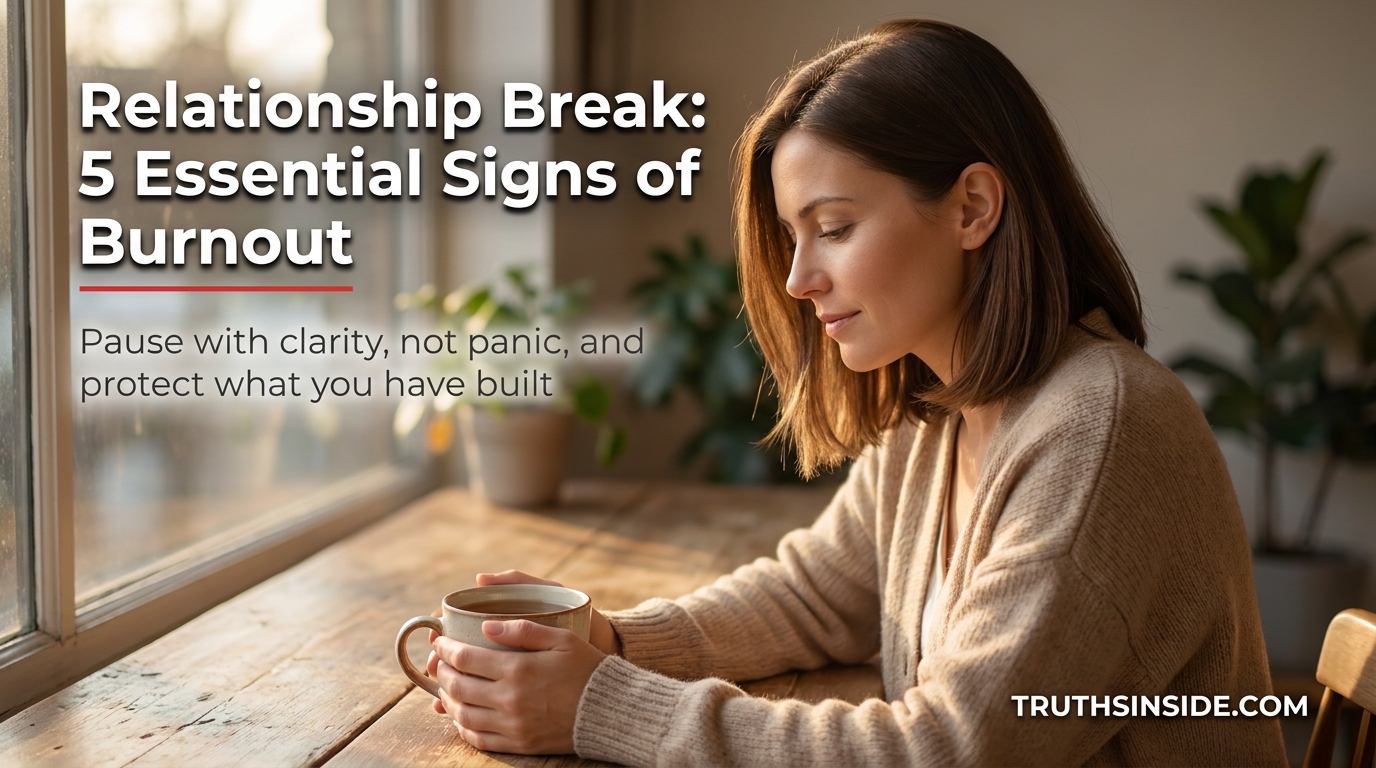
Signs You Need a Break From Your Relationship (Not a Breakup)
A relationship break can sound alarming, but for many couples it is a practical pause rather than a sign that the story is ending. If you have found yourself wondering whether you need distance to think clearly, you are not alone. Many people feel stuck between loving their partner and feeling worn down by the same patterns, week after week.
Research on couples has long shown that how partners handle conflict often matters more than how often they disagree. John Gottman’s studies identified four communication patterns, including criticism, contempt, defensiveness, and stonewalling, that frequently predict relationship distress. A well-planned relationship break can interrupt these patterns before they harden, giving both people room to regulate emotion and return with clearer intentions.
This article explores five signs that you may benefit from a relationship break, how it differs from a breakup, and how to talk about it honestly. You will also learn what healthy pauses look like, how to protect the connection while you are apart, and when a break should be treated as a warning rather than a reset.
What a Relationship Break Really Means
Not a Breakup, Not a Verdict
A relationship break is a deliberate, time-limited pause in which both partners agree to step back from certain patterns, routines, or levels of contact. It is not a decision to end the relationship. It is closer to restarting a device that has been running too long. Both people still care, but they recognize that the current way of interacting is not working.
A Pause With Purpose
The purpose matters. A relationship break works best when it has a clear reason, such as reducing conflict, managing stress, or restoring individual wellbeing. Without a purpose, distance can drift into avoidance. With a purpose, it becomes a structured period of reflection, and both partners know what they are working toward.
Sign One: Conversations Keep Circling the Same Fight
Repetition Without Resolution
Every couple has recurring topics, but a healthy relationship makes progress on them over time. When the same argument returns every week with the same tone, the same accusations, and the same exhausted ending, the relationship may need a break to stop the loop. Neither partner has to be right for the pause to help.
Pay attention to whether you are discussing solutions or simply replaying old scripts. Circular arguments often leave both people feeling more distant than before. A short relationship break can create the emotional space needed to approach the topic differently, without the pressure of an immediate resolution.
Sign Two: You Feel Relief When You Are Apart
Relief as Information
Relief is information. If you feel lighter when your partner is traveling, working late, or spending a weekend with friends, pay attention to that feeling. It does not automatically mean the relationship is over. It may mean that constant togetherness has become draining, or that you need more room to breathe and think.
A relationship break can test this honestly. Spending a few days or weeks with reduced contact reveals whether the relief fades quickly or persists. Either outcome is useful, because it helps you understand what you actually need rather than what you think you should want.
📃 Related article: Partner Competing With You? 6 Toxic Red Flags Revealed
Sign Three: Resentment Is Building Quietly
Small Irritations Stack Up
Resentment rarely arrives as a single dramatic moment. It builds through small irritations: a forgotten plan, a sarcastic comment, a missed chance to listen. Over months, those moments form a pattern that makes affection feel effortful. Partners often sense the tension without naming it, which is why conversations become guarded and playful moments disappear.
Resentment grows when small disappointments are never spoken, and a relationship break can create the quiet needed to finally name them.
If you notice that you are keeping score, rehearsing grievances, or feeling cold before your partner even walks through the door, a relationship break might give you the perspective to address those feelings before they harden into contempt.

Sign Four: You Are Losing Touch With Yourself
Shrinking Friendships and Goals
Healthy love makes room for both people’s lives. When your hobbies, friendships, or career goals have quietly disappeared because the relationship consumes every free hour, you may be losing yourself. This does not make your partner the villain. It does mean the relationship has grown too large a share of your identity.
A relationship break can restore balance. Use the time to reconnect with friends, pick up an old interest, or set a personal goal. Many people discover that feeling more like themselves makes them more generous and present when they return to the relationship.
Sign Five: Outside Stress Is Spilling Over
Work, Money, and Family Pressure
Sometimes the problem is not the relationship itself but the pressure surrounding it. Demanding jobs, financial strain, caregiving responsibilities, or health concerns can spill into every interaction. Partners may start treating each other as the source of stress rather than the place where stress is shared.
When external pressure drives conflict, a relationship break can help separate the stressor from the partnership. The goal is to address the real pressure together, perhaps through budgeting, shared responsibilities, or professional support, rather than blaming each other for circumstances neither person chose.
How to Ask for a Relationship Break Without Panic
Choose the Right Moment
Timing shapes how a request is received. Avoid raising the idea in the middle of a heated argument, late at night, or when one partner is already overwhelmed. Choose a calm moment to propose a relationship break, and open with care: “I value us, and I think we need some space to reset how we’re handling things.” This framing invites collaboration rather than defense.
Name the Purpose and the Length
Vague requests create anxiety. Be specific about what you hope to achieve and how long the pause will last, even if the timeline can be adjusted later. For example, you might suggest two weeks with fewer daily texts, no major decisions, and a check-in at the end. Clarity reduces the chance that a relationship break is misread as abandonment.
What Makes a Relationship Break Work
Clear Agreements
Agreements protect both people. Discuss contact expectations, how you will handle emergencies, whether you will see each other at all, and whether either of you will date others. These topics feel uncomfortable, but leaving them unspoken often leads to hurt later. Write the agreement down if that helps, so both people can revisit it without guessing. Strong agreements determine how a relationship break unfolds, and they make the experience feel safer for everyone involved.
Staying Connected Kindly
Distance does not have to mean silence. A short, warm message, a note about your day, or a brief check-in can keep the bond alive without pulling either person back into old conflicts. The aim is steady care, not constant monitoring. A relationship break should not become a silent treatment, and respectful contact reassures both people that the relationship still matters.

Reflecting Together
At the end of the pause, come together with curiosity. Share what you learned about yourself, what you missed, and what you would like to change. Avoid using the time as evidence in a case against your partner. The most valuable outcomes happen when both people return with more compassion and a clearer sense of what they want.
A relationship break is only as useful as the honesty you bring back into the room when it ends.
When a Relationship Break Becomes a Warning
Safety First
Not every break is healthy. If one partner uses distance to punish, control, or intimidate the other, the situation requires caution and outside support. Threats, monitoring, isolation, or pressure to prove commitment are serious red flags. Your safety and emotional wellbeing come first, and reaching out to a trusted person or a licensed professional is a responsible step.
📃 Related article: Low Self-Esteem Sabotage: 7 Shocking Ways
When Silence Becomes Permanent
Also watch for a relationship break that becomes permanent avoidance. If conversations never resume, if neither person initiates repair, or if both feel relieved to stop trying, it may be time to consider whether the relationship can meet your needs. Honest reflection is not failure. It is a legitimate outcome of a pause.

Frequently Asked Questions About a Relationship Break
Is a relationship break the same as a breakup?
No. A breakup ends the relationship, while a relationship break is a time-limited pause with an intention to return and rebuild. That said, some couples discover during the pause that ending is the healthier choice, and that outcome is still valid.
How long should a relationship break last?
The right length depends on the purpose and the intensity of conflict. Many couples choose a few days to a few weeks. Agree on a check-in date so the pause does not drift indefinitely, and feel free to extend or shorten it if both people agree.
Should we see other people during a relationship break?
This must be discussed openly. Some couples agree that dating is off limits, while others set clear boundaries. Ambiguity is one of the most common sources of hurt during a relationship break, so clarity protects trust on both sides.
What if my partner does not want a relationship break?
Respect their response while explaining your reasons calmly. You can still express your needs, suggest alternatives such as counseling, or take steps to care for yourself, even when a relationship break feels unwelcome to the other person. If the disagreement becomes the central issue, a licensed therapist can help you navigate it together.
Choosing Space Without Losing Connection
A relationship break is not a failure of love. It is a practical way to slow down, see clearly, and decide what kind of partnership you want to build. Used with honesty and care, it can protect what matters most while addressing the patterns that have worn you down.
Remember that the purpose of a relationship break is never to win the pause or prove who needs it more. It is to create enough space for both people to return with clearer hearts. Whether you come back stronger or choose a different path, the reflection you bring can make your next steps wiser.
Before you go, save this article for the next time you feel stretched thin in a relationship break, share it with someone who may need permission to pause, and follow Truthsinside.com for more research-based guidance on relationship signs and signals.
🎵 Music
Maren Lull is a singer-songwriter who writes from the places most people don’t talk about out loud.
Not the dramatic grief. Not the obvious heartbreak. The quiet kind — the ordinary Tuesday emptiness, the habit of reaching for someone who isn’t there anymore, the particular exhaustion of being strong for so long that the strength itself wears thin.
Her music lives at the intersection of emotional honesty and soft beauty — breathy vocals over gentle piano, slow tempos, lyrics that feel less like songs and more like something you wrote in a private notebook at two in the morning and never showed anyone.
Maren Lull writes for the people who feel everything deeply and say very little about it. For the ones who listen to sad music not because they want to feel worse — but because being understood, even by a song, makes the feeling easier to carry.
📱 Follow Maren Lull:
→ Spotify
→ Apple Music
→ Youtube
→ Audiomack